Columns

Jeremy Corbyn’s one true virtue

Enough of all these vital, apocalyptic, existential elections. They don’t half wear you out. The Scottish referendum was vital and apocalyptic, so they said, because the wrong decision would have seen Britain crack like a plate, and Scotland spiral off into insane debt, and residual Britain fade in geopolitical importance. Or, on other side, Tory rule for a millennium, which no Scot could ever want. Hmmm. Then the 2015 election was vital and apocalyptic, too, because Ed Miliband… Ed Miliband… Hang on. What was the big problem with Ed Miliband? There definitely was one. Ah yes, his dad hated Britain. Also he was incompetent. Didn’t even know how many kitchens he had. Couldn’t eat a sandwich. Or hold a banana. Unless that was somebody else.
Should those poor kids have been there?

My wife will not let our 11-year-old daughter take the dog for a walk around the large field adjoining our house in case a paedophile jumps out of one of the hawthorn bushes with a bag of sweets or a beguiling promise of puppies. For every yellowhammer singing its insipid chorus, the missus thinks there’s at least one nonce crouched down in the undergrowth beneath, waiting, waiting. We live six miles from the nearest town and two from the nearest village. From the age of six I spent all of my holidays out, playing, and would not be heard of from dawn until dusk. Quite often I would walk a mile or so along reasonably busy roads to Darlington railway station and spend the day on the platforms watching the trains, until, by the age of eight, trains had lost much of their allure.

Will Theresa May ever resist a backlash?

Elections matter. They are fundamental to our way of life. So, while it is appropriate that the campaigns stopped on Tuesday to mourn the victims of the heinous terrorist attack in Manchester, democracy demands that they resume as quickly as possible. The terrorists must know that they will never change how our society functions. This is an odd election. Everyone assumes they know what the result will be and the real psephological debate is over just how big the Tory majority will be. On Monday, even the most panicked Tory was only concerned about what Theresa May’s U-turn would mean for the party’s margin of victory, not the actual result. But her retreat on social care will have ramifications far beyond 8 June.

This is the worst Tory campaign ever

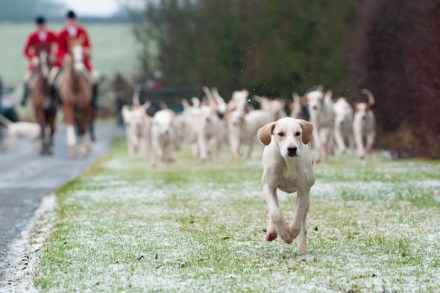
I am trying to remember if there was ever a worse Conservative election campaign than this current dog’s breakfast — and failing. Certainly 2001 was pretty awful, with Oliver Letwin going rogue and Thatcher sniping nastily from behind the arras. It is often said that 1987 was a little lacklustre and Ted Heath had effectively thrown in the towel in October 1974. But I don’t think anything quite matches up to this combination of prize gaffes and the robotic incantation of platitudinous idiocies. To have suggested that the hunting with dogs legislation might be subject to a free vote in the House of Commons was, whether you are pro hunting or against, a move of quite stunning stupidity.

A dementia tax would be a euthanasia bonus

Had Theresa May not on Monday summarily abandoned her manifesto threat to raid the savings of those who end up senile in care homes, I had planned to defend the idea here in terms that might have added to her woes.  I’ll do so regardless. The so-called dementia tax would, over time, have become a euthanasia bonus. And that would be a good thing. As I argued on this page two weeks ago, morality is the father of religion, and not the other way around. Secular morality can be largely explained by social Darwinism.

Why do nurses quit? Because they care

Sometimes, on Sundays, I visit Richard, a friend who’s 95 and lives alone. The idea originally was that I’d be doing Richard a favour, but the truth is he cheers me up far more than I do him. I visit because I like him, but as the weeks go by, I’m afraid I’ve also developed a grim curiosity about what it’s like to be in your nineties. Meals-on-wheels, crumbling knees, hernias, cannulas, the way a day dissolves into unintended naps… ‘Can’t we talk about something more cheerful?’ says Richard, as we sit knee to knee. But I’m obsessed, like a tourist taking notes on some awful country they must one day go to.

We owe it to hunt staff to repeal the ban

Though I don’t think much of Theresa May’s paternalistic soft-left politics, I do like her no-nonsense style. That Q&A she did for the Sunday Times where she was asked ‘Sherlock or Midsomer Murders?’ — ‘I’ve watched both’ she replied — was hilarious in its Olympian imperviousness to the convention, established by Tony Blair, that prime ministers must kowtow at all times to popular culture and sentiment. So too was the extraordinarily unevasive answer she gave when asked recently why she was committed to allowing Conservative MPs a free vote on rescinding Tony Blair’s fox-hunting ban. ‘As it happens, personally, I’ve always been in favour of fox hunting,’ she said. Me too.

Big money, big data and the dead cat strategy

In his new book Move Fast and Break Things, the American academic Jonathan Taplin makes a decent case that, democratically speaking, the internet has gone awry. Tools and freedoms which originally promised to allow individuals to challenge the powerful, he argues, are instead exploited by the powerful to dodge the demands of society. He’s writing about copy-right and tax, mainly. But he could have been writing about political advertising. On the radio last weekend, my friend and colleague Lord Finkelstein (I don’t actually call him Lord Finkelstein) was talking about the skills of Sir Lynton Crosby, the Tory election mastermind. ‘Lots of election campaigns are taking place where you can’t see them.

Corbyn is the real heir to Blair

Alastair Campbell once famously punched the Guardian’s Michael White in the face. A commendable thing to do, undoubtedly, as Mr White is the very incarnation of pomposity and self-righteousness. Quite possibly the best thing Campbell has ever done. But the brief spat (White hit back, according to White) was revealing in another way. Robert Maxwell had just drowned by falling off his yacht and Campbell, then working in the lobby for Maxwell’s paper, the Daily Mirror, took exception to White’s glee at this watery end to the proprietor’s life. ‘Captain Bob, Bob, Bob!’ White chortled, so Campbell punched him.

Twelve months of May

Normally, the first anniversary of a prime minister taking office is the occasion for a lot of opinion polls and assessments. But by going to the country early, Theresa May has pre-empted that. By the time she has been in No. 10 a year, the voters will already have delivered their verdict via the ballot box. Still, it is worth assessing what May has done so far. When she arrived in No. 10, her team had three main priorities. They wanted to complete the modernisation process by making the Tories more appealing to the so-called ‘just about managing’ classes, and to those outside the party’s heartlands. They were determined to shore up the Union — to see off Nicola Sturgeon’s renewed drive for Scottish independence.

Why it’s obvious that morality precedes religion

At a beautiful church service recently I encountered again a Gospel parable that left me, again, torn between sympathy and doubt. You will recognise Matthew 25: 35-40, for its phrasing has entered the idiom: ‘I was hungry and you gave me food … sick and you visited me … in prison and you came to me … a stranger and you took me in … naked and you clothed me … ’ The story is of a king praising his subjects for these kindnesses to him. This puzzles them: ‘When did we see you hungry, and feed you … a stranger and take you in…’ (etc)? The king replies: ‘Inasmuch as you did it to one of the least of these, my brethren, you did it to me.

The cops should have said: it’s just Stephen Fry, what did you expect?

Coming to a workplace near you, perhaps — masturbation breaks. The policy was first recommended by a psychologist at Nottingham Trent ‘University’ and has now been supported by Dr Cliff Arnall, who is a life coach. These brief moments of respite in the working day would, according to old Cliff, result in less aggression, higher productivity and more smiles. I’m sure he’s right. ‘I’ll read the lesson in a few minutes, Justin, I’m just off for a quick Sherman. Pass me that copy of the Tablet, will you?’ I do wonder if in some workplaces — the BBC commissioning centre, all advertising agencies, Channel 4 News, the Law Society — these breaks are already de rigueur and, further, are unceasing in their duration.

Never mind the election – Corbynism isn’t going away

General elections are meant to produce a government and an opposition — ideally, a decent version of both. It is obvious what government this election will deliver: a Tory one with an increased majority. That, after all, is one of the reasons why Theresa May has decided to go to the country three years early. But it is not clear what opposition there will be. What passes for optimism in moderate Labour circles these days is the belief that a shellacking in this election will lead to Jeremy Corbyn’s departure, as the party’s membership sobers up and elects a new and sensible leader. But it is far from certain that this will happen.

Labour’s election strategy – vote for us and watch us lose

The crapness of Corbyn’s Labour is a phenomenon. It fascinates me. Frankly, it does my head in. For there is a theory, you see, that Corbyn’s Labour isn’t really crap at all. That it is all a conspiracy. That journalists such as me, who I suspect are ‘neoliberal’ or something, merely construct a narrative demonising it as such. Where politicians match our prejudices, this theory goes, we give them enormous leeway and spring to their defence. When they don’t, we supposedly deem them ‘mad’ or ‘radical’ or, yes, ‘crap’, in a spirit of sheer defensiveness. It’s a neat theory, this, and very occasionally I even find myself wondering if it might be true.

Diane’s grey matter and Labour’s sticky votes

I awoke the other morning to hear Diane Abbott’s brains leaking out of her ears and all over the carpet during an interview with LBC’s excellent Nick Ferrari. You will need a mop and a bucket very sharpish, I thought to myself, as she gabbled on, the hole beneath her feet growing larger with every syllable she uttered. Diane has had the brain leakage problem before, many times, and my worry is that following the LBC debacle there is almost nothing left inside her skull at all, just a thin greyish residue resembling a kind of fungi or leaf mould. This would leave her on an intellectual par with Emily Thornberry, a disaster for Labour. Later Diane explained that she had ‘misspoken’ during the interview — but how were we to know?

Thanks, Jamie Oliver – you’ve stolen my childhood

Whenever I want to travel back in time to my 1970s childhood, all I need is a glass of Lucozade. One sip of the electric orange nectar and there I am in the magical era of Chopper bikes, space hoppers and clackers (which they banned because they were dangerous, apparently), of the Clangers, Animal Magic and John Craven’s Newsround, of Wagon Wheels, Alphabetti spaghetti and chewy chocolate peanut bars still known in those days by their correct name, Marathon. (See also: Jif, Oil of Ulay, Opal Fruits.) Bliss was it in that loon-panted dawn to be alive. But to be young was very heaven.

Tim’s a Christian, so he’s not allowed an opinion

Maybe I’m wrong about this, but I don’t remember the BBC running a documentary 100 days into Barack Obama’s first presidency and kicking him from pillar to post. Interviewing almost exclusively people who hated him, pouring scorn on his every utterance. They did it this week to Donald Trump, though, and even wheeled out Jeremy Paxman to present this travesty of a documentary. Because Jeremy was interviewing exclusively people with whom he wholeheartedly agreed, he didn’t get the chance to put on that famous supercilious expression we all used to love, back when he was good. Shame. With Obama, as I remember, it was a very different approach. The studio floors were still awash with liberal ejaculate well after 100 days of his singularly inept presidency had elapsed.

Why Tories are talking up Labour

Considering that their party is expected to win by a landslide, the Tory spin doctors sound unusually panicked. They are keen to point out that the polls aren’t always right, and the pollsters are still trying to correct what they got wrong at the last general election. They insist that national voting tells you little about what will happen in the key marginal seats. These are normally the pleas of a party that is failing, and trying to persuade voters that it is still in the race. But Labour isn’t doing a good job of spinning its own prospects — so the Tories are doing it for them. This is not as odd as it first sounds. The Tories are worried about complacency, about their vote not turning out.

What would Darwin make of trainspotters?

Why are men so much more likely to be interested in trains than women? I believe this to be a question of profound importance. It has implications for the debate about whether behavioural gender differences are inborn or learned. And implications for our understanding of male thinking. When at a dinner party did you ever hear an intense conversation between two women about railway timetables? How many teenage girls have you ever noticed among groups of trainspotters? Do small girls ask for a train set as a birthday present? Doesn’t this stark disparity between genders on a matter which touches equally the lives of both, and in which both are equally competent to take an interest, deserve attention? Women use trains just as men do, because they are a convenient means of transport.

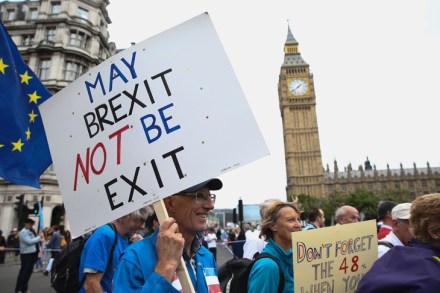
What can May say to the Tory Remainers?

I don’t see it. I do not see the anatomy of how it all pans out. Theresa May will be the next Prime Minister because, jeez, who else is going to be? What I cannot see, though, is what she says, and to whom, along the way. Most of all, I cannot see what she says to Remainers. ‘Who cares?’ you may be thinking, and ‘get over it’ and ‘you lost’ and so on. Yet these arguments, while powerful, only get us so far. The fact is, quite a lot of people who formerly voted Conservative also voted Remain. In Mrs May’s own constituency, indeed, she may have a majority of a smidge over 29,000, but she also faces an electorate who, by a margin of almost 8 per cent, voted against leaving the European Union.