Columns

The heartbreaking story of Pecky, a young green woodpecker

Ever since I was a child, I’d always yearned to see a green woodpecker. With its scarlet cap and lime-green body, it looks far too colourful and exotic to be a native species. But it very much is, as you can tell from the fact that it has a rustic nickname — the yaffle. This, incidentally, is how Professor Yaffle — the carved wooden bookend which comes to life as a drily academic woodpecker, the ‘font of all knowledge’, apparently based on Bertrand Russell — in the 1970s children’s TV series Bagpuss got his name. But I digress. The point is, I never did get to see a green woodpecker till my mid--forties when I moved to the country.

The phoney Tory leadership war

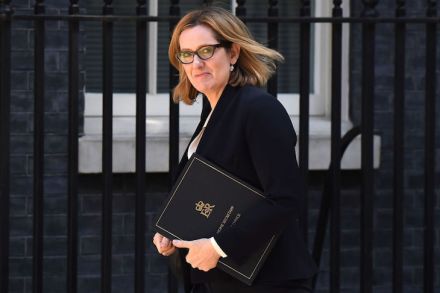
When a new MP is offered a job as a parliamentary private secretary for a cabinet member, it’s often a test to see if they really would do anything to get into government. It involves running errands, spying on colleagues, ferrying messages around the Commons and planting inane questions for backbenchers to ask in the chamber. But in this hung Parliament, another duty has been added to those of the Tory PPS: to report anyone who might look as if they’re running for leadership. The Tory whips’ office has asked every PPS to inform them if any minister is behaving suspiciously — giving grand speeches about the state of the nation, perhaps, inviting colleagues for drinks or just making a few too many friends.

My son and the back-crackers of Harley Street

All along Harley Street, charlatans and medical experts have set up side by side with no obvious way to tell them apart. The same wide steps lead up to the same glossy front doors, all with prestigious brass knobs. Each separate house is itself a layered stack of quacks and docs: radiology one floor above absence healing, flower therapy down the corridor from paediatric ENT. The magnificent Harley Street address confers a blessing on every dubious therapy. Perhaps it has a placebo effect all of its own. I know the street quacks well, or used to. My mother had a horror of antibiotics and would pack us off to Harley Street’s alternative therapists. I remember a mournful young Russian who was said to have treated astronauts.

In my other life, I’m a water engineer

Friends arrived last week to find me in a mudhole, inside a cave-like tunnel into the hill, fiddling around with our spring-fed water supply. Hearing their car, I slithered out to greet them, covered in slime like a monster from the deep. It would be natural to say this took them by surprise. It did not. They know me. Since infancy I’ve loved playing with water. Every river I could dam, every channel I could dig, every pond I could drain or fill, every stream I could divert, every castle wall I could build against the encroaching tide, seemed to point to a promising career as a water engineer. Sadly I showed no talent for any of this; and, later, the maths bored me. I just loved digging, damming and diverting: a master of my little water world.

The hormone that makes you a liberal halfwit

People who feel unkindly disposed towards economic migrants are chemically imbalanced, according to a study from the University of Bonn. More specifically, they are deficient in oxytocin, a neuropeptide hormone sometimes known as the ‘cuddle drug’ because of its ability to turn normal human beings into simpering halfwits. Psychologists ran a series of studies in which Germans were asked how much money they would like to give to, say, Tariq and Mohammed, who have just arrived here from Syria. ‘Nothing at all, unless they intend to spend it on a ticket home’ is of course the correct response, and indeed many Germans initially concurred with this. However, after they were bunged some oxytocin they were handing out the dosh willy-nilly. Remarkable.

Snobbery in the age of social media

We like to think we have moved on from the age of snobbery. Judging others by birth or status, or at least being seen to, is the height of rudeness, and just not very cool. But English snobbery is in fact as potent as before — and possibly even more insidious. Among my age group of twentysomethings, it is rife. Our elders might think of us as fiercely egalitarian, and in some ways that’s true. We aren’t as obviously obsessed with class. But we’ve found sneakier ways of being snobs. It starts with social media. Everyone has an online profile, and that has created a new generation of ultra snobs, who lurk behind their phones watching their peers, noting subtle differences. I do it and I know many of my friends do too.

Dave’s kept his head down, so let him chillax

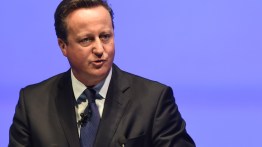
David Cameron was in the news again this week after being paid £1 million a minute to give a speech explaining why Brexit was a terrible mistake at the annual Gay Stranglers’ Guild gala dinner at a brutal dictatorship in central Asia, before spending a week cruising the Baltic on the yacht of Putin’s second-favourite oligarch with the prettiest members of the Russian men’s lacrosse team. No, wait. My bad. Had he done that, as we know from similar cases, he would have got off scot-free. Instead, the ex-PM did something far, far worse in the eyes of our ever watchful media: he was photographed enjoying himself at a Cotswolds pop festival with a glass of booze in one hand and a fag in the other.

Football wants the ‘somewheres’ to get lost

Some years ago, when Millwall played West Ham United, the Millwall fans sang the following song (to the tune of ‘When The Saints Go Marching In’, if you want to hum along): ‘Oh east London, is like Bengal. Oh east London is like Bengal. It’s like the back streets of Delhi. Oh east -London is like Bengal.’ They haven’t sung it for two or three years, but only because Millwall haven’t played West Ham. I mean, I don’t think that Millwall’s supporters have gradually thought better of it and decided that the ditty was perhaps racist and demeaning, or are worried about the relative geography of Delhi and Bengal. If we (Millwall are my team) played West Ham tomorrow, I think we’d still sing it.

Why is your holiday exchange rate so awful? Because investors see hope for the eurozone

As usual for August, I’m in France, where the news in brief is ‘Euro up, Macron down’. The youthful French president, who swept to power with two-thirds of the second round vote in May, has seen his approval rating plunge to 36 per cent — at the time of writing, 2 per cent worse than Donald Trump’s latest score in the US. Macron’s move to slash housing benefits for millions of lower-income citizens, including students, is one factor that has brought his honeymoon with French voters to an abrupt end, though his proposed labour law reforms are still playing well with employers.

Parliament’s new tribe

Politics is such a fickle game that it’s perfectly acceptable to believe six impossible things before breakfast without ever having to apologise for being so wrong. Remember, for instance, when everyone was predicting that the dead cert increased majority for Theresa May would lead to the creation of a new party? Perhaps, like everyone else who has since gone on to predict another series of impossible things with equal confidence, it’s easier for us to forget those old certainties. No one talks about a new party any more. The facts have changed, so we’ve changed our minds too. There aren’t the same conditions for that proposed new party about which Tony Blair and other grandees kept dropping loud, clanging hints.

Civilised air travel? Pigs might fly

Does anyone actually enjoy flying     any more? I know I don’t. I realised recently, while anxiously repacking my tiny carry-on case with its cache of toiletries dribbled into miniature bottles, that travelling with an airline now feels a bit like going on holiday with a friend who — just beneath the surface — actually hates you. With every trip, it seems, airlines grow angrier and stingier, stripping away any remaining perks and then making us stump up to buy them all back. Their profits have grown fat on the commerce of small differentiations, micro-transactions around fragile scraps of sanity and time. On the budget airline easyJet, for example, you are allowed one piece of cabin baggage, but no handbag.

We need ideology in politics

‘Studying history at Balliol,’ writes Chris Patten, ‘I knew that the one thing which made me uneasy was a grand theory or over-arching generalisation.’ The remark comes from a Lord Patten’s latest book, First Confession. Henry Keswick wrote an unpleasant review in this magazine, and I’ve spent some time recently discouraging mutual friends from bothering to protest (‘Leave it, Jono, he isn’t worth it’). To hear Patten himself talking about this honest, engaging and very personal memoir, I went recently to see him in a packed opera house at the Buxton Festival. I count Chris, who as director of the Conservative Research Department in 1977 gave me my first job in politics, as a friend and as a politician whom I admire tremendously.

No true Tory can support this gender idiocy

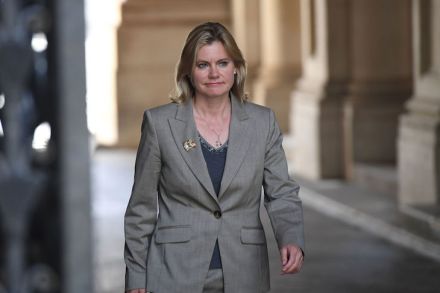
I’ve had it with the Conservatives. For me, and I know I’m not the only one, the final straw was the announcement at the weekend that the Equalities Minister Justine Greening wants to change the law so that people are free to specify their gender on their birth certificate regardless of medical opinion. What were they thinking, Greening and the various senior party bods who supported this decision, including, apparently, the Prime Minister? Actually, I think we can guess. They were thinking: ‘Oh, Jeremy Corbyn. His young followers seem to like this LBGBLT — how do the initials go again? — malarkey so perhaps we’d better get with it too.’ And: ‘Nasty party detox.

The dark clouds threatening Brexit

It’s summertime and the living is easy... unless you’re a civil servant working on Brexit. Whitehall has recognised that the UK needs to step up its preparations for leaving the EU and to offer greater certainty about the country’s immediate future. A big speech is planned for September, probably by the Prime Minister, which will set out more of the government’s thinking on the issue. One aspect of Brexit that urgently needs clarity is how Britain will leave the European Union. Theresa May has long been open to a transitional period or, as she terms it, an implementation phase. But since the election, the government’s enthusiasm for this has become far more explicit.

If Brexit is dying, what about democracy?

Never meet your enemies — you might like them, and that ruins stuff. I had dinner with the former Archbishop of Canterbury, Rowan Williams, about a year ago. During his time in office, Rowan came out with what I considered to be some of the most cringing, effete, left-liberal, self-abnegating rot I have ever heard. But then, at this dinner, I met the most kindly, charming, humble and witty human being. If a man could be said to actually radiate goodness, that was Rowan. I left the dinner utterly dismayed. Never meet your enemies. So it is with Matthew Parris. I bump into Matthew every so often and am always reminded what a delightful chap he is: drily humorous, ineffably good-natured and a pleasure to talk to.

Why must I have a view on everything?

At a party earlier this summer, I was chatting to a man who asked me how I voted in last year’s EU referendum. I don’t see why anybody asks that question more than a year on, and I don’t see why anyone should be expected to answer. There is no faster way to sour a perfectly fine evening. Whatever you say, you risk causing offence, so why bother? I told the man I preferred not to say, and that I still don’t really know what I think about Brexit. He appeared put out by my reluctance — as if I was the one being rude. Before long he made his excuses and moved on. I find myself in that situation more and more in social encounters — skirting round questions in order to avoid an embarrassing argument only to find I’ve caused more awkwardness.

My fears about the new ‘extremism commission’

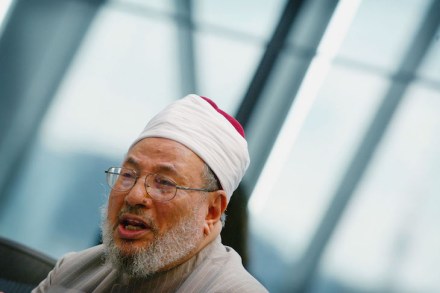
The Egyptian-born Muslim cleric Yusuf al-Qaradawi was once invited to speak in this country — and the row which developed as a consequence was both entertaining and instructive. Many people said he shouldn’t be given a visa because of his ‘extremism’. Others, such as the mainstream UK Muslim organisations, insisted that this was a libellous description and that Qaradawi was a moderate who had always favoured dialogue with people of other faiths; Ken Livingstone went further and described him as being a ‘leading progressive voice’ within Islam. So who was right?

The Tories need a ‘what’ as much as a ‘who’

Theresa May has made it to the summer. In the aftermath of the election, Downing Street’s immediate aim was to get the Prime Minister to the parliamentary recess. On Thursday they succeeded. They think that the next six weeks will give the government a much-needed chance to regroup and catch its breath. Like a cricket team playing for the close, they hope conditions will be more favourable when proceedings resume. But is there any reason to think that things will be different in September? The summer break can do many things but it can’t conjure up another 20 Tory MPs or put time on the Brexit clock. Tory optimists claim things will be better once everyone has had a lie down.

Dear Leavebugs, it’s time to admit your mistake

‘Brexit,’ says my friend David Aaronovitch, ‘is dying.’ We Remainer irreconcilables certainly hope so. But there’s a slim chance the grisly Brexit project could yet pull through, and it’s right to acknowledge this. So in a spirit of candid friendship I write this letter to die-hard Leavers, of whom a small — but vigorous — colony survives on these Spectator pages… Dear Leavebugs, You know I am not of your number, but I understand you. I even feel for you. The Leave/Remain split is not a divide between two halves of the British population, but a war within the breast of each person. Every feeling you’ve had, I’ve experienced too. Civil wars are always bitter; wars within ourselves the most bitter of all.

A vicious reaction to a very bad word

Having a nigger in the woodpile and a skeleton in the closet are closely related problems, although subtly different. In the first case it is a problem which is lurking, hitherto unseen, but which may pop up very soon to cause mayhem and mischief. In the second case it is a problem which has been hidden from public gaze quite deliberately but which may yet emerge, clanking and rattling, to ruin one’s life. Both terms are capable of giving grave offence. The first because it probably dates from the time at which some white people enslaved some black people (about 150 years, give or take), as opposed to the time when black people enslaved black people (about 2,000 years, give or take). It has that very bad word in it, a pejorative word, which can cause hurt and anguish.