Columns

Is Trump’s revolution already over?

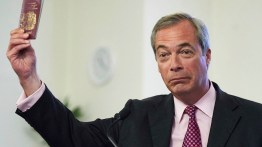
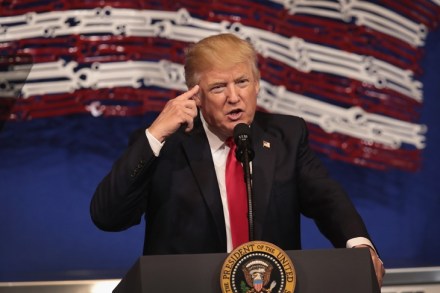
There were three reasons why I so badly wanted Donald Trump to win the US presidential election. One was that the alternative was Hillary; another that I knew it would annoy all the worst people in the world; but the third was a positive one: I genuinely believed that as an independently wealthy, outsider candidate with no loyalties to the DC establishment, Trump was going to be the revolutionary hero who would finally free the people from the shackles of a corrupt, sclerotic and self-serving ruling elite. Some may scoff at my naivety. But there was evidence to support my view. Brexit had just happened and what seemed clear from Trump’s embrace of Nigel Farage was that he saw himself as part of the same populist wave.
What I expect from this pointless election

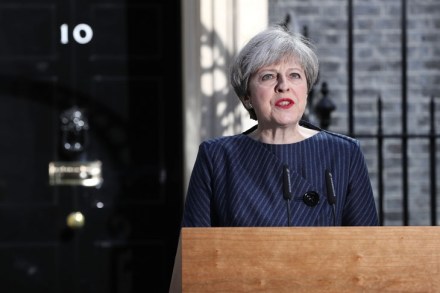
A general election is called and in a matter of hours a neutral and unbiased BBC presenter has likened our Prime Minister to Recep Tayyip Erdogan. Governments rise and governments fall, but some things stay just as they always were. It was Eddie Mair on Radio 4’s PM programme who made the comparison, while interviewing the Home Secretary, Amber Rudd. In fairness to Mair, he had been alluding to Theresa May’s apparent wish to create ‘unity’ within Westminster, a truly stupid statement within an address which sometimes made no semantic sense and sounded, to my ears, petulant and arrogant. Then along came the opinion pollsters to tell us exactly what will happen on 8 June — except they declined to be too explicit.

If Trump’s listening to his generals, that’s great news for Britain

‘Great Britain has lost an Empire and not yet found a role’. Fifty-five years on, Dean Acheson’s remark has not lost its sting. British statecraft is, even now, an attempt to lay claim to a place in the post-imperial world. The events of the past few months — Brexit, the election of the most unlikely US president in history and the debate over the Union — all raise the issue of what kind of country Britain hopes to be. The chemical weapons attack in the rebel-held town of Khan Sheikhoun in Syria last week has prompted the first foreign policy crisis of this new era. Britain’s role in the response has become a proxy for the wider debate about our global standing.

Give me the Anglican option

The Algerian government’s official tourist guide describes ‘the walled town of Beni Isguen — normally closed to foreigners — where the women, clad entirely in white, reveal only one eye to the outside world’. Rod Dreher’s Easter call to devout Christians to separate themselves as a community from what he believes to be the degeneracy of our western culture puts me in mind of that sad, disturbing place. Beni Isguen is one of the oasis towns near Ghardaia in southern Algeria. I visited many years ago and can be sure there has been little change since, for the community has clung to unchanging and uniting beliefs for hundreds of years.

What message do Trump’s missiles really send?

Let me take this opportunity to join with our Prime Minister and Foreign Secretary in commending President Trump’s swift and decisive military action against the Syrian government as being ‘appropriate’ — one of my favourite words and one which I like to use every day, regardless of whether it is appropriate to do so. The important thing was not of course the destruction of a few Syrian planes and, collaterally, a few Syrian children. The crucial point is that this moderate and judicious use of expensive missiles ‘sends out a message’ to President Assad. And the message is very simple. We will no longer tolerate Syrian children being killed by hugely unpleasant chemical weapons such as sarin or chlorine gas.

Who dares face down the teenage gangsters?

The baby, unbothered by diesel fumes, enjoys an outing down the main road through London N1. Each passing bus is marked by a fat and pointing finger: ‘There!’ On the way to our local park last Thursday, we had just begun to cross the road, pointing up at the green ‘walk’ man, when a scooter tore straight through a red light and cut across in front of the pram. ‘What the hell?!’ I shouted and raised an angry hand. To my surprise, instead of speeding off, the driver jammed on his brakes and skidded round to face me. He was a boy of about 15 or 16, black, slight, and snarling with fury. He said: ‘You want to start? You really wanna start this?’ The baby and I were mid-road.

On balance, I’d vote for a rate rise and a stronger pound

Since Article 50 was triggered last week, City traders have been avidly watching the fluctuations of the pound. Analysts at Barclays, Nomura and Citigroup think sterling is undervalued against the euro and the dollar, and due for a rebound, having dived in the market tizzy that followed last June’s referendum and kept its head down through the phoney war of the past nine months. As ambiguity over Brexit terms begins to recede, says the City, it’s time for the pound to perk up. Well, maybe — as I’m often moved to observe in relation to bald economic statements. Let’s take a closer look.

A meeting with Britain’s most hated man

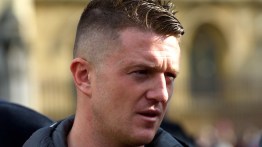
‘Christ, I would be shot for buying this if people knew,’ says an anonymous fan in the comments below Amazon’s unlikely bestseller Enemy of the State. Which sums up how I feel before meeting the book’s author, Tommy Robinson. What if he turns out to be not nearly as bad as his reputation as ‘Britain’s most hated man’? What if, as some familiar with him have warned, I turn out to like him and want to plead his cause, and end up being tainted as a far-right thug by association? We meet in a gastropub in a pretty Georgian market town.

You can take the liberal media bubble out of London…

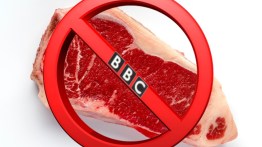
An American woman started a website called ‘People I Want to Punch in the Throat’, in which she listed the people she wanted to punch in the throat. It was enormously successful and spawned a book called People I Want to Punch in the Throat, which sold very well. This is the heartening thing about the internet; the level of visceral loathing harboured by all of us for other people, which otherwise would remain hidden. I have thought about getting in on the action by starting a website called ‘People I Want to Stab to Death with a Bradawl’, or perhaps ‘People I Want to Dissolve in a Vat of Acid’. Very high up on my list for the bradawl treatment would be the BBC executive who decided that corporation staff would not be allowed to eat meat on Mondays.

Let’s rein in Brexiteer triumphalism before we all go mad

According to archaeologists and all the papers last week, the 11th-century villagers of Wharram Percy, North Yorkshire, used to mutilate their dead, chopping off their heads and breaking their legs to minimise the danger of zombie resurrection. ‘Imagine being afraid,’ I chortled while reading this, ‘that the undead might put you in mortal danger!’ Whereupon I flicked forward a couple of pages and came across Michael Howard’s plan to defend Gibraltar by sending a gunboat. Personally, I’m against the idea of war with Spain. Although I say that cautiously, because we Remoaners must not hold back the will of the people.

The mad, bad war on ‘cultural appropriation’

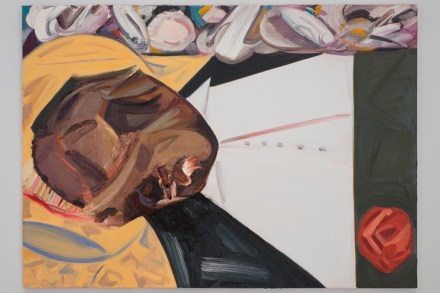
It’s usually best to ignore the indignant fury of the 21st-century young. We’re used to them now, these snowflakes, posing as victims (though they’re mostly middle-class), demanding ‘safe spaces’, banning books and speakers. Best to rise above them, deadhead the camellias. Attention, especially from the press, acts on entitled millennials like water on gremlins — they start proliferating and develop a taste for blood. But then sometimes they go too far. Ten days ago, the Whitney museum, on the New York bank of the Hudson, opened its biennial exhibition of contemporary American art. It’s an exciting show, full of vim and diversity.

Our dangerous impulse to make sense of murder

‘On Friday noon, July the 20th, 1714,’ begins the small, perfect 20th-century novel The Bridge of San Luis Rey, ‘the finest bridge in all Peru broke and precipitated five travellers into the gulf below.’ In the coincidence of crossing the bridge at the same time, explains the writer, Thornton Wilder, these five seemed to have been assembled by pure chance. Or had they? He entitles this first chapter ‘Perhaps An Accident’. He spends the rest of his book tracing the lives of each until the moment when, in a twang of rope, fate hurled all together into the abyss. Thus is the reader’s interest engaged for the human histories that unfold. But Wilder, an American Christian humanist, falters in his rationalism.

Brexit brings us endless little beakers of joy

The thing that got me about the photo-graph which prompted the Daily Mail’s harmless but now infamous headline ‘Never mind Brexit — who won Legs-it!’ was what I shall call the Sturgeon Lower Limb Mystery. In the photograph, the SNP leader seemed to be possessed of two slender and very long legs indeed. Whereas we know from television news footage that her legs are only seven inches long from her toes to that bit where they join the rest of her body. Walking to Downing Street for meetings, or being interviewed on the hoof by camera crews, Nicola Sturgeon usually resembles a slightly deranged Oompa--Loompa, or, as many have commented before, Janette Krankie.

A way for both sides to claim Brexit victory

Theresa May doesn’t do drama. She regards order as both a political and personal virtue. And this goes a long way towards explaining why she is Prime Minister. After the Brexit vote last June and David Cameron’s resignation, the Tories had had enough excitement. They turned to the leadership contender who was best able to project a reassuring sense of calm. It is in keeping with May’s approach that she has drained the drama from the triggering of Article 50, the start of the two-year process for leaving the EU. Other prime ministers might have been tempted to do it with a flourish — to feel the hand of history on their shoulder. But May has removed any sense of surprise by having her spokesman blandly declare that she’ll be sending the letter on Wednesday.

The real BBC shocker: occasionally it isn’t biased

There’s one thing that bothers me a lot about the letter sent by ‘more than 70’ MPs to the director-general of the BBC complaining about bias in its coverage of the Brexit debate. There are 650 MPs in the House of Commons, of whom 330 are Conservative. So does this mean that more than 570 of our elected representatives, including the vast majority of Tories, think the BBC is doing a bloody good job and is an exemplar of impartial reporting? If so, I suspect they have been secretly lobotomised — perhaps by members of the BBC’s impeccably fair and impartial editorial board. In the dead of night. Silently, without remorse. Chloroform, a hacksaw, a scalpel.

For a real Oxbridge education, go to Durham

‘Should I just have done with it and tell them they’re a bunch of tossers?’ I was on my way to speak at the Durham Union. The motion was ‘This House believes the NHS is out of date’. And, as usual, I was on the ‘wrong’ side of the debate — so why should I even bother? You know beforehand which way the vote is going to go at any university debate these days: the one which enables the snowflakes most easily to signal their virtue. But, on the spur of the moment, I decided to give Durham the benefit of the doubt. ‘I was going to be incredibly rude to you,’ I began. ‘Which you totally deserve for being a bunch of snowflakes who are going to vote against the motion because hashtag “I heart the NHS”.

Juncker is now the hardest Brexiter there is

The best thing about being a Remainer is obviously the dinner parties, where we all sit around being incredibly well-heeled in leafy Islington. Bloody love a good heel, I do. And a leaf. Honestly, you haven’t lived until you’ve heard Eddie Izzard and Nick Clegg crack jokes at each other in French, as Lily Allen and Matthew Parris do impressions of old people from Northumberland, while in the background Bob Geldof and Professor Brian Cox duet on the piano. It’s almost literally how I spend almost all of my time. Whereas Leaver dinner parties, so I’m told, are just IDS and a Scotch egg. The worst thing about being a Remainer, though, is Jean-Claude Juncker. Indeed, I’d go further and say that he’s the worst thing about the European Union altogether.

You don’t have to be good to do good

I am a regular listener to the Sunday morning service just after eight on BBC Radio 4. It’s a habit owed to my old bedside clock radio. Purchased in 1978, its controls have gone wonky and the radio takes ages to retune; so I just leave it on Radio 4 all the time. Every week, therefore, I awake on Sunday to the sound of hymns. I like hymns. Their melodies and words are often trite, their message sanctimonious, but from a churchgoing boyhood I know them so well, and early on a Sunday morning there’s something comforting in the familiar. Besides I’m not a very fierce kind of atheist.

Prisoners, phones and Amazon’s bottom line

On the Amazon page that sells the world’s smallest mobile phone, the reviews are mainly about putting it into your bottom. ‘What more can you ask for,’ writes a man called John Doe, ‘than this ergonomic phone that fits snugly in your rectum?’ Sean writes, ‘No anal problems!!! Didn’t hurt my bum at all!’ Pookey says it’s ‘easy to butt dial’, although may be talking about something else. For another customer, the big problem is that ‘you can barely feel the vibrate function when it is concealed’. Although don’t worry, because ‘Bluetooth reception is OK’. Why ever take it out? Many of these phones are advertised under the slogan ‘Beat The Boss!

Europe’s politicians rightly feel extinction breathing down their necks

Allahu Akbar! Greetings from Samsun, where Turkish protestors — their eyeballs spinning in orgasmic Islamic rage — tried to set fire to the Dutch flag while chanting the usual ‘Allah’s dead good’ stuff. They used cigarette lighters and some lighter fuel and up it went — and was then jubilantly trampled on by the inflamed, howling masses. Except that it wasn’t the Dutch flag — they had got hold of the French flag by mistake. I wonder if any of the similarly inflamed Turkish protestors in the Netherlands would have noticed? My guess is most of those demonstrating in Rotterdam had spent their entire lives in the Netherlands, but possibly still wouldn’t know what the country’s flag looked like.