Columns

Why can’t we remember our first few years?

I begin this column on a train from Paris to London. Opposite me are a mother and baby. I don’t know them and will probably never see them again. The baby is nine months old and called Gabriel. A genial and relaxed child, he is grinning at me and waving his soft-toy giraffe. He’s wearing bootees, white socks polka-dotted with little red hearts, pale burgundy trousers and a grey top. He seems uninterested in northern France flashing past our window, though his mother has held him up to look; but he is taken with this new stranger, your columnist. And I reflect: is it not very odd indeed — does it not require explanation — that Gabriel will never remember any of this? It preoccupies him now.

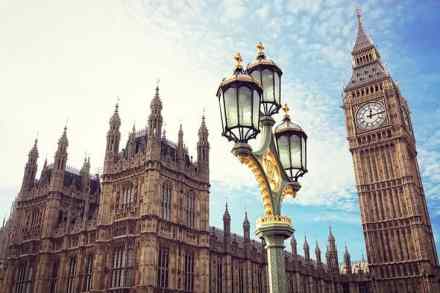
MPs aren’t the elite – faceless bureaucrats are

I see that the most boring conversation in the nation is back. The one even worse than people in the country telling you that the only real difficulty in getting to their part of Gloucestershire/Norfolk/the Orkneys is the drive out of London. I refer to, of course, the reform of the House of Lords. The debate is perennial because there is no good answer to it. The ‘cash for peerages’ scandal comes around every few years because it is unsolvable. If you don’t offer inducements for political donations then what sane person would give millions of pounds to a political party? Besides which, all the constitutional alternatives are worse.

The dangerous pleasure of hating men

I have Netflix, and in particular the series Maid, to thank for the startling discovery of how easy it is to slide into a form of man-hating — not a righteous feminist rage, but a sort of dopey, palliative, unthinking misandry. Maid was released last month, and it’s already one of the stand-out Netflix successes of 2021. (It was announced last week that it’s set to take over Queen’s Gambit as the most-watched Netflix miniseries.) The show is catnip for women, and after several late nights, letting one episode tip into another, I can see why. It’s based on the real-life memoir of a woman in the US who fled an abusive boyfriend and supported herself and her small daughter by working as a cleaner.

Kamala Harris and the problem with racist trees

I was intrigued to learn that Kamala Harris, the Vice President of the US, is worried about racist trees. I have always held trees in the deepest suspicion: it is their long-abiding silences which worry me. As we know from Black Lives Matter, ‘Silence is violence’ — and trees, for literally aeons, have been conspicuously silent on the matter of white privilege and racism. To follow this logic, then, trees are inherently violent. Nasty, leafy bastards. This certainly seems to be what Ms Harris thinks. During a visit to Nasa, instead of asking those space boys how to reverse park a shuttle, she instead became obsessed with keeping an eye on trees.

Can Boris weather this new storm?

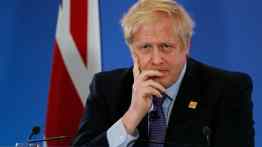
The row over MPs’ outside interests has landed Boris Johnson in one of the most uncomfortable positions a prime minister can be in: he has to choose between being on the wrong side of public opinion and his own backbenchers. What makes matters worse is that his own misjudgment got him into this position. Even a ministerial loyalist admits that: ‘It’s up there with the biggest mistake.’ The government’s attempt to block the standards committee’s guilty verdict against Owen Paterson and change the rules surrounding MPs’ conduct was so brazen that it has, inevitably, created a row about second jobs for MPs.

Do you really need to see the GP in person?

Only later, perhaps even a decade later, as the pandemic of 2020-22 shrinks in our rear-view mirror, may we be able to assess its enduring consequences. So I am only speculating when I suggest that one of these may be the beginning of the slow death of general practice in the United Kingdom. And, no, this will not be a column attacking Britain’s GPs, whom I think to be mostly dedicated and hard-working men and women whose careers are demanding, whose work is difficult, and who are not paid excessively for the hours and expertise they bring to their vocation. Rather as with the class for which we use the generic term ‘politicians’, public discontent about ‘GPs’ is felt towards the generality.

Brace yourselves for Kamala Harris vs Donald Trump 2024

For Democrats, like the ‘insurrection’ of January 6th, the Trump policy of separating illegal-immigrant parents from their children in 2018 has been the political gift that’s kept on giving ever since. In 2020, the conspicuously inhumane protocol provided a rallying cry for candidates in the primaries and later for Biden as nominee. True, the policy did have a rationale beyond sheer sadism. American law restricts the number of days border agents may detain the underaged and likewise constrains children’s deportation.

Three little words that could cost Boris

Boris Johnson knows the value of three-word slogans. ‘Take back control’ and ‘get Brexit done’ helped propel him to his two greatest electoral triumphs. But another three words that no one would ever put on a campaign poster might determine the success of his premiership: public service reform. Johnson has taken an unusual decision for a Tory prime minister. He has chosen to raise personal and business taxes to put more money into public services. This gamble may pay off if people feel that services have improved. If they do not, he risks an angry electorate who are paying more tax yet not getting anything extra in return. No. 10 is aware of this danger, which is why Johnson puts such an emphasis on delivery. But this is more difficult than it sounds.

The burden of being a Newcastle United fan

The second thing I learned about football, after moving to London, is that you can never, ever switch your allegiance. That was unfortunate, because the first thing I discovered was that I liked Newcastle United and had already chosen them as my team. It’s been fairly relentless pain ever since. In 2016, I watched Newcastle get relegated. They bounced back to the Premier League the next season, but it’s been utter mediocrity ever since. I’ve followed them from stadium to stadium, unwavering in my support, cheering on often extremely boring and disappointing football. I like the idea of loyalty in sports; to ditch a team because they depress you would show weakness of character. It doesn’t matter how awful Newcastle are, I thought, nothing could put me off.

Who owns the language?

The mayor of London, Sadiq Khan, is giving local residents £25,000 grants to enable them to change the names of the roads in which they live. Some Londoners, I believe, find it uncomfortable to live in a street which has a name redolent of colonialism. Fair enough. I hope, though, that Sadiq will also give grants to right-wing white neighbourhoods of the capital so that the residents there can change the names of roads to make them more redolent of colonialism — such as Cecil Rhodes Avenue, or Zulus 0 British Army 5 Crescent. Or perhaps install a name which commemorates the mayor himself, such as Vacuous Dwarf Close. This war on history, tradition, rationality, logic and complexity (known in short as ‘woke’) continues apace.

What this Budget tells us

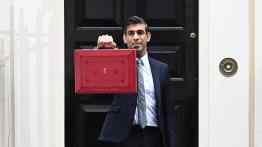
The Budget and the spending review gave the clearest indication yet of what the post-Covid government might look like. During the height of the pandemic, government spending exceeded 50 per cent of the economy for the first time since 1945-46. Even this year, public spending will be higher than when Denis Healey had to seek a bailout from the International Monetary Fund in 1976. Such spending has long-lasting consequences. The tax burden is now at its highest level in terms of GDP since the 1950s and is likely to stay high for some time. It will take quite an effort to return the government to its pre-pandemic size. The risk is that the UK’s ageing population will make this task particularly difficult.

What if Clinton had come clean?

What if Bill Clinton had told the truth? Would America’s sexual and political history be different? The thought occurs because of the new TV drama Impeachment (being shown in Britain on BBC2) about the Monica Lewinsky affair. Somewhat unfairly to both main parties, it is part of the American Crime Story series. Previous subjects have included O.J. Simpson and Andrew Cunanan, who killed Gianni Versace. It’s a bit rich putting Bill Clinton in the same bracket as these murder cases. Nonetheless, the result is intriguing, not just because of the magnificent acting and production — and not only because in the quarter of a century since the world’s most famous blow job a certain axis of society seems to have turned.

My advice to Dave Chappelle

I’m accustomed to a sense of urgency in relation to Netflix offerings because the streaming service often buys short-term rights that abruptly run out. But this time, I rushed to see Dave Chappelle’s new stand-up special The Closer lest Netflix’s own disgruntled employees succeed in getting the performance taken down. Strictly speaking, the affronted staff aren’t demanding the show’s withdrawal, but it’s hard to see what else the proposed employee walkout on Wednesday was designed to accomplish. After all, in the olden days if you didn’t like something on television you just didn’t watch it, but in our enlightened times you make damned sure no one else can watch it either.

The case for road pricing

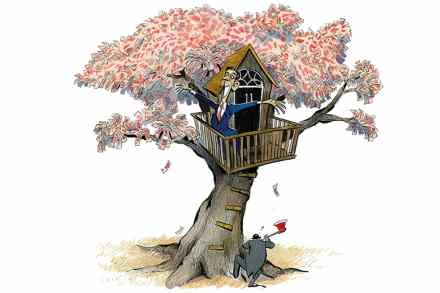
Thornton Wilder remarked that there are individuals who fall in love with an idea long before its appointed rendezvous with history. We hurl ourselves against the indifference of the age. It is now four decades since one of my first columns was published in London’s Evening Standard. In it I proposed an idea of which (if you read on) you’ll hear more. I got no response. It’s nearly 20 years since I wrote essentially the same piece as a whimsical side column for the Times. Labour’s Alistair Darling had called for debate on the idea. It never happened and my column attracted little notice. Fifteen years later, excited by a competition the Wolfson Foundation ran for the best proposal for implementing the idea, I wrote a serious 1,000-word column for the Times.

The ideology of madness

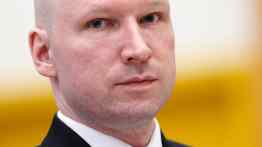
On the wooden jetty from which the ferry used to depart for the little island of Utoya, there stood for a while a small obelisk around which people deposited flowers. ‘If one man can show this much hate, imagine how much love we can show together’ was the marvellously trite inscription on the obelisk: vapid and close to meaningless, in either Norwegian or English. Utoya lies in the Tyrifjorden Lake about 45 minutes north of Oslo and it is where the Labour party’s ‘Workers’ Youth League’ once held its summer camps — until one afternoon in July 2011 when a man called Anders Breivik turned up, heavily armed. Breivik murdered 69 people on Utoya, 33 of them under the age of 18.

The problem with ‘David’s law’

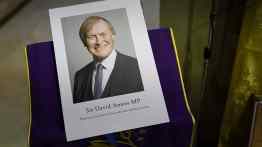
Two members of parliament have been killed in the past five and a half years. This, one long-serving MP laments, is the kind of statistic you would expect in a failing state. One of the shocking things about Sir David Amess’s murder is that many MPs weren’t surprised by it. Parliamentarians are acutely aware that when they are away from the Palace of Westminster, with its armed guards and security scanners, they are a soft target. Their job requires them to mix with the public and that involves a certain level of risk. One senior Tory MP points to how during the Troubles in Northern Ireland, MPs who were thought to be in particular danger were offered a firearm for personal protection, and argues that an offer like this should be extended to all MPs today.

The legacy of Covid: a much bigger state

Covid transformed the role of the state. During the pandemic, the government did things it would never normally even contemplate. At the same time as it restricted civil liberties, it intervened in the economy to an extent never before seen in peacetime. Through the furlough scheme, close to £70 billion was spent on paying people’s wages. Other government economic interventions seem minor in comparison. What is a few hundred million here and there when the state has been spending billions so regularly? History suggests that when the state expands in a crisis, it doesn’t revert to its pre-crisis level once the emergency is over.

The characteristic I most admire in politicians? Petulance

Many negative qualities are ascribed to politicians — name-calling, absenteeism, drunkenness — but you rarely hear of my favourite political emotion: petulance, which has caused us so much public entertainment in the political arena and promises to cause so much more. Think of Dominic Raab refusing to accept his demotion until he was made Deputy Prime Minister; the spat between Liz Truss and Dominic Raab over who gets to stay at Chevening; Angela Rayner’s scathing letter on Commons notepaper to a Brighton shoe shop after it failed to put a pair of £195 heels aside for her; the spectacular Starmer meltdown in February when Sir Keir went ‘puce’ and kept hissing at Boris Johnson ‘It’s not true, it’s not true!

Israel has been spared Sally Rooney

I have not watched the BBC’s new period drama Ridley Road because I knew it would be impossible for the corporation to commission any series about anything without grafting onto it facile and usually pig-ignorant observations which suggest that history always reveals that the BBC left-liberal mindset is right about everything. So it seems to be from reviews I have seen from the likes of Melanie Phillips and one or two others. Ridley Road concerns the 62 Group’s struggles against fascism and anti-Semitism in east London in the 1960s, and especially Colin Jordan’s National Socialist Movement (NSM).

The pandemic has made cynics of us all

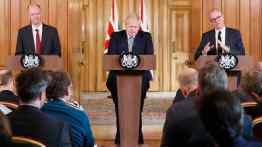
A report by MPs into the spread of the coronavirus has concluded that the government’s approach constituted one of this country’s worst ever public health failures. The MPs say the early fondness for herd immunity plus the delay in locking the country down ended up costing thousands of lives. What makes this worse is that everything the government did was done at the suggestion of its leading scientific advisers, Whitty, Vallance and Sage. And so one feels another slippage of faith. On this occasion relating to the imperium not of government, but of scientists. I know some people will be amazed that I should have any remaining trust in government scientific advisers. But everybody has to trust somebody, and I tend to trust people who know about things I do not.