Columns

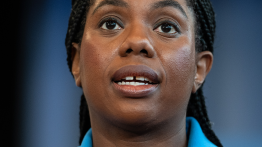
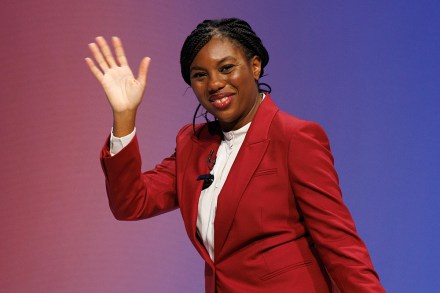
Don’t write off Kemi Badenoch

In the great game of musical chairs that is British politics, it’s impossible to foresee which contestant will be left with nowhere to sit when the music stops. Keir Starmer won a landslide victory last July, but has since behaved like a child who has allowed the excitement to go to his head. He agreed immediately to cut the universal winter fuel payment, which made the government look ready to risk short-term unpopularity in pursuit of serious long-term goals. Yet when the unpopularity arrived, he abandoned the measure and with it any claim to long-term thought. As a contributor to one of Lord Ashcroft’s focus groups said this week: ‘He made himself look bad doing it, but he’s made himself look even worse going back on it.
The war on normality

Exciting news. To ‘showcase the vibrant diversity of both marine life and the LGBTQ+ community’, the visionary Bristol Aquarium has just announced a one-off tour of non-binary fish. On 28 June, its Sunset Seas exhibit will ‘celebrate love, life and the beauty of being yourself’ by illuminating with brightly coloured lights a collection of creatures that ‘defy the binary, change sex and mirror the spectrum of identities found in the human world’. Adults-only tickets are a mere £18.50, so rush to reserve your place now. We’re presumably to conclude from this racy reveal that because some fish can change sex and hermaphroditic undersea organisms are commonplace, for humans sex is a phantasmagorical multiple choice and we can change sex, too.

The derangement of Harvard

It is 60 years since William F. Buckley said that he would ‘rather be governed by the first 2,000 people in the Boston telephone directory than by the 2,000 people on the faculty of Harvard University’. Yet even the godfather of American conservatism would be surprised at how much more attractive the folks in the phone directory appear today. Harvard is currently having a major row with Donald Trump’s administration. It results from the way in which the university responded to the 7 October attacks in Israel. While the Hamas massacres were still on-going, more than 30 Harvard University student organisations signed a letter which claimed to hold the ‘Israeli regime entirely responsible for all unfolding violence’.

How Covid broke Britain

It was at about this time, five years ago, that the workers at my (then) local farm shop began wearing plastic bags on their feet, over their trainers. This was because of a report somewhere that said the Covid virus hung about on the ground and then leapt, with great agility and cunning, on to people’s shoes, from whence it swiftly decamped to your bloodstream and killed you. We were still rubbing raw alcohol on to our hands wherever we went, if you recall, because whatever you touched harboured the virus. You couldn’t actually go in the farm shop but had to give your orders to the staff who manned a table out front, from which you were instructed to stand one metre back. People with short arms had difficulty reaching their groceries.

The rise of the Red Queen

‘All Labour prime ministers go gaga for the Queen,’ sighed Cherie Blair, played by Helen McCrory, in the 2006 film about the death of Diana, Princess of Wales. Her words were fictitious but the sentiment is real. From Ramsay MacDonald to Harold Wilson, left-wing prime ministers invariably end up as royalists. The current cabinet is no exception: former republicans such as Lisa Nandy have been charmed by Charles III. Even Keir Starmer – who once boasted on camera that he ‘often used to propose the abolition of the monarchy’ – is said to have a warm relationship with the King. Yet geniality is only one reason why Labour loves the monarchy. The King has been a helpful sovereign to Labour ministers.

The battle over fishing is a sideshow

So far, so routine. Labour wants to update and if possible upgrade the United Kingdom’s arrangements with our immediate neighbour and by far our biggest trading partner, the European Union. As any new government would. The recent destabilisation of world trade adds urgency to the task. So our government goes to Brussels and (after the customary silly European ‘to the wire’ theatrics) hammers out what looks like a sensible improvement on the existing unnecessarily irksome restrictions and procedures. The deal involves – inevitably – a few concessions on both sides (we concede a bit on fishing) but overall looks modestly advantageous for us and for them. A thoroughly workmanlike result.

I’ve reached zero tolerance on zero tolerance

I know an astonishing 89-year-old who climbs mountains, uses a chainsaw and has the muscular, vice-like grip of a gym-built thirtysomething. He refuses pills and painkillers and considers it vital to embrace life’s most horrifying experiences. Last week the astonishing 89-year-old tore his Achilles tendon (leaping into a moving car), was driven to A&E and referred for an ultrasound. On the way to the scanning room, helped along by a male nurse, he put his injured leg down by mistake and yelled: ‘FUCK!’ At this, the nurse turned on his heel and walked off, saying: ‘I don’t have to put up with this.

What do ‘Labour values’ actually mean?

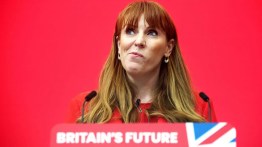
Keir Starmer’s appearance before Labour MPs on Monday was a crowded affair. Such was the level of excitement that organisers set up an overspill room in parliament. A fortnight after a dire set of local election results, the Prime Minister promised to fight the next election ‘as Labour’. Yet his troops seem increasingly divided as to what that actually means. More than two dozen MPs spoke at that meeting, criticising Starmer’s Gaza policy, migration speech and welfare cuts. It is those benefit changes that are causing the most immediate grief to the whips. Ministers want to restrict the eligibility requirements for disability payments, meaning only those with the most serious conditions can claim support. The hope is this will save £5 billion a year by 2030.

Reform and the problem with the Overton window

In the space of about one month a further 9 per cent of the electorate has decided that the views of Reform UK accord with their own take on the world, putting Nigel Farage’s party well ahead of the government in the polls and leaving the Conservatives trailing Ed Davey’s cavalcade of grinning village idiots. The Greens are not that far behind the Tories, either, on 10 per cent. This means that policies which were once considered extreme, such as the immediate joyous jettisoning of all that diversity, equality and inclusion rubbish and drastic action taken against asylum seekers, are now considered acceptable by almost a third of the electorate. Good.

How English are you really?

I’ve struggled to ascertain from afar the true nature of Germany’s Alternative für Deutschland. Progressive media love to quote its supporters’ politically off-key comments, but no party can answer for a membership’s every daft remark; even the odd dodgy politician comes with the territory. Yet the country’s two mainstream but increasingly unpopular parties – a disenchantment Brits will recognise – portray the AfD as chocka with swastika-waving Nazis building scale models of Treblinka in their basements. After anti-Trump Democrats screamed ‘Hitler! Hitler! Hitler!’ until they were blue in the face last year, I can’t help but view the German elite’s hyperventilation with scepticism.

Should you be arrested for reading The Spectator?

Regular readers will know that I have an obsession with home burglaries. Specifically those occasions when a burglar goes into a British home, helps himself to the contents of the household and finds that the last people on his case are the British police. Scanning some recent burglary statistics, I was struck again by the almost miraculous failures of force after force. Take Kent Police. In a recent breakdown of crime statistics, the force managed a career high. In one of the areas where they are meant to have oversight, there were 123 home burglaries. Of those 123 burglaries, they managed a great, round zero in their detection rate of the burglars. Or 0.

In defence of virgins

If we were really an island of strangers, as Sir Keir Starmer attested this week, then it might be OK. The real problem is that we have to interact with the bastards, so they cease being strangers and start being people who have a function in our lives. The old cliché had it that in the UK you were never more than ten metres from a rat and this is probably still true, except it’s five metres in Birmingham. But it is also true that you are never more than ten metres from a skank. A foreign skank, a British skank, makes no odds. Someone pig-ignorant and witless but possessed, nonetheless, of a kind of neolithic cunning. Probably tattooed, probably insistent that they shouldn’t be judged.

Kemi Badenoch now leads the ‘Tinkerbell Tories’

Market choice has long been an article of faith in the Conservative party. But the Tories are less keen on competition when it comes to their own fate. Traditionally, the party’s historic market share ensured that, after some time in opposition, the pendulum eventually swung back their way. That rule no longer holds true. This month’s local elections offered a painful case study in consumer choice. With five serious parties on offer, just 15 per cent of voters chose to back the Conservatives. Polls suggest that, in a general election, the onetime ‘natural party of government’ would be reduced to barely two dozen seats. ‘Existential’ is the word favoured by many Tories to describe their party’s plight. Inevitably, some want to ‘sack the management’.

Kemi shouldn’t play the Trump card

I doubt I’m alone among Spectator readers in feeling a certain slight but nagging discomfort when I hear those on the left in British politics tearing into the present President of the United States. Why so? one asks oneself. Have I a shred of sympathy with this monster? No. Can I do other than deplore the attitudes and personal behaviour of this moral toad? Of course not. Do I for a minute agree with the way he’s handling the presidency – that machine-gun fire of executive orders and constitutional improprieties?’ By no means. Could I by any stretch of the imagination endorse the preposterous policy goals Donald Trump is wont to shout at us in capital letters? Don’t be ridiculous. And yet.

Our politicians find truth more painful than fiction

Do you remember the great Adolescence debate? It may feel like an age ago, but way back in March Netflix released a drama about a 13-year-old caucasian boy who stabs a female classmate to death. For a time it was one of the most watched shows on Netflix. British politicians and opinion writers spent weeks chewing over this entirely fictional programme. What could we learn about the epidemic of white 13-year-old boys from decent two-parent families killing their female schoolmates? Should everyone watch it? Should anyone who hasn’t watched it be hounded from public life?

The changing face of Nigel Farage

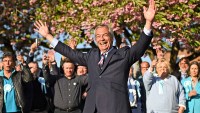
On Monday night, a hundred Reform staff and donors met at a Marylebone pub to toast the local election results. A jubilant Nigel Farage addressed his troops, who ran up a five-figure bill. They had good reason to celebrate. With 30 per cent of the vote, Reform crushed Labour (20 per cent) and the Tories (15 per cent). They won 677 wards, ten councils and a fifth MP in the Runcorn by-election. Certain results were particularly satisfying: in Ed Miliband’s Doncaster North, Reform won more seats than any other party. Three speeches defined Reform’s campaign. First, there was the Birmingham rally at the end of March. Farage arrived on a JCB digger, presenting himself as a ‘Mr Fixit’ for the woes of ‘Broken Britain’.

The Reformation is here

These are dark and bewildering days for Britain’s community of Good People, the ones who – insulated from material discomfort through large incomes and in many cases large inheritances – believe that everything can be accomplished simply by being kind and, further, by wearing one’s kindness as a badge which on the surface proclaims gentility and compassion but which, not very far below, is a polite voice insisting: ‘I am considerably richer than you, which is why I have these beliefs.’ These are the people who could not possibly vote Reform UK because it would be akin to having an avocado bathroom suite, or net curtains, or a bright-yellow Nissan Juke.

The unbearable smugness of the White House Correspondents’ Dinner

Polls occasionally appear which reveal the extent to which people trust – or rather don’t trust – journalists. In one last year, something called the Edelman Trust Barometer found that just 31 per cent of the British public said they trust the media, a fall of 6 per cent in a year. This puts the media class at a level of trust somewhere between politicians and burglars in the public’s eyes. Still, any British hacks reading this can console themselves with one thing: at least most of our media does not cloak itself in the mantle of the utmost righteousness and hold itself out as some sort of priestly class. The same poll discovered that only 39 per cent of the American public trust journalists.