Classical

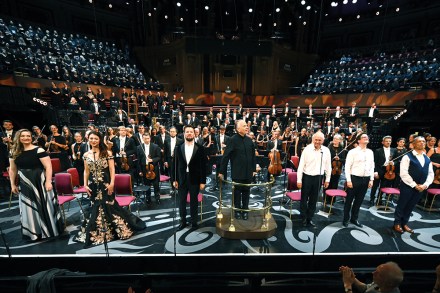
The orchestra that makes pros go weak at the knees

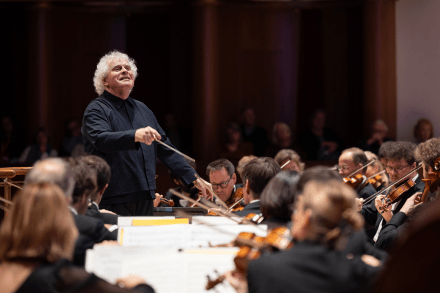
Stravinsky’s The Firebird begins in darkness, and it might be the softest, deepest darkness in all music. Basses and cellos rock slowly, pianissimo, in their lowest register; using mutes to give the sound that added touch of velvet. Far beneath them rumbles the bass drum: a halo of blackness, perceptible only at the very edge of the senses. In Liverpool Philharmonic Hall, with Sir Simon Rattle conducting the Bavarian Radio Symphony Orchestra, you felt your hairs tingle before you discerned a note. Seconds later, the very air within the hall seemed to be quivering with sensuous, engulfing bass warmth. You can be sure that Rattle anticipated that sensation; planned for it, in fact, from the moment that he confirmed this short British tour with his new orchestra.

My unofficial music teacher

In the early 1970s my father moved offices and I was plucked out of my cosy prep school in Surrey to land in the eccentric surroundings of Presentation College. My new school’s modern block was surrounded by decaying Edwardian villas occupied by Irish teaching brothers with impenetrable accents. There was a broken aeroplane on one of the lawns; I never found out how it got there. Talk about a culture shock. Already I was besotted with classical music; to say that the brothers didn’t share my enthusiasm is putting it mildly. There wasn’t a flicker of interest in eight years – something that puzzled me until I read Thomas Day’s book Why Catholics Can’t Sing, which argues that, in the Irish diaspora, highbrow music stirs folk memories of English colonial occupation.

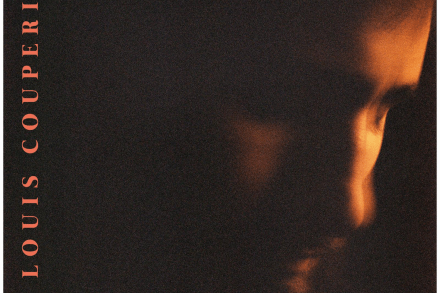
The mind-bendingly creative works of Louis Couperin

The French lutenist Charles Fleury, Sieur de Blancrocher, is one of those unfortunate historical figures who are chiefly remembered because of how they died. He was climbing the stairs to his apartment near the Louvre after a court dinner in November 1652 when he slipped, fell head over heels and was dead a few hours later. We don’t know, though people have wondered, whether the wine was to blame. Only one piece of music by him survives, and he would probably be forgotten if he hadn’t been memorialised in several tombeaux – slow memorial dances – by royal composers, one of whom was a young harpsichordist whose genius is only now being fully recognised. Louis Couperin (c.1626-1661) will always be overshadowed by his nephew François (1668-1733).

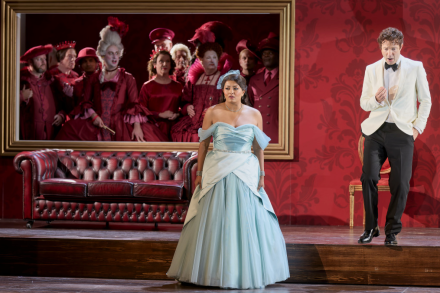
Pure feelgood: ENO’s Cinderella reviewed

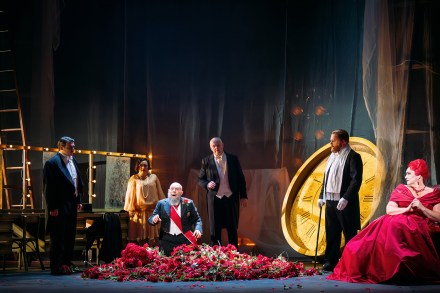
‘Goodness Triumphant’ is the alternative title of Rossini’s La Cenerentola, and you’d better believe he meant it. Possibly my reaction was coloured by last week’s experience with the weapons-grade cynicism of Stephen Sondheim’s Follies, but honestly – it’s just so sweet. A gentle, put-upon girl gets her fairy-tale ending in the face of stepsisters and a stepfather who are basically buffoons rather than outright villains. We’re in the realm of panto, or children’s TV: nothing really dark can happen here and the only sorcery is worked by Rossini, whose fountain of laughing, crystal-bright invention is as life-affirming as Haydn, if he’d been born 50 years later and in Italy. Pure feelgood, then, for kids of all ages.

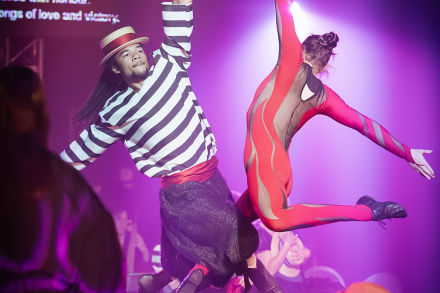
Huge Fun: Le Carnaval de Venise reviewed

Summer’s lease hath all too short a date, but there’s still time for one last opera festival. Vache Baroque popped up in 2020 during that weird first release from lockdown, but to be honest, if you were starting a new festival, late August is probably the best part of the calendar to colonise. The big boys (even Glyndebourne) have left the stage, Edinburgh is done and the Proms are the only game in town. And the place to do it would be within easy reach of the capital: in this case, a fold of the Chilterns just off the rural top end of the Metropolitan Line. Anyway, Vache Baroque seems to have made a name very quickly, and like the more established opera startup at Waterperry, it still has that youthful, hands-on energy: let’s do the show right here!

A revelation: Delius’s Mass of Life at the Proms reviewed

Regarding Frederick Delius, how do we stand? In the 1930s, Sir Henry Wood believed that Proms audiences much preferred Delius to Holst, and most critics back then would have described him as a major British composer. Times change: if you took your music GCSE in the late 1980s, you’ll have sensed that the Bradford lad was no longer quite up there. But you might well have been taught by people who still remembered him as a giant, and there was also the legacy of that greatest of composer biopics, Ken Russell’s Song of Summer, in which Delius’s music explodes in sunbursts of passion and colour against Russell’s austere black and white cinematography.

The rise of cringe

No one wrote programme notes quite like the English experimentalist John White. ‘This music is top-quality trash,’ proclaims his 1993 album Fashion Music. ‘We kindly ask the users of this CD to play it at the volume of a suburban Paris soundmachine or a London underground discman earphone as used by the kid next door.’ Track titles included ‘Epaulette’ and ‘Latin Flutes’. From what I remember – my copy vanished a long time ago – the music was cheap and very funny: tinny and dumb. I was reminded of White recently because trash is back. Everywhere I go, I find composers producing shamefully terrible music. Some deliberately, some inadvertently. What flavour of terrible? Not ugly or discordant. Not camp. More tonal and naff: works woven from the worn-out and iffy.

The excruciating tedium of John Tavener

The Edinburgh International Festival opened with John Tavener’s The Veil of the Temple, and I wish it hadn’t. Not that they were wrong to do it; in fact it was an heroic endeavour. Drawing on three large choirs, members of the Royal Scottish National Orchestra and a sizeable team of soloists, this eight-hour performance was the sort of occasion that justifies a festival’s existence – the kind that, done well, can transform your perceptions of a work or a composer. It was certainly done well, and it certainly transformed mine. I’d never much minded the music of John Tavener. By the fifth hour of The Veil of the Temple, I was beginning to detest it.

Three cheers for the Three Choirs Festival

The Welsh composer William Mathias died in 1992, aged 57. I was a teenager at the time, and the loss felt personal as well as premature. Not that I knew him; and nor was he regarded – in the era of Birtwistle and Tippett – as one of the A-list British composers (John Drummond, the Proms controller of the day, was particularly snobbish about Welsh music). But Mathias was a composer whose music I had played; whose music, indeed, me and my peers actually could play. His Serenade was a youth orchestra staple. It felt good to know that its creator was alive and well and working in Bangor, and when he wrote his Third Symphony I listened to the première in my bedroom, live on Radio Three. Like I say, it felt personal.

Alfred Brendel was peerless – but he wasn’t universally loved

In middle age Alfred Brendel looked disconcertingly like Eric Morecambe – but, unlike the comedian in his legendary encounter with André Previn, he played all the right notes in the right order. OK, so perhaps I’m selling the maestro a bit short: I do think Brendel, who died on 17 June at the age of 94, was a peerless interpreter of the Austro-German repertoire, and for a time in the 1970s had a better claim than any other pianist to ‘own’ the Beethoven and late Schubert piano sonatas. But some of the media tributes have been embarrassingly uncritical, implying that Brendel was universally loved. He wasn’t, and he didn’t want to be.

Astonishing ‘lost tapes’ from a piano great

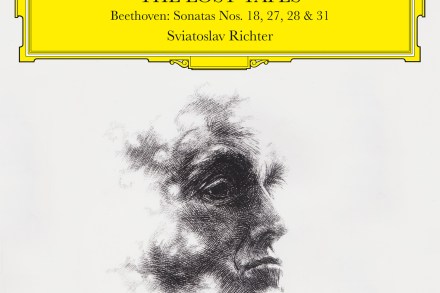
These days the heart sinks when Deutsche Grammophon announces its new releases. I still shudder at the memory of Lang Lang’s 2024 French album, in which he drooled over Ravel’s Pavane pour une infante défunte; when I reviewed it I suggested that if the poor girl wasn’t dead when he started, then she certainly was by the time he’d finished. Now she’s been killed again, this time by the guitarist Robin Scherpen, whose Ravel Reimagined offers us ‘a peaceful and serene soundscape’. Then there’s Rêverie from Nemo Filou, a trio whose cocktail-lounge noodling allows ‘the listener to drift off into bliss’, and Sleep Circle, a ‘re-recorded version of the 2012 project Sleep’ by DG’s in-house snoozemeister Max Richter.

Poulenc’s Stabat Mater – sacred, fervent and always on the verge of breaking into giggles

It’s funny what you see at orchestral concerts. See, that is, not just hear. If you weren’t in the hall during Poulenc’s Stabat Mater would you even realise that the tuba uses a mute in the final chord? Visually, it’s hard to miss – the thing’s huge, whether standing on the floor or being heaved into the instrument’s bell. The sound? A muffled, matte effect, quite unlike the usual nasal buzz of muted brass. But how droll of Poulenc, and how utterly in keeping with the raffish, trash-fabulous aesthetic of Gallic brass writing: a world where no symphony is complete without a pair of honking cornets à pistons. And how perfect, too, for this Stabat Mater, a fervent choral work that sounds nonetheless as if it’s about to break into giggles.

The liberating, invigorating music of Pierre Boulez

‘When you’re not offensive in life, you obtain absolutely nothing,’ declares a twinkly-eyed Pierre Boulez in one of the archive films that the Barbican were screening to celebrate the composer’s centenary. What a joy to be reminded of the young Boulez – the unashamed elitist, the unbeatable snob. Not even allies such as Schoenberg (too trad) and Messiaen (‘vulgar’) were safe from his tongue. To Boulez, pop music wasn’t good or bad; it didn’t exist. Ditto his own life. ‘I will be the first composer without a biography’, he proclaimed. Forget that Boulez was entangled in a love triangle with Camus’s mistress and for most of his time on earth screwing his valet, Hans… The music was everything.

The liberating force of musical modernism 

It’s Arvo Part’s 90th birthday year, which is good news if you like your minimalism glum, low and very, very slow. Lots of people seem to. The London Philharmonic’s concert on Saturday night was a reminder of an earlier, less ingratiating Part: the dissident composer in Soviet-controlled Estonia. Hannu Lintu revived Part’s First Symphony of 1963, and there’s nothing remotely minimal about its opening. There’s a swagger of brass, machine rhythms and an onslaught of string chords in which the dissonances don’t feel aggressive so much as mischievous. This is a young composer taking a manic glee in piling on the wrong notes just because he can.

Splendid revival of an unsurpassed production: Royal Opera’s Turandot reviewed

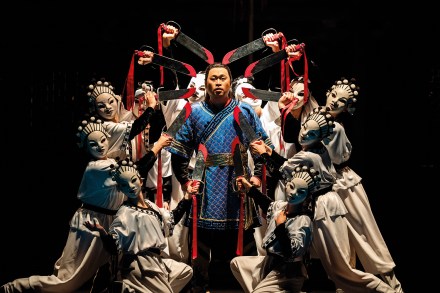
Puccini’s Turandot is back at the Royal Opera in the 40-year old production by Andrei Serban and… well, guilty pleasure is an unfashionable notion these days, but I still feel a batsqueak of shame at enjoying it so much. It’s not the chinoiserie – anyone who believes that an opera based on an 18th-century Italian pantomime should be taken literally is probably beyond help. No, it’s a Spectator headline from years back that still nags. ‘Turandot is a disgusting opera that is beyond redemption’ was the gist of a review of this same staging by the late Michael Tanner, and if it was anyone else you’d put it down to snobbery and move on. But you can’t do that with Tanner, a thinker of piercing intelligence who spent decades interrogating how opera works and why it matters.

Barbara Hannigan needs to stop conducting while singing

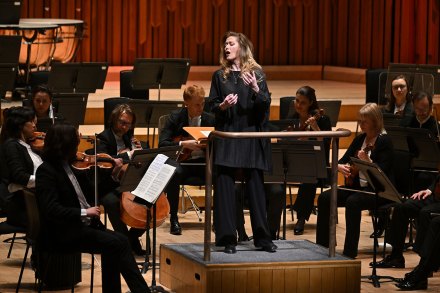
Last week, Barbara Hannigan conducted the London Symphony Orchestra in Haydn, Roussel, Ravel and Britten, though to be honest she had me at Haydn. It’s still relatively unusual to encounter him in a symphonic concert, and more than one promoter has told me that Haydn is ‘box office poison’, which is a shocking description of such life-enhancing music. Perhaps it’s down to sonic overkill. Bingeing on Shostakovich and Mahler has left our emotional reflexes distended and coarsened, and now we feel short-changed if every inch of the concert platform isn’t crammed with extra brass and percussion.

The filthy side of Dame Myra Hess

The photograph on the cover of Jessica Duchen’s magnificent new biography of Dame Myra Hess shows a statuesque lady sitting at the keyboard, hair swept back into the neatest of buns. Add a pair of half-moon spectacles and she could be Dr Evadne Hinge, accompanist to Dame Hilda Bracket. This isn’t to imply that Dame Myra looked like a man in drag, but then neither did the ‘Dear Ladies’ played by George Logan and Patrick Fyffe, some of whose fans thought the singing spinsters actually were women. In their 1980s heyday Hinge and Bracket were national treasures – and so, on a far grander scale, was Dame Myra, who lifted Londoners’ spirits with her National Gallery concerts during the second world war.

A dancing, weightless garland of gems: Stephen Hough’s piano concerto reviewed

Stephen Hough’s new piano concerto is called The World of Yesterday but its second ever performance offered a dispiriting glimpse into the world of tomorrow. A couple of minutes into the finale Hough stopped playing and the orchestra fell silent. ‘I’m very sorry,’ he explained. ‘My iPad is going crazy.’ A murmur of sympathy, mingled with laughter; then Hough signalled to the conductor Mark Wigglesworth and the Bournemouth Symphony Orchestra and they carried on, this time without mishap. But we’d seen it happen, and until last week I’d have told you it was inconceivable. This wasn’t some rash experiment: professional musicians have been using electronic scores for well over a decade, generally without problems.

How to write a piano concerto

My Piano Concerto, The World of Yesterday, began with an email during one of the darker days of the pandemic: would I like to write a score for a movie about a concert pianist writing a piano concerto. As I looked at my concert diary, blank but for Zoom calls, it seemed like a wonderful way to keep me busy. I’d never wanted to write a piano concerto (how to begin?

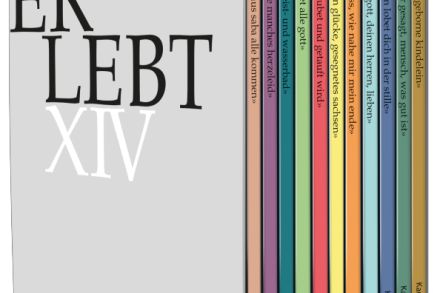
Are these performances of the Bach cantatas the best on record?

Three projects shedding light on the sacred music of J.S. Bach are nearing completion. The first consists of an epic 25-year project to record all the composer’s vocal works – passions, masses, motets and more than 200-odd cantatas – in electrifying performances supplemented by lectures and workshops. At the helm is a Swiss choral conductor renowned for his improvisatory skills – and surely the only baroque specialist to have played Sidney Bechet on a chamber organ. The second project is a guide to Bach’s church cantatas tailored at ‘cultural Christians’; that is, music lovers intrigued but intimidated by their Lutheran theology, unsure how to approach this treasure trove of, at a conservative estimate, more than 100 masterpieces of western civilisation.