Classical

Opera North’s Flying Dutchman scores a full house in cliché bingo

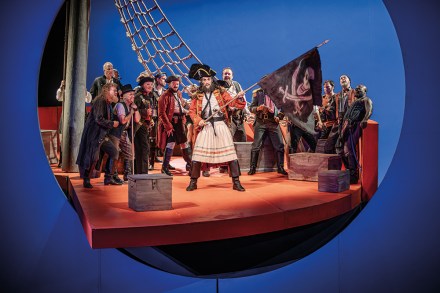
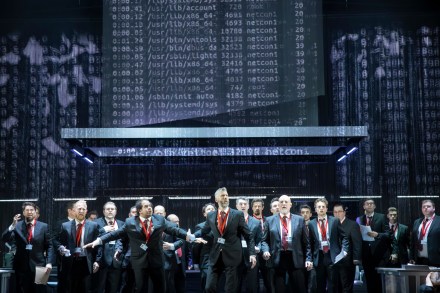
The overture to The Flying Dutchman opens at gale force. There’s nothing like it; Mendelssohn and Berlioz both painted orchestral seascapes but no one before Wagner had flung open the sluices and let the ocean roar into the opera house with quite such elemental power. Garry Walker and the orchestra of Opera North dived into it headfirst, while images of waves were projected on the curtain. If you believe that opera audiences can’t handle an overture without visual distraction (and most opera directors do appear to think this) it’s as good a solution as any. A strong start for a new production. Then the curtain rose and we were in the Home Office.
Classical music has much to learn from Liverpool

They do things their own way in Liverpool; they always have. In 1997 the Royal Liverpool Philharmonic Orchestra launched a contemporary music group called Ensemble 10:10 (the name came from the post-concert time-slot of their early performances). For a decade now, they’ve also administered the Rushworth Prize, an annual competition for young composers based in the north-west. And while classical fads and crises have come and gone, the RLPO has held its friends close and tended its garden. The result? The kind of artistic self-assurance that lets you put your chief conductor in charge of a première by a novice composer, and then call in a Barenboim to guarantee a full house.

The stupidity of the classical piano trio

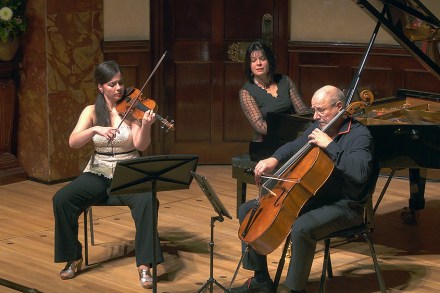
It’s a right mess, the classical piano trio; the unintended consequence of one of musical history’s more frustrating twists. When the trio first evolved, in the age of Haydn, the piano (or at any rate, its frail domestic forebear) was the junior partner, and the two string instruments, violin and cello, were added to make the silly thing audible. Then the piano started to evolve, while its partners – give or take the odd tweak – really didn’t, much. The end result, by the second half of the 19th century, completely reversed the original balance of power, leaving the two string instruments thrashing for dear life against the onslaught of that glossy, black, all-devouring monster, the modern concert grand.

Our verdict on Pappano’s first months at the London Symphony Orchestra

Sir Antonio Pappano began 2024 as music director of the Royal Opera and ended as chief conductor of the London Symphony Orchestra. Around the middle of the year, there was a sort of retrospective; a stock-taking, if you like, as he made the transition to this third act of his career. Warner Classics released a box set of Pappano’s recordings with the Santa Cecilia Orchestra in Rome, where he held the top job from 2005 to 2023. And Pappano published a memoir, My Life in Music – a masterclass in diplomacy. No beans were spilled, and they were never likely to be. You don’t survive 22 years in an international opera house without learning discretion; not, that is, if you intend to remain sane.

Carols are much weirder than we think

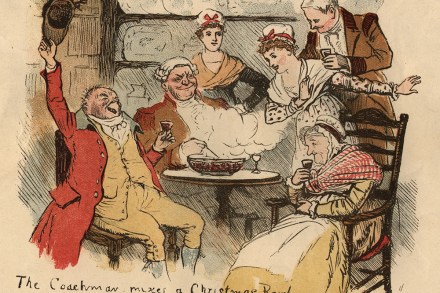
Why, my sharp-minded colleague Tom Utley once asked after a Telegraph Christmas Carol service, should anyone think God would abhor the Virgin’s womb? He was talking about the line in ‘O come, all ye faithful’ that goes: ‘Lo, he abhors not the Virgin’s womb.’ Wasn’t it a bit weird? At last I found the answer in a book, Redeemer in the Womb, by the theologian John Saward, which brilliantly explores the unusual subject of what writers in the early Church thought about the months spent by Jesus in the Virgin Mary’s womb. A pagan presumption in the ancient world was that women’s insides were nasty and shameful.

Vivid, noble and bouyant: AAM’s Messiah reviewed

More than a thousand musicians took part when Handel’s Messiah was performed in Westminster Abbey in May 1791. It wasn’t the only item on the bill, either; it was part of a day-long blow-out that lasted from 11 a.m. to 5 p.m. and also included the whole of Handel’s Israel in Egypt. The crowd came prepared. According to Adalbert Gyrowetz, a Bohemian composer then living in London, the audience munched on ‘hard-boiled eggs, ham and roast meat’ during the intervals. ‘One had almost to wade through a mass of eggshells and other rubbish on the way out of the church,’ he noted.

Spellbinding: Herbert Blomstedt’s Mahler 9 reviewed

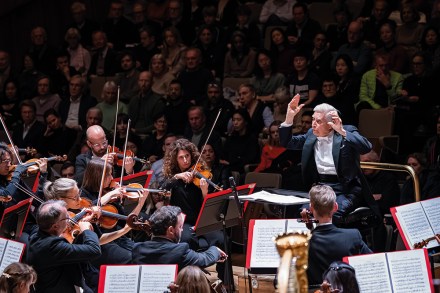
Ivor Cutler called silence the music of the cognoscenti. But there’s silence and there’s silence, and a regular concertgoer hears a fair bit of both. The ability to fold silence into a musical line – to create the impression that a conductor is somehow sculpting a sound which doesn’t exist – is an indicator of high artistry on the podium. This was real: the concentrated hush of 2,700 people listening as if the silence was part of the symphony Conversely, there’s the embarrassing strained silence when, at the end of a work, a conductor decides to keep the baton raised and see how long he can hold back the tide of applause. It’s spray-on sublimity; an attempt to force the illusion of shared transcendence. It’s the musical version of faking an orgasm.

A lively and imaginative interpretation of an indestructible Britten opera

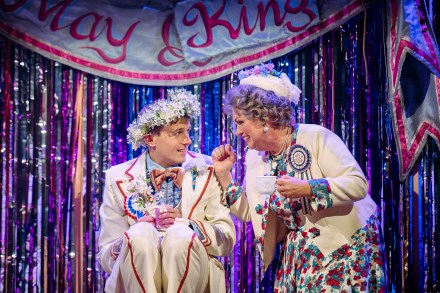
Scottish Opera’s new production of Albert Herring updates the action to 1990, and hey – remember 1990? No, not particularly, and I suspect that’ll be a common reaction if you were actually around back then. The director Daisy Evans was a toddler at the time and she imagines a gaudy, tawdry small-town world of bum-bags, WeightWatchers and decrepit gas heaters. Loxford Village Hall looks like it hasn’t been redecorated since the year the opera was composed, 1947, and that certainly rings true. Blancmange for the May Day feast, though? I’m pretty sure that even under John Major, blancmange was a throwback. But Evans has a show to put on after all, and a pink wobbling gelatine-based dessert is more theatrical than a bowl of Monster Munch.

Schoenberg owes his survival to crime drama

George Gershwin once made a home movie of Arnold Schoenberg grinning in a suit on his tennis court in Beverly Hills but, sadly, never filmed one of their weekly matches. According to one observer, the composer of ‘I Got Rhythm’ played with languid strokes in a ‘nonchalant and chivalrous’ manner against the ‘choppy, over eager’ strokes of the creator of Erwartung. That figures. But how odd that the two men should be friends and passionate admirers of each other’s work. Gershwin paid for the first recording of Schoenberg’s gnarliest string quartet, the Fourth; when the younger man died, Schoenberg described him as ‘a great composer’ and expressed ‘the deepest grief for the deplorable loss to music’.

The BBC Singers Centenary Concert was toe-curling

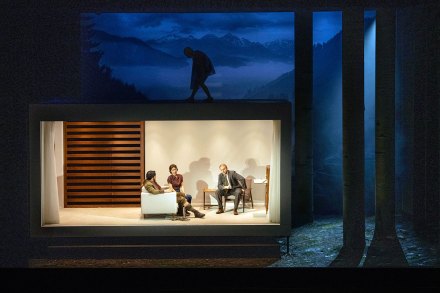
When does a new opera enter the repertoire? Judith Weir’s Blond Eckbert has only had a couple of UK productions since its première at English National Opera in 1994, but it’s been doing reasonably good business on the continent, where its source material – a story by German writer Ludwig Tieck – presumably has more cultural currency. In any case, it’s back now, as part of English Touring Opera’s autumn roster, and both the staging (by ETO’s general director Robin Norton-Hale) and the performances deserve to make Weir’s haunted, oddly unsettling opera a lot better known. If my toes had curled any harder I think I’d have dropped a shoe size As it should be: this is a small opera that makes a bigger and darker impression each time you see it.

Heartfelt and thought-provoking: Eugene Onegin, at the Royal Opera, reviewed

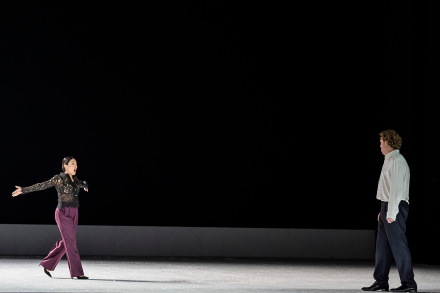
The curtain is already up at the start of Ted Huffman’s new production of Eugene Onegin. The auditorium is lit but the stage is in darkness and almost bare. Gradually, as Tchaikovsky’s prelude sighs and unfurls, the stage brightens and the theatre grows dim. But not before Onegin (Gordon Bintner) – tousle-headed and in a designer suit – has walked out, bowed to the house and retired to a chair at the back of the stage, to wait for the story to call him to life. Any competent maestro can whip up a big noise, but it’s a lot harder to make meaning out of silence Russophiles have grumbled for years about the way Tchaikovsky trimmed and tidied Pushkin’s raffish first-person narrative into seven self-contained ‘lyrical scenes’.

Manacorda’s thrills and spills at Prom 72

At a Hollywood party in the 1940s, the garrulous socialite Elsa Maxwell spotted Arnold Schoenberg, then teaching music at UCLA, looking miserable. So she pushed him towards the piano with the words: ‘Come on, Professor, give us a tune!’ I couldn’t help thinking of those words on Friday night, when we heard the first Proms performance of a symphony written in 1847 by a professor at the Paris Conservatoire. The Third Symphony of Louise Farrenc is full of well-crafted melodic lines, neatly configured to fit maddeningly predictable textbook chord progressions. It’s delicately orchestrated, but even the feathery flutes of the Orchestra of the Age of Enlightenment couldn’t disguise the professor’s failure to give us a single memorable tune. This is not a popular opinion.

The problem with Klaus Makela

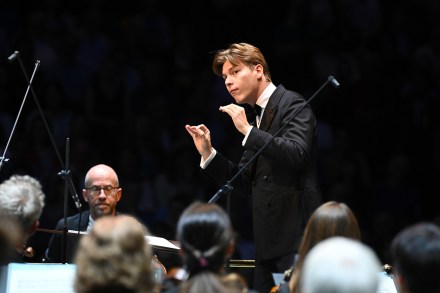
Klaus Makela is kind of a big deal. He’s a pupil of the Finnish conducting guru Jorma Panula – the so-called ‘Yoda of conducting’ – and he’s chief conductor of the Oslo Philharmonic as well as the Orchestre de Paris. Within the next three years he’s scheduled to take the baton at both the Chicago Symphony and the Royal Concertgebouw Orchestra in Amsterdam: blue-chip international positions, with fees to match. So we’re going to be hearing a lot more from maestro Makela, though possibly not in the UK where he has almost certainly (barring the LSO and Covent Garden) been priced out of the market. He is only 28, though apparently his agents would prefer it if you didn’t talk about that.

A lively showcase for a great central European orchestra at the Proms

As the Proms season enters the home straight, it’s moved up a gear, with a string of high profile European guest orchestras. First up was the Czech Philharmonic playing Suk’s Asrael Symphony under Jakub Hrusa before moving on to Janacek’s Glagolitic Mass the following night. These grand, glittering monuments of Czech music were garnished with a couple of relative rarities – Dvorak’s Piano Concerto, played by Mao Fujita, and the Military Sinfonietta, composed in 1937 by (the then 22-year-old) Vitezslava Kapralova, who died at the age of 25. It’s unmistakably the work of a young composer. Xylophone?

Forget the Proms and Edinburgh – the Three Choirs Festival is where it’s at

The Proms have started but there is a world elsewhere, and in Worcester Cathedral the 296th Three Choirs Festival set sail with a concert that couldn’t have happened anywhere else. A few years back I caused grave offence when I described the Three Choirs as a ‘home of lost causes’; as if, coming from The Spectator, that could ever be anything but a compliment. In truth, there’s still no classical music festival that provides such a sense of being plugged into a vital and ancient tradition – of being so close, as Elgar put it to ‘the living centre of music in Great Britain’.

Thank goodness Busoni’s Piano Concerto is returning to the Proms

On 5 August, Ferruccio Busoni’s Piano Concerto will be performed at the Proms for only the second time. It should have been the third time, but a Musician’s Union strike in 1980 forced the cancellation of the concert at which Martin Jones had been booked to give the première. Jones is a fearless virtuoso, still recording in his eighties, but one can’t help wondering whether his disappointment back then was tinged with relief. In one place, the soloist’s fingers must wrap themselves around 128 notes in a single bar Garrick Ohlsson, a long-time champion of the work, describes its difficulties as ‘absolutely immense, and 25 per cent of this piece is the most cruelly difficult writing in any piano concerto’.

When Fauré played The Spectator

Gabriel Fauré composed his song cycle La bonne chanson in 1894 for piano and voice. But he added string parts later and he premièred that version in April 1898 at the London home of his friend Frank Schuster: 22 Old Queen Street, the building currently occupied by this very magazine. I’m not sure how much Fauré gets played at Spectator HQ these days; his music certainly hasn’t been a feature of recent summer parties. Perhaps Fauré himself caressed the ivories where James Delingpole and Toby Young now prop up the bar. Imagine Verlaine’s poetry drifting out into the garden to mingle with Rod Liddle’s cigarette smoke on the moonlit air. L’heure exquise, indeed.

Bristol’s new concert hall is extremely fine

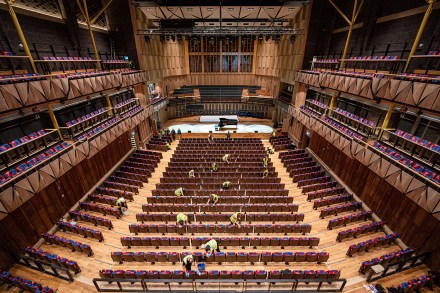
Bristol has a new concert hall, and it’s rather good. The transformation of the old Colston Hall into the Bristol Beacon has been reported as if it was simply a matter of upgrading and renaming. There were probably sound reasons for doing so, but in fact (and despite protests from the Twentieth Century Society) the postwar auditorium has been demolished outright and replaced with a wholly new orchestral hall designed on the best current principles: shoebox-shaped, with much use of wood and textured brick. Butterworth sears his melodies on to the eardrums. Isn’t it weird we still think of the Edwardians as inhibited? Acoustically, it’s extremely fine – not a glamorous sound, but a remarkably transparent one.

Meet the man who says improvisation is the key to Mozart

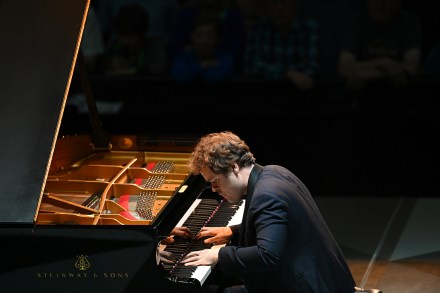
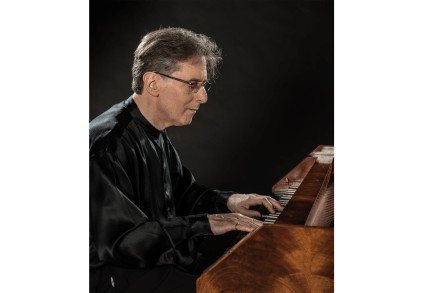
In August 1993, the pianist Robert Levin sat down in Walthamstow Assembly Rooms with the conductor Christopher Hogwood and the Academy of Ancient Music (AAM) to record the complete piano concertos of Wolfgang Amadeus Mozart. Mozart was big – the bicentenary celebrations of 1991 had made a global impact. And Hogwood and the AAM were big too. After their groundbreaking period-instrument Mozart symphony cycle a decade earlier, the 27 piano concertos seemed like a wholly achievable ambition. What could go wrong? ‘For Mozart’s contemporaries, what surpassed even his virtuosity was his ability to improvise’ Only, as it turned out, the entire classical record industry. The project was meant to take a decade but in 2000 the record label, Decca, lost its nerve and pulled the plug.

Across Britain punters are lapping up ultra-trad opera – the Arts Council will be disgusted

Another week at the opera, another evening with an elitist and ethically dubious art form. I love it; you love it; but the authors of the Arts Council’s recent report on opera in England are less enamoured. One issue they identified was that ‘the stories which opera and music theatre tells are failing to connect fully with contemporary society’. Possibly the memo never reached the promoters of Ellen Kent’s spring tour, which since January has visited 40-odd venues not typically served by major opera companies, and has done so without public subsidy. You might imagine that the only commercial outfit to make live opera pay in Wolverhampton, Ipswich and Sunderland would have featured prominently in the Arts Council’s research, but they don’t appear to have been consulted.