Cinema

Film review: Summer in February: as vivid as a Munnings masterpiece

We like our artists to be larger than life and preferably bohemian, even if nowadays we’ve had to accept that the ones we hear about are more likely to live in a castle than a garret. Sir Alfred Munnings (1878–1959) began life as an artist in true bohemian style, carousing with gypsies and horse-trainers, living rough and constantly on the road, painting at full-stretch. On form, he was a superb painter of horses and English country life, and although he is denigrated as a reactionary by the current art establishment, his paintings still sell for large sums. He ended up covered in honours as President of the Royal Academy, but remained a controversial figure, publicly damning modern art in a live broadcast from the RA banquet in 1949.


Michael Douglas is 68 – and for the first time, as Liberace, vaguely sexy

Behind the Candelabra is Stephen Soderbergh’s film about Liberace, starring Michael Douglas and Matt Damon, and already you will have heard two things which, naturally, you will need me to confirm so you can move on with your life. These two things are: 1. It is fabulous. 2. The film was ultimately funded by the television channel HBO, as Hollywood declared it ‘too gay’. I will now deal with both: 1. Yes. It is fabulous. No other word for it, unless that word is ‘glorious’. 2. True and, if I had the time, I would go to Hollywood and knock their heads together.

Gemma Arterton’s new vampire flick, Byzantium, is melancholia at its most trying

Neil Jordan’s Byzantium may well be stylish and moody — so moody, in fact, I wanted to send it to its bedroom with the instruction it could only come down again when less sulky — and Gemma Arterton and Saoirse Ronan may well be fine actresses, but yet another vampire film? Really? True, it plays with the tropes a little. There’s a mother and daughter twist. There are no pointy teeth, just pointy thumbnails. But that thing vampires do, after they’ve sucked human blood and then look up, with blood-smeared lips and chin? That’s here, plentifully, and it always makes me wonder why vampires have such bad table manners. Weren’t they taught any, while growing up?

Film review: Drifting with Something in the Air

Something in the Air is a French film set in Paris in 1971, three years after the uprisings of June 1968; a time when civil unrest was still ongoing but starting to tail off. In France, this film is titled Après Mai, which makes a lot more sense, as it speaks of an aftermath, and I don’t understand why anyone imagined it a good idea to rename it with something quite so nebulous, although I’m guessing there were fears the American market would be too shallow and dumb to get it otherwise, which is always a worry. (Hark at me! When I read recently, ‘Sharon suffers stroke’ I gave no thought to the former Israeli PM and thought instead: ‘Who’d have predicted she’d outlive Ozzy?

The Great Gatsby dazzles Deborah Ross

OK, old sports, Baz Luhrmann’s version of F. Scott Fitzgerald’s The Great Gatsby, as produced by Jay-Z, and with Kanye West on the soundtrack, has already riled the purists, who are grumbling and railing and basically queuing up to say it sucks, it’s a travesty, nothing like the book, doesn’t even come close, but you know what? You can tell them all to go hang. This is fantastically enjoyable, and a blast. It is wild and rampant and thrilling. It’s the best film I’ve seen since the last best film I saw, whatever and whenever that was. So tell them to go hang plus, if you are in the mood, you may wish to add: ‘But has it stayed true to Fitzgerald’s vision of a Kanye West soundtrack?

Benedict Cumberbatch is brilliant in Star Trek Into Darkness

P.D. James is a figure of fun in my household. She used to be a regular pundit on Newsnight Review, the old BBC arts programme, and her film criticism was guided by her hearing. Every new film, she complained, was ‘terribly loud’. Why didn’t projectionists reduce the volume? We wondered if it had ever been thus with James. We replaced the baroness’s soft tones with the austere squawk of Dame Edith Evans and declared that Buster Keaton was ‘terribly loud’. But the great lady is on to something: an overbearing sound system can harm a film. Star Trek Into Darkness began and it was as if a choir of Hell’s Angels, on their way to the seaside to biff some unsuspecting day-trippers, had taken a detour via the Leicester Square Empire.

Deborah Ross is so NOT excited by Almodovar

I was so excited about I’m So Excited but now I am just so disappointed. I love Pedro Almodóvar, usually. I would be his bitch any day, I’d have said, and although I’d probably still be his bitch, because you can’t hold one film against a person when they’ve made so many terrific ones, I may not be quite so wholehearted now I’ve been sold a pup. I thought this was going to be a ‘fun, screwball comedy’. I thought it was Almodóvar returning to his ‘wild comedy roots’. But it’s thin, banal, boring, unwitty and, if satirical, then poorly satirical, and poorly satire is no good to anyone. It won’t even put the kettle on. (Put the kettle on. ‘No. I’m poorly.

Cinema: The Look of Love

The Look of Love is the biopic of Paul Raymond and although it wants to be a tragedy — I could feel it straining at the leash to go in that direction — it never quite pulls it off, so to speak. Visually, it’s fantastic, with more retro kitsch than you can shake a stick at, should you wish to shake a stick at retro kitsch, and there are exceptional performances from Anna Friel and Imogen Poots, but it somehow lacks emotional heart, or any kind of poignancy. It’s entertaining, but glib and unaffecting, and so astonishingly uncritical it makes posing for porn mags or getting your kit off in some seedy Soho dive seem like the most fulfilling and joyful thing a woman can ever do, which I would dispute. A whole morning in John Lewis, that’s when a woman is happiest.

Cinema: Love Is All You Need

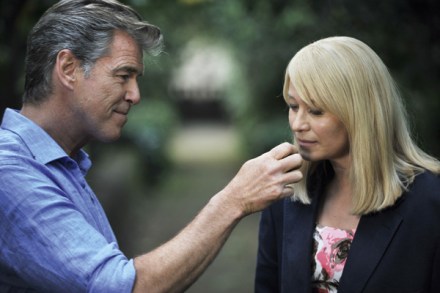
Love Is All You Need is a romantic comedy that isn’t romantic or comic or much of anything. It stars Pierce Brosnan as Philip, a widowed, all-work-no-play Englishman working in Denmark whose son is about to get married in Italy. Meanwhile, across town, the mother of the bride, Ida (Trine Dyrholm), a hairdresser who wears a wig because she’s lost all her own hair to chemotherapy, has just discovered her husband is playing away from home with pretty young Thilde from accounts. Films are always full of middle-aged men playing away from home with pretty young Thildes from accounts, but have you ever wandered into a company’s accounts department?

The Place Beyond the Pines – don’t read this review!

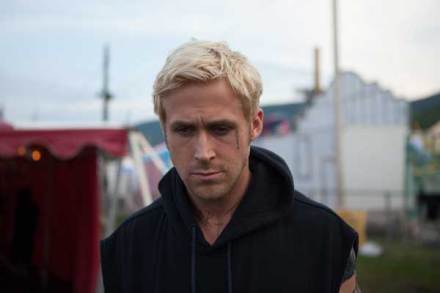
The Place Beyond the Pines stars both Ryan Gosling and Bradley Cooper — you spoil us, ambassador! — and is a generational feud film about fathers and sons and legacy. Can anyone be born clean? How do past events reverberate? How might one act of violence play out, years later? It is written and directed by Derek Cianfrance who made Blue Valentine, a remarkably raw and claustrophobic film about a marriage going down the tubes, also starring Ryan Gosling, but with Michelle Williams, and although this is a more familiar genre, it is still blissfully gripping. Certainly, I was gripped, blissfully, which was nice, as I haven’t been held in such a way for a long, long time, although I couldn’t tell you why. I’m up for a blissful grip at any time, just so you know.

Composition and catharsis: Review of ‘A Late Quartet’.

Why the sudden spate of movies about classical music quartets and impending death? Early this year, we had Quartet, about four senior singers in a retirement home. Now we have A Late Quartet, about a string ensemble facing the loss of one of its members. The film industry couldn’t possibly be subliminally associating classical music with ageing and fuddy-duddyness, could they? Shame on them. Perhaps before the year is out we’ll have The Latest Quartet, then we’ll know that classical music has carked it altogether. Anyway, of the two movies (so far), Late is by far the more masterly. It is for all intents and purposes a chamber film — intimate, intricate and with very few players. Built around Beethoven’s ‘String Quartet No.

Trance: not Danny Boyle’s finest hour

Obviously, we all love Danny Boyle and want to have his babies — I’d like at least two of his babies — but his latest film, Trance, is a horrid mess. A psychological take on the art-heist film, it is miscast, iffily acted, confusing, implausible (to the extent I never fully understood what was happening) and is interspersed with bouts of horrible, ill-judged violence. In one instance, for example, a man gets shot in the penis. This need not be a dealbreaker necessarily but at some point, possibly before we’ve even had the first child, and to prevent such nonsense going any further, I will have to sit him down and say: ‘Danny, love, this shooting at penises has to stop. We’re going to be parents. Why not gardening? Or golf?

No questions asked | 21 March 2013

Compliance is a small film that says big things rather than one of those big films  that say very little, if anything. It’s written and directed by no one you have ever heard of, and stars no one you have ever heard of (I know!; be brave!) yet takes such a rivetingly clear-eyed look at the dark truths of human behaviour and the consequences of accepting authority without question that I don’t think I will ever get it out of my mind. It’s not an easy watch, which is kind of the point, and I’m not even sure what genre it is. Psychological horror? Thriller? But it will haunt and resonate. I saw it a week ago with my husband and we are still discussing it, which, for a pair who ran out of things to say to each other years ago, is quite something.

Get a life

Welcome to the Punch is a British crime action thriller and here is why you may wish to see it: it is set in a night-time London so magnificently lit even I wanted to visit, and I live there. And now, ten reasons you can skip it, get on with your life and save 99 minutes, whether those minutes are precious or not. My time isn’t particularly precious, but it may be different for you. Here you are. 1. Although it has a top, top cast (James McAvoy, Mark Strong, Andrea Riseborough, David Morrissey) it only goes to prove the following old saying: the best cast in the world cannot save a poor script/story, try as they might. The fact I’ve just made up this old saying doesn’t make it any less true, for now or all time. 2.

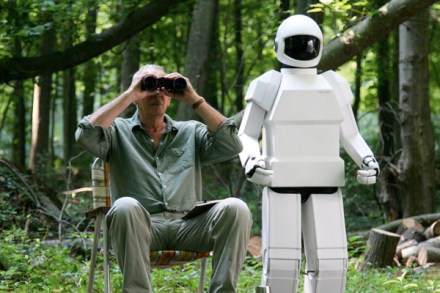
Robot & Frank

Robot & Frank is about a robot, and Frank, and I’d like to say it is as charmingly irresistible as you might suppose from the cute posters all around town, but hand on heart?  I cannot. It’s OK, I guess, as far as it goes, but it doesn’t go far enough, and, in the end, settles for what I most feared it would settle for: sentimentality. A pity, as the set-up is brilliant, and the questions it throws up — are you still you, once your mind starts to fail?; who is going to look after all our old?  — so worth asking, but it never properly gets to grips with any of them.

Secrets and lies | 28 February 2013

After a succession of epic films including three hours of watching Cloud Atlas disappear up its own bottom — if you are going to disappear up your own bottom, at least make it snappy — along comes this crisp and confident thriller which demands you only appreciate it for what it is: a crisp and confident thriller. It’s set in the vastly wealthy world of Bernie Madoff-style hedge funds but, although it could easily have slipped into some kind of essay about money being the root of all evil, or how the rich bastards who crashed the economy keep getting away with murder (perhaps literally, in this instance), this has other things on its mind, like keeping you gripped and entertained.

Only disconnect

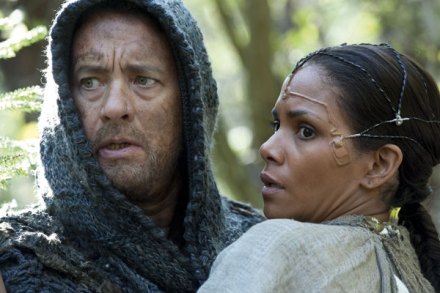
Cloud Atlas is part-sci-fi, part-thriller, part-romance, part-comedy, part-action flick, part-this, part-that and it all adds up to? A whole lot of not very much. Based on David Mitchell’s novel, this strains, laboriously, to capture that novel’s scope and complexity, but gets nowhere near, and takes three hours to get nowhere near. (If you are going to take three hours, you can’t get somewhere, at least? Is that too much to ask?) Its problem isn’t lack of ambition. This cost $100 million, had three directors and stars multiple A-listers in multiple roles in multiple storylines.

Mid-life crisis | 14 February 2013

This is 40. Or perhaps I should say, is this 40? I haven’t yet reached that rounded age myself, so don’t have much of a frame of reference. But a quick spin around Wikipedia reveals that the film’s writer-director Judd Apatow (45) and its two stars, Leslie Mann (40) and Paul Rudd (43), all have the requisite number of years on them. They must know what they’re talking about, mustn’t they? Mann and Rudd play Debbie and Pete, a married couple who first appeared in one of the best comedies of the last decade, Apatow’s Knocked Up (2007). And their relationship is summed up by the film’s poster: Pete squats on the toilet, iPad in hand, while Debbie looks on askance through the bathroom mirror.

What kind of film does ‘Hitchcock’ think it is?

Hitchcock is one of those films which would have been much better off if it had taken a moment to sit down and decide on its own sensibility. Before a camera had even rolled, it should have pulled up a chair and asked itself: am I a film about Hitchcock’s marriage, or am I a film about his psyche, or am I a film about one of his films, or am I an inside-Hollywood comedy, starring Sir Anthony Hopkins lumbering about in a fat suit and perving at blondes? If it had asked itself, it might have settled on the one, and retained its focus, and told us something. But it didn’t, so it doesn’t, and it tells us nothing. It’s not awful. It’s just not much of anything; the kind of film you will walk away from with a ‘so what?’ and a shrug. ‘So what?

A Cirque to irk

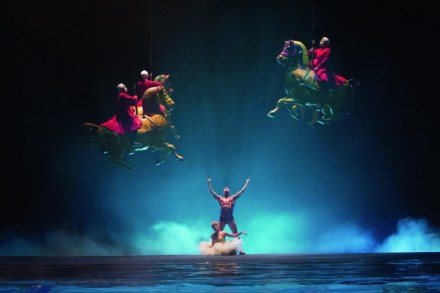
Just as Les Mis was soaringly monotonous, Cirque du Soleil: Worlds Away (3D) is soaringly pointless. No point to it whatsoever. I looked. I looked everywhere for a point, even under my cinema seat. (That’s how desperate I was.) But I came up empty-handed. It’s 90 minutes of sheer, total, utter pointlessness, as written and directed by Andrew Adamson (who directed the first two Shreks and the first two Chronicles of Narnia) and produced by James Cameron, who has made some good films, and Titanic. God knows what they were thinking of when they embarked on this. And boredom doesn’t even come near it. I experienced the sort of boredom that is also a seething rage spread thin. What am I doing here? When’s it going to end? Why did anyone imagine this was even a film?