Chess

Willing to wound

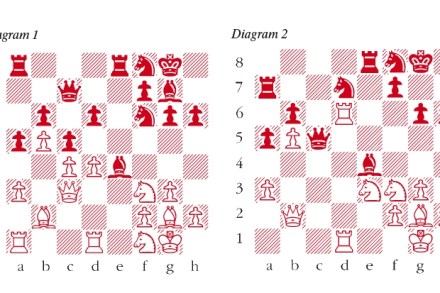
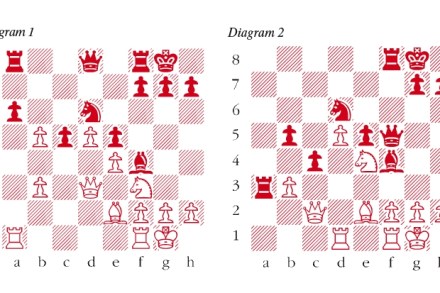
But yet afraid to strike, as Alexander Pope would doubtless have described the first seven games of the World Championship currently in progress in New York. It is not that there has been a dearth of opportunity, just a frustrating lack of realisation. Like Marshall Grouchy at the Battle of Waterloo, no sooner are the players presented with an opportunity for advantage than they march briskly away from the sound of the cannons. Take game five, for example.   Carlsen-Karjakin: World Championship, New York (Game 5) 2016 (see diagram 1)   Here Black has an excellent chance to exploit the windy position of White’s king with 43 ... Rh8, when the following variation is forced: 43 ... Rh8 44 Qe4 Qh6 45 Kf1 Qh1+ 46 Ke2 Bd5 47 Qf5+ Kb8 48 Qd3 Qa1.

Chigorin revived

The early games of the World Championship in New York between Magnus Carlsen and Sergei Karjakin did little to contribute to the gaiety of nations. In the first two games both contestants seemed more anxious to display their ability to avoid loss than to strive heroically for a win. If the two were ‘willing to wound, but yet afraid to strike’, their willingness was of a most muted variety.   Fortunately, there was no lack of entertainment from the parallel Champions Showdown in St Louis, which pits Veselin Topalov, Hikaru Nakamura, Fabiano Caruana and Viswanathan Anand against each other in multifarious formats. Meanwhile, the European Club Cup, from which this week’s extraordinary game is taken, also showed a plethora of exciting clashes.

Magnus vs Sergei

The World Championship in New York begins this week. In the run-up, the defending champion, Magnus Carlsen of Norway, has been the heavy favourite to retain his title against Sergei Karjakin, formerly representing the Ukraine but now playing for Russia. Their lifetime score at classical time limits, under which the New York contest will be conducted, is notably loaded in favour of the incumbent.   As a final preview, here is a win by Carlsen against the former champion Vladimir Kramnik. The notes are based on Cyrus Lakdawala’s in Carlsen: Move by Move (Everyman Chess), a useful compendium for those considering Christmas gifts for chess enthusiasts.

Lasker’s heir

Last week I previewed the respective chances of world champion Magnus Carlsen and his challenger Sergey Karjakin for their forthcoming championship bout in New York. Now I take a look at what drives Magnus and what primarily distinguishes his approach to chess from that of his rival. Karjakin has a powerful, conventional style. Well versed in aggressive modern opening theory, he has a forceful, direct and elegant mode of play that owes much to Bobby Fischer. Carlsen, on the other hand, is the spiritual heir of the great Emanuel Lasker, world champion from 1894 to 1921. Lasker was no connoisseur of opening theory, but where he excelled was in juggling options to avoid any kind of clear equality. Faced with such intense psychological pressure, his opponents tended to crack.

Psephology

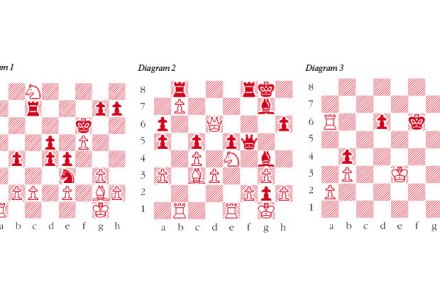
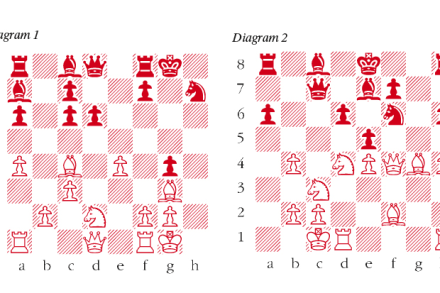
The polls are in for next month’s big event in the USA and Magnus Carlsen has emerged the clear favourite in his world title defence against Sergey Karjakin. Indeed, the Norwegian world champion leads by five wins to one in the classical format used in New York. The match is organised by Agon and the prize fund is ‘at least one million euros’. See worldchess.com/nyc2016 for details of new technology to follow the games online, as well as New York travel packages. This week, extracts of play from previous bouts between the pair.   Karjakin-Carlsen; Norway Chess, Stavanger 2013 (see diagram 1)   White had stood well but Carlsen coordinated his forces impressively and now tears into Karjakin’s kingside. 33 ...

Gamesters of Triskelion

I first encountered the Triskelion, the traditional coat of arms of the Isle of Man, when I saw Laurence Oliver’s film of Shakepeare’s Richard III. At the crucial Battle of Bosworth, Lord Stanley, the Earl of Derby and feudal lord of the Isle of Man switches sides and betrays Richard. His three-legged triskelion banners are seen hurtling down on King Richard’s forces just before the immortal lines, ‘A horse, a horse! My kingdom for a horse!’   The only knights in action on the Isle of Man in the past weeks have been those on the chessboard. Congratulations are due to the organisers and sponsors for attracting a hugely powerful field which included the reigning US and British champions and the better part of the gold-medal-winning US Olympiad team.

Tal order

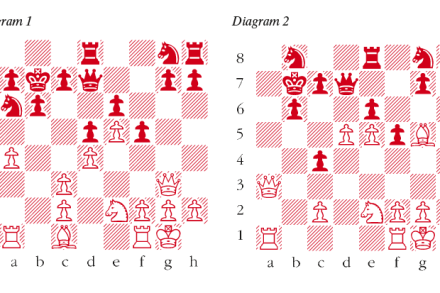
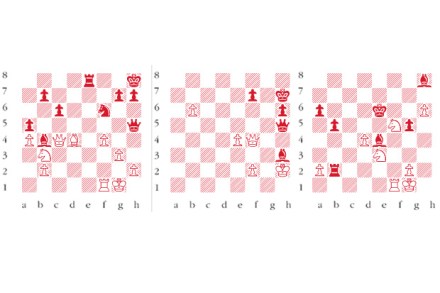
As I write, the Mikhail Tal Memorial tournament in Moscow is still underway. The Dutch grandmaster Anish Giri stormed into an early lead, winning three games out of his first five. But he was toppled when coming to grief in the following dramatic situation.   Aronian-Giri: Tal Memorial Moscow 2016 (see diagram 1)   White has sacrificed a rook but can regain material with 31 Nc6 Qb6 32 Nxb8 Qxb7 with an extra pawn. Nevertheless, the Armenian triple olympiad gold medal winner came up with something far more dashing. 31 Qxb8 Rxb8 32 Rc8+ Qd8 Obviously forced. 33 Rxd8+ Rxd8 34 Nc6 Black resigns If 34 ... Re8 35 Ne7+ Kf8 36 Nc8 sheltering the promotion square for White’s passed pawn. Or 34 ...

Rigan wizard

Mikhail Tal, the Wizard from Riga, was one of the most devastating tacticians in the history of chess. His rise to become world champion was meteoric and included an equally devastating first prize in the 1959 Candidates tournament as well as demolition of the incumbent champion Mikhail Botvinnik in their 1960 title contest.   Tal’s forte was the creation of inexhaustible attacking potential that was almost impossible to refute. Harry Golombek, then the Times chess correspondent, related an anecdote about this week’s game in his book Fourth Candidates Tournament (Hardinge Simpole): ‘Tal sacrificed a piece for an attack that certainly should not have been sufficient.

Olympiad | 22 September 2016

The 42nd Chess Olympiad in Baku, Azerbaijan, ended in a narrow victory for the USA. Having tied with Ukraine, the American team qualified for the gold medals by virtue of a superior tie-break. The critical factor in the American success, their first gold medals in the Olympiad since 1976, was the acquisition for the team of two superstars, namely Fabiano Caruana, formerly of Italy, and Wesley So, who had represented the Philippines. So, in particular, distinguished himself by winning a second gold medal for best performance on board three.   The top five teams were: 1.USA 2.Ukraine 3.Russia 4.India 5.Norway (England finished a respectable ninth.)   In the parallel Women’s Olympiad the top five teams were: 1.China 2.Poland 3.Ukraine 4.Russia 5.

Chinese puzzle

As I write, the final results of the Baku Olympiad are still not in. England are fighting for a possible medal position. The highlight so far was our 3-1 victory against the defending gold medallists, China. The most spectacular game was Nigel Short’s complicated victory, which I analyse this week.   Li Chao-Short: Baku Olympiad 2016; Nimzo-Indian Defence   1 d4 Nf6 2 c4 e6 3 Nc3 Bb4 4 Nf3 b6 5 e3 Bb7 6 Bd3 0-0 Viable alternatives are 6 ... Ne4 and 6 ... c5. 7 Bd2 d5 8 cxd5 exd5 9 0-0 Nbd7 10 Rc1 a6 11 Ne5 Re8 I have some experience of this variation. In the game Keene-Seuss, Ybbs 1968 Black continued with the less useful 11 ... Bd6 12 f4 Ne4 13 Nxe4 dxe4 14 Bc4 Nf6 15 Qb3. Short avoids playing 11 ...

Back to Baku

The 42nd Chess Olympiad is now underway in Baku, Azerbaijan, and English grandmasters are making their best efforts to recapture the glory days of world team chess when England regularly finished in silver medal position to the mighty Soviets. After the early rounds Russia leads, with Kramnik as top board. The incumbent Chinese gold medallists are of course in contention, while the USA, already with Nakamura but strengthened by Caruana and So, is definitely among the favourites. Here are some choice positions from the opening rounds, where weaker teams face the giants.

Queen’s Gambit rejected

One of the most reliable methods of frustrating chess computers is to play 1 d4 but then avoid the well-trodden paths of the Queen’s Gambit, in favour of delaying central occupation with c4. Instead white aims for an early e3, possibly supported by the queenside bishop fianchetto, or Bf4. The former is known as the Colle Attack, while the latter is called The London System. Such great masters as Zukertort, Capablanca, Alekhine and even our reigning world champion Magnus Carlsen, have used these less explored ways of entering the middlegame.

So it St Louis

From the humble status of wild-card entry at St Louis last year, the US Grandmaster, Wesley So (formerly of the Philippines) has rocketed to first prize laureate this year and also overall leader in the Chess Grand Tour standings. Final scores in St Louis were: So 5½; Anand, Aronian, Caruana and Topalov 5; Vachier-Lagrave and Nakamura 4½; Ding Liren 4; Svidler 3½; Giri 3.  The overall standings in the Grand Chess Tour are:   Player PointsPrize Wesley So 30$120,000 Magnus Carlsen 23$67,500 Lev Aronian 21.75$66,250 Hikaru Nakamura 21.5$62,500 Fabiano Caruana 16.75$58,750 Viswanathan Anand 14.75$51,250 Veselin Topalov 10.75$51,250 Maxime Vachier-Lagrave 17.5$40,000 Anish Giri 8.5$30,000 Vladimir Kramnik 8.

Adams apple

Grandmaster Michael Adams turned in a superlative performance earlier this month to win the British Championship for the fifth time. The first occasion was 27 years ago in Plymouth. Adams’s performance on this occasion included victories with the black pieces against the two former British champions David Howell and Gawain Jones. Adams’s score of 10/11 equals the record set up by Julian Hodgson. It is likely that this record will never be broken, since the English Chess Federation in their wisdom have decided from now on to reduce the number of rounds in the Championship from 11 to 9.

Surreptitious subversion

After the vote to leave the EU it is time to reclaim the good old English names for traditional openings such as the Ruy Lopez and the Centre Counter. Foreign subversion has gradually altered the correct name for the Ruy Lopez (1 e4 e5 2 Nf3 Nc6 3 Bb5) to the less evocative Spanish Opening, while the Centre Counter (see this week’s game), which was good enough for Howard Staunton when he played Paul Morphy, was quietly changed on the continent to the Scandinavian Defence. I see no reason whatsoever why our Viking cousins should be able to lay any claim to the naming of this defence.

Vikings on board

Mark Hall, curator of the Perth Museum, has recently drawn attention to the proliferation of board games in Viking burials. One site on the island of Rousay in the Orkneys, dating back to the 9th century, contains 25 board game pieces, while a similar site at Sanday, 25 miles to the north-east, has 22 playing pieces. Mr. Hall said (as quoted in the Times of 28 July): ‘Strategy and the skill of board games were closely linked to the warrior status of the dead. Placing the gaming kit in the grave served to remember or commemorate that status and skill and to make it available for the deceased in the afterlife.

Bilbao

Magnus Carlsen, the world champion, has added yet another tournament to his extensive list of victories. Although he must have been annoyed to incur a rare loss against Hikaru Nakamura in the first round, Carlsen then scythed through the field to emerge ahead by a substantial margin. Bilbao was one of those events where the organisers chose to award three points for a win, one for a draw and nothing for a loss. The final scores were: Carlsen 17, Nakamura 12, So and Wei Yi 11, Karjakin 9 and Giri 7. The fact that Sergey Karjakin, who has qualified to challenge Magnus Carlsen for his world title, and Anish Giri, who went through the Candidates tournament without a single loss, should have ended up in the bottom two slots, is a powerful indicator of the overall strength of this competition.

Karjakin’s complaint

Sergey Karjakin, the challenger for Magnus Carlsen’s world title later this year, has announced in Bilbao, where he is contesting an elite tournament, that he wants to launch his challenge ‘anywhere but the USA!’ His stance poses an awkward problem for the World Chess Federation, which does not seem to have even contemplated an alternative venue, though no final arrangements have yet been announced. Disagreements over world championship venues have bedevilled former contests, and although we do not know the precise reason for Karjakin’s complaint, once one of the two protagonists digs in his heels it can be hard to shift them. So I propose that it is high time London hosted a world championship match. The most recent was Kasparov-Kramnik back in 2000.

Electric shock

To mark the UK’s decision to exit from the EU, I can think of no better example than the triple match victories of Howard Staunton against major European rivals, victories which established him as the de facto champion of the chess playing world. From 1843 to 1846 Staunton comprehensively defeated three leading opponents from France, Germany and Poland, St Amant, Horwitz and Harrwitz, in the process overturning the domination of France, which had previously been upheld by those great luminaries of the game Philidor and Labourdonnais. As a prominent Shakespearean scholar himself, Staunton could justly claim with Faulconbridge in King John (Act V Scene 7): ‘Come the three corners of the world in arms, and we shall shock them.

Korchnoi’s French

As we bid farewell to the great Viktor Korchnoi, it is worth pointing out that he was one of those rare players who at various times held a diversity of national titles. His record included winning the championships of the USSR, the Netherlands and finally Switzerland. I conclude my tribute to him this week with one of his classic wins in the French Defence. This week’s game is a Korchnoi masterpiece that I found in a new book on one of his favourite defences.    First Steps: The French Defence by Cyrus Lakdawala is published by Everyman Chess.