Chess

Grand tour

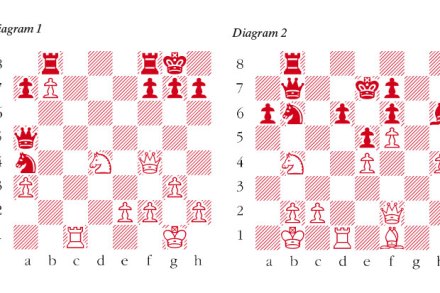
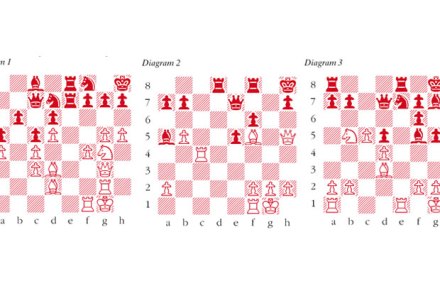
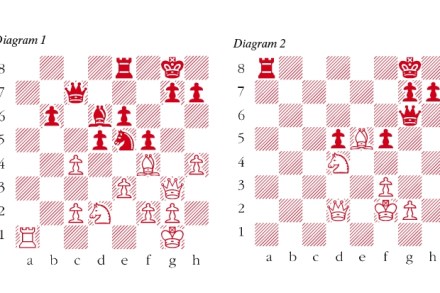
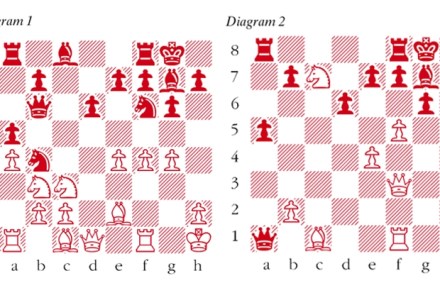
The first two legs of this year’s Grand Chess Tour have now been staged in Paris and Leuven. There will be follow-ups later this year in St Louis and London. The format of Paris and Leuven consisted of a rapidplay and blitz tournament at each venue. After the conclusion of these events the leading overall standings in the Tour are Carlsen 23, Nakamura and So 17.   Carlsen-Anand: GCT Rapid Leuven 2016 (see diagram 1)   Carlsen now shows excellent judgment by heading for an endgame which, at first sight, appears to give Black no problems. 21 dxe5 dxe5 22 Qxe7 Rxe7 One would expect that the extra queenside pawn would be more relevant than White’s doubled e-pawns. However, more important is that the white forces are very active and the e-pawns control important squares.

Memorable Mamedyarov

Local hero Shakhriyar Mamedyarov won the Vugar Gashimov Memorial in Shamkir, Azerbaijan by virtue of three consecutive victories at the last minute. Two of these wins came against the leaders Fabiano Caruana and Anish Giri. That catapulted Mamedyarov into a tie for first prize with Caruana, and then he went on to win the tie-break. This was a colossal performance by the Azeri frontrunner and it must have thrilled the home crowds. Full scores in the main tournament were as follows: Mamedyarov and Caruana 6 (out of 9); Giri 5½; Karjakin 5; Mamedov 4½; Harikrishna, Safarli and Radjabov 4; Eljanov 3½ and Hou Yifan 2½. Mamedyarov then went on to win the four-game play-off against Caruana by one win with three draws.

Leningrad Lip

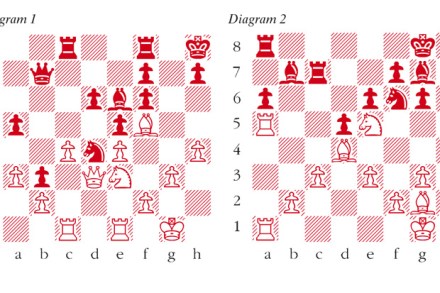
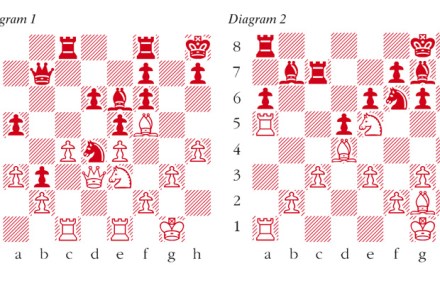
I had intended this week to write about the surprise surge by Mamedyarov which overturned all expectations in the elite Gashimov Memorial. Instead, the death of Viktor Korchnoi, known variously as Viktor the Terrible or the Leningrad Lip, represents a force majeure priority. An outspoken defector and three-times world champion contender, Korchnoi was one of the dominating figures of 20th-century chess.   This week, a win against the legendary Bobby Fischer and a puzzle position against his arch foe Anatoly Karpov. Comments based on those by Cyrus Lakdawala in Korchnoi: Move by Move (Everyman Chess).

Edgehogs

Last week, commenting on Nigel Davies’s new book The Pirc Move by Move (Everyman Chess), I wrote about my win against Dr Jonathan Penrose which clinched the British Championship title for me. I want to expatiate further on the black defensive strategy which is predicated on flank development with the aim of destroying White’s pawn centre from the edges of the board. The Pontifex Maximus of this wing strategy was Duncan Suttles, the Canadian grandmaster, whose exploits are recorded in the multivolume Chess on the Edge: 100 Selected Games of Canadian Grandmaster Duncan Suttles by Harper and Seirawan (available on Amazon). My main contribution to the theory of this edgy branch of chess thought was to refine a system based on an early … Nc6. Here is one example.

Life on the edge

The grandmaster Nigel Davies has just written a new book on the Pirc Defence, a variation in which Black sacrifices immediate control of the centre to White’s pawns, in the hope of a later counterattack, designed to paint the centre of the board black instead of white. Davies is a solid, dependable and reliable guide to an opening that was once considered heretical but is now mainstream. The game I have chosen to illustrate the principle theme of this defence is the victory I achieved against the ten-times British champion Jonathan Penrose in 1971. This game was instrumental in my winning the British Championship that year.

Garry’s comeback

To great surprise, the former world champion Garry Kasparov staged a brief comeback when he participated in a blitz tournament held to celebrate the close of this year’s US Championship. His opponents were the top three from the championship and an 18-round competition resulted in the following scores: Nakamura 11, So 10, Kasparov 9½ and Caruana 5½.   It is astounding that at the age of 53, with no tournament practice whatsoever for some time, Kasparov can hold his own with the young tigers of the contemporary chess scene. Indeed, had he converted two winning positions against Wesley So, he would have emerged as the clear victor. Instead, in both cases, bad blunders transformed near-triumph into loss for him.

Cyrus the Great

I think I hold the world record for the greatest number of chess books written (or co-written) and published. At the last count I managed to identify 199, with several of them translated into a total of 13 different languages. Last week, a new book by the prolific Cyrus Lakdawala dropped through my letterbox. Lakdawala seems to be producing a book every month and I fear he is threatening to overtake me. His latest tome is an exposition of various methods of combating the Sicilian Defence. These include an early c3, in order to build up a formidable pawn centre for White, a quick Bb5 and the feared Morra Gambit where White immediately plays 2 d4 and then continues in sacrificial style with 2 ... cxd4 3 c3, rather than trying to recapture the pawn.

Magna cum laude

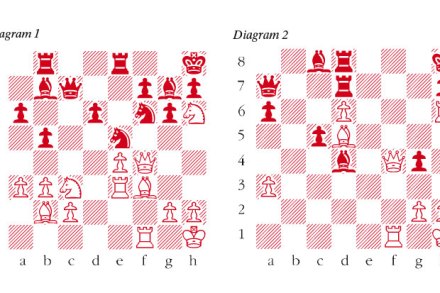
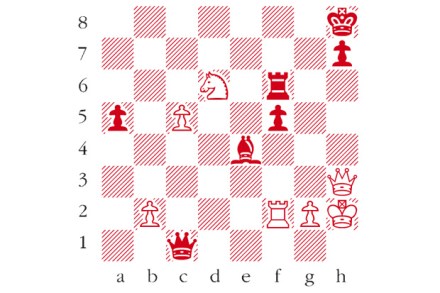
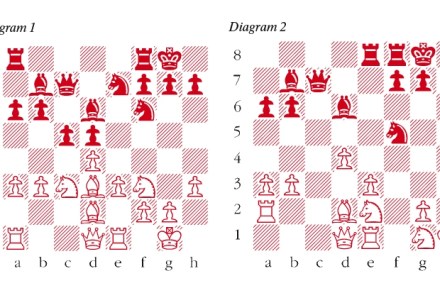
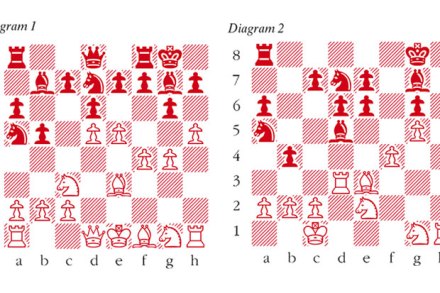
World champion Magnus Carlsen has taken first prize in the Norway tournament at Stavanger which finished last month. Carlsen had dominated proceedings but was briefly derailed by a loss to the triple Olympiad gold medallist Levon Aronian of Armenia, who eventually emerged as the runner-up. As so often, Carlsen pulled a rabbit out of the hat in the last round, overcoming Eljanov to secure first prize. Scores (out of 9) were: Carlsen 6; Aronian 5½; Vachier-Lagrave, Topalov and Kramnik 5; Li and Harikrishna 4½; Giri 4; Eljanov 3 and Grandelius 2½.   Aronian-Carlsen; Norway Chess, Stavanger 2016 (see diagram 1)   Carlsen’s only vague hope here is 26 ... Bh3, speculating on the weak light squares around the white king.

Out of the book

Last week we saw the reigning world champion Magnus Carlsen taking a leaf from Alekhine’s book to destroy eccentric opening play by the Swedish grandmaster Nils Grandelius. This week we see Alekhine himself in action, launching a sacrificial maelstrom which destroys his hapless opponent. Alekhine once wrote, ‘It is especially with respect to the original opening of this game that people often speak of a “hypermodern technique”, a “neo-romantic school” etc. The question is in reality much simpler. Black has given himself over to several eccentricities in the opening which, without the reaction of his opponent, would in the end give him a good game.

Evolution

World champion Magnus Carlsen takes much inspiration from the games of the former champion Emanuel Lasker. Lasker and Carlsen share the ability to manoeuvre at length in approximately level positions, without letting the situation dry up and become devoid of winning prospects. Such a style does not always lead to attractive games, and some of Carlsen’s victories have become so obscure that Viktor Korchnoi even accused the champion of hypnotism. Nevertheless, as Carlsen has become more confident, his style has evolved. As can be seen from the following game from the powerful Norway tournament which finishes this week, he is beginning to take risks and play in the sharp style of Morphy, Alekhine, Tal and Kasparov.

The Godfather

It is often asked how chess became so popular in the USSR. My answer is that most areas of creative thought were closely supervised by the state; literature, art and even music, as Shostokovich and Prokofiev found, were subject to government control. Shostokovich’s opera Lady Macbeth of the Mtsensk District was severely criticised by the Communist Party Congress, for instance. Antagonising the state could be fatal. In chess, though, creative thought could flourish without interference from the commissars. The notion that chess moves could be ideologically unsound was rarely entertained. My theory for the popularity of chess would have had no currency within the Soviet Union.

666

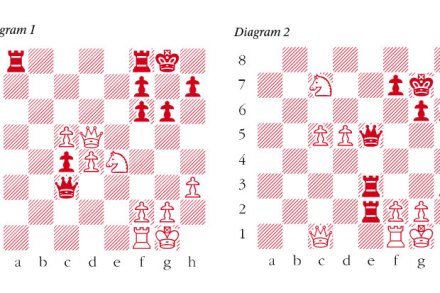
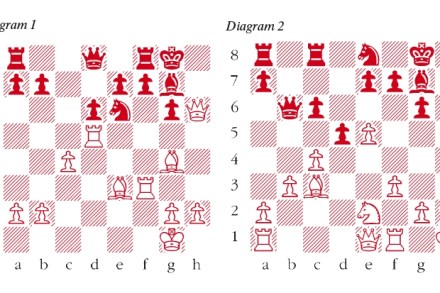
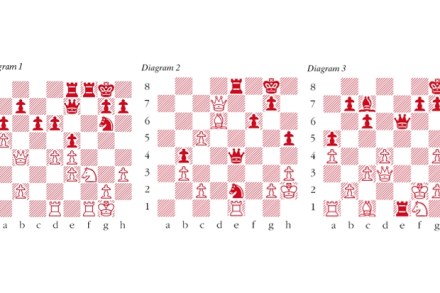
The year 2016 is the anniversary of a number of significant events in the chess world. In 1946 Alexander Alekhine died in possession of the title, the only champion so to do. The following position is taken from Alekhine: Move by Move by Steve Giddins (Everyman Chess). Alekhine-Prat: Paris Simultaneous 1913 Alekhine concludes with a typically brilliant flourish. 22 Qh5+!! Nxh5 23 fxe6+ Kg6 24 Bc2+ Kg5 25 Rf5+ Kg6 26 Rf6+ Kg5 27 Rg6+ Kh4 28 Re4+ Nf4 29 Rxf4+ Kh5 30 g3 Black resigns 31 Rh4 mate is unstoppable. And in 1966 Tigran Petrosian became the first player since Alekhine in 1934 to defend his title successfully in a World Championship match. We join in the decisive 22nd game where Spassky could have announced his intention of playing 25 ...

Sergey’s sensation

Sergey Karjakin, who in 2002 became the world’s youngest-ever grandmaster at the age of 12 years and seven months, has won the Moscow Candidates tournament and has earned the right to challenge Magnus Carlsen for his world title later this year. It was thought the match would take place in New York, but given Karjakin’s victory it would not be surprising if it was relocated to Moscow. The full scores in the Candidates tournament were as follows (out of 14): Karjakin 8½; Caruana and Anand 7½; Giri, Aronian, Nakamura and Svidler 7; Topalov 4½. The field was exceedingly close, except for Bulgaria’s Veselin Topalov, the former Fidé World Chess Federation champion, who lagged behind.

Bellum sociorum

The internecine but friendly annual rivalry between the Universities of Oxford and Cambridge, generously hosted last month by the Chess Circle of the Royal Automobile Club in Pall Mall, resulted in an overwhelming 6-2 victory for the light blues. Cambridge now leads the longest-running chess series in the world with 59 wins. Oxford has 53 wins, and 22 matches have been drawn. Oxford have in the past benefited from grandmaster representation in their team, but this year they were clearly outgunned in rating terms. In spite of dour resistance, the heavily weighted rating, statistics eventually told in favour of Cambridge.

Tal story

With the proliferation of modern opening theory and advances in knowledge of the game, I wonder sometimes if the kind of coruscating brilliance and originality that Mikhail Tal possessed will ever be seen again. Tal, the ‘Wizard of Riga’, was able to summon up lightning attacks from the most unpromising-looking positions. Last week we saw one of Tal’s sparkling efforts from his Candidates tournament victory of 1959 — a sensational result which propelled him directly to a successful championship challenge against the redoubtable Botvinnik. This week, here is another of Tal’s wins from that qualifying event, one of his clean-sweep quartet that demolished Bobby Fischer.

Candidates | 17 March 2016

The Candidates tournament to determine the challenger later this year to world champion Magnus Carlsen is now well underway in Moscow. Early indications favoured the former champion Viswanathan Anand, the new young talent Sergei Karjakin, and Lev Aronian, Olympiad gold medallist, all of whom scored in the opening rounds. The main victim of their initial surge was Vesselin Topalov, the former Fidé champion, whose conduct in his games at the start was unrecognisably supine. This week’s puzzle features his loss to Anand. An instructive element of the official website (moscow2016.fide.com) is a potted history of previous Candidates tournaments and their winners, including such luminaries as David Bronstein, Vassily Smyslov, Tigran Petrosian and Mikhail Tal.

Bunratty

The tournament at Bunratty is Ireland’s premier chess competition and has been for several years. This year’s event, to which I was invited as a guest to deliver the closing speech, attracted a powerful field including the former world title challenger Nigel Short and the former British champion Gawain Jones as well as grandmasters Peter Wells, Simon Williams and Alexander Baburin. This year, Nigel Short dominated proceedings by winning his first five games and only relaxing his pace with a quick draw in the final round to clinch his victory. The unique selling point of Bunratty is the social atmosphere generated by the hundreds of chessplayers — grandmasters and neophytes alike — all packed into the Castle Hotel over a long weekend.

Varsity match | 3 March 2016

On Saturday 5 March the 134th Varsity Match between the teams from the Universities of Oxford and Cambridge takes place at the Royal Automobile Club, Pall Mall. As has become traditional, the annual clash between our premier academic institutions is supported by Henry Mutkin, the doyen of the RAC chess circle. The scores so far are 58 wins to Cambridge, 53 to Oxford with 22 draws. Spectators are welcome, although standard dress rules for London clubs are in force. It is a source of constant bemusement to me that although Cambridge award half-blues for representation in the Varsity Match, Oxford still deny that honour to their chess representatives.

Gnomic | 25 February 2016

Zurich has been the scene for the latest clash between the titans of chess. Over a mere four days in February, six elite grandmasters contested no fewer than three fast-time-limit all-play-all tournaments, with combined results leading to an overall victory for Hikaru Nakamura, fresh from his triumph in Gibraltar. Zurich was what might be termed a boutique competition, but action-packed nonetheless. Even an apparently unperturbed Sepp Blatter was observed in the VIP enclosure, perhaps following up the theories expounded in the book Football and Chess: Tactics Strategy Beauty (Hardinge Simpole), which identifies similarities between the games. Nakamura-Aronian: Opening Blitz, Zurich 2016 18 Bxh6 Nakamura spots vulnerability in the black camp. If now 18 ...

Rocky 14

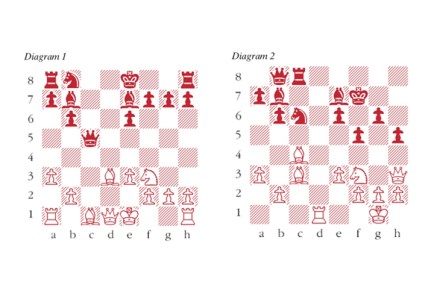
The 14th Tradewise tournament at Gibraltar ended in a triumph for the American grandmaster Hikaru Nakamura. Naka, as he is affectionately known, tied on points with the leading French representative, Maxime Vachier-Lagrave, but in the obligatory playoff, the American nosed ahead to take the £20,000 first prize. Gibraltar, under the auspices of chess-loving hotelier Brian Callaghan OBE, is noted for its promotion of female chess. Anna Muzychuk seized her chance to win the £15,000 reward for top woman competitor. With an enthusiastic female entry vying for record prizes, the social atmosphere at the Caleta hotel is unique. Nakamura-Gupta: Gibraltar Masters 2016 17 g4 White plans to meet the natural 17 ...