Chess

Study in obsession

Genna Sosonko is a writer and grandmaster who straddles two great chess cultures, Holland and the USSR, his chosen and native lands. His latest book, The Rise and Fall of David Bronstein (Elk and Ruby Publishing House), does not contain any actual chess analysis but instead focuses on Bronstein’s decade-long obsession with his narrow failure to become world champion in his 1951 match with Botvinnik. Bronstein was one of the most creative players in the history of the game, yet his inability to unseat Botvinnik gnawed at his soul and acted as a block on any future attempt to seize the supreme title, or even to win a major tournament.

David and the Giants

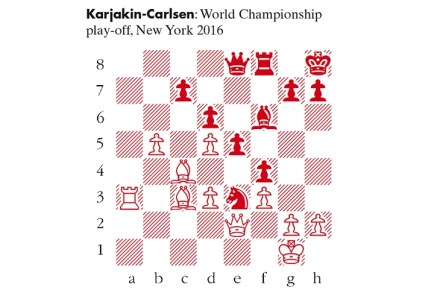
The overall scores of the exceedingly strong combined rapid and blitz tournaments in St Louis were as follows: 1. Aronian 24½;   2= Karjakin and Nakamura 21½; 4. Nepomniachtchi 20; 5= Dominguez, Caruana and Le 16½; 8. Kasparov 16; 9. Anand 14; 10. Navara 13. As an indication of the elite nature of this competition, the bottom-placed contestant, David Navara from the Czech Republic, succeeded in defeating former world champion Garry Kasparov and Sergei Karjakin, the outright winner of the blitz section.   Karjakin-Navara; St Louis Blitz 2017; Caro-Kann Defence   1 e4 c6 2 Nf3 More usual is 2 d4. 2 ... d5 3 Nc3 dxe4 4 Nxe4 Nf6 Against the variation chosen by White this knight challenge is eminently feasible.

Hou dares wins

Hou Yifan, the leading female grandmaster, is beginning to place strain on Judit Polgar’s record as the best woman chess player ever. At the Biel Grandmaster tournament, Hou seized first prize ahead of a phalanx of elite male rivals. Her win against the veteran grandmaster Rafael Vaganian (see below) was outstanding.   There have been occasional controversies, including one in which our own Nigel Short once became embroiled, about the relative powers of the male and female brain.

Philidor’s heir

There was a time when France was the dominant power in world chess. When Howard Staunton commenced his remarkable series of match victories in the mid-1840s, his ascent was seen as an assumption of the sceptre wielded by that great 18th-century master of the game, André Danican Philidor. After Philidor came Labourdonnais, who was succeeded by St Amant, and it was Staunton’s annihilation of the French champion at the Café de la Regence in Paris in 1843, which heralded the end of French hegemony over the chessboard.   It is true that Alexander Alekhine, the mighty Russian champion, represented France in the chess Olympiads of the 1930s, but he was anything but a homegrown Francophone.

Magnum opus

A new book on the ingenious Hungarian master Gyula Breyer ranks, in my opinion, at the very top of chess publications, along with Kasparov’s various mega series, Nimzowitsch’s My System, and Alekhine’s books of his best games. It is a compendium of games, discursive digressions, notes, discreet modern corrections, scholarly research, history, theory and perhaps most impressive of all, Breyer’s philosophy of the art, science and sport of chess. I just have one query, a strange reference by Dvoretsky in his notes to Breyer v. Esser. Tal v. Tolush 1957 USSR Championship seems to be strangely misattributed, with White (instead of Tal) being given as somebody I have never heard of, one Szucs.

Test of time | 10 August 2017

Last week I pointed to the fact that games played at accelerated time limits are acquiring an official imprimatur that threatens to rival the well-established ratings, rankings and titles of chess played at classical time controls. This year’s British Championship (the 104th) last weekend concluded in Llandudno with a four-way tie for first place. In order to separate the top four, a rapidplay play-off was necessary. So the British Championship title for the coming year has now been decided by games at faster speeds.   The final leading scores in the championship and the final involving the top four were as follows: Gawain Jones 10½; Luke McShane 9½; Craig Hanley and David Howell both 7; Richard Palliser, John Emms and Ameet Ghasi 6½.

Classical conundrum

The great Mikhail Botvinnik excoriated chess played at fast time limits. Botvinnik believed that classical chess at time limits of, for example, 40 moves per player in two and a half hours each, was the purest expression of the art and science of chess. Radically faster alternatives cheapened and debased the thought processes, he believed. Of course, he also relished adjournments — now outlawed because of the possibility of computer analysis.   Modern chess faces the problem of excessive draws bedevilling elite events at classical time controls.

British championship

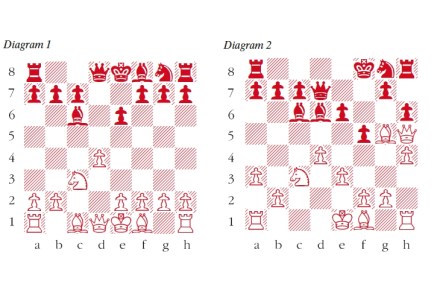
This year’s British Championship starts on Saturday and is endowed with an outstanding prize fund supplied by Capital Developments Waterloo Ltd. The first prize alone is £10,000 and this has attracted a field which includes many of the UK’s leading grandmasters. This week, a game and a puzzle by two of the leading contenders. Gawain Jones won the championship in 2012 and this week’s game is taken from that event. The puzzle position is by Luke McShane, a hugely talented player who has been somewhat distracted from his vocation as a chess grandmaster by his day job in finance.   Jones-Turner: British Championship, North Shields 2012; Petroff Defence   1 e4 e5 2 Nf3 Nf6 3 Nxe5 d6 4 Nf3 Nxe4 5 Nc3 Nf6 This is a fashionable line in the Petroff.

New in chess

New in Chess is one of the world’s leading chess magazines. At one time or another, every contemporary champion and leading grandmaster has contributed to it. Of particular interest are the regular columns by the English grandmasters Nigel Short and Matthew Sadler. The group also publishes many high-quality books. In Chess for Hawks, Cyrus Lakdawala regales us with a number of inspirational examples, including several from his own games. The title suggests a certain predatory attitude is necessary in striving for victory, but the prime message conveyed is: never give up, even if you only have the tiniest of edges. Persistence is everything.

Queen’s gambit | 13 July 2017

International master Andrew Martin is the head of the English Chess Federation Academy. He is well qualified for this post, since his conversational writing style is both characteristically endearing and informative. It is very easy to learn from Andrew’s work. His latest book is a tour de force of the venerable Queen’s Gambit which was originally popularised in the great 1834 series of matches between Labourdonnais and Macdonnell in London. Since then it has formed a staple of every champion’s repertoire. This week’s game, with notes based on those in Andrew’s book (First Steps: Queen’s Gambit Declined, Everyman Chess), shows how devastating the Queen’s Gambit can be in the hands of a great virtuoso of the opening.

Judgment of Paris

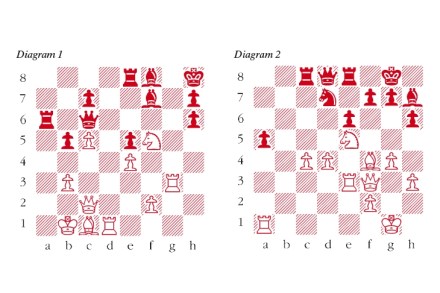
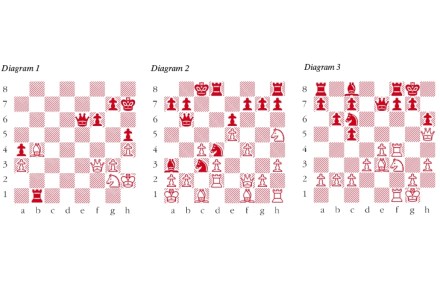
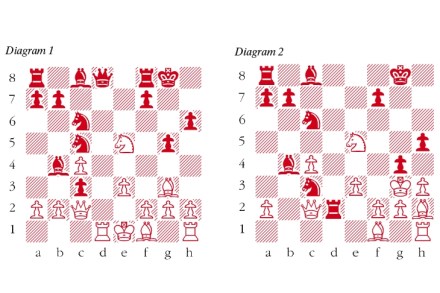
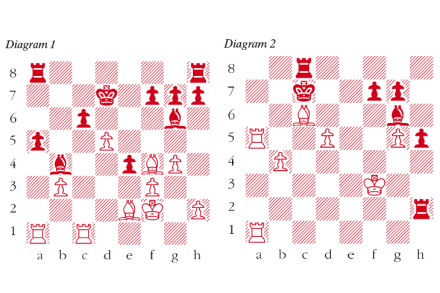
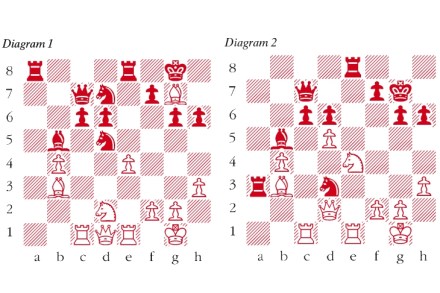
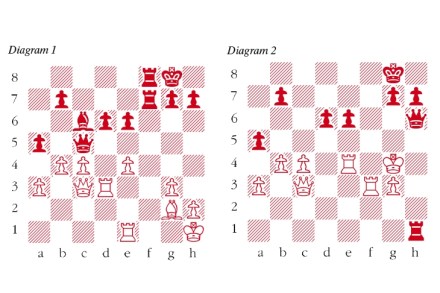
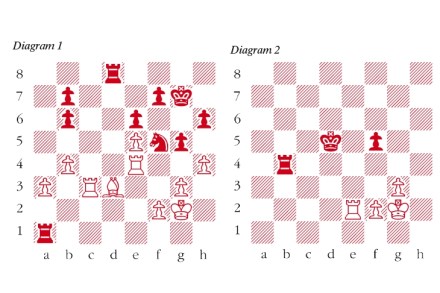
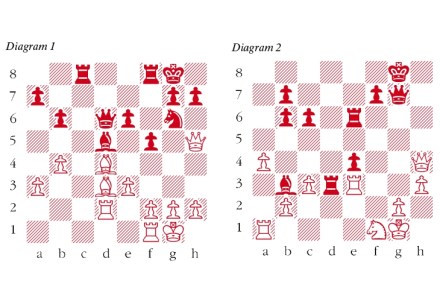
This year’s Grand Chess Tour started in Paris, continues in Leuven (Belgium) and will go on to St Louis and then London. The Paris and Leuven legs are speed events, while St Louis and London revert to chess played at classical time limits.   In Paris world champion Magnus Carlsen won the rapidplay section, fell back in the blitz but eventually triumphed in a tie-break to be the overall winner against the French grandmaster Maxime Vachier-Lagrave. He netted $31,250 for his efforts. The first extract this week shows the decisive phase of Carlsen’s play-off decider.   Carlsen–Vachier-Lagrave: Paris tie-break 2017 (diagram 1)   The white rook keeps the dangerous black a-pawn under guard and now his further advance on the kingside proves decisive.

Sporting life

Can chess and bridge be considered sports? According to a European Court of Justice judgment earlier this month, bridge is a sport and should be granted the same official status as football, rugby and tennis. The Daily Telegraph report says: ‘Advocate General Maciej Szpunar ruled that sport was an activity requiring a certain effort to overcome a challenge or an obstacle and which trains certain physical or mental skills. To be a sport it is not necessary that the activity has a certain physical element. It is sufficient that the activity has a significant mental element which is material to its outcome.

Great Tigran’s heir

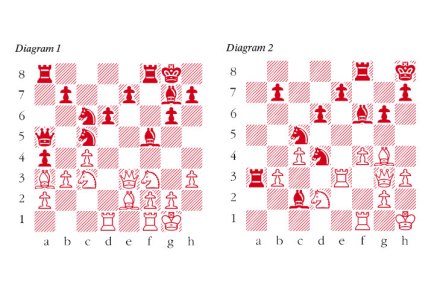
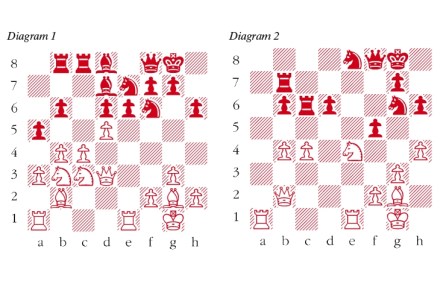
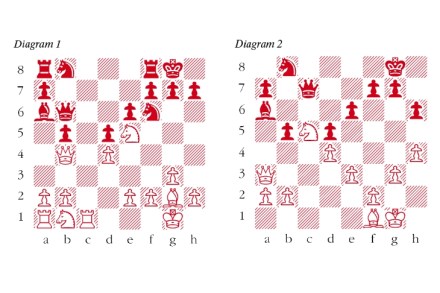
Tigran Petrosian is the great chess hero of Armenia. World champion from 1963-1969, his best games exhibit a profundity which few other champions have matched. Sadly he passed away in his fifties, in 1984, but his legacy lives on in Levon Aronian, who has emerged victorious from Stavanger. Scores from Norway (out of 9) were Aronian 6; Nakamura and Kramnik 5; Caruana, So and Giri 4½; Vachier-Lagrave, Anand and Carlsen 4; Karjakin 3½.   Aronian-Kramnik: Stavanger 2017 (diagram 1)   Here Black should play 19 ... Qg5. 19 ... Qg4 20 g3 Now White has weaknesses along the h1-a8 diagonal but his central pressure more than outweighs this. 20 ... fxe5 21 Qxe5 Rcd8 This is far too passive and now Black is lost. He had to try 21 ... Kh8, meeting 22 f4 with 22 ...

Stavanger

The powerful tournament in Stavanger, Norway, draws to a close at the end of this week. World champion Magnus Carlsen dominated the blitz event which preceded the main competition. Sadly for the home crowd, Carlsen got off to a very bad start in the classical time limits competition that followed, with the energetic American grandmaster Hikaru Nakamura seizing the leading role. Here are some key extracts from play.   Aronian–Carlsen: Norway Chess, Stavanger 2017 (see diagram 1)   In this tense situation, where White has a mass of pawns in exchange for a bishop, Carlsen conceives of a plausible defensive plan to resurrect his dormant bishop and ferry it round to the defence of his king. Paradoxically, this logical try turns out to be defective. 31 ...

Parliamentary moves

With the election dominating the news, this week I focus on the strongest chess player to have entered Parliament. Marmaduke Wyvill was MP for Richmond Yorkshire, and he won the silver medal in the very first international tournament, which was organised by Howard Staunton to coincide with the Great Exhibition of London in 1851. Stylistically, Wyvill was a student of Staunton, and he favoured the king’s side bishop fianchetto and a delayed action to challenge the centre from the flanks. Notes based on those by Imre Konig in Chess from Morphy to Botvinnik (Hardinge Simpole).

Vote Basman

To the best of my knowledge, Michael Basman is the first officially titled chess master to ever stand in a UK parliamentary election. Marmaduke Wyvill, MP for Richmond Yorkshire, was an accomplished player who took second prize in the great London tournament of 1851, but he could not have been described as a chess professional. Basman will be standing as an independent in Kingston-upon-Thames, and his manifesto is a curious blend of selective support for Jeremy Corbyn-style intervention combined with extreme libertarianism. (The manifesto can be found at endtaxsploitation.co.uk.) This week’s game and puzzle are an excursion into Basmanland.

Thoroughly modern

In 1972, in collaboration with George Botterill, two-times British champion, I published a revolutionary book on 1 ... g6 which we named the Modern Defence. At first sight this defence is paradoxical, since it makes no attempt whatsoever to prevent the construction of a gigantic white pawn structure. However, its virtues have subsequently been recognised and it is now mainstream, as this week’s win by the world champion demonstrates. First Steps: The Modern by Cyrus Lakdawala is published by Everyman Chess. Wei Yi-Carlsen: Bilbao 2016; Modern Defence 1 d4 g6 2 e4 Bg7 3 Nc3 d6 4 Be3 a6 5 f4 b5 6 Nf3 Nd7 7 e5 Bb7 8 Bd3 c5 The dismantling of White’s centre is top priority.

Trumpeting success

Regular readers will recall my column of 15 April in which I speculated on the future of the eccentric Fidé president Kirsan Ilyumzhinov in the face of mounting criticism from the board of the World Chess Federation. Somewhat surprisingly, Kirsan survived and has announced his intention to run yet again in the presidential election next year.   Nevertheless, mutterings are getting louder. The editorial of a lavish new periodical called the American Chess Magazine (acmchess.com) trumpeted the success of the US team in winning the Olympiad gold medals and establishing three players, Wesley So, Hikaru Nakamura and Fabiano Caruana in the world’s top ten.

Tetralogy

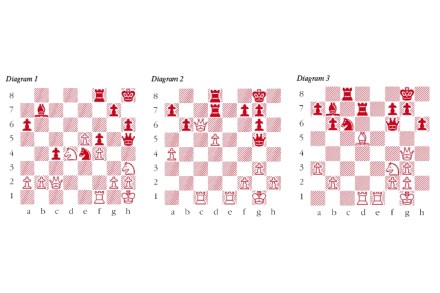
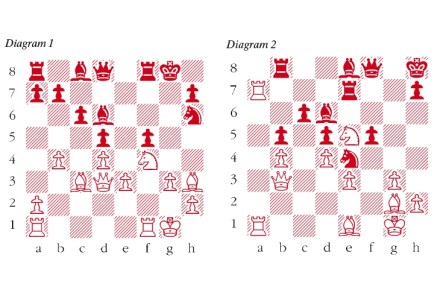
Four important events have taken centre stage over the past few weeks. These were tournaments in Shenzen (won by Ding Liren), Zurich (won by Hikaru Nakamura), Karlsruhe (which witnessed a massive triumph for Lev Aronian, who came in ahead of Magnus Carlsen) and Shamkir. In this last, the local matador Shakhriyar Mamedyarov seized the laurels ahead of the former world champion Vladimir Kramnik and the current world no. 2 Wesley So. This week, an overview of these four competitions.   Aronian–Vachier-Lagrave: Grenke Chess Classic, Karlsruhe 2017 (see diagram 1)   Although material is level, Black’s extra queenside pawn is useless. Aronian now finds a way to decisively activate his kingside pawn majority.

Catalan

The Catalan opening looks as if it should be relatively harmless, combining as it does the Queen’s Gambit with the modest fianchetto development of White’s king’s bishop. But various endgame virtuosi, notably Petrosian, Korchnoi and Kramnik, have demonstrated that the Catalan can be dangerous. In particular, the nagging pressure exerted at first by White’s light-squared bishop may persist long into the middlegame and endgame. The following notes are based on those by Neil McDonald in The Catalan: Move by Move (Everyman Chess)   Grischuk-Potkin: Villarrobledo 2009; Catalan Opening   1 Nf3 d5 2 c4 e6 3 d4 Nf6 4 g3 dxc4 5 Bg2 a6 6 0-0 Nc6 7 Bg5 Other moves for White leading to a sharp game are 7 Nc3 and 7 e3. 7 ...