Chess

Bugged

Polish grandmaster Akiba Rubinstein was one of the strongest players never to win the world title. Up to 1914 he seemed unstoppable, but then the Cuban genius Capablanca burst on to the scene and after the first world war Rubinstein was a changed man. In Chess and Chessmasters (Hardinge Simpole), Gideon Stahlberg wrote: ‘A latent disease of the mind was slowly weakening the titan’s creative powers and sapping his ability … but one could still recognise that he was a great master; his play was almost more subtle than before and his art more remarkable’.

BCM

The British Chess Magazine is the oldest continuously published chess magazine in the world. Recently it has been boosted by the appointment as co-editor of the Belgrade journalist Milan Dinic, who cut his teeth on the news journal Svedok (Witness). The last issue contained an interview with the entertaining and controversial Nigel Short, as well as excellent comments on some of Short’s wins from Bunratty, where he won first prize with 6/6.   Short-Hunt; Bunratty Masters 2017; Queen’s Gambit Declined   1 Nf3 d5 2 d4 Nf6 3 c4 e6 4 Nc3 Be7 5 Bg5 Nbd7 6 e3 0-0 7 Bd3 b6 This is not good as the fianchetto of the queen’s bishop and ... Nbd7 do not work well together.

Presidential panic

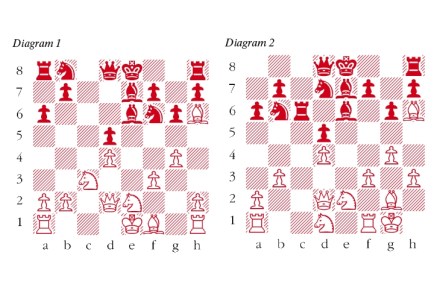
This month, watch out for unidentified fleeing presidents. Kirsan Ilyumzhinov, president of Fidé, the World Chess Federation, and a self-confessed alien abductee, seems to have a revolution on his hands. Several of his closest lieutenants, such as Giorgios Makropolous and Nigel Freeman from the Athens HQ, are insisting that Kirsan has resigned, while Kirsan himself is insisting that something has been lost in translation.   We shall know more about whether the president has been blasted into outer space after a board meeting which is due to take place soon.   This week’s game and puzzle feature Dr Max Euwe, Fidé president from 1974-1978.

Stakhanovite

Before leaving the topic of the 50th anniversary of the 1967 tournament to mark the half-century of the Russian revolution, I must mention the Hungarian grandmaster Lajos Portisch, another hero of that prestigious competition. (Leonid Stein being the overall winner.) Portisch was famed for his immense hard work and profound erudition in the openings. At Moscow he outgunned both the reigning world champion, Tigran Petrosian, and his recent challenger, the future champion Boris Spassky, as a result of his Stakhanovite exertions in the field of openings analysis.   Portisch-Spassky: October Revolution, Moscow 1967, Nimzo-Indian Defence   1 d4 Nf6 2 c4 e6 3 Nc3 Bb4 4 e3 b6 5 Nge2 Ba6 6 Ng3 0-0 7 e4 Nc6 8 Bd3 d5 This move is not seen any more, 8 ... e5 being preferred.

Fifty glorious years

Whatever else you may say about it, the USSR certainly created the greatest national chess-playing machine the world has ever seen or is likely to see. The Soviet Union perceived itself to be regarded as a pariah by the international community. One way to counter this was by winning the World Chess Championship, as it would establish the state’s intellectual credentials.   In 1967 a great tournament was held to celebrate the first 50 years of the revolution. The USSR failed to survive the next half century, but the anniversary of that tournament, won by Leonid Stein ahead of such luminaries as Vassily Smyslov, Mikhail Tal, Boris Spassky and the reigning world champion Tigran Petrosian, is worth marking.

Pauline conversion | 23 March 2017

Paul Keres is the only chess player to have appeared on the euro currency, his face adorning the two-euro piece in Estonia, where he remains a national hero. Keres has a powerful claim to be regarded as the strongest player never to have won the World Championship. His scalps included Capablanca, Alekhine, Botvinnik, Smyslov, Tal, Petrosian, Spassky and Fischer.   This week’s game, with notes based on those by Zenon Franco in Keres: Move by Move (Everyman Chess) is a crushing victory against another grandmaster who also has claims to be seen as the strongest ever non-world champion.   Korchnoi-Keres: Tallinn 1965; Torre Attack   1 d4 Nf6 2 Nf3 e6 3 Bg5 h6 4 Bxf6 Qxf6 5 e4 b6 6 a3 The idea of this is to be able to play Nc3 without fearing ...

Oxford v Cambridge

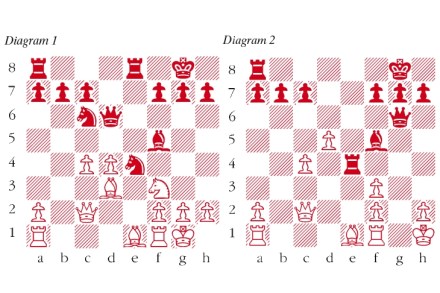
The 135th Varsity Match hosted by London’s Royal Automobile Club last Saturday resulted in a narrow win for Oxford, who have reduced their overall deficit. The score is now 59 wins to Cambridge, 54 to Oxford. The brilliancy prize, judged by grandmasters Jon Speelman and Luke McShane and named in honour of Bob Wade OBE, was awarded to the Cambridge player Daniel Fernandez. When we join the position he is a piece down for very little compensation.   Gerlagh (University College, Oxford)- Fernandez (Queens College, Cambridge) See diagram 1   27 Ra6+ Much better is 27 Nb6 with the idea 27 ... Rxc2 28 Nxd5+ Nxd5 29 Bxe4 Rc5 30 Ra6+ winning. 27 ... Kg5 Despite the extra piece, White is in difficulties.

Mutkin’s masterpiece

This Saturday, 11 March, the annual Oxford v Cambridge Varsity match is being hosted by The Royal Automobile Club Pall Mall. Cambridge lead the series with 59 wins to Oxford’s 53 in a contest which goes back to the 1870s. Primum mobile at the RAC is Henry Mutkin, who himself led the Oxford team in the mid-1950s. This week’s game sees Mutkin felling not one but two former British champions, both grandmasters, with a series of mighty blows. Thanks to Henry for providing variations.   Hodgson/Sadler-Mutkin: London 2016, Trompovsky Attack   1 d4 Nf6 2 Bg5 Ne4 3 Bf4 d5 4 e3 e6 5 Bd3 Bd6 6 Ne2 Nd7 7 Bxe4 dxe4 8 Nd2 Nf6 9 Bg5 c5 This leads to complicated play. White wins a pawn but Black gains practical counterchances.

Mr Hundred Per Cent

Nigel Short has distinguished himself by scoring 100 per cent, winning all six games, in the Bunratty tournament which finished towards the end of last month in Ireland. Anyone who has competed in a chess tournament of almost any strength will realise how hard it is to win all the games. In Short’s case he played consistently solid yet aggressive classical chess and in the process defeated two grandmasters, Peter Wells and Alexander Baburin, the victim of this week’s game.   Next year sees Bunratty’s silver jubilee and they are hoping to attract as many previous winners as possible. Nigel will surely be high on the list.

Blazing Sadler

Matthew Sadler’s retirement from full-time international chess is one of the great losses to the British game. Occasionally, the one-time prodigy emerges, usually to make a massive score in a rapid or blitz event in the vicinity of Holland, where he now works and lives. It is also fortunate that he still competes in the Four Nations Chess League.   This week’s game is a Sadler victory against a former two-times World Championship candidate, Jon Speelman.   Sadler-Speelman: 4NCL 2017; French Defence   1 e4 e6 2 d4 d5 3 Nc3 Bb4 4 e5 Qd7 The usual move here is 4 ... c5 with an immediate challenge to the white pawn centre. Speelman may have chosen the text in the erroneous belief that Sadler would have been less well prepared for it.

Cui Bono

The cause célèbre at the Tradewise tournament in Gibraltar, which finished earlier this month, was the extraordinary protest by Hou Yifan, the reigning women’s world champion, against having to play seven female opponents in ten rounds. In the tenth and final round she made her complaint manifest by deliberately throwing the game in just five moves. The sensational outburst went as follows: (Hou Yifan-Babu Lalith, Gibraltar 2017) 1 g4 d5 2 f3 e5 3 d3 Qh4+ 4 Kd2 h5 5 h3 hxg4 White resigns. The Gibraltar organisers reacted with indignation, pointing out that the pairings for their event are calculated by a well-established computer program which excludes any bias.

Tradewise | 9 February 2017

The Tradewise tournament at Gibraltar has gained a colossal reputation and is even challenging the traditional tournament at Wijk aan Zee (see last week’s column) in terms of playing strength. This year the tournament was graced by our very own Michael Adams and Nigel Short, as well as such illustrious denizens of the international arena as Vassily Ivanchuk, Fabiano Caruana and Hikaru Nakamura. Astonishingly, Nakamura succeeded in winning the event for the third year running, having triumphed in a play-off after an initial triple-tie for first place. His first-prize reward was a handsome £23,000.

Serendipity

My two previous articles dwelt on Richard Réti’s introduction of the so-called hypermodern systems. Characterised by the double fianchetto of White’s bishops, Réti swept to victory with his invention against both Bogolyubov and Capablanca, as detailed in my columns. A fortuitous coincidence with the publication of Réti: Move by Move by Thomas Engqvist (Everyman Chess) was the victory by the young Hungarian Richard Rapport against world champion Magnus Carlsen at the recent Tata Steel tournament at Wijk aan Zee in Holland.   The tournament was won by the resurgent former Philippine, now USA grandmaster, Wesley So, who appears to have become invincible in his latest competitions.

Capa capitulates

The new book by Thomas Engqvist, Réti: Move by Move (Everyman Chess), about the hypermodern leader Richard Réti, is so significant that it deserves further examination.   Perhaps Réti’s most celebrated victory came against Capablanca, who had come through his 1921 world title contest and the subsequent great tournament of London 1922 without losing a single game. When Réti defeated Capablanca with his new opening system at New York 1924, it was the first game lost by Capa in eight years. It created a sensation.

Hypermodern

Richard Réti is one of the most fascinating figures in the history of chess thought. The author of two seminal books, Modern Ideas in Chess and Masters of the Chessboard, Réti was an expert in simultaneous blindfold chess, successfully taking on many opponents at one and the same time. In terms of his theories and games, his assertion that the centre need not be occupied by pawns must have seemed the chess equivalent of Dada to the classically minded grandmasters of his day, such as Tarrasch, Teichmann and Rubinstein. At the time it was dubbed ‘Hypermodern’ by Savielly Tartakower.

Gone Giri

The London Classic is over with the final scores being as follows: Wesley So 6/9; Fabiano Caruana 5½; Viswanathan Anand, Vladimir Kramnik and Hikaru Nakamura 5; Anish Giri 4½; Lev Aronian, Maxime Vachier-Lagrave and Michael Adams 4; Veselin Topalov 2.   This result means that Wesley So not only wins the London leg of the Grand Tour, but also takes first prize in the overall contest. The Grand Tour organisers have now announced the full lineup for 2017, with the nine permanent competitors being as follows: Wesley So, Fabiano Caruana, Magnus Carlsen, Hikaru Nakamura, Vladimir Kramnik, Maxime Vachier-Lagrave, Sergei Karjakin, Viswanathan Anand and Ian Nepomniachtchi.

Missed chances

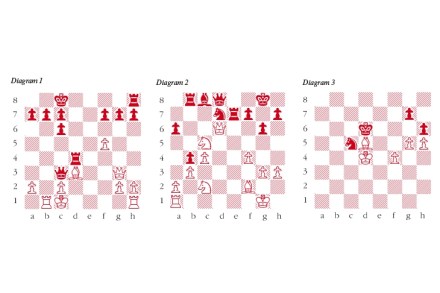
Magnus Carlsen has retained the World Championship but only after Sergei Karjakin, the challenger, missed some glorious opportunities. In game 9 Karjakin, already a point ahead in the match, built up a formidable attacking position, only to miss the coup juste at the critical moment.   Karjakin-Carlsen, New York (Game 9) 2016 (see diagram 1)   In the diagram position, Karjakin played 39 Bxf7+ which fizzled out to a draw after 39 ... Kxf7 40 Qc4+ Kg7 41 d5 Nf5 42 Bc3+ Kf8 43 Bxa1 Nxh4+ 44 Qxh4 Qxd5 45 Qf6+ Qf7. What Karjakin missed was 39 Qb3 when all the variations work in his favour, e.g. 39 ... Nf5 40 Bxf7+ Kg7 41 Rh3 (forced) 41 ... Qe7 (threatening ...Nh4+) 42 Bg8 Nh4+ 43 Rxh4 Qxh4 44 Qf7+ Kh8 45 Qxc7 Kxg8 46 d5 which should win.

Game of the year

Probably the most spectacular game played in the past year was the brilliant win by Gawain Jones in the Olympiad. Gawain, a devotee of the King’s Indian Defence, succeeded in fashioning a masterpiece very much in the style of those King’s Indian heroes David Bronstein, Mikhail Tal and Leonid Stein.   Nguyen (Vietnam)-Jones (England): Baku Chess Olympiad 2016; King’s Indian Defence   1 d4 Nf6 2 c4 g6 3 Nc3 Bg7 4 e4 0-0 5 Nf3 d6 6 h3 e5 7 d5 Na6 8 Be3 Nc5 9 Nd2 Nh5 This is highly unusual. In previous play, Black almost invariably secured the position of his queen’s knight with 9 ... a5.

London classic

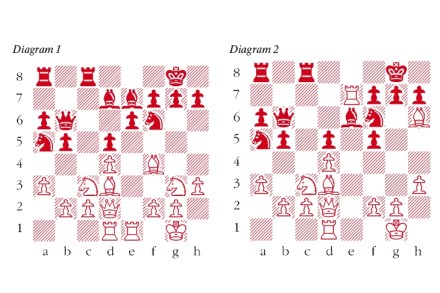
The annual London Classic is now underway at Olympia. Understandably Magnus Carlsen, after his exertions in New York, is not competing. Nevertheless, the line-up is extremely powerful, consisting of Maxime Vachier-Lagrave, Fabiano Caruana, Vladimir Kramnik, Lev Aronian, Hikaru Nakamura, Wesley So, Anish Giri, Viswanathan Anand, Veselin Topalov and our own Michael Adams. This week, a game and puzzle from previous encounters between the contestants. I have published this game before, but fresh computer analysis has revealed some exciting new possibilities.

Overreach

Game eight of the World Championship in New York broke the deadlock of hard-fought draws in the first seven games. Carlsen employed a closed variation of the queen’s pawn opening which had, in the past, been popularised both by Johannes Zukertort and Akiba Rubinstein. The opening merged into a level but still fertile middlegame. At this point Carlsen overreached and after a sequence of sub-optimal moves on both sides, doubtless occasioned by time trouble, the black defence emerged victorious. Carlsen-Karjakin: World Championship, New York (Game 8) 2016; Zukertort/Rubinstein 1 d4 Nf6 2 Nf3 d5 3 e3 e6 4 Bd3 c5 5 b3 Be7 6 0-0 0-0 7 Bb2 b6 8 dxc5 A strange choice, relinquishing his full control of e5, which is normally a key plank in the white attack. 8 ...