Chess

Mighty Magnus

The world champion is back on form. After winning the overall laurels in last year’s Grand Tour, and taking first prizes on tie break at both London and Qatar in December, Carlsen secured a convincing and outright triumph at the Tata Steel elite tournament in Wijk aan Zee, Holland, last month. His margin of victory was clear and he remained unbeaten throughout. Leading scores out of 13 possible were as follows: Carlsen 9/13; Caruana and Ding Liren both 8. Wesley So, formerly of the Philippines but now, like Caruana, representing USA, scored 7, but was the only other unbeaten player. Britain’s Micky Adams gained a disappointing 5 points, which left him sharing last place.

Irresistible force

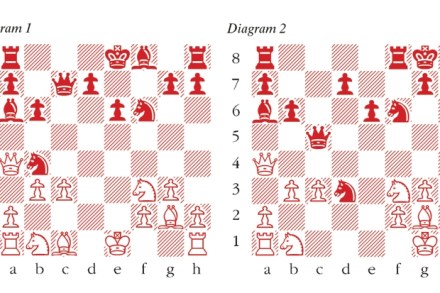
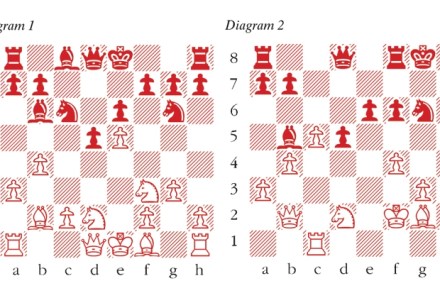
Alexander Alekhine was one of the immortals of the chessboard — world champion from 1927, when in an epic war of attrition at Buenos Aires 1927 he had wrested the championship from Capablanca, until 1935, and again from 1937 until his death in 1946. His victories at the tournaments of San Remo 1930 and Bled 1931 number among the most devastating performances in the history of the game. The historic table and pieces, with which the two titans fought their battles, is a prime treasure of the Buenos Aires chess club. Alekhine’s forte was the whirlwind attack.

Keres scene

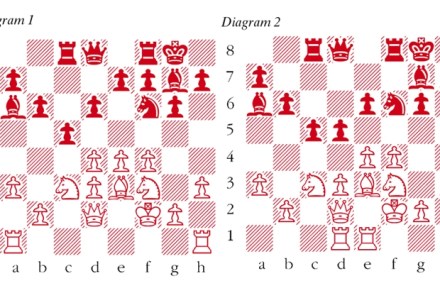
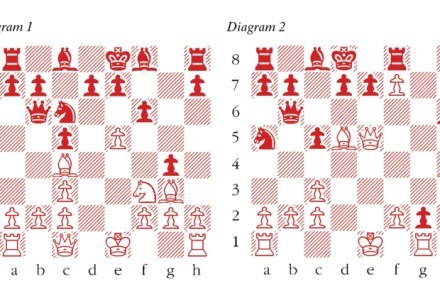
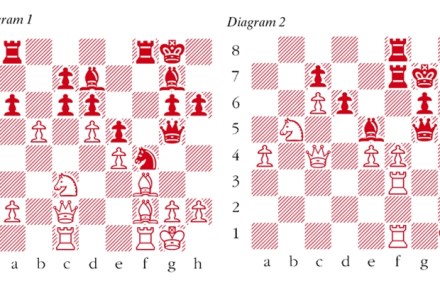
This week I conclude my homage to the great Estonian grandmaster Paul Keres, who was born a century ago this month. The game I have selected to round off my tribute is an incendiary victory against the red czar of Soviet chess, Mikhail Botvinnik. In their earlier clashes Botvinnik reeled off a series of wins, and by the mid-1950s the Soviet world champion led by seven to one in terms of decisive games. Then Keres struck back in the USSR championship and Alekhine Memorial tournaments from 1955 and 1956. This week’s game is the latter of those inflammable wins. Keres-Botvinnik: Alekhine Memorial, Moscow 1956; Sicilian Defence 1 e4 c5 2 Nf3 Nc6 3 d4 cxd4 4 Nxd4 Nf6 5 Nc3 d6 6 Bg5 e6 7 Qd2 h6 8 Bxf6 gxf6 Botvinnik often resorted to this double-edged variation of the Sicilian defence.

Pauline conversion

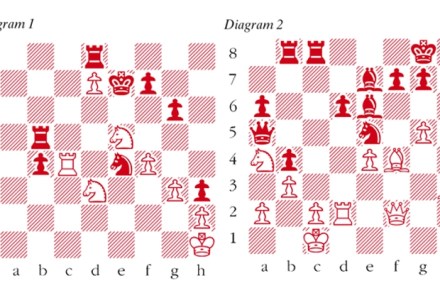
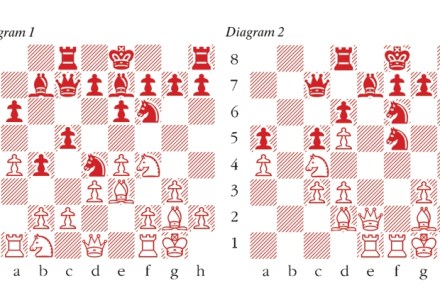
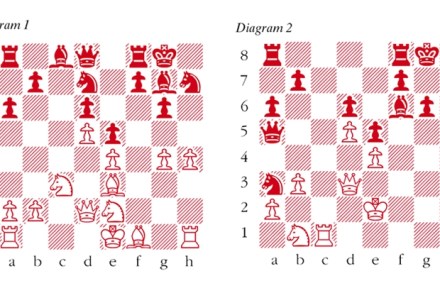
Paul Keres, the Estonian grandmaster and many times world championship contender, was born a hundred years ago this month. His record against world champions was very impressive: he defeated all nine in sequence from Capablanca to Bobby Fischer. Keres was probably the strongest player, pace Nimzowitsch, Rubinstein and Korchnoi, never to have won the world title. The hallmark of a Keres win was a flowing initiative, often directed towards the opposing king, frequently converted into victory by a shattering sacrifice. Here he is at his best. Keres-Spassky; Riga 1965 18 d5! Despite the two pawn deficit, Keres has a huge initiative against Spassky’s disorganised and undeveloped position. 18 ...

Paul stories

An excellent recent article by Dominic Lawson in Standpoint magazine reminded me of the greatness of Paul Keres. The Estonian grandmaster,whose centenary falls this month, was silver medallist in no fewer than four world championship Candidates tournaments. (I will be writing about him next week.) Another illustrious player (one with the same first name) is Paul Morphy, the victor of Bobby Fischer’s favourite masterpiece. I saw Fischer demonstrate this game to Fidel Castro during the 1966 Olympiad in Havana and it forms the topic of this week’s analysis.

Winter’s tail

The London Classic, the end of the million-dollar Grand Tour, was something of a damp squib. A surfeit of draws meant the event largely boiled down to who was most effectively able to despatch the cellar dwellers Anand and Topalov. Top scores out of nine were as follows: Carlsen, Giri and Vachier-Lagrave 51/2 each, Aronian 5, and Britain’s Mickey Adams 41/2. What to do about such a preponderance of drawn games? In the past, whenever the threat of draw death has loomed, some charismatic genius — Alekhine, Tal, Kasparov — has emerged to revitalise the game at the top. But the reigning champion and overall Grand Tour winner, Magnus Carlsen, effective as he is, simply does not possess this kind of dynamism.

Banking on chess

As the new year begins, I pay a final tribute to the city financier Jim Slater, who did so much to support British chess and who was instrumental, with Henry Kissinger, in rescuing Bobby Fischer’s challenge against Boris Spassky from Reykjavik 1972. Slater offered £50,000 to increase the World Championship prize fund, created awards and prizes for the first British grandmasters (of which I was a grateful recipient) and sponsored tournaments to promote British chess. This new year column celebrates Jim Slater’s first foray into sponsorship of chess. He died towards the end of 2015.

London calling | 10 December 2015

By the time this article appears, the London Classic at Olympia and the newly created brainchild of the indefatigable Malcolm Pein, the introduction of the British Knockout Championship, will have been underway for some time. The prize fund in the Classic is $300,000, this being part of the new global Grand Chess Tour which has tournaments in St Louis and Norway, where the overall prize fund available amounts to over $1,000,000. Given the lavish support for these two events, a recent article in the Guardian by Stephen Moss entitled ‘Grandmaster Crash — How English Chess Pawned Its Future’deserves attention.

London Classic | 3 December 2015

The annual London Classic, inspired and organised by the indefatigable Malcolm Pein, is now underway at London’s Olympia. The website is www.londonchessclassic.com and in the stellar line-up are Magnus Carlsen, Fabiano Caruana, Hikaru Nakamura, Veselin Topalov, Alexander Grischuk, Viswanathan Anand, Anish Giri, Lev Aronian, Michael Adams and Maxime Vachier-Lagrave. This is the highest-rated tournament ever held on British soil, though Nottingham 1936 can challenge for quality given that five world champions were competing, namely Emanuel Lasker, Capablanca, Alekhine, Euwe and Botvinnik. London has been the scene of many brilliant games, jewels in the crown of chess art. This week I give two examples of coruscating brilliance.

Chess Maecenas

Last week saw the death of the city financier Jim Slater. He was famous in chess circles for joining Henry Kissinger in persuading Bobby Fischer to play his 1972 World Championship match against Boris Spassky in Reykjavik. Kissinger’s contribution was a diplomatic phone call to Fischer, while Slater pumped extra cash into the prize fund and said Fischer was ‘chicken’ if he did not come out to play. Slater also supported British chess by offering thousands of pounds in incentives for the first British grandmasters and by sponsoring tournaments to promote British talent. I won the first of these, from which this week’s game and puzzle are taken.

Grand Larsen-y

It is said that more books have been written about chess than about any other game, sport or pastime. I can well believe it. When the Chess and Bridge (shop.chess.co.uk) catalogue dropped through my letterbox last week, I counted 360 book titles, and I know that is just the tip of the iceberg. One book that caught my eye in the catalogue was the unlikely entry Best Larsen’s Bent Games of Chess. I know that Bent Larsen, a supergrandmaster who in his time defeated Botvinnik, Smyslov, Tal, Petrosian, Spassky, Fischer and Karpov, sometimes resorted to weird openings, but the catalogue typo seemed to be taking things a little far. The game below is based on one from a new book on Larsen, Larsen Move by Move by Cyrus Lakdawala (Everyman Chess).

Sporting chance

I was not quite sure whether to be annoyed or relieved about the recent High Court decision not to recognise bridge as a sport. On the one hand, it’s a comfort to know that there is now little danger of British bridge and, pari passu, chess being classified alongside activities that feature perspiring individuals running around in underwear. Chess should, in my opinion, be dignified by elegant surroundings, with the players in formal attire, as in the fictional sequence of the James Bond movie From Russia with Love, or the encounters between Nigel Short and Garry Kasparov that were screened by Channel 4 in 1987.

Winter of discontent

The two great Soviet world champion Russians, Anatoly Karpov and Garry Kasparov, have almost always taken divergent paths. Karpov was the golden boy of the Soviet establishment, while Kasparov was an early supporter of glasnost and perestroika. A détente occurred when Karpov visited Kasparov in prison after he was incarcerated by the Putin regime for taking part in a public protest in Moscow. But their ancient opposition continues. Kasparov’s new book, Winter Is Coming: Why Vladimir Putin and the enemies of the free world must be stopped (Atlantic), is a challenge to the Kremlin and the Russian president. Kasparov prepared for its publication by emigrating to New York.

Doctor Hou

Hou Yifan has won what must be considered one of the strongest, if not the strongest, all-women chess tournaments ever held. Staged in the opulent surroundings of the Casino in Monte Carlo, the organisers succeeded in arranging a line-up which could have been improved upon only if Judit Polgar had agreed to participate. Judit, after many years at the top of female chess, has finally retired. Leading scores in Monaco were as follows: Hou Yifan 9/11; M. Muzychuk and Koneru 7; Cramling and Pogonina 6. It was unfortunate that there was no British representation in this stellar competition. Indeed, ever since 1976 when the English women’s team won the silver medals in the Haifa Olympiad, there seems to have been a steady decline in English women’s chess.

Ex libris

When I first studied chess I thought it was a golden age for chess literature. There were the classics such as Nimzowitsch’s My System and Reti’s Masters of the Chessboard; a series of publications by Harry Golombek on his heroes Reti, Capablanca, Botvinnik and Smyslov; and Peter Clarke’s wonderful elucidations of the best games of Mikhail Tal and Tigran Petrosian. In the recent past chess authors have tended to rely too much on computer analysis and databases. Fortunately, we are now in a second golden age, where the computer is the servant rather than the tyrannical master. Garry Kasparov’s mighty My Great Predecessors series on world champions may be the best series of chess books ever written.

Thud and blunder

The Fidé World Cup, which finished last week in Baku, boasted over $1 million in overall prize money, with $100,000 going to the winner. The format consisted of short sharp knockout matches, hardly congenial to heavyweight contenders such as Kramnik, Topalov, Aronian, Nakamura and Caruana, who were all eliminated in the early stages. The final, as befits an ultimate shoot-out, lasted much longer, and extraordinarily the ten games between Sergei Karjakin and Peter Svidler all ended decisively. Karjakin came back from the grave on more than one occasion to secure the laurels, but the tournament was mainly notable for the egregious blunders committed by both sides.

Black death

Joseph Henry Blackburne was the leading British tournament player towards the end of the 19th century. It could be said that he challenged Steinitz for world matchplay supremacy, though he could not hold his own with the great Austrian strategist. A monumental new book by chess scholar Tim Harding represents a huge contribution to chess literature. Harding has produced a full biography with many games, and has done far more than just reproduce 19th-century commentary. In this week’s game he pinpoints a critical fulcrum, missed by previous commentators, where Blackburne could have seized the advantage.

Homer nods

Paul Morphy, in a strange prefiguration of the later career of Bobby Fischer, was often described as ‘the pride and sorrow of chess’. In the late 1850s he blazed like a meteor across the chess firmament. He sprang to prominence by thoroughly defeating the German master Louis Paulsen in the New York tournament of 1857. Based on this success, Morphy travelled to Europe where, in quick succession, he inflicted match defeats on the established European masters such as Lowenthal, Harrwitz and finally Adolf Anderssen, who was very much regarded as champion after his victory at the London tournament of 1851. Morphy’s victories were so great that we tend to regard him as a titan of chess, but this week’s game shows that he was also human.

Coincidence

My grandmaster colleague James Plaskett has two passions, the pursuit of the mythical giant octopus (ongoing) and a fascination with coincidence. Is the latter just a concatenation of unrelated circumstances, or does it have some deeper meaning, signifying something in the air at a particular time? How, for example, does one explain the virtually simultaneous, yet certainly isolated, discovery of the calculus by Newton in England, Leibnitz in Germany and Kowa Seki in Japan? So Plaskett would, I am sure, be intrigued by the coincidental publication by two quite different publishing houses, of two books, both by American authors, about simplification, liquidation and the exchange of pieces?

Grand Tour

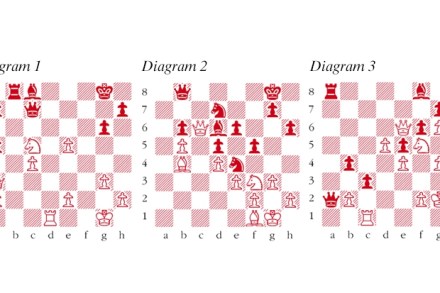
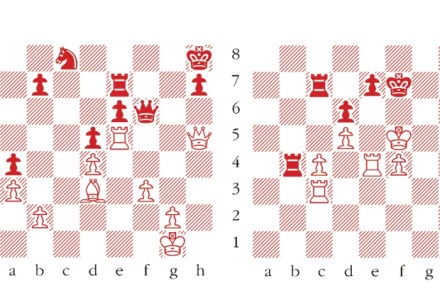
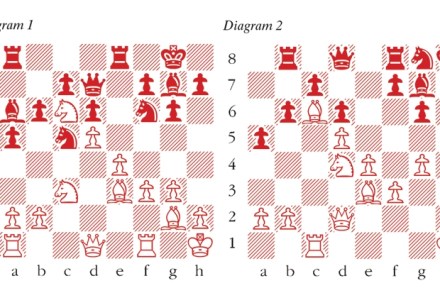
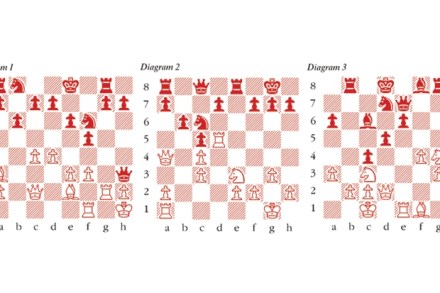
This week I conclude my coverage of the St Louis leg of the million dollar Grand Tour.   Carlsen-So: Sinquefield Cup, St Louis 2015 (see diagram 1)   Although Carlsen is a pawn down here his knight is so much better than Black’s bishop that this small material imbalance is essentially irrelevant. 29 a4 Bd8 30 Rd4 Kf8 31 Rfd1 Rc6 32 Ne3 Bb6 33 Nc4 Bxd4 34 Nxa5 This zwischenzug regains the pawn. 34 ... Qb6 35 Nxc6 Bc5 36 Qd5 e3 37 a5 Qb5 38 Nd8 Ra7 39 Ne6+ Ke8 40 Nd4 Carlsen could have terminated the game more swiftly with 40 Nxc5 Qxc5 41 Qg8+ Kd7 42 Qxh7+ Kc6 43 Qxg6 when the pressure against d6 kills any black counterplay. 40 ...