Chess

Knight outriders

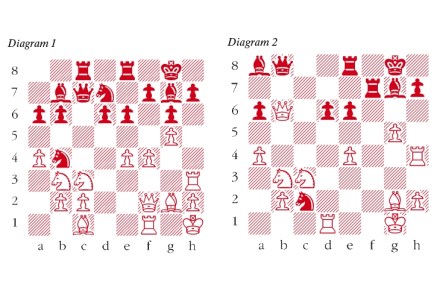
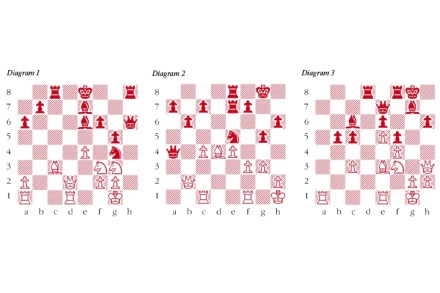
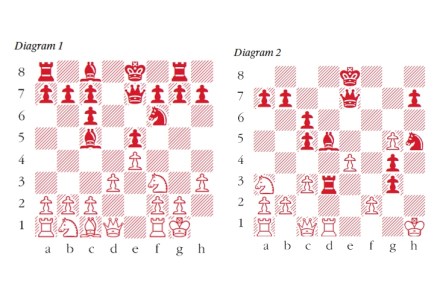
A good rule of thumb is to avoid sending off knights to excursions at the edge of the board, where their mobility can be limited. Exceptions exist, of course, in particular where a knight strikes from the extremities to land a decisive blow against the enemy king. A good example arose in a win by Michael Adams, Britain’s best performer in the recently concluded Gibraltar Tradewise Masters. The way in which Adams destroyed his opponent brought to mind some classic examples from the greats in similar vein.   Adams-Grandelius: Gibraltar Masters 2018 (see diagram 1)   Black has attempted to equalise the game by clearing the centre but has carried out this manoeuvre too early and exposed his king to an attack. Rather than recapturing on d5, Adams now played 17 Nh6+! Kh8 17 ...

Chess on the Rock

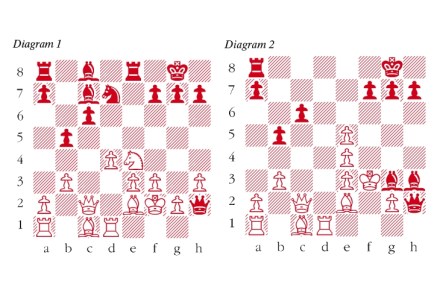
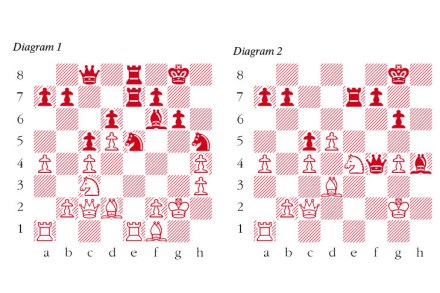
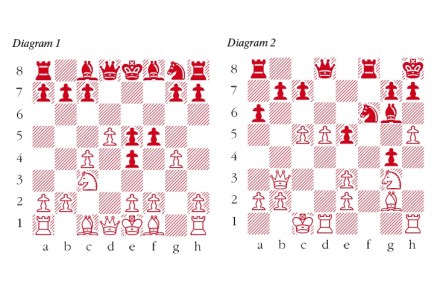
The Armenian Grandmaster Levon Aronian has won first prize of £25,000 in the important Tradewise Masters which has just finished in Gibraltar. Britain’s Mickey Adams also shared first place, but due to the exigencies of the tie-breaking system it was Aronian who progressed to the play-off, where he defeated the leading French representative Maxime Vachier-Lagrave.   Here are some extracts from an event which has consistently been voted the world’s best open competition.   Aronian-Hoolt: Gibraltar Masters 2018 (See diagram 1)   Black is a pawn up but White has tremendously active rooks and a juicy square on e5 for the knight. 34 Nf6! This proves remarkably awkward. Black cannot capture as 34 ... gxf6 35 Qxf6+ Rg7 36 Rd7 Reg8 37 Rcc7 wins. 34 ...

Hypnosis?

Various champions have been accused of hypnotising their opponents, including Alexander Alekhine, Mikhail Tal and, not least, the reigning world champion, Magnus Carlsen. The respective accusers were the grandmasters and world-title candidates, Efim Bogolyubov, Pal Benko and the relatively recently deceased, Viktor Korchnoi.   The latter was an adept in the dark arts of presumed parapsychology; indeed Korchnoi’s 1978 challenge for the chess crown was dominated by suspicions of paranormal activity. It was evident that Korchnoi simply could not comprehend the magnitude of Carlsen’s successes, finding the quality of his play incompatible with his superlative results.

Frankenchess

A remarkable event took place in London towards the end of last year, when the AlphaZero computer program took on one of the leading commercial programs, Stockfish, in a 100-game match. Astonishingly AlphaZero won by the overwhelming score of 28 wins, no losses, with the remainder of the games being drawn. AlphaZero is the brainchild of Demis Hassabis and his team at Deep Mind. I had the pleasure of playing against Demis in a simultaneous display when he was just eight years old. It was absolutely evident that he possessed an extraordinary intellect, and he has gone on to invent revolutionary processes for creating new types of AI. He was awarded CBE in the New Year’s Honours list. In my opinion, he is nearly up there with Newton and Darwin in the pantheon of British geniuses.

Willing to wound | 18 January 2018

‘Willing to wound and yet afraid to strike,’ wrote Alexander Pope about Atticus. Those lines more or less describe the entire tone of the London Classic, which concluded towards the end of last year. Though it was a powerful event, there were too many anodyne draws to stir the blood of either the live audience or the substantial online one. In the first three rounds, there was not one decisive game, while in the clash between Aronian and Karjakin, the latter, as if reluctant to break union rules and actually win a game, agreed a draw in a winning position.   The final scores (out of nine) were as follows: Caruana and Nepomniachtchi 6, Carlsen, Vachier-Lagrave and So 5, Nakamura 4½, Aronian 4, Karjakin 3½, Anand and Adams 3.

On speed

Although it does not have the prestige of the Classical World Championship (to be staged in London in November), the Rapid and Blitz championships recently concluded in Saudi Arabia carried not just worthy titles, but an impressive overall prize fund of $2 million. Viswanathan Anand emerged victorious in the Rapid, while Magnus Carlsen dominated the Blitz. The only fly in the ointment was the refusal to grant visas to Israeli players, an omission excoriated by Carlsen. This week, key extracts from play in both championships.   McShane-Anand, Riyadh Rapid 2017 (see diagram 1)   The veteran new champion strikes with a bolt from the blue against a leading British grandmaster and winner of the recent UK Knockout Championship. 51 ... Qh3+!

Game of the year | 4 January 2018

It is traditional that in my first column of the new year I review the previous 12 months and select the most outstanding game played at elite level to receive the accolade of game of the year. This time, there is little doubt that the most spectacular game of 2017 was the win by the Chinese grandmaster (and now World Championship candidate) Ding Liren against Jinshi Bei from the Chinese League. This game has become known as the Chinese Immortal and, as with the original bearer of the immortal accolade, Anderssen-Kieseritsky, London 1851, this game sees a queen sacrifice followed by a devastating attack against the opposing king. Indeed, the closing stages resemble one of the wild king hunts of the 19th century rather than a game between modern experts.

Grand prix | 13 December 2017

The London Classic is over and full reports in this column will follow in the new year. Meanwhile, we now know the line-up for the World Championship candidates tournament, which is to be staged in Berlin next March and will determine the challenger to Magnus Carlsen for the supreme title. Leading results in the Fidé (World Chess Federation) event in Palma de Mallorca were as follows: 1= Dmitry Jakovenko and Lev Aronian 5½.   The upshot is that the following players now have secure places in the Candidates tournament: Sergei Karjakin, Lev Aronian, Ding Liren, Shakhriyar Mamedyarov, Alexander Grischuk, Fabiano Caruana, Wesley So and Vladimir Kramnik.

Books of the year | 7 December 2017

The English Chess Federation has awarded its Book of the Year prize to Timman’s Titans: My World Chess Champions by Jan Timman (New in Chess). This is a good choice for a present: Timman’s book is aimed at both the expert and the general chess enthusiast, and describes his interactions with many world champions.   A perennial favourite for the committed chess fan is the great series by Garry Kasparov on himself and his predecessors as world champions. This comprises a 12-volume set which analyses his clashes for the title with Anatoly Karpov, Nigel Short and Vladimir Kramnik. This contribution by Kasparov is probably the most significant account ever produced in world chess literature.   This week, Kasparov losing to Jan Timman.

London Classic | 30 November 2017

The London Classic gets underway this weekend in Olympia. The line-up is formidable, including the world champion Magnus Carlsen, his predecessor Viswanathan Anand, and Sergei Karjakin, who challenged Carlsen for the title last year. The remaining contestants are as follows: Lev Aronian, Maxime Vachier-Lagrave, Fabiano Caruana, Wesley So, Ian Nepomniachtchi, Hikaru Nakamura and Michael Adams.   Carlsen comes fresh from his triumph in St Louis against the elite Chinese grandmaster Ding Liren. In a mixture of fast-play formats Carlsen triumphed by the overall score of 67-25, winning the match with 13 rounds to spare.

Alekhine’s heir

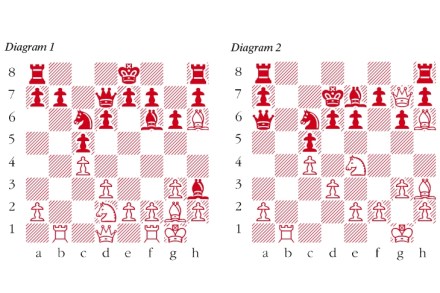
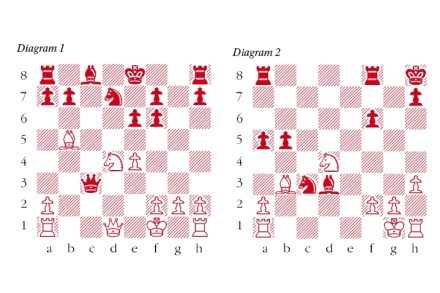
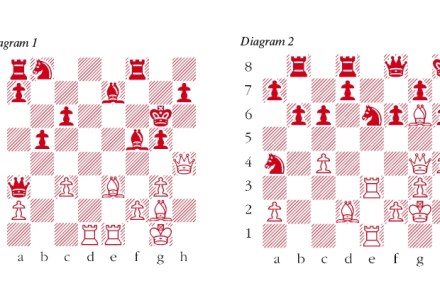
Garry Kasparov was without a doubt Alekhine’s creative heir. The 1985-2000 world champion said himself that he became entranced at an early age by Alekhine’s dynamic style, and that he was particularly impressed by Alekhine’s sudden attacks which came like lightning from a clear sky. This week some further examples of Alekhine’s genius, and a clear case where the great man’s influence could be detected in the play of his admirer.   Torres-Alekhine, Simultaneous display, Spain 1922 (see diagram 1)   Black’s next sets up a deadly double check. 28 ... Qxh3! 29 gxh3 Nf2+ 30 Kg1 Nxh3 mate   Alekhine-Colle, Paris 1925 (see diagram 2)   30 Qxd7!

Alekhine’s anniversaries

Alexander Alekhine was one of the two world champions (the other being his fellow native Russian Mikhail Botvinnik) who won, lost and regained the supreme title. In fact 2017 represents the 90th anniversary of Alekhine’s victory over the Cuban world champion José Raúl Capablanca at Buenos Aires 1927, and the 80th anniversary of his revenge match against Max Euwe, played on the Dutchman’s home turf, where Alekhine retrieved the title he had lost in 1935. On re-examining Alekhine’s games recently, I was struck by the proliferation of queen sacrifices which characterise his vigorous creative approach, several against the leading exponents of the day.

Master class

While researching some early games in the Bf4 version of the Queen’s Pawn openings favoured by world champion Magnus Carlsen, I came across an epic publication which called to mind that fine, seminal and instructive writer, Polish grandmaster Savielly Tartakower. His 500 Master Games of Chess, co-written with J. Dumont, contains readable annotations to virtually ever game of importance played from the days of Philidor in the 18th century, up to the period immediately pre-dating the second world war. Apart from an excellent eye for selection of the best games, thus providing an effective tour d’horizon of the development of chess strategy and tactics over one and a half centuries, the erudition and pithiness of the comments make every game a pleasure to follow.

Chigorin lives

Nigel Short, who challenged Garry Kasparov for the world title in 1993, has made a reputation for employing slightly offbeat openings in order to derail opponents who are unused to non-standard situations. As part of his repertoire, Short has a penchant for the ancient Chigorin Defence, and has even employed a version of this in a game against Kasparov himself. Earlier this month Short triumphed handsomely in the Negros Open in the Philippines, taking first prize with 8 points from 9, well clear of the runners-up, Karen Grigoryan and Nguyen Duc Hoa, who finished on 7. In round one, Short wheeled out the Chigorin to great effect.

Brief encounter | 26 October 2017

Books on the world championship matches used to appear regularly, with some having multiple written accounts. In recent years, though, these have declined, not least because of the decision by Fidé, the World Chess Federation, to keep reducing the length of the matches. When Labourdonnais and Macdonnell clashed in London in a series of contests during 1834, the total number of games played was 85. This was the first competition which (although it took place over a series of smaller consecutive events) might be regarded as the inaugural chess match to pitch the two acknowledged frontrunners of the day against one another. The longest world championship match to take place since then was the first meeting between Karpov and Kasparov, in 1984/1985, which extended to 48 games.

Father William

The American grandmaster William Lombardy died last week (4 December 1937–13 October 2017). He was an amazing talent in his youth, winning the Junior World Championship of 1957 with a 100 per cent score. During the early 1960s Lombardy had the potential to rival the American genius Bobby Fischer, but he decided instead to abandon chess and become a Catholic priest, though he also later renounced that vocation. As a chess-playing man of the cloth, Lombardy was the strongest since the Revd John Owen in the 19th century, who was a regular opponent of Paul Morphy.   Having abandoned his religious calling, Lombardy returned to chess but never quite recaptured the promising sparkle of his youth.

Prodigy

Twelve-year-old Rameshbabu Praggnanandhaa scored a sensational result in the recent Isle of Man Masters. At the age of ten years and ten months, he achieved the extraordinary distinction of becoming the youngest official international master in the history of chess. The youngest ever grandmaster is last year’s world championship challenger Sergei Karjakin, who was elevated to the chess peerage when he was 12 years and seven months old. Praggnanandhaa now has five months in which to break that record.   In the Isle of Man Praggnanandhaa scored a respectable 50 per cent (4½/9) and notched his first win against a grandmaster rated 2700+ — the former British champion David Howell. Here is Praggnanandhaa’s amazing victory.   Praggnanandhaa-Howell: chess.

Historic

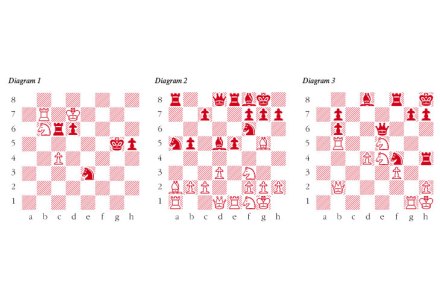
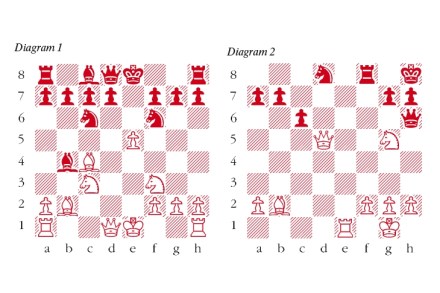
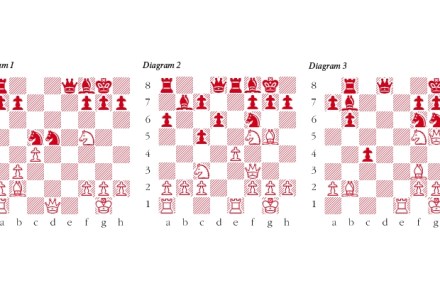
Congratulations to the organisational team of the Isle of Man Masters, which concluded last weekend. They assembled what must have been the strongest ever field for an open tournament in the history of international chess. Magnus Carlsen showed the kind of dominance he can achieve when he moves into overdrive. Leading results were: Carlsen 7½/9, Viswanathan Anand and Hikaru Nakamura both 7, with Michael Adams, Fabiano Caruana and the former world champion Vladimir Kramnik sharing 4th prize.   Perelshteyn-Carlsen: chess.com Masters Isle of Man 2017 (see diagram 1)   Although Black is a pawn down, his compact pawn structure and active play give him the advantage. 36 ... Rh4 37 Bc3 Rbh8 38 g3 Rh1+ 39 Kg2 R8h2+ 40 Kf3 g4+ After this the white king becomes exposed.

Gamesters of Triskelion | 28 September 2017

The triskelion, or three-legged emblem, has been on the coat of arms of the Isle of Man since the late 13th century. The Isle of Man has now attracted one of the strongest ever lineups for an open competition in the history of formal chess tournaments. The lists include world champion Magnus Carlsen, former champions Vladimir Kramnik and Viswanathan Anand, and Hikaru Nakamura as well as the former world title challengers Boris Gelfand and Nigel Short. The British contingent is joined by Michael Adams, the newly minted British champion Gawain Jones, and David Howell. Doubtless the munificent prize fund of £133,000 is a lure.

Bronstein’s legacy

Last week I focused on the games and somewhat tragic career of the ingenious David Bronstein. Before his time the King’s Indian Defence was viewed with a certain degree of suspicion, not least because of the early and gigantic concessions it makes to White in terms of occupation of central terrain. It was Bronstein who resurrected and then espoused that previously neglected defence, paving the way for later practitioners, such as Tal, Fischer and Kasparov. Nowadays,the KID has become one of the main highways of opening theory, along which both grandmaster and neophyte may travel, secure in the knowledge that the defence is essentially sound. A new book, The King’s Indian Defence: Move by Move (Everyman Chess) by Sam Collins brings the theory of this opening fully up to date.