Chess

We still have Paris

The second leg of this year’s Grand Tour was contested in Paris, almost immediately after Leuven. For Paris, Anish Giri was replaced by the former world champion Vladimir Kramnik, increasing the overall strength of the competition.   Final results and top prizes in Paris were as follows: Hikaru Nakamura 13 ($37,500), Sergei Karjakin 10 ($25,000), Wesley So 8 ($20,000), Lev Aronian 7 ($15,000). The overall standings after completion of the first two elements of the circuit are: Wesley So 21, Hikaru Nakamura 20, Sergei Karjakin 19 and Maxime Vachier-Lagrave 15.

The Caruana conundrum

Over the course of this year Fabiano Caruana has scored splendidly in tournaments with classical time limits, notching up first prizes in the Berlin Candidates tournament, Baden Baden and Stavanger. The first of these triumphs qualified him to contest the World Championship match against Magnus Carlsen, the title holder, in London in November. In the second and third Caruana finished ahead of Carlsen himself on both occasions. Nevertheless, the worm in the fruit was that Caruana had to fight to the death with the white pieces to save himself against Carlsen at Baden Baden while in Stavanger Caruana actually lost his individual clash with the world champion, recovering brilliantly to take the overall laurels. Where Caruana has slipped up is in quickplay events.

Altibox

Fabiano Caruana has won the elite Altibox tournament ahead of world champion Magnus Carlsen. This result might appear to give a promising boost to Caruana’s prospects for his world title challenge to Carlsen, which is due to take place in London in November. Alas, that is not the case. It is true that Caruana triumphed by a narrow margin over the champion in the main event, but in their individual clash it was the Norwegian who once again gained the laurels. This outcome further extends Carlsen’s already impressive lead over Caruana in their individual tussles. Carlsen therefore remains firm favourite to retain his title at the chess summit.

Viktor the Terrible

Viktor Korchnoi is the subject of a poignant new book from the distinguished pen of the Dutch grandmaster and former Soviet emigré Genna Sosonko. The title Evil Doer (published by Elk and Ruby) refers to the damnatio memoriae meted out by the USSR after Korchnoi’s very public defection to Amsterdam from the socialist paradise in 1976. Thereafter, Korchnoi combined the pursuit of a successful chess career, including two challenges for the world title, with the life of a persecuted traitor to the anointed heirs of Marx, Lenin and Stalin.   As a fellow ‘betrayer’ of the Soviet chess empire, Sosonko is well placed to chronicle the inner emotions, haunting fears and occasional huge triumphs of one of the most prominent personalities ever to defect.

Title background

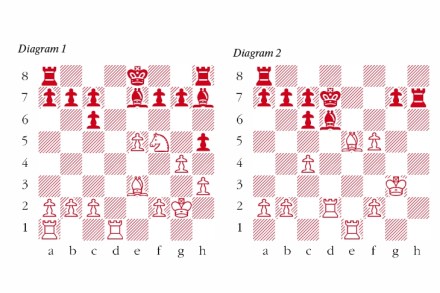
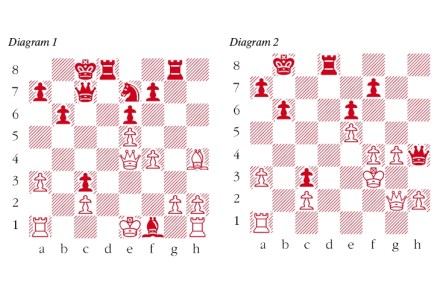
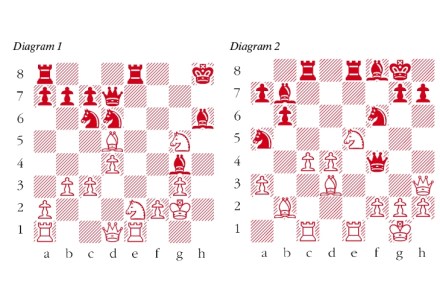
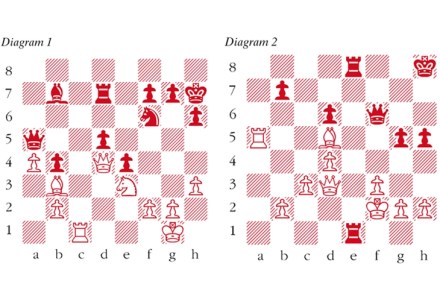
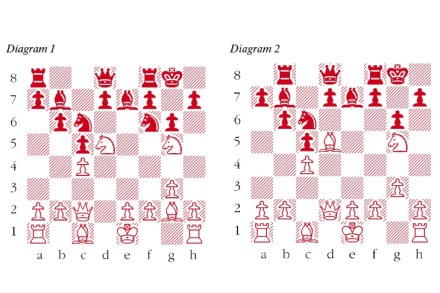
Magnus Carlsen and Fabiano Caruana will be contesting their World Championship match in London in November. As I mentioned last week, there is no better guide to the entire history of the World Championship than the extraordinary series by Garry Kasparov. He catalogues the best games of every champion, demonstrating how each one represents the intellectual ethos of his day. This week’s game is the magnificent clash which led to Kasparov himself becoming the youngest ever world chess champion.   Karpov-Kasparov: World Championship, Moscow (Game 24) 1985; Sicilian Defence   1 e4 c5 2 Nf3 d6 3 d4 cxd4 4 Nxd4 Nf6 5 Nc3 a6 6 Be2 e6 7 0-0 Be7 8 f4 0-0 9 Kh1 Qc7 10 a4 Nc6 11 Be3 Re8 12 Bf3 Rb8 13 Qd2 Bd7 14 Nb3 b6 15 g4 This move signals the start of an assault.

Sherpa

My Great Predecessors is an indispensable guide to the achievements, style and best games of the former world chess champions. It is a monumental series, consisting of five volumes, written by probably the greatest champion of them all, Garry Kasparov. In Modern Chess and Kasparov on Kasparov there are several more volumes, and in the latter Kasparov documents his own bouts for the title as well as his major career highlights. All titles are published by Everyman Chess. Kasparov’s oeuvre amounts to the most complete history of chess ever written.   This year’s World Championship match between Magnus Carlsen and Fabiano Caruana is set for London in November.

Short shrift

On 10 May, Britain’s most famous grandmaster, Nigel Short, chose the pages of the Times to announce his surprise candidacy for the post of president of Fidé, the World Chess Federation. It is high time indeed that someone had the courage to attempt the clean-up of this organisation, whose bank account has recently been terminated with extreme prejudice by UBS.   It will be essential for Nigel’s prospects that he receives the fullest backing of the English Chess Federation and its highest officials. To stiffen their resolve in the face of foreign blandishments, I urge ‘all who love the game’ (in the ringing words of the Times editorial in support of Nigel) to encourage the ECF to summon up their courage.

Musical chairs | 17 May 2018

Chess, the musical by Sir Tim Rice and the male half of ABBA, Björn Ulvaeus and Benny Andersson, runs at the London Coliseum until 2 June. I cannot recommend it more highly, especially for chess enthusiasts who recall the defections, alcoholism, protests, match terminations and paranormal interventions of the age of Tal, Spassky, Fischer, Korchnoi, Karpov and Kasparov.   The current generation of championship aspirants seems remarkably free of such controversy. In November, clean-living Fabiano Caruana challenges equally clean-living Magnus Carlsen in London for the world title.   Their recent exploits in Shamkir and St Louis indicate that after the next round of musical chairs, Carlsen will retain the sole seat at the chess Olympus.

Biblical

Matthew Sadler was the star of the evening on the night of the Royal Automobile Club annual dinner which I mentioned in this column on 14 April. It is traditional that a grandmaster takes on the assembled forces of the RAC, who this year won the Hamilton Russell Trophy. On this occasion it was Matthew who put to the sword 30 opponents simultaneously.   He also distinguished himself this year by defeating the British champion Gawain Jones in the semi-final, and the former champion Jon Speelman in the final.   Thanks to Matthew for his notes to this game, upon which my comments are based.   Sadler-Jones: King’s Head Blitz memorial 2018; English Opening   1 Nf3 g6 2 c4 Bg7 3 Nc3 c5 4 g3 Nc6 5 Bg2 d6 6 0-0 Bf5 Adventurous. Black could aim to maintain symmetry with 6 .

Grenke

The Grenke Chess Classic, played in Karlsruhe and Baden Baden, has been won by Fabiano Caruana, who also won the World Championship Candidates tournament in Berlin (see Chess, 21 April). In his most recent success Caruana finished ahead of the world champion, Magnus Carlsen, by a clear point. Although Carlsen must remain the favourite for the forthcoming World Championship match between the two in London in November, the fact that Caruana can dominate a powerful field in this way and leave the world champion in his wake adds weight to the idea that he may be able to triumph then.   This week, some important milestones from Caruana’s latest laurels in Germany.

Viennese Waltz

The Vienna variation of the Queen’s Gambit is notable for a line in which the pieces conduct an elaborate dance around respective captures on opposite sides of the board. The variation has come into prominence as a result of a game from the recently concluded Berlin Candidates tournament. On the whole, in spite of the tactical complexities, Black appears to be emerging with safety, as is explained in the new book Queen’s Gambit Declined: Vienna by Krzysztof Panczyk and Jacek Ilczuk (Everyman Chess).   Ponomariov-Ivanchuk; Fidé World Cup, Khanty-Mansiysk 2011; Queen’s Gambit Declined, Vienna Variation   1 d4 Nf6 2 c4 e6 3 Nf3 d5 4 Nc3 dxc4 5 e4 Bb4 6 Bg5 c5 7 Bxc4 cxd4 8 Nxd4 Bxc3+ 9 bxc3 Qa5 This is typical of the variation.

Fischer redivivus

The Berlin qualifying tournament to determine the challenger to world champion Magnus Carlsen has ended in victory for the American grandmaster and Olympiad gold medallist Fabiano Caruana. Caruana will be the first homegrown American contender since the days of Bobby Fischer in 1972. The world championship match will take place in November in London. This is the first time it will have been held in London since 2000. (Before that, they were held there in 1986 and 1993.)   It is clear that mental preparation will form a key part of Carlsen’s approach to the London shootout.

Class club

The annual Hamilton-Russell competition for London Clubs has been won by the Royal Automobile Club, with the Marylebone Cricket Club in close contention. On Tuesday 17 April, the awards ceremony will take place in the Mountbatten Room of the Royal Automobile Club, Pall Mall, combined with the annual dinner for notables of the contesting teams. It is the premier annual social event of the London chess scene.   This week, a game won by Dominic Lawson from this year’s closely run event.   Lawson-Shankland: Hamilton-Russell Cup 2018; Scotch Gambit   1 e4 e5 2 Nf3 Nc6 3 d4 exd4 4 c3 dxc3 5 Bc4 cxb2 This is certainly playable but capturing so many pawns is dangerous. 5 ... d6 and 5 ... Nf6 are safer lines. 6 Bxb2 Bb4+ 7 Nc3 Nf6 8 e5 Acting immediately in the centre.

Space travel

No, not the type of space travel allegedly enjoyed by the World Chess Federation president, Kirsan Ilumzinov, during his self-confessed encounters with aliens — rather, the control of space conferred by certain types of chess opening as explained in Opening Repertoire 1 e4 by Cyrus Lakdawala (Everyman Chess). The industrious and prolific Lakdawala presents a smorgasbord of possibilities in an easy-to-learn repertoire for White, predicated on the ambition to dominate greater terrain. Against the Caro-Kann Defence he advocates 3 e5, while in this week’s game (featuring the early frontrunner in the Candidates tournament for the World Championship) Lakdawala recommends the space-gaining 3 e5 against the French Defence, as favoured by the guru of chess strategy Aron Nimzowitsch.

Victor Ludorum

A match which has attracted less attention than it deserves was Luke McShane’s victory over David Howell in the final of the UK Knockout championship, which coincided with the London Classic last December. En route to the final, Luke eliminated both the reigning British champion Gawain Jones and England’s most celebrated grandmaster, Nigel Short.   The following game from the final is furnished with notes based on those kindly provided by the victor.   Howell-McShane: British Knockout Championship, London 2017; King’s Indian   1 Nf3 Nf6 2 c4 g6 3 g3 Bg7 4 Bg2 0-0 5 d4 d6 6 0-0 Nbd7 7 Nc3 e5 8 e4 c6 9 h3 Qa5 10 Re1 exd4 11 Nxd4 Ne5 12 Bf1 Qb6 13 Be3 c5 Not 13 ... Qxb2 as then 14 Na4 Qb4 15 Bd2 Qa3 16 Re3 traps the queen.

Kramnik’s Immortal

Every so often a game is played which is worthy of joining the immortals in the pantheon of chessboard masterpieces. Anderssen v. Kieseritsky, London 1851, Zukertort v. Blackburne, London 1883, Botvinnik v. Capablanca, AVRO 1938; these are the jewels to which every chess player aspires. As Marcel Duchamp once observed: ‘not all artists are chess players, but all chess players are artists’. The former world champion Vladimir Kramnik played such a game against Levon Aronian, one of the pre-tournament favourites in the Berlin Candidates to determine the challenger to Magnus Carlsen’s crown. The championship match itself is set for London in November.

First round nerves

The three most important events in the World Chess Federation calendar are the World Championship match, the Olympiad and the Candidates tournament, all of them biennial. The last of these is now in progress in Berlin and the winner will go on to challenge Magnus Carlsen for the supreme title in London later this year. The first round witnessed some typical nerves which tend to afflict even leading players at the commencement of career-determining competitions.

Berlin

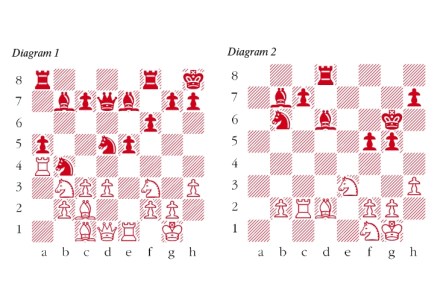
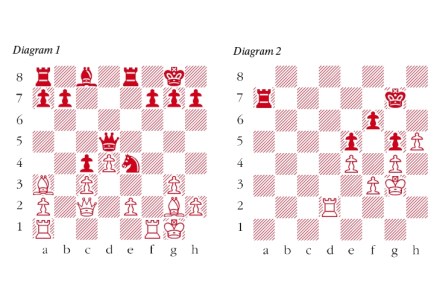
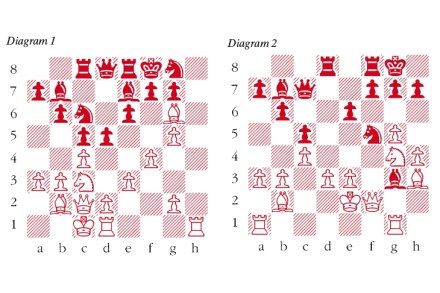
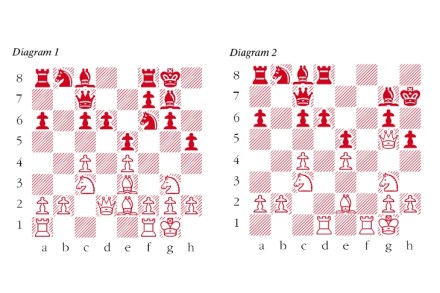
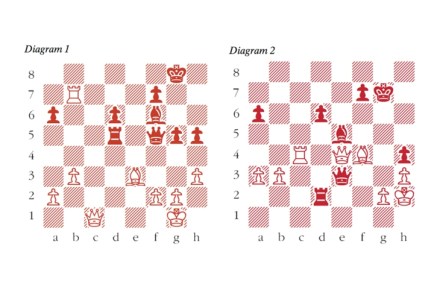
This weekend the Candidates tournament commences in Berlin to decide the challenger who will face Magnus Carlsen for the world title in London later this year. The favourite is Shakhriyar Mamedyarov, with a rating of 2814, and this week’s puzzle shows a sample of his trenchant style. Although he is not the highest-rated, my money is in fact on triple Olympiad gold medallist Levon Aronian (2797), who is capable of reaching great heights when on form. The rest of the field, in rating order, is as follows: Vladimir Kramnik (2800), Wesley So (2799), Fabiano Caruana (2784), Ding Liren (2769), Sergei Karjakin (2763) and Alexander Grischuk (2767).

Bunratty | 1 March 2018

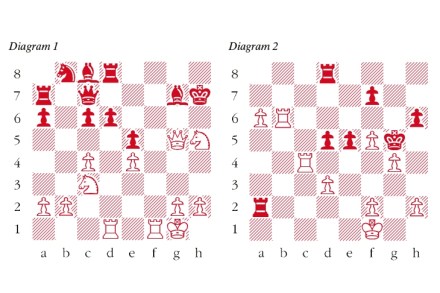
This year’s tournament at Bunratty in Ireland was the celebratory 25th in the series and I was invited to deliver the closing peroration. The competition was particularly stiff on this occasion, with British champion Gawain Jones sharing first prize with grandmaster Sergey Tiviakov, ahead of Nigel Short, Jon Speelman, Luke McShane and a host of other grandmasters and masters.   To break the tie a sudden death playoff was required, from which Tiviakov emerged the winner. For the key moment see this week’s puzzle. The game I have selected demonstrates the great talent of the female grandmaster Dina Belenkaya, of whom no doubt we shall be hearing much more.

Another Troy

One of the sharpest lines in the Ruy Lopez (1 e4 e5 2 Nf3 Nc6 3 Bb5 f5) is widely attributed to Wilhelm Karl Adolf Schliemann (1817-1872), said to be a relative of the Heinrich Schliemann (1822-1890) who discovered the site of Troy. Now it appears that the variation should in fact be attributed to Carl Jaenisch (1813-1872) since W.K.A.S. in fact advocated something rather different, namely 1 e4 e5 2 Nf3 Nc6 3 Bb5 Bc5 4 c3 f5. However as Junior Tay, author of the new book The Schliemann: Move by Move (Everyman Chess) points out, the name of Schliemann has stuck and it would take a lot of literary hard labour to undo the misattribution.