Chess

Dante’s millions

As I write, the London world championship is tied at 3½-3½, after seven games. In striving to move ahead, the challenger, Fabiano Caruana, has been the victim of the awesome mathematics of chess. According to the statisticians there are more possible moves in chess games than there are atoms in the observable universe. Ten to the power of 70 is the official estimate. As someone with a good Italian name and ancestry, Fabiano may be familiar with Dante’s Paradiso. In Canto 28 the poet writes: ‘Ed eran tante, che ‘l numero loro, Piu che ‘l doppiar de li scacchi s’inmilla.

Paradise mislaid

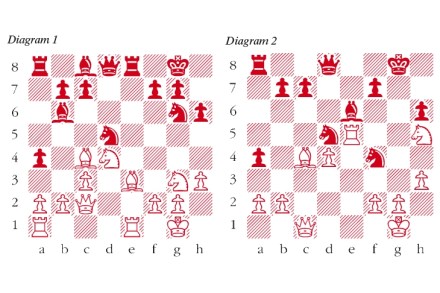
World champion Magnus Carlsen missed several chances to win with black in the first game of his title defence, currently continuing in London.   A black win right at the start is by no means ultimately a match winner, but is rather like breaking serve in the first set of the Wimbledon final.   Alexander Alekhine, in 1927 against José Capablanca and again Vassily Smyslov in 1957 against Mikhail Botvinnik, both went on to seize the supreme title after black wins in game one.   In this case, Carlsen built up a dominating position after some highly original opening strategy and an inspired temporary pawn sacrifice and now came the time to reap the harvest.

Nos morituri

Magnus Carlsen and Fabiano Caruana, those two gladiators of the mind, will duel in London during the remainder of this month for the title of world chess champion.   Twelve games will be played, and if no clear victor emerges there will be a rapidplay tie break on November 28. It is my prediction that in spite of the fact that their ratings are very close (Carlsen 2835, Caruana 2832), the more artistic Caruana will succumb to the extreme pragmatist Carlsen, by the score of 6½ to 4½.   Should Caruana somehow escape to a level score after the stipulated dozen games, then I hold out little hope for him in the speed chess tiebreak on 28 November. Carlsen has hitherto dominated Caruana in quick games and I foresee no miraculous reversal of this trend.

Man made

This year’s Isle of Man Masters, sponsored by Chess.com, could claim to be the strongest ever open chess competition. The line-up was formidable, with most of the English Olympiad squad participating, as well as former world champions Vladimir Kramnik and Viswanathan Anand.   As it was, the championship titans failed in their bid to capture the £50,000 first prize. Leading scores were as follows, with Radoslaw Wojtaszek emerging as the title holder after the obligatory playoff: Wojtaszek and Naiditsch Arkadij both scored 7/9 in the main event, ahead of Vladimir Kramnik, Alexander Grischuk, Hikaru Nakamura, Wang Hao, Gawain Jones, B. Adhiban and Jeffery Xiong, who all scored 6½.

Condottieri

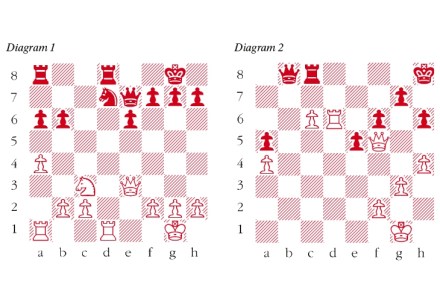
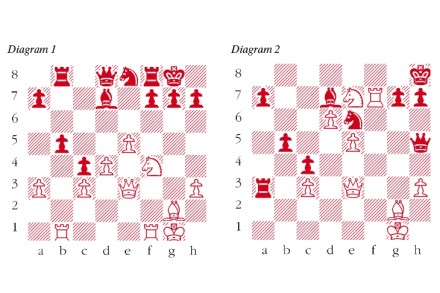
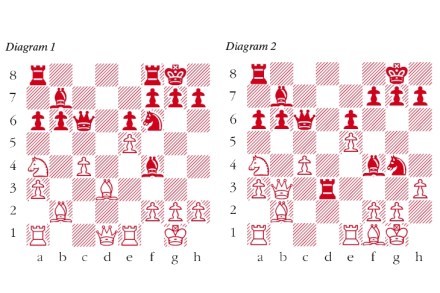
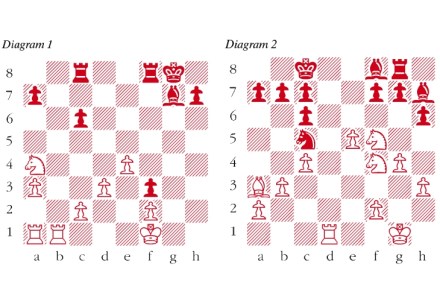
The recently concluded European Club Cup, held at Porto Carras in Greece, resembled late medieval Italian warfare — populated by armies of mercenaries who seemed to have no allegiance to the geographical area of the clubs they were representing. Thus the British grandmaster David Howell was on the same Norwegian team as the world champion Magnus Carlsen, while the Chinese grandmaster Ding Liren was playing on top board for the Alkaloid team from Macedonia. The eventual winners were Mednyi Vsadnik from St Petersburg. This week a selection of play from this remarkably powerful event.   Carlsen-Potkin: European Club Cup, Porto Carras 2018 (see diagram 1)   World champion Magnus Carlsen only achieved victory in one game. This game was, however, vintage Carlsen.

Ship ahoy

The Evans Gambit was invented by a British naval officer of the early part of the 19th century, Captain W.D. Evans, who invented a form of ship’s lighting which was given an award by the Tsar of Russia. Captain Evans’s gambit is highly suitable at club and county level and in the 19th century it captured the scalps of many great masters, including Johannes Zukertort and Adolf Anderssen. For the latter, see this week’s game. In modern chess it has been employed by Garry Kasparov, and even Viswanathan Anand and world champion Magnus Carlsen have fallen victim to its intricacies.

Eastern promise | 11 October 2018

The Batumi Olympiad ended as a great success for the teams from China, which captured the gold medals in both the open and women’s sections. England finished a most creditable fifth in the open, behind USA (silver) Russia (bronze) and Poland, our best result for decades. Meanwhile the bitter contest for the Fidé (World Chess Federation) presidential election concluded in victory for the Russian candidate, Arkady Dvorkovich.   Mr Dvorkovich evidently appreciated the value of the English candidate for president, grandmaster Nigel Short, since he promptly appointed him vice president after Short stepped down at the last minute.

Role model

World champion Magnus Carlsen is not competing in the Batumi Olympiad (of which more next week). Doubtless he is conserving his strength for his title struggle against Fabiano Caruana in London in November.   This lull gives me the opportunity to mention a new book about the great Emanuel Lasker, champion from 1894–1921, a role model of Carlsen’s. Lasker’s forte was to keep the ball in play through thick and thin in order to avoid draws. The same trait is evident in many of Carlsen’s victories, often achieved from risky situations.

Batumi Olympiad

The Chess Olympiad for national teams is now underway in Batumi, Georgia. Over 200 teams are competing and the lavish opening ceremony was attended by 5,000 spectators. This is certainly an indication of the increasing popularity of chess, paradoxically fuelled by the advent of computer technology. There are now 11 million online chess games played worldwide every day, and 600 million active chess players. Probably the most celebrated game ever played in a Chess Olympiad was the following clash between Boris Spassky and Bobby Fischer.

Interregnum

The only official interregnum in the reigns of the world chess champions was that between the death of Alekhine in 1946 and the accession of Botvinnik in 1948. There is, however, an unofficial interregnum which occurred when Bobby Fischer won the world title in 1972 but did not play a serious game of chess as champion and forfeited the title without play to Karpov in 1975. At this point, step forward Mikhail Tal. According to statistician John Ellis in the August issue of the British Chess Magazine, it was Tal who filled the void created by Fischer’s disappearance. From July 1972 to April 1973, according to the BCM, Tal played a record 86 consecutive games without a loss, comprising 47 wins and 39 draws.

Caruana chronicles

In the run-up to the Carlsen-Caruana World Championship match set for London in November, I will be previewing their prospects. The match pits Magnus Carlsen from Norway, the highest-rated player in the history of chess and world champion since 2014, against the top-ranked American grandmaster, Fabiano Caruana. Their chessboard styles could not be more different. Like his great predecessors Lasker and Karpov, Carlsen favours wars of attrition. Caruana plays more aggressively, openly and fluently, clearly influenced by Bobby Fischer. Who will win? My heart prefers Caruana, but my head says Carlsen, probably by the points score of 6½ to 4½.

Peaceful solution

In the recent super-tournament in St Louis, Magnus Carlsen, Fabiano Caruana and Lev Aronian opted to share the laurels. According to the regulations, any tie for first place should have been resolved by a playoff. But the three co-victors decided that they would prefer to share the trophy. This peaceful solution was in line with the tournament as a whole, where no fewer than six of the ten contestants remained undefeated, with two of them, the former world champion Viswanathan Anand and Maxime Vachier-Lagrave, drawing all their games. A staggering 82 per cent of the games were draws.

Shak attack

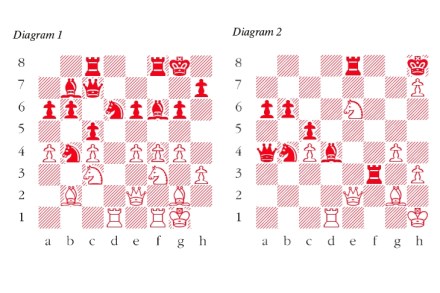
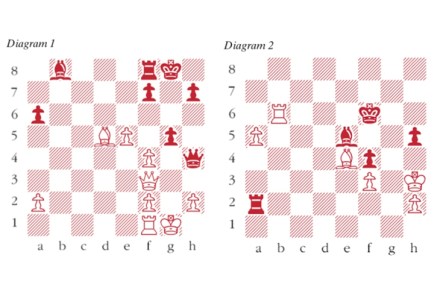
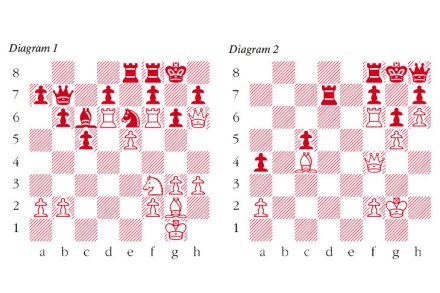
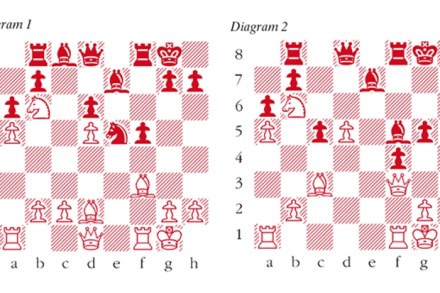
The Azeri grandmaster Shakhriyar Mamedyarov has been distinguishing himself recently at both classical and speed chess time limits. Last month he emerged as the overwhelming winner of the elite tournament in Biel, taking first prize and defeating world champion Magnus Carlsen in their individual clash. Mamedyarov went on to St Louis where he took the bronze medal behind Hikaru Nakamura and Maxime Vachier-Lagrave, and in the process demonstrated an extraordinary originality in his choice of openings and power of attack. We join two of his games against former world title challenger Sergey Karjakin at the crucial moments.   Mamedyarov-Karjakin: St Louis Rapidplay 2018 (diagram 1)   18 Bh7 This proves good enough to win.

Royal road

The mathematician Euclid once boldly informed King Ptolemy Soter I of Egypt that there was no royal road to geometry. However, a royal road to a UK visa does exist and it has just been granted to the family of nine-year-old prodigy Shreyas Royal, by means of the intervention of the Home Secretary himself.   A vigorous campaign has been in train for most of this year to prevent the Royal family from being deported in September. This included a charitable programme of chess tuition implemented by the experienced junior coach Julian Simpole, whose former pupils included Luke McShane and David Howell.

Luke’s gospel

Perhaps the outstanding clash of the recently concluded British championship in Hull, supported by Capital Developments Waterloo Ltd, was the last round battle between grandmaster Luke McShane and David Howell. The former has twice thwarted the latter at the finishing post in the past year. At stake was a final shootout for the title with Mickey Adams, plus the prizes allocated for the victor, £10,000 and runner-up £5,000. Luke has generously provided insights into this epic struggle. Howell-McShane: British Championship, Hull 2018; Ruy Lopez 1 e4 e5 2 Nf3 Nc6 3 Bb5 a6 4 Ba4 d6 5 0-0 Bd7 6 d4 exd4 7 Nxd4 Nxd4 8 Bxd7+ Qxd7 9 Qxd4 Nf6 10 Nc3 Be7 11 Bf4 11 b3, to place the bishop on the long diagonal, is a more popular choice. 11 ...

Royal shame

Nine-year-old Shreyas Royal, widely regarded as the UK’s best hope to become a future world chess champion, is being deported from the country next month because his father, although in regular employment, does not have earnings that reach the necessary threshold of £120,000 per annum. The chess world is in uproar about this, not least because Shreyas has already been invited to make the ceremonial first move in the Carlsen-Caruana World Championship match to be held in London at the College, Holborn, in November. The case has attracted acid comment from John Cleese on social media and the former chess champion Rachel Reeves MP has written an eloquent plea to the Home Secretary Sajid Javid requesting clemency.

Rice gambit

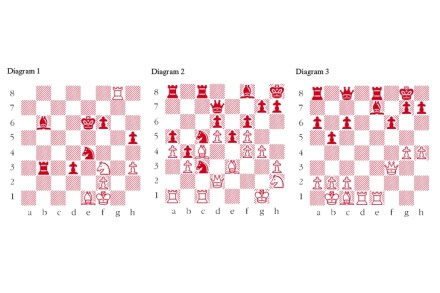
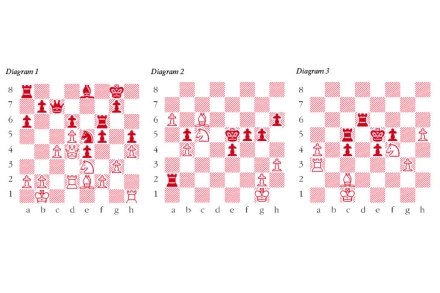
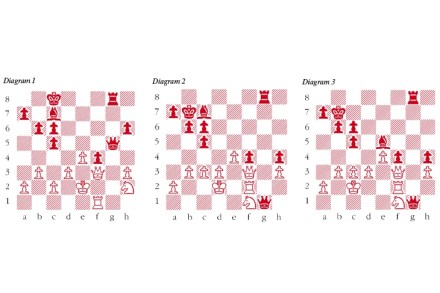
The recent successful revival of the musical Chess, by Sir Tim Rice and the men of Abba, featured some genuine extracts from play in the staged re-enactments of decisive games. One of the most impressive — and most easy to identify even from a distance without opera glasses — was Bobby Fischer’s infamous and very loud rook swoop against grandmaster Pal Benko, who has just celebrated his 90th birthday. Fischer-Benko; US Championship, New York 1963 (diagram 1) White has a powerful attack but his problem is that the natural 19 e5 is met comfortably by 19 ... f5, when Black has no problems. Fischer’s solution is startling. 19 Rf6! Fischer famously described this as ‘rolling a boulder in front of the f-pawn’. 19 ... Bxf6 20 e5 forces mate as the ...

Fiend from Hull

This year’s British Championship commences today in Hull. Among a powerful field, which includes Michael Adams and defending champion Gawain Jones, Luke McShane stands out as a supremely dangerous tactician, who at his best can overrun any opponent. This week’s game shows him outmanoeuvring a leading contender from last year’s championship. McShane-Howell: British Championship, Llandudno 2017; French Defence 1 e4 e6 2 d4 d5 3 Nd2 It is not clear to me that the French Defence suits Howell’s style. In the later playoff game for the title McShane-Howell continued 3 e5 and White also won. 3 ... c5 4 Ngf3 cxd4 5 Nxd4 Nc6 6 Bb5 Bd7 7 Nxc6 bxc6 8 Bd3 White has a slightly more favourable pawn structure but the position is balanced. 8 ...

Mental sport

Sporting commentators frequently resort to chess metaphors to convey the flavour of a particular contest. In the case of football, chess tends to be wheeled out as a comparison when nothing much is happening. Tennis commentators, in contrast, and somewhat more perceptively, deploy the chess metaphor to convey mental toughness.   I have for some time regarded Judit Polgar as the Serena Williams of the chessboard. A major difference, though, is that on the physical battlefield Serena would stand no chance against Djokovic, Federer or Nadal. On the mental plane, however, Judit has defeated, among others, Carlsen, Kasparov, Anand, Korchnoi and Short.   A new book, Strike Like Judit!, by Charles Hertan (New in Chess) recounts her many exploits.

Leningrad Lip | 12 July 2018

This description of Viktor Korchnoi was coined (an oblique reference to Muhammad Ali’s nickname of Louisville Lip) by Ian Ward of the Daily Telegraph during the Baguio City World Championship of 1978.   During the pre-Kasparov mid-1970s and early 1980s, world title chess was dominated by the three great matches between Viktor Korchnoi and Anatoly Karpov. During the second and longest of these, at Baguio in the Philippines, Korchnoi’s tendency to make outspoken remarks became more pronounced. There were moments when his outrageous comments came close to capsizing the match.