Chess

Venit, vidit, vicit

India is quite possibly the birthplace of chess, with the four branches of the ancient Indian army, infantry, cavalry, chariots and war elephants, morphing into the pawns, knights, rooks and bishops of the modern game. The most celebrated protagonist of Indian chess is former world champion, Viswanathan Anand. Nevertheless, behind him are surging younger generations of Indian grandmasters, some of whom (e.g. Dommaraju Gukesh and Rameshbabu Praggnanandhaa) are still barely into their teens.

Carlsen the Great

I cannot conceal the feeling over the years of Magnus Carlsen’s leading position at the head of world chess, that his victories were to be ascribed to his powers of Sitzfleisch (endurance at the board) or opposing errors, rather than his own enterprise, dynamism and genius. The result of the London world championship last year tended, if anything, to reinforce this belief, with all the games in the classical section being drawn.   The Gashimov Memorial tournament, which ended earlier this month at Shamkir in Azerbaijan, has forced me to revise that opinion. Carlsen dominated the event, displaying huge energy, aggression and versatility.

Be prepared

Last week I wrote about Cyrus Lakdawala’s new book, which provides an aggressive repertoire based on the solid move 1 d4. This week I focus on what might be termed a companion volume by the experienced chess coach grandmaster Neil McDonald, Coach Yourself (Everyman Chess), which aims to provide a training programme for those who wish to seriously improve their results. McDonald’s book is packed with essential tips on teaching yourself to calculate, honing your feel for the initiative, and practising planning. It is thoroughly recommended for club players or anyone who has decided that it is time to put up a fight against the chess app on their phone. The following game is an excellent illustration of how to seize the initiative by opening lines of attack.

Advance planning

One way to improve your results is to develop a specific opening repertoire and learn it thoroughly so as to be prepared for most eventualities. This might seem like common sense but it is a lesson which many amateurs neglect to observe. A new book by the prolific author Cyrus Lakdawala (Opening Repertoire 1 d4 with 2 c4, published by Everyman Chess) seeks to plug this lacuna in the chess aficionado’s arsenal of openings by providing an aggressive repertoire based on the solid 1 d4.   Le Quang Liem-Nguyen Van Huy: Ho Chi Minh City 2014; Nimzo-Indian Defence   1 d4 Nf6 2 c4 e6 3 Nc3 Bb4 4 f3 This is Lakdawala’s recommendation against the solid Nimzo-Indian Defence. White aims to create a strong centre as soon as possible and challenges Black to break it down.

Fischer favourite

A favoured line of the great Bobby Fischer was to meet both the French Defence (1 e4 e6) and the Caro-Kann Defence (1 e4 c6) with 2 d3, introducing what is known as the King’s Indian Attack. Fischer won celebrated games with this line against such powerful opponents as the Argentine grandmaster Oscar Panno and World Championship candidate Boris Ivkov. This week’s puzzle shows a further coruscating finish by Fischer with the King’s Indian Attack from the Interzonal stage of the World Championship cycle which brought Fischer the supreme title. Ever a good learner, the three-times British champion grandmaster Julian Hodgson put the King’s Indian Attack to good use in this week’s win against an illustrious opponent.

Family silver

The World Team Championship in Astana, Kazakhstan, finished last week with a victory for Russia but with an outstanding team silver medal for England — our best result for decades.   The final scores at the top (out of 18) were as follows: Russia 16, England 13, China 12, India and USA 11, Iran and Azerbaijan 8, Kazakhstan and Sweden 4, Egypt 3. The individual English scores were as follows: Michael Adams 3½/9, Luke McShane (individual gold medal) 6/9, David Howell (individual bronze medal) 6/9, Gawain Jones (individual silver medal) 5½/8 and Jon Speelman 0/1.   The hero of the English squad was the individual gold medallist Luke McShane, who was the only team member to go through this powerful event without losing a single game.

Oxford win

The annual Varsity Match between Oxford and Cambridge ended in a surprisingly narrow victory for the dark blues. Their team was led by the former women’s world champion Hou Yifan from China, and the rating difference on virtually every board was massively in favour of Oxford. Cambridge put up a stout fight and it was only a series of misjudgments by Cambridge board six, Peter Finn, in the tense last game to finish, which converted a drawn match (or even a win for Cambridge) into a loss. This was one of those times when defeat is snatched from the jaws of victory.

Bunratty | 7 March 2019

The Bunratty tournament in Ireland is one of the highlights of the chess year and always attracts an impressive field. This year grandmasters Luke McShane and Mark Hebden shared first prize on 5/6 in the main event. It is traditional in Bunratty that, although prize money can be shared, the title must go to a sole victor. McShane, accordingly, demolished Hebden 2-0 in a play-off. Places 3-8 were shared by Nigel Short, David Howell, Matthew Turner, Adam Hunt, Bogdan Lalic and David Fitzsimons.   McShane’s play was characterised by a fierce will to win. During the game which preceded the following extract he had already declined a draw in a slightly worse position. His determination paid off and was rewarded with the full point.

Playing the blues

This Saturday (2 March) sees the annual varsity match between the teams of Oxford and Cambridge. Oxford are strengthened this year by the addition of China’s Hou Yifan, the former women’s world champion, and are likely to be the favourites.   As usual, the match starts at noon in the traditional venue of the RAC in Pall Mall and spectators are welcome, though there is a smart dress code for those who wish to watch.   A continuing problem is the failure of Oxford to award their players half blues in recognition of their distinction in representing the university. The more enlightened authorities at Cambridge granted this deserved honour many years ago. It is time for the Oxford players to demand their rightful due.

Rock solid | 21 February 2019

This year’s Gibraltar Masters saw some surprising results at the top, chiefly the victory by the young Russian, Vladimir Artemiev, who netted £25,000. He came in ahead of a host of established grandmasters, including Levon Aronian, Vassily Ivanchuk, Michael Adams and Wesley So.   The winner’s style was marked by restless aggression with both black and white pieces. This week’s game shows him overwhelming a pre-tournament favourite. The notes are based on those by John Saunders in the official bulletin.   Artemiev-Nakamura: Gibraltar Masters 2019; Réti Opening   1 Nf3 Nf6 2 g3 d5 3 Bg2 e6 4 0-0 Be7 5 c4 0-0 6 b3 c5 7 Bb2 Nc6 8 e3 b6 Black decides against the double-edged 8 ...

Homage to Kramnik

The former world champion Vladimir Kramnik recently announced his retirement from competitive chess. He is one of the greats of the modern game, winning three World Championship contests — against Garry Kasparov, Peter Leko and Veselin Topalov — and retaining the title from 2000 to 2007. This tenure puts him on a par with other champions such as José Capablanca, Tigran Petrosian and Viswanathan Anand, who all reigned for around half a decade on the supreme chess throne. Kramnik was crowned champion when he defeated Kasparov in their match in London in 2000.

Kramnik retires

A notable feature from the recently concluded elite tournament at Wijk aan Zee was the abject failure of former world champion Vladimir Kramnik, who finished in equal last place. I have been conjecturing that it might be time for him to put his pieces back in the box, in the style of the Rubaiyat of Omar Khayyam. Tis all a Chequer-board of nights and days. Where Destiny with men for Pieces plays: Hither and thither moves, and mates, and slays, And one by one back in the closet lays. He could evolve into an elder statesman for the new Fidé regime led by Arkady Dvorkovich and his vice-president Nigel Short. Now, at the age of 43, he has stunned the chess world by taking this dramatic step, announcing his retirement from active play.

A tale of two tournaments

The start of the year sees the elite of the chess world divided between Wijk aan Zee in Holland and the Gibraltar Masters. In Gibraltar, from where I am writing this column, grandmasters such as Wesley So, Lev Aronian and Hikaru Nakamura cross swords with the British aspirants Michael Adams, Gawain Jones and Nigel Short. In Wijk aan Zee, the world champion Magnus Carlsen reasserted his authority with a decisive victory. Leading scores were: Carlsen 9/13; Giri 8½; Nepomniachtchi, Ding and Anand 7½.

Game changer

Game Changer, the long-awaited book by Matthew Sadler and Natasha Regan, has now appeared. This represents the most thorough inside story about the sensation that is AlphaZero. It includes material by the DeepMind founder Demis Hassabis and by Garry Kasparov, who must be gratified by the authors’ conclusion that DeepMind’s brainchild plays in the style of the 13th world champion — aggressive, sacrificial, seeking the initiative while keeping its own king safe. All these are hallmarks of Kasparov.   AlphaZero-Stockfish: London 2017, Queen’s Indian Defence   1 Nf3 Nf6 2 c4 b6 3 d4 e6 4 g3 Ba6 5 Qc2 c5 6 d5 exd5 7 cxd5 Bb7 8 Bg2 Nxd5 9 0-0 Nc6 10 Rd1 Be7 11 Qf5 Nf6 12 e4 g6 13 Qf4 0-0 14 e5 Nh5 15 Qg4 Re8 This is new.

Knockout

The 2018 UK Knockout, won by Gawain Jones, ahead of Luke McShane (silver) and Michael Adams (bronze), was played in conjunction with the rather unsatisfactory finale of last year’s Grand Tour. The latter ended in victory for the US grandmaster Hikaru Nakamura, who prevailed over Maxime Vachier-Lagrave in the final. Sadly there was a dearth of decisive games. In contrast, the UK Knockout was packed with excitement. A fine example was this win by Gawain Jones, in the enterprising style of Mikhail Tal.   Jones-Howell: UK Knockout, London 2018; Giuoco Piano   1 e4 e5 2 Nf3 Nc6 3 Bc4 Bc5 4 0-0 Nf6 5 d3 d6 6 c3 a5 7 Re1 White has chosen the Giuoco Piano, which means ‘quiet game’.

Three titans

The Dutch grandmaster Genna Sosonko specialises in biographies of the greats of the Soviet era. His earlier forays covered the careers of David Bronstein and Viktor Korchnoi; the latter is my choice of book of the year for 2018. Now Sosonko, a Soviet émigré himself, has turned his focus on Vassily Smyslov, world champion from 1957 to 1958, who also made history as the oldest world championship contender of all time in 1984 when he reached the Candidates final in his mid-sixties.   Smyslov won the supreme title in 1957 and came close to retaining it in the revenge match a year later. The final turning point came in this week’s puzzle, where Smyslov could have caused Botvinnik’s resignation in a crucial game, but faltered and went on to lose.

Game of the year | 3 January 2019

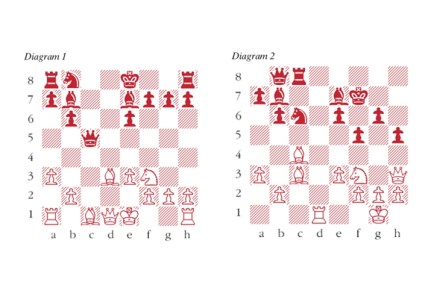
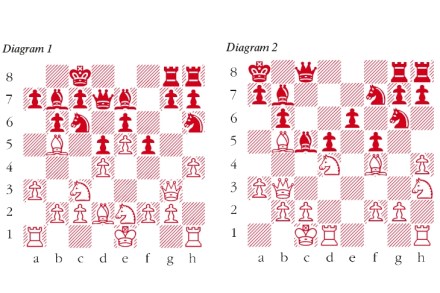
The time has come again when I award the accolade of most spectacular game of the year. It adds lustre if this is from one of the great matches. However, not one of the games from the London World Championship comes close to creating the requisite brilliance and drama. Instead, my choice falls on the game Aronian-Kramnik from the Fidé Candidates in Berlin.   Aronian-Kramnik: Fidé Candidates Berlin 2018; Ruy Lopez   1 e4 e5 2 Nf3 Nc6 3 Bb5 Nf6 4 d3 Bc5 5 Bxc6 This kind of ‘delayed exchange’ is a popular counter to the Berlin Defence  5 ... dxc6 6 0-0 Qe7 7 h3 Rg8 (see diag 1) This is an extraordinary idea and shows an admirable flexibility of thought.

Leviathan

Last week I compared the Norwegian world chess champion Magnus Carlsen to a lurking crocodile, ready to grab its oblivious prey. Perhaps a more apt metaphor is that of the whale in Milton’s Paradise Lost: ‘haply slumbering on the Norway foam…’. Mariners in Milton’s narrative mistake the leviathan for an island, moor their craft, and are undone as the whale wakes and dives.   So it was with Carlsen, who destroyed Caruana once he roused himself to action. This week, the third, final and decisive game from the tie-break which confirmed him as world champion again.

Beneath the surface

After 12 games of classical chess, the world championship between the incumbent, Magnus Carlsen of Norway, and his American challenger, Fabiano Caruana, ended in a record-breaking twelve draws. My initial impression was that both contestants were willing to wound, yet somehow afraid to strike at the climactic moment. The more Machiavellian explanation for such overt lack of ambition was that Carlsen was so confident of his superiority at speed chess that he was content to keep things level and just wait for the speed chess tie-breaks. In fact, this turned out to be the case. Carlsen was lying in wait like a crocodile.

Atticus

The Epistle to Dr Arbuthnot by Alexander Pope contains a memorable excoriation of his fellow wit and former friend Joseph Addison. When they fell out, Pope lampooned Addison as Atticus (Cicero’s Athenian correspondent) in The Epistle, the most telling phrase of which runs, ‘Willing to wound and yet afraid to strike.’ There could not be a better epithet to encapsulate the London World Championship, which finished this week. In previous articles I focused on missed wins in Game 1 (Magnus Carlsen) and Game 6 (Fabiano Caruana). This week: Caruana’s failures to strike in Game 8.