Any other business

The case for privatising Manchester airport

It is 12 years since Tony Blair did battle with the socialist dinosaurs and forced them to abandon their commitment to nationalisation with his celebrated ‘Clause 4 moment’ — the very birth of New Labour. It is 12 years since Tony Blair did battle with the socialist dinosaurs and forced them to abandon their commitment to nationalisation with his celebrated ‘Clause 4 moment’ — the very birth of New Labour. Now that Blair has been and gone, you would struggle to find a serious politician in any party who would advocate state ownership of any industry as a 21st-century model. Indeed, the idea of the state running our utilities, airlines or railways now seems archaic and even faintly ridiculous.

One last cigarette before the firing squad? Certainly not!

I suppose in 100 years’ time, perhaps much sooner, no one will smoke. So we will be back where we were before the 16th century, when adventurers like Raleigh brought the Red Indian habit of smoking tobacco to Europe. I suppose in 100 years’ time, perhaps much sooner, no one will smoke. So we will be back where we were before the 16th century, when adventurers like Raleigh brought the Red Indian habit of smoking tobacco to Europe. It was one of the points on which he intrigued Queen Elizabeth. ‘I can weigh tobacco smoke, Your Grace.’ ‘Oh no, you can’t, Sir Walter.’ Then he would produce a small pair of scales, weigh a bit of tobacco, smoke it, then weigh the ashes. ‘The difference between the two is the weight of the smoke.

Thinking of becoming a cartoonist in today’s Britain? Think again

The cartoonist Vicky (Victor Weisz, 1913–66) fled to London not long after the Reichstag fire, with the Gestapo at his heels. Had he not possessed a Hungarian passport he would never have got away, for as the boy wonder of Berlin political cartooning in the 12 Uhr Blatt, he had gone for Hitler as far back as 1928, and was a marked man. The cartoonist Vicky (Victor Weisz, 1913–66) fled to London not long after the Reichstag fire, with the Gestapo at his heels. Had he not possessed a Hungarian passport he would never have got away, for as the boy wonder of Berlin political cartooning in the 12 Uhr Blatt, he had gone for Hitler as far back as 1928, and was a marked man. He spoke no English, and he told me he found it hard to learn.

Rare stamps in a class of their own

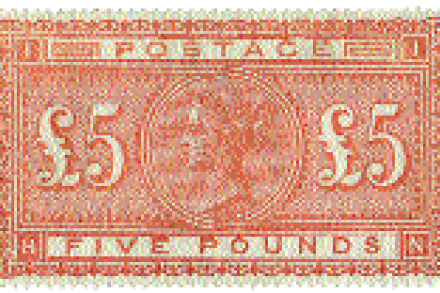
Stamps, it is said, are the most valuable commodity on earth by weight. An 1868 Benjamin Franklin stamp, for example — a standard-sized stamp weighing a fraction of a fraction of a gram — was bought recently for $2.97 million by an American investor. So the claim may well be true. Rare and desirable stamps, in good condition, can make impressive investments. The GB30 index, which tracks the values of the 30 rarest Great Britain stamps, has ‘never once fallen in the last 50 years’, says Geoff Anandappa, investment portfolio manager at the stamp dealers Stanley Gibbons in London. ‘It has gone up by an average of 10.7 per cent per year over the last 50 years, and by 10 to 15 per cent per year in the last five years.

A very private enterprise

Private equity investment, backing venture capital and management buy-outs, has been around a long time. Private-equity takeovers of public companies listed on the stock exchange are a more recent development; and the number and size of such transactions has increased dramatically. Since some identified individuals have made enormous fortunes, inevitably there has been a bit of an outcry.Several forces have come together. Abundant liquidity has made banks ready to lend large amounts of money at interest rates which are still low by historical standards. Energetic entrepreneurs have spotted that they can exploit opportunities arising from the way the stock exchange values some companies. On top of this, tax changes have made the net returns seriously attractive, assuming all goes well.

Is the Loch Ness Monster heading for real celebrity?

At this time of year my thoughts often dwell on the Loch Ness Monster. Let me recapitulate what we know about this beast. It was first spotted on 22 July 1932. It was described as crossing the main road running north of Loch Ness and being about six feet long. Later it was seen in the water, with its head above the surface. It had a long neck, a snake-like head and flippers, and was at least 20 feet long. A famous but indistinct photo was taken corresponding to this description. The monster has never again been seen on land but is often sighted, always in midsummer, holding its prehistoric head up and swimming strongly. Scotch stringers for London newspapers regularly visit the Loch at this time, hoping for a silly season story.

The price of sex in the City

Morgan Stanley has just hosted its first ‘early access’ event for young women: 75 girls from 15 top schools were taken on a tour of the trading floor (I bet there weren’t many traders off sick that day) Morgan Stanley has just hosted its first ‘early access’ event for young women: 75 girls from 15 top schools were taken on a tour of the trading floor (I bet there weren’t many traders off sick that day) and given ‘networking’ sessions in which they could talk to female staffers. Morgan Stanley says the event was part of its strategy to ‘bring women in’, and it is not alone in this worthy-sounding aim: most big banks now make similar noises. This seems odd.

The KGB man who spied on the bond markets

It’s not every day a former KGB spy invites you to interview him. But Alexander Lebedev is not your typical KGB spy. He’s made billions in stock-market trading, he throws lavish parties in London attended by the likes of Tom Wolfe and J.K. Rowling, and he might just be the most serious critic of Kremlin policy still standing. Naturally I accept, and go to meet him in the Hyatt hotel in central Moscow. He’s sitting at the back of the bar, dressed more like a rock-band manager than a billionaire spook. Lebedev joined the KGB in the early 1980s and was sent to London in 1988, operating out of a flat in Kensington High Street.

And another thing | 21 July 2007

The wet weather this summer has made me think about umbrellas, and the curious moral associations they attract. It is not so in the Orient, where they were invented (in China) sometime early in the first millennium bc. There they were designed to protect exalted persons against the sun. They were carried by attendants in state processions and were associated with power, privilege and class. We would call them parasols. The plebs were not allowed to possess or use them and often they were carefully graded, in size and elaboration, in accordance with the dignity of the owner. There are occasional hints of similar status-parasols in the West.

Mind your manners

We’ve all been there: the brain stuck in first gear during an interview; an inappropriate remark to a senior colleague or client; uncontrollable shaking before a speech in public. For most of us these are relatively isolated incidents. There are, however, serial offenders whose failure to control their manners and nerves ultimately proves fatal in today’s cut-throat business world. Two recent surveys highlight the problem. The first reveals that demand for senior executives is booming, thanks to private equity investors’ appetite for hired-in, new-broom management — good news for job-hunters, provided they’re up to the job. But the second suggests they might not be, revealing that 71 per cent of business leaders are frightened of speaking in public.

Any other Business

Shoppers stay home as rates and floods rise — but there’s a bit of better news for M&S Shoppers have spent these past few weeks sheltering from incessant rain, rising interest rates and renewed threats of terrorism. Fuel- and flood-hit food prices are on an up-trend too, so we must brace ourselves for a spate of High Street gloom. At Marks & Spencer, like-for-like sales were up only 2 per cent in the April–June quarter, compared to a rise of more than 8 per cent in the same quarter of 2006. Still, that was slightly less bad than the stock market expected, and there was one bit of better news for M&S this week: George Davies is thinking of leaving.

A dull business made great by allowing workers to think

Ah, the terrible persistence of the irritating jingle. It’s nearly 30 years since ‘Thousands of parts for millions of cars’ last assaulted our ears, but I’ll bet millions of middle-aged Britons, motorists or not, can render it pretty faithfully. The company behind the jingle was a leaky lifeboat from the sinking British Leyland. It was called Unipart, and at the helm was the slight, rather diffident figure of John Neill. He had organised the management buy-out of BL’s spare-parts division, and he had a vision of a different kind of business, one where each employee was not merely a cog in a machine but, as he puts it now, ‘has the capacity to be great at whatever he is doing’.

Not going gentle into the good night

Retirement, especially for a prime minister, used to being frantically busy in the full gaze of the public, is a melancholy thing. The younger he — or she — is, the more it hurts, with long years of inactivity and growing oblivion stretching ahead. I often think that the most successful of all British politicians, in a worldly but also in a personal sense, was Lord Palmerston. Not only did he hold offices of one kind or another for longer than anyone else, a total of nearly 60 years, but he died as prime minister. His last words, as reported, were: ‘Die? My dear doctor, that’s the last thing I shall do.’ So he was confident to the end; and if the key word in the rhetorical question had been ‘resign’, the saying would have been even more apt.

Argentina has what the world wants — and may soon have a woman in charge

In Washington, the campaign to put another Clinton in the White House is well underway. In Argentina, the next president could also be the wife of a man who has held the highest office before. President Néstor Kirchner, who grabbed the top job four years ago after polling just 22 per cent of the vote in the first round against a discredited Carlos Menem, comes up for re-election in October. As the deadline for nominations approached, it was always certain that a Kirchner would run. But would it be the President or his wife Cristina? For months, rumours circulated that Kirchner, who is said to have health problems, might stand aside and allow his missus to go for the job.

Global championship heads for a ladies’ final

On 20 July, one of America’s most influential businesswomen, Cathy Kinney, will swap Wall Street for the boulevards of Paris. Kinney is one of the New York Stock Exchange’s big chiefs — president and co-chief operating officer of the newly merged $20 billion NYSE–Euronext group — and she’s moving to the French bourse’s headquarters at 39 rue Cambon, where she has been charged with setting up the nerve-centre of the NYSE’s global offensive. Her boss, the ambitious NYSE chief executive John Thain, has already tucked Euronext (the pan-European bourse which encompasses Paris, Amsterdam, Lisbon and Brussels) under his formidable belt.

Smoking ban causes brewers’ droop

An Englishman, an Irishman and a Scotsman walk into a pub. The Englishman turns to the others and says, ‘What’s that awful smell?’ ‘Och,’ says the Scotsman, ‘it takes a wee while to get used to.’ ‘Ah, so it does,’ says the Irishman, ‘’tis what pubs really smell like when you get rid of the smoke.’ Apologies for the Bernard Manning-style gag, but it illustrates the smoking ban’s unfortunate consequences: as the Scots and Irish will attest, pubs now give off a noxious aroma of stale beer, missed urinals, damp dogs and damp old men and the flatulence of both — plus the industrial-strength air freshener that fails to disguise it all.

And another thing

A MasterCard survey shows that London is now the most important and efficient city in the world — financially that is — and another reveals it is also the most expensive, Moscow alone excepted. The two are connected no doubt. Certainly a lot of successful people live here: over 10,000 of them, I hear, earn more than £1 million a year. I have lived here 52 years and expect to die here, for I like my house despite its 52 stairs. People pour into London from all over the world, in greater numbers and variety than ever before. I now come across tourists from Sri Lanka and India, as well as Korea and China, to add to the countless Japanese. Half a million Poles work here, 350,000 Filipinos, almost as many French and countless Brazilians. How do they all fit in?

One day, the dollar will no longer be almighty

At the end of the second world war, 43 allied nations gathered at Bretton Woods to reconstruct the global financial system. The result was an economic version of Pax Americana: a liberal trading and financial regime centred on US strength. The dollar became the world’s reserve currency and the free world fixed its exchange rates to the greenback. Europe and Japan proceeded to rebuild their economic base, in large part by exporting to the US and accumulating international reserves. While it lasted, Pax Americana had great symbiotic benefits for the US and its allies. Fixed exchange rates jump-started postwar trade and finance.

Why Agatha Christie never made camel soufflé

Funny creatures have begun to appear in Somerset. Little herds of vicuna, llamas and guanaco, and other similar animals. They are farmed for various purposes, chiefly hair. We already have riding camels, but I am expecting camels to appear any moment as a dairy herd. What, can you drink camel’s milk? Certainly. The view of Dr Ulrich Wernery, a vet and microbiologist, is that it is ‘the nearly perfect animal product for humans’. This ingenious German has for 20 years been looking after the hawks, horses and camels of the Emir of Dubai, and I learn from the Financial Times that he has now assembled a herd of 500 milking camels to produce the stuff on a commercial scale.

Can private equity halt EMI’s decline?

Amid the acres of coverage devoted to the 40th anniversary of Sergeant Pepper’s Lonely Hearts Club Band, the most celebrated record in pop history, one irony has been overlooked. The album was considered as ephemeral as any other when it came out, but has grown mightier and mightier; the company that made it, on the other hand, was rightly regarded as one of the giants of British industry back in 1967, but has never looked weaker than it does now. Indeed, by the time the Sergeant celebrates his half-century — not to mention the palaver when he hits 64 — EMI may have shuffled into the history books, at least as far as being a public company is concerned. It has already agreed to a takeover bid from Guy Hands’s private equity firm Terra Firma.