Any other business

Why Keynesian theory can’t dig us out of Brexit uncertainty

‘It is seldom wise to sacrifice a present evil for a doubtful advantage in the future,’ wrote John Maynard Keynes as a precocious undergraduate in 1904. As we contemplate what no deal might be about to bring, those words seem to confirm the view of his living followers that the sage who died in 1946 (though usually labelled a free-trader) would have voted Remain.      But he was also well known as a pragmatist, so it’s worth asking what he would be telling us to do now, as the cliff-edge looms while UK GDP growth has already fallen to its slowest rate since 2012, at 1.4 per cent last year, according to the ONS.

The Fed’s U-turn on rates is a reality check, not a sop to Trump

Has ‘Jay’ Powell gone wobbly, or does he know something we don’t? That was the question being asked after the US Federal Reserve, of which Powell is chairman, kept dollar interest rates on hold last week — rather than continuing to notch them upwards as it has been doing for two years — and hinted that the next move might actually be downwards. Trade tension with China, the impact of Donald Trump’s government shutdown and the risk of a no-deal Brexit were all cited as ‘cross-currents’ affecting the decision, but pundits led by Wall Street ‘bond king’ Jeffrey Gundlach declared the Fed to be ‘caving in’ to the demands of the stock market and the President.

Salute the rich who choose to pay their taxes

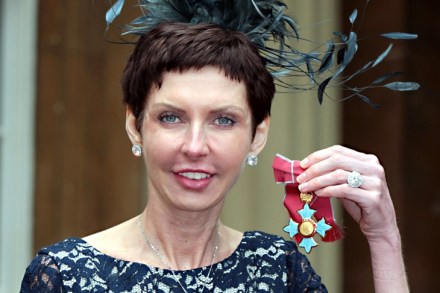
Paying tax — which many of us have been doing this week before HMRC’s 31 January deadline — is a citizen’s duty, not an act of virtue. But for the very rich it is also a choice, since with the help of expensive advisers they can duck it or pay very little of it by using complex avoidance devices and offshore havens. So if they stay onshore and pay up, we should salute their good citizenship — if only to encourage others like them who might lighten the tax burden for the rest of us. In that context I was pleased to see two of this column’s controversial heroes of modern capitalism in the Sunday Times list of the UK’s 50 highest taxpayers.

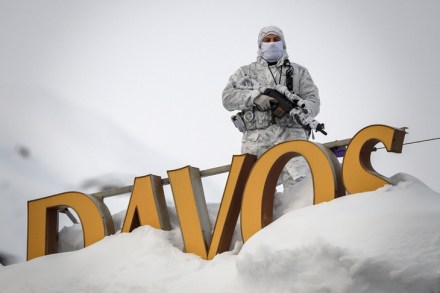
A quiet week in Davos should be a warning to the global elite

Nobody who’s anybody is in Davos this week and, as usual, neither am I. World leaders from Donald Trump to Narendra Modi declined to attend the annual super-elite World Economic Forum in the Swiss Alps, while the UK was represented chiefly by Sir David Attenborough and a giant Union-Flag banner across the front of the Belvedere Hotel proclaiming — incongruously, you might think, given IMF warnings about what a no-deal Brexit might do to global growth — ‘Free trade is great’. My own excuse was that I’m too busy at home rehearsing the role of a wickedly exploitative landlord in a spoof Victorian melodrama called Her Honour for Tenpence.

Darkness looms as distracted ministers fail to address the widening energy gap

Transfixed as you were by Westminster chaos, did you also spot the news that Hitachi is about to cancel or suspend construction of the Wylfa nuclear power station in North Wales? The Japanese engineering giant has evidently failed to reach agreement on a guaranteed electricity price and terms for a UK government stake in the project; its decision follows that of its compatriot Toshiba, which in November pulled out of building a nuclear station at Moorside in Cumbria, largely because it disliked the Treasury’s favoured financing model that loads risk on to the contractor. These two projects between them were intended to keep the lights on in 11 million UK homes, factories and offices.

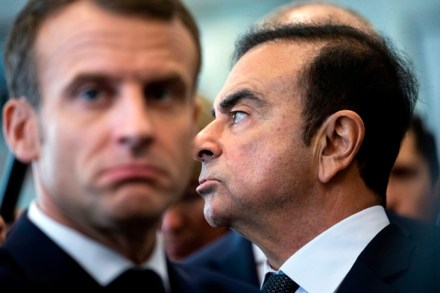
Why Macron is happy to leave Ghosn shivering in his Tokyo cell

In France after New Year, the only gilets jaunes I spotted were a rather dejected bunch near an autoroute exit. I was ready to give them a cheery thumbs-up rather than risk having my path blocked, but they took no notice of me — and no one I met expressed support for them. The novelty has worn off and sensible French citizens are horrified that the protests have led to deaths in car and lorry accidents at the barricades.

A seven-year winter or a pleasant surprise? Your guess is as good as mine

A friend reminds me that she sold her house last summer because I warned her 18 months ago that Brexit chaos would loom over every aspect of life by the beginning of 2019. I got that horribly right, and I was right too that the dismissive attitude of Westminster politicians towards the Irish border problem — call it ‘the Barnier trap’ if you prefer, but I can tell you I heard grown-up Irish voices trying in vain to alert UK ministers as long ago as September 2016 — would come back to baulk the entire negotiation. But would I care to make any sort of prediction for the three months ahead? No, I wouldn’t.

All I want for Christmas is a City time machine

Are smartphones fuelling a pandemic of youthful anxiety and depression? That’s the question parents will wrestle with this Christmas as their offspring clamour for the latest Samsung or Huawei. And the answer seems to be yes: these must-have accessories are corroding the nature of human interaction for the next generation — but the young can’t live without them, so we’d better get used to it. And that gives rise to an even trickier yuletide dilemma: what of the previous generation? Is there a digital device that’s safe to pop under the tree for an elderly relative? The solution, I suggest, is the iPad.

Who’s really to blame for the Crossrail fiasco?

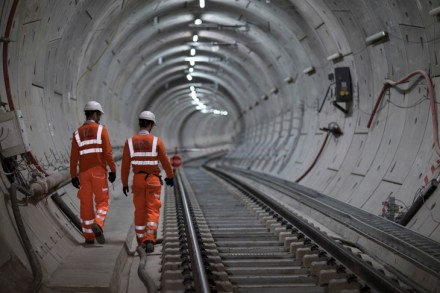
There’s been a strong sense of pre-Christmas turkeys coming home to roost in this week’s news, as stories I’ve written about for months or years have reached, if not a denouement, then at least a new twist in the plot. Saddest of these is Crossrail, London’s east-west mass--transit system that was originally scheduled for its royal opening next week: now we hear it needs ‘hundreds of millions’ more of public money if it is to meet its delayed completion a year hence, though even that date no longer looks a safe bet. Its chairman Sir Terry Morgan has announced that he’s waiting to be sacked, both from Crossrail and from the chairmanship of the possibly even more troubled HS2 project.

How a betting business saved Stoke-on-Trent

I wrote last week of my fear that we’ll never ‘take back control of our fish’, as Brexiteers ardently wish, because the rights of UK fishermen — whose diminished industry contributes less than half a per cent of GDP — will be too easy to give away in the next negotiating phase. Sure enough, last Sunday’s Brussels summit to approve the withdrawal agreement produced an explicit warning from President Emmanuel Macron that unless the UK allows continuing access into its waters for EU (meaning specifically French) fishing boats, he may veto a wider trade deal, which means the hated ‘backstop’ would come into force instead.

Nissan’s Carlos Ghosn was a tall nail but was he really a bent one?

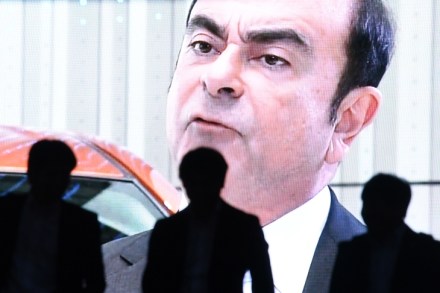
The arrest of Carlos Ghosn and the move to oust him as chairman of Nissan in Japan has stunned the auto industry of which he’s a global megastar — serving simultaneously as head of Renault in France, and having bolted together the Renault-Nissan-Mitsubishi alliance that built more than ten million cars last year. Nissan has accused the Lebanese--Brazilian engineer of violating Japanese securities law by understating his remuneration in the company’s public documents, and of ‘numerous other significant acts of misconduct… such as personal use of company assets’. That allegedly includes using Nissan funds to buy properties for his own use in Beirut and Rio de Janeiro. We must of course wait to hear the evidence.

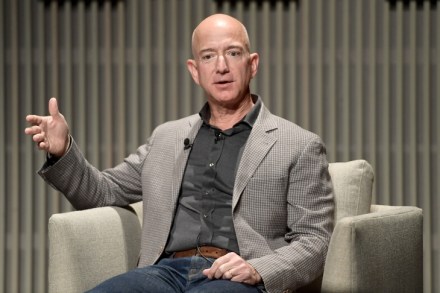
Anyone seen Jeff Bezos? I’m here to talk to him about tax

 Los Angeles/Seattle US stocks briefly rallied after the midterm results as markets looked favourably on a divided Congress and the possibility of cooperation between Donald Trump and House Democrats. The Fed kept interest rates on hold until next month, while remarking on strong growth and a continuing fall in unemployment. That, in a nutshell, is the economic news as I land at Los Angeles — but a more vivid update is delivered, as ever, by the talkative cab driver who takes me into the city. He’s from Mexico, and his story is a cameo of the vigour with which Americans build their own prosperity as best they can.

The Irish border issue is no mere sideshow – and UK ministers are mostly to blame

We may or may not hear news soon of a settlement of the Irish border issue that will allow Brexit to proceed without the calamity of ‘no deal’. Word this week was that Irish taoiseach Leo Varadkar might offer a compromise ‘review mechanism’ for the ‘backstop’ which might otherwise leave the UK locked in a customs union — but like me, you’re probably none the wiser as to what that actually means.

Has Hammond saved the high street? No, but every little helps

How much did Philip Hammond’s giveaway Budget help dying town centres? Not enough, say campaigners, but let’s give the Chancellor some credit. A one-third relief in business rates for retail properties with a rateable value of less than £51,000 means an annual saving of up to £8,000 for a huge number of small businesses; pubs where people still drink beer and spirits in old-fashioned style benefit from a duty freeze that one industry body says will ‘secure upwards of 3,000 jobs’; and there’s money to help convert disused premises into homes.

Can Hammond’s Budget make business feel better about Brexit?

‘Uncertainty is draining investment from the UK, with Brexit having a negative impact on eight in ten businesses,’ says Carolyn Fairbairn of the CBI. OK, let’s pause for a chorus of ‘She would say that, wouldn’t she?’ But even if we shade off for ‘scaremongering’, her survey (of 236 firms) is bleak: ‘44 per cent of businesses with contingency plans intend to stockpile goods… 30 per cent intend to relocate production and services overseas… 15 per cent intend to move jobs…’ And I’ve seen no rival surveys that contradict the gist of it. So what can Monday’s Budget do to make business feel better?

Why I’m boycotting ‘Davos in the Desert’

The current stock-market correction has been steaming down the track since August and I claim no wisdom for having predicted it: the FTSE100 dipped below 7,000 at the start of the week, having shed all of the 10 per cent it had gained since it began to surge in April. Weaker UK growth forecasts from the EY Item Club, reflecting the impact of the Brexit impasse on business and consumer confidence, are just one factor in the autumnal mood. But let’s cheer ourselves up with a round of applause for our veteran investor Robin Andrews, whose ‘Faangs to Banngs’ trading idea I offered you on 1 September.

Unilever’s botched retreat from London leaves it more open to hostile bids

Unilever’s abandonment of plans to scrap its Anglo-Dutch corporate structure and leave London is a huge embarrassment for chief executive Paul Polman, whose days in post must surely be numbered. More significantly, it’s a rare demonstration of the power of UK institutional investors (the likes of Aviva, Legal & General, M&G and Schroders) to exercise collective influence in errant boardrooms. The institutions were unpersuaded that the proposed new Dutch-based structure would generate greater value for them from the Persil-to-Marmite conglomerate — and many disliked the idea that Unilever would drop out of the FTSE 100 index, obliging tracker funds to sell their holdings.

If Tories are ‘the party of business’, the PM should listen before it’s too late

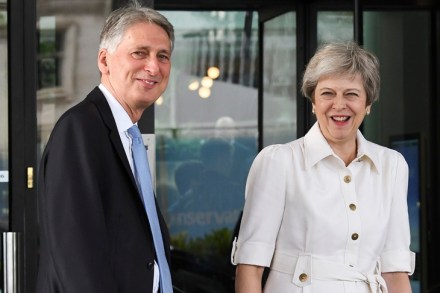
‘Let me say it, loud and clear: the Conservative party is, and always will be, the party of business,’ declared Philip Hammond at Birmingham — a few hours after City tycoon and former Tory treasurer Michael Spencer told the BBC that the Prime Minister had ‘let herself down personally by not being a champion of business’. Were Spencer’s doubts assuaged by the Chancellor’s reassurance? I doubt it: the truth is Spencer was right. Theresa May signalled her non--championship of business in her 2016 leadership bid when, ahead of John McDonnell, she spoke of forcing companies to accept worker representatives on boards and of the ‘irrational, unhealthy’ pay gap between top executives and average workers.

McDonnell’s one-term mission to turn Britain into the new Venezuela

The least convincing thing said by Labour shadow chancellor John McDonnell at the Labour party conference in Liverpool was ‘I believe we’ll be elected for a second term.’ In all his other remarks about plans for compulsory employee share schemes, workers on boards, higher corporate taxes, extended employment rights, attacks on the rich and below-market renationalisation of water utilities whose bosses he would fire, he talked about getting the programme done ‘within the life of a Labour government’ — with the clear implication that he thinks Tory turmoil might be about to give him a once-in-a-lifetime, one-term-only chance to make a reality of the recreation he lists in Who’s Who: ‘fermenting the overthrow of capitalism.

Jaguar’s boss isn’t scaremongering: the UK car industry is in big trouble

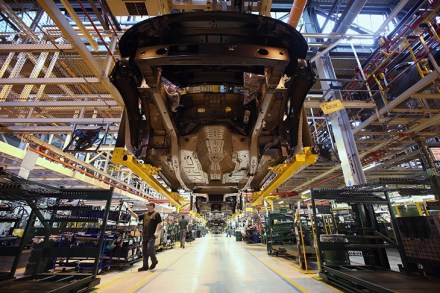
‘I’m afraid I think he’s making it up,’ was the retort of Tory MP Sir Bernard Jenkin on Monday’s Today programme to the claim by Ralf Speth, boss of Jaguar Land Rover, that a bad Brexit deal could put tens of thousands of jobs at risk in JLR and its suppliers, and cost his company £1.2 billion a year. In the same speech last week, Speth pointed out that the lack of any sort of Brexit clarity means he has no idea whether his UK factories will be able to operate on 30 March next year — or whether even the ‘tiny’ border delays Jenkin concedes are likely will cripple the just-in-time systems on which the likes of JLR and the BMW Mini factory at Cowley depend.