Any other business

Why the wheel of fortune is turning in Tesco’s favour again

How surprising to read one former Tesco chief, 82-year-old Lord MacLaurin, badmouthing another, Sir Terry Leahy. The surprise is because both were titans of their trade and Leahy has always been seen as Ian MacLaurin’s protégé: it was MacLaurin who took Tesco to the top of the UK supermarket league in the mid-1990s, then Leahy who quadrupled its sales, profits and share price between 1997 and 2011 to make it the monster we know. But Leahy also took Tesco into a disastrous US grocery venture and — according to MacLaurin, talking to the Sunday Times — started ‘the rot’ that brought the company low by 2014, leaving the blame to be taken by his own successor, Philip Clarke.

We should never have expected the SFO to bring banks to justice

Friends of former Barclays chief executive John Varley — I don’t mean ‘people who speak to the media on his behalf’, but rather people like me who have known him all our working lives and hold him in high regard — were relieved to hear he has been cleared of fraud charges relating to the bank’s 2008 capital raising from Qatar. Charges against Barclays itself were dropped last year but Varley’s co--defendants Roger Jenkins, Tom Kalaris and Richard Boath now face a retrial — so I’ll say no more for now about the Serious Fraud Office’s handling of this dossier. But it’s fair to ask, in general, how well our criminal justice system has dealt with the ramifications of the financial crisis.

Is Green’s deal with his creditors the beginning of another scandal?

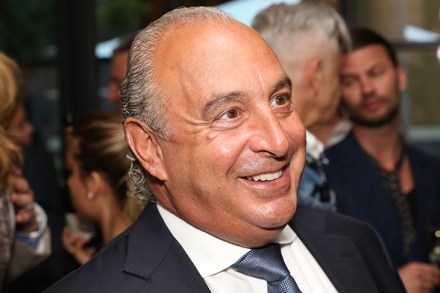
There’s a palpable urge elsewhere in the media to see Sir Philip Green come to grief, whether as a result of allegations, denied by him, that he ‘spanked and groped a Pilates trainer’ in Tucson, Arizona, or through the collapse of his Arcadia retail empire, which includes Topshop and Burton, even if that were to involve thousands of job losses and hundreds of empty shops. So there were mixed reactions to the news that Arcadia has succeeded, after months of hardball negotiation, in signing a Company Voluntary Arrangement (CVA) with a required majority of its creditors, including its major commercial landlords, that will cut its cost base by securing rent cuts on 200 stores and enabling it to close 23 others.

Moral of the Woodford saga: if you want to back start-ups, do it yourself

Hounds are baying for the blood of former star investment manager Neil Woodford, whose shrinking funds have closed for withdrawals. His promoters such as the broker Hargreaves Lansdown have also been taking media flak, as has the Financial Conduct Authority, whose critics say it should have spotted the problem early and intervened. There are suggestions that Woodford and his associates have made ‘a huge pile of money’ (to quote Merryn Somerset Webb in the FT) out of an over-puffed venture in which small investors are now stuck — and that all those responsible should queue up for a public lashing from the Treasury select committee. So it goes: as a parable of financial hubris, this looks like an open-and-shut case.

In favour of nationalisation? Take a look at Network Rail

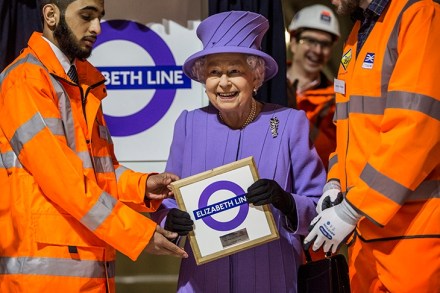
We don’t hear enough about Network Rail these days. By that I mean that the entity recently described by the Sunday Times as ‘synonymous with incompetence and delays’ doesn’t receive anything like the abuse it deserves for failing to provide the infrastructure essential for a 21st-century railway. I refer you to the Crossrail project, in which the inability of new trains to connect with old Network Rail signalling systems is one reason for the delayed opening that has become a major national embarrassment. I invite you to observe LNER’s expensive new fleet of Azuma bullet trains that were due to launch in December but delayed by incompatibility with Network Rail signals.

How afraid should we be of Facebook’s cryptocurrency?

The cryptocurrency winter has turned to spring: having slumped from $20,000 in late 2017 to $3,200 a year later, bitcoin has lately risen like a rocket to $8,800. Though it doesn’t change my negative opinion, I admit that if I had bought a fistful of these wacky gaming chips last October when I gave the crypto concept a kicking at our Spectator conference on the subject, I’d be up almost 40 per cent. Evidently, hints from the US Federal Reserve and the European Central Bank that further bouts of ultra-low interest rates and quantitative easing may be in the offing have spurred what the FT calls ‘a rally in riskier assets’. Crypto is the new gold for those who distrust central banks and seek stores of wealth that governments can’t reach.

This latest British Steel crisis isn’t all about Brexit

There’s a strong sense of déjà vu in this week’s steel crisis. The whole Brexit saga seems to have been bookended by trouble in what’s left of the British steel industry, beginning in 2016 when Tata of India announced plans to sell its entire UK steel business — the remnants of the privatised British Steel, later called Corus. The focus then was on the future of the blast furnaces at Port Talbot, but a buyer was found for the Scunthorpe ‘long products’ plant, at a price of £1, in the private equity firm Greybull Capital. Now 4,000 Scunthorpe jobs are at risk as Greybull prepares to throw in the towel: unless ministers come up with a last-ditch rescue loan, administrators were expected to be appointed by midweek.

Metro Bank was the wrong model for its place and time

This column has long been a fan of the concept of ‘challenger banks’ offering alternatives for personal and small business customers who were mistreated or underserved by the big banks before and after the 2008 crash. Most challengers were internet-based, but Metro Bank — founded in 2010 by US entrepreneur Vernon Hill, whose early career was spent developing sites for McDonald’s — was different. Its model was predicated on an expensive chain of bricks-and--mortar branches (referred to as ‘stores’, open seven days a week, and with 200 planned by 2020) at a time when the likes of NatWest and HSBC were withdrawing from the high street as fast as they could.

The truth behind Huawei is that all telecoms networks are insecure

On the matter of whether former defence secretary Gavin Williamson was the real ‘H’ in Line of Duty, I admit I may have lost the plot. But meanwhile the rest of the media has rather lost sight of the key issue with Huawei, the Chinese telecoms giant whose involvement in UK 5G networks was allegedly opposed by Williamson and others at a National Security Council meeting chaired by the Prime Minister. The nub of this isn’t whether or not Huawei is closely linked to the Chinese government: let’s just say that objective China-watchers are unpersuaded by assurances to the contrary, while acknowledging an element of trade-war jingoism in the way US politicians bandy the accusation.

The Bank’s search for a female governor is a good thing

If you’re a bloke in a suit who’d like to apply for the governorship of the Bank of England (deadline 5 June), I suggest you browse the website of Sapphire Partners, the headhunters appointed by Philip Hammond to conduct the search. Run by ex-JPMorgan banker Kate Grussing with an all-female team plus Cherie Booth and Lady (Barbara) Judge on its board, the firm declares: ‘We are trailblazers [as] advocated for women in business.’ You’ll probably already have read the job spec on the Cabinet Office website, which refers to candidates as ‘she/he’.

Bramson the corporate raider is not wrong about Barclays

If you know my personal history with Barclays, you may be wondering whether I’m for or against Edward Bramson. To recap, I’m a former second-generation employee of the bank as well as the custodian of a family shareholding that’s never likely to be sold — and nowadays, rather miraculously given everything that’s happened to me and the bank since I left 27 years ago, a recipient of its pension largesse. Bramson, by contrast, is a Johnny-come-lately: a New York-based ‘activist investor’ whose firm Sherborne has become Barclays’ third largest shareholder by building a 5.5 per cent stake, and who is seeking a seat on the bank’s board at next week’s annual meeting.

Travellers won’t mourn the passing of Virgin trains

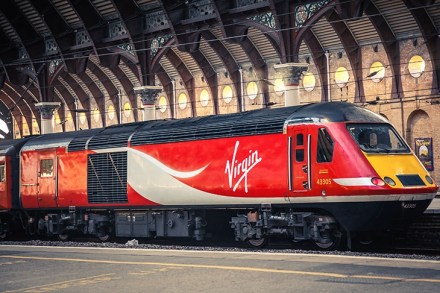
‘Virgin trains could be gone from the UK in November,’ blogged Sir Richard Branson from his billionaire hideaway after the Department for Transport barred Stagecoach, Virgin’s 49 per cent joint-venture partner, from bidding for new passenger rail franchises. This followed a row over Stagecoach’s reluctance to help fill a £6 billion black hole in the Railways Pension Scheme – and affects Stagecoach’s bids for the East Midlands and South Eastern franchises as well as the renewal of Virgin’s West Coast Main Line service. Branson is always a sore loser on the rare occasions the dice don’t roll his way, but I doubt many travellers will mourn the passing of his trains.

Be thankful our economy isn’t shaped like Germany’s

This is no time for schadenfreude — but take comfort from the fact that the UK isn’t built like Germany. Being a world-leading exporter of manufactured goods — which they are and we’re not — is all very well until orders from China fade, Donald Trump adds you to his list of trade foes, your flagship car industry goes into spasm, and even the mystic waters of the Rhine get in on the act by falling to levels that impede the movement of cargo. Now the German economy is close to recession, with falling factory orders and a Purchasing Managers’ Index for manufacturing (in which results below 50 indicate contraction) of 44.7, its lowest since 2012. Consensus 2019 growth forecasts have dropped to 1 per cent, and some pundits expect much worse.

We’re in danger of missing out on the next industrial revolution

Business investment in the UK declined in all four quarters of 2018 to complete a year-on-year dive of 2.4 per cent, according to the ONS. These are the worst capital spending figures since the 2008 crisis, and you’ll guess where the Bank of England places the blame: weaker global growth hasn’t helped but the ‘UK-specific factor’ is ‘a growing portion of [companies] putting new capital investment on hold until there is greater clarity around Brexit’. Amid reports that factories are focused on stockpiling components ‘at the fastest rate on record’, no one expects investment for the first half of 2019 to look stronger.

The real winner from Brexodus won’t be Frankfurt, Paris or Dublin

How big is Brexodus — the flight of business and people from the City of London in parallel with our exit from the EU? I observed recently that squealing from the Square Mile has been minimal compared to sectors that make and move physical goods — suggesting that banks, insurers and investment houses have quietly completed all the necessary rejigging of domiciles and compliance that will permit them to carry on making money willy-nilly. There’s been plenty of paddling beneath the City surface. A report by the New Financial thinktank ‘identified 275 firms in the UK that have moved or are moving some of their business, staff, assets or legal entities from the UK to the EU’.

Bigness in banking isn’t a virtue, so beware of defensive mergers

It never works to take two unhappy companies and blend them into a bigger pile of misery. That’s the way it looks at the investment giant Standard Life Aberdeen, known to some as ‘Staberdeen’, where Aberdeen Asset Management founder Martin Gilbert seems to have just lost a power struggle with his former co-chief executive Keith Skeoch from the Standard Life side. And that’s certainly the way in Frankfurt, where Deutsche Bank and Commerzbank are being shoved together by pressure to create what German finance minister Olaf Scholz foresees as a national champion that would be the second largest lender in the eurozone (after BNP Paribas of France) and impregnable to foreign takeover.

Reassurance today, excitement tomorrow: your UK Optimist Fund portfolio

The nation certainly needs optimism this week, so what better moment to start building our ‘UK Optimist Fund’ of shares with exciting prospects for the post-Brexit era, for which I invited suggestions last week? I’m grateful to all  respondents but was particularly glad to hear from former minister Edwina Currie — whose stock picks show a penchant for high dividend yields — and this column’s very own veteran investor Robin Andrews, whose market eye has stood Spectator readers in such good stead over the years. Our underlying quest is a serious one. We’re heading into new territory in which businesses will clearly suffer if they previously depended on tariff-free access to European markets.

Don’t vilify housebuilders for profiting from Help to Buy

Was Help to Buy a timely market intervention with a valid social purpose or a political gimmick that unintentionally showered housebuilders with taxpayers’ cash? Or both: this isn’t a straightforward question. ‘This government supports those who dream of owning their own home,’ said a statement from Philip Hammond last week. So far the ‘equity loan scheme’ launched by George Osborne in 2013 and now extended until 2023 has underpinned 194,000 home sales, the great majority to first-time buyers in the provinces, while another 300,000 have been supported by a £3,000 savings top-up.

What’s the worst business to be in right now? Sheep farming

What’s the very worst line of business you could be in, if we’re heading for a no-deal Brexit? Not finance, for sure: there’s a noticeable absence of squealing from the City, which has evidently made all the contingency plans it needs to continue making numbers dance on screens and booking the proceeds in convenient domiciles. Car manufacturing, on which I’ve written so much in recent weeks, clearly has its challenges — but the impediments of Brexit are no more than a tiresome sideshow compared to the industry’s wider technological and market issues. Fishing has been a bad career choice ever since we joined the Common Market and probably can’t get much worse.

The UK car industry is reversing back to the 1970s

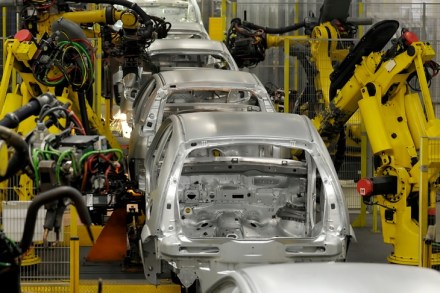
When I wrote a fortnight ago, in the context of Nissan’s decision not to build its new X-Trail model at Sunderland, that ‘British carmaking as a whole is on course to shrink back to the 1970s’, I was expecting the next bulletin of doom from US-owned Ford, whose bosses — I’d heard from an insider — were ‘hair-on-fire apoplectic’ at the government’s failure to provide Brexit clarity. Subsequent indications that Ford may shift some production out of the UK were taken by industry watchers as a mild warning of serious cutbacks to come — but meanwhile, news of Honda’s factory closure at Swindon knocked everything else off the headlines.