Books & Arts

Books and Arts

Margaret Atwood’s autobiography reveals a steely self-possession

The problem with the contemporary literary life, most of its observers usually agree, is that nobody at large in it does anything much except write. A century ago, your specimen male novelist could be found fighting in wars or traveling to places from which the reportage he brought back had genuine novelty. These days, alas, our man just sits at a desk and every so often looks out of the window at the teeming world beyond. The trajectory of the 21st-century novelist is as familiar – and as unavoidable – as a portrait of Taylor Swift. You grow up, you show an aptitude for literature, you start writing books and, unless something very unusual happens, you go on writing them.

Margaret Atwood
Michael McFaul

It feels as if Michael McFaul’s audience has long since left

Since the end of the Cold War, politicians and commentators have been searching for a new paradigm through which to understand international relations. Notwithstanding Francis Fukuyama’s oft-misunderstood The End of History, we have tried various patterns to classify the world order, of which George W. Bush’s “Axis of Evil,” first used in 2002, was among the more enduring. In Autocrats vs. Democrats: China, Russia, America, and the New Global Disorder, Michael McFaul acknowledges the widespread if nebulous consensus that the challenge presented by Russia and China is a kind of second Cold War – historian Niall Ferguson has labeled America’s relations with China “Cold War II.

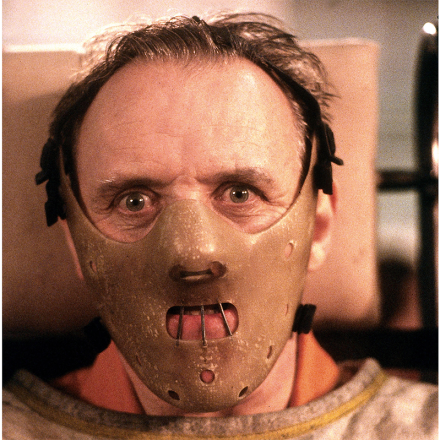
Sir Anthony Hopkins, outsider actor

Yes, Sir Anthony Hopkins did have a life before The Silence of the Lambs. And after it, too. But most casual moviegoers would be hard pressed to add too many other entries to his filmography. Like his most famous screen creation, the cannibalistic serial killer Hannibal Lecter, Hopkins has always been something of a study in contrasts. As an actor, he sits in the middle of the Venn diagram where the mainstream and the fringe overlap, seemingly as happy to mug his way through the Transformers franchise as to direct and star in a project like 1996’s August, a drily worthy adaptation of Uncle Vanya that barely registered on the sordidly commercial level.

Anthony Hopkins
uncool

Cameron Crowe’s cringe magic

Cameron Crowe’s long-awaited memoir The Uncool can be read intertextually as the real Almost Famous. The Uncool is also about lush California summers, grief, the unwavering support of a mother, cool big sisters, and Almost Famous: The Musical, but when you peel back the pages like it's a vintage magazine, there’s an elegiac aroma. This is a crinkled love letter to a deceased paramour; in this case, the beating heart of rock journalism. Crowe treats writers such as Lester Bangs (“my heart was almost all Lester Bangs”) and Danny Sugerman with devotional reverence that is as uncool or “problematic” in 2025 as learning about sex from your mom in a laundromat and writing about it. Crowe’s lack of cool thus becomes the book’s artistic frame.

The stubborn resilience of Mexico

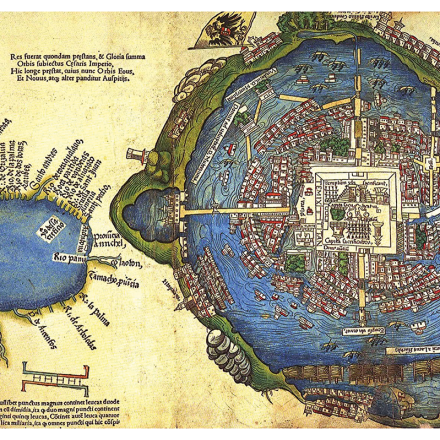
When they looked back, indigenous historians remembered how the fall of the Aztec empire to Hernán Cortés had been prefigured by terrifying omens and portents. The central valley had been plagued by comets, eclipses and supernatural storms. The previous emperor, Ahuitzótl, died after hitting his head on a lintel. A strange woman stalked the streets of Tenochtitlán, the capital, at night, crying “O my sons! We are about to perish.” But there were other signs that might have been heeded, too. The empire itself was only a few decades old when Cortés arrived in 1519. It was a patchwork of rebellious territories and city states, surrounded by yet more hostile peoples. Tenochtitlán fell after a three-month siege in 1521.

Mexico
Truth

Is there such a thing as right-wing art?

This has been adapted from a speech titled “The Myth-Maker as Nation-Builder,” which was delivered by Jonathan Keeperman, who runs publishing house Passage Press, at the National Conservatism Conference 2025. As W.B. Yeats once said: “There is no great literature without nationality. There is no great nationality without literature.” People often ask me whether it is possible to produce right-wing art, or otherwise to use art to engineer a more nationalist politics. But this strikes me as backward thinking. Culture is the field in which a people encounters the shared symbols and language that make political life possible. Art, done well, discloses the deeper truths a people already carry within themselves. Art therefore does not produce the nation; it reveals the nation.

Reconciling dreams with reality

Should you be waiting in line at the Philadelphia Museum of Art to see the exhibition Dreamworld: Surrealism at 100, don’t be put off by “Tête” (1974), a sculpture by Joan Miró that is big and ugly and plopped down directly at the entrance. Be aware that Miró’s true métier was painting; “Tête” was cranked out long past his prime. You can’t blame an old man for cashing in on his reputation, particularly when his formative years were burdened by poverty. You can blame a curator for including a flagrant piece of product as a how-do-you-do to a centennial celebration.

Surrealism

The contingent talent of Emily Sargent

When your brother is one of the most successful artists of his time, you might feel reluctant to pick up a paintbrush. Yet, the works of Emily Sargent, in the Metropolitan Museum of Art’s Portrait of a Family, prove that she was an artist in her own right. Sargent (1857-1936) was not in her brother’s shadow, although she was undoubtedly in his debt. John, Emily and their sister Violet were the children of FitzWilliam Sargent, a successful Philadelphia physician, and the artist Mary Newbold Sargent. By the 1850s, the Sargent family were living a nomadic existence in Europe – John and Emily were both born in Florence. Encouraged by their spirited mother, the Sargent children were instructed that no matter how many sketches were begun in a day, at least one must be finished.

Monet’s Venetian moment

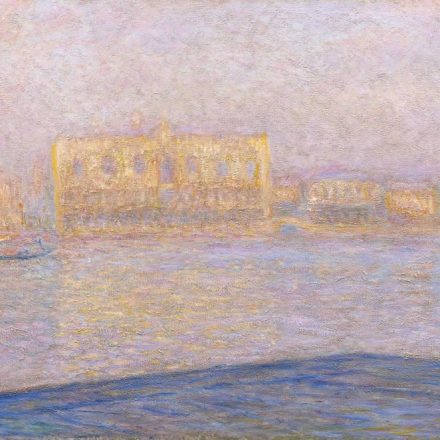
If you crave art that will envelop you, book a ticket, pronto, to Monet and Venice at the Brooklyn Museum. Enveloppe was the term the French impressionist artist Claude Monet (1840-1926) used to describe the “beauty of the air around” the objects and landscapes he painted. “Other painters paint a bridge, a house, a boat… I want to paint the air in which the bridge, the house, and the boat are to be found – the beauty of the air around them, and that is nothing less than the impossible,” he said.

Monet
train dreams

Portrait of a frontier life

Death falls from the sky in Denis Johnson’s 116-page novella Train Dreams (2011) in the form of “widowmakers,” broken tree limbs that can strike heedless loggers. Death burns through forests and arrests the heart of a young man hauling sacks of cornmeal; it rots through the wounded leg of a pedophile; it takes Robert Grainier in his sleep in November of 1968: “He lay dead in his cabin through the rest of the fall, and through the winter, and was never missed.” But Train Dreams, often hailed as a “miniature masterpiece,” is not a story of defeat: it is an elegiac love letter to the unobserved life of the American frontier worker who, though left behind by the steady march of progress, endures with quiet grace.