Books & Arts

Books and Arts

The great, underestimated Richard Yates

When the novelist Richard Yates, who was born in February 1926, was interviewed by the magazine Ploughshares in 1972, the conversation turned to the neglected writers of his generation. Yates, a man of remarkable acuity and taste, was typically incisive about the likes of Evan S. Connell, Brian Moore and Edward Lewis Wallant – and, just to show that he was no misogynist, he saluted Gina Berriault, saying that she was “an absolutely first-class talent who has somehow been left almost entirely out of the mainstream. She hasn’t quit writing yet, either, and I hope she never will.” If these words struck something of a cautionary note, then Yates’s conclusion was even more concerning.
Inside the mind of Cheryl Hines

This book shouldn’t work. A memoir written by a 60-year-old actress – who, frankly, has never threatened to become a major movie star – hardly sounds promising. Then there’s the author’s personal baggage. Since 2014, Cheryl Hines has been married to Robert F. Kennedy Jr., the raspy-voiced Health and Human Services Secretary who served as one of Donald Trump’s chief surrogates during his last presidential campaign. Rarely has a book so straddled the worlds of Hollywood and conservative politics, let alone those embodied by the current administration. Yet, against all the odds, Unscripted is an enthralling read. To address the burning topic first: no, not all of Hines’s friends were entirely happy with her husband’s appointment, nor with his views on Dr.

Jon Fosse’s Scandi-lit revival

Jon Fosse, the Norwegian novelist who won the 2023 Nobel Prize in Literature, has sat center stage in the recent revival of interest in Scandinavian literature. Fosse’s one-time creative-writing student Karl Ove Knausgård became the very definition of a publishing sensation when the first volume of his six-part memoir Min Kamp (“My Struggle”) – in which he dragged all his family skeletons out of the closet for all to see – was published in 2009. Danish novelist Solvej Balle’s seven-part On The Calculation of Volume, of which only the first three parts have been published in translation, has caused a similar stir in the past two years.

How the West can win

It is no overreaction to look at the current state of western culture, through academia and the arts alike, and to feel that Rome has fallen all over again. Whether it’s a crowd chanting in support of terrorists at Coachella, or a horrific political assassination on a university campus, cheered by some, we are witnessing something far more sinister than a mere surge in political violence. We are watching the collapse of the fundamental preconditions that make civil society possible, as a civilization tears itself apart. Many are of the opinion that it is already too late: that the unique and unprecedented advances in western culture over the past three millennia cannot be furthered.

Keith McNally: ‘big-name’ stars are wrecking Broadway

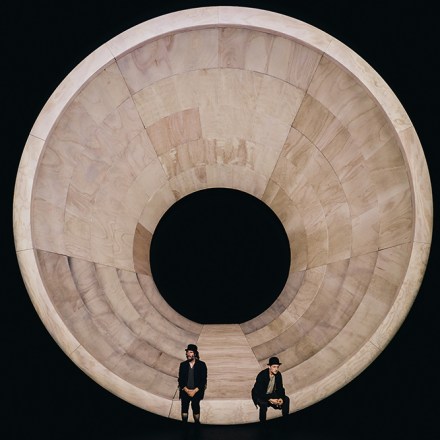
“WAITING FOR GODOT IS A RUBBISH PLAY.” So declared Keith McNally in an Instagram post that caught my eye. “I urge you not to see Waiting for Godot.” Accompanying the statement was an image of the two stars who headlined this fall’s production at Broadway’s Hudson Theater, Keanu Reeves and Alex Winter. The play is the latest in what regular theatergoers and visiting tourists may have started to recognize as a recurring theme in New York’s theater scene: an overwhelming number of big-name Hollywood screen actors dotting their playbills. These players are here to make their bones and increase their prestige as “true” thespians, often by attaching themselves to tired and familiar productions. This has certainly not been lost on McNally.

mcnally

The Adventures of Elektronik is not your average children’s comedy

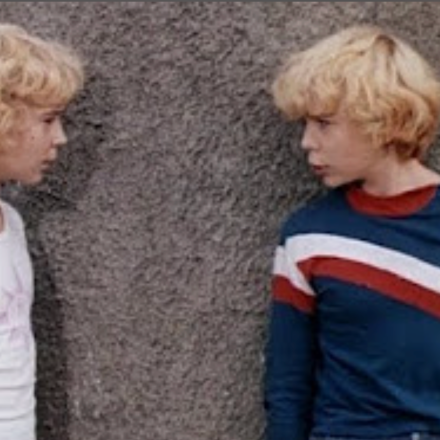
For people from the former Soviet Union, the holiday season brings with it two certainties: mayonnaise and movies. Mayonnaise, because no winter festivity is complete without the traditional mayo-infused salads with such evocative names as “herring under a fur coat” and “Olivier,” which are eaten for days straight. These calorific concoctions are best accompanied by a dozen or so cult films from around 1965 to 1985, which are ritually rewatched every year by Homo Sovieticus and his descendants. Of these classics, one of the most beloved is the musical The Adventures of Elektronik (1979). Adapted from the novels of the science-fiction writer Yevgeny Veltistov, the movie tells the story of a young robot named Elektronik.

The secrets of Henri Rousseau

Henri Rousseau (1844-1910) was so earnest that it landed him in jail. When a former student asked him to use forged identity papers to open a bank account, Rousseau, who was then in his sixties, was happy to help out his old acquaintance. He seemed unaware that he was doing anything more than a favor, let alone committing fraud. To prove the painter’s innocence, his lawyer brought one of his canvases before the jury and declared: “You do not have the right to condemn a primitive.” The works that result from such legendary naivety are on view at the Barnes Foundation in Henri Rousseau: A Painter’s Secrets.

orson welles

My Name is Orson Welles was illuminating

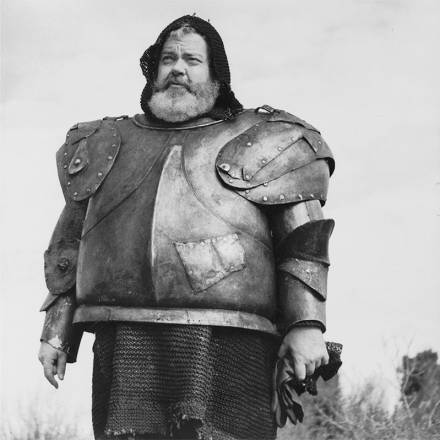
Orson Welles (1915-85) considered the notion of posterity vulgar, but he knew that he’d be loved once he was dead. That death came suddenly, just over 40 years ago, on October 10, 1985. There was a poignancy to the way death took him – sitting at his typewriter after appearing on Merv Griffin’s talk show. By then, the co-writer, director and star of the greatest film ever made, Citizen Kane (1941), hadn’t finished a film since 1973’s ignored but now quietly loved F for Fake. At the end of his life, he may have been better known as the guy in Paul Masson wine commercials than as a cinematic genius. To commemorate the 40th anniversary of his passing, Paris’s Cinémathèque Française last fall arranged the illuminating exhibition My Name is Orson Welles.

Jane Austen: Rise of a Genius is projecting

Which is your favorite Jane Austen novel? OK, maybe not a conversation prompt appropriate for every setting, but a reliable one, I find, to break the ice at DC dinner parties where I’m not well acquainted with my fellow guests but spy someone who seems likely to know her work. I also ask it of younger fiction writers who come looking for advice about plot construction. I once resorted to it with a stranger, a woman of a certain age, to distract me from my irritation, sitting on an Acela train inexplicably halted outside Wilmington, Delaware, for two hours. She chose Persuasion, Austen’s elegiac account of late-in-life love.