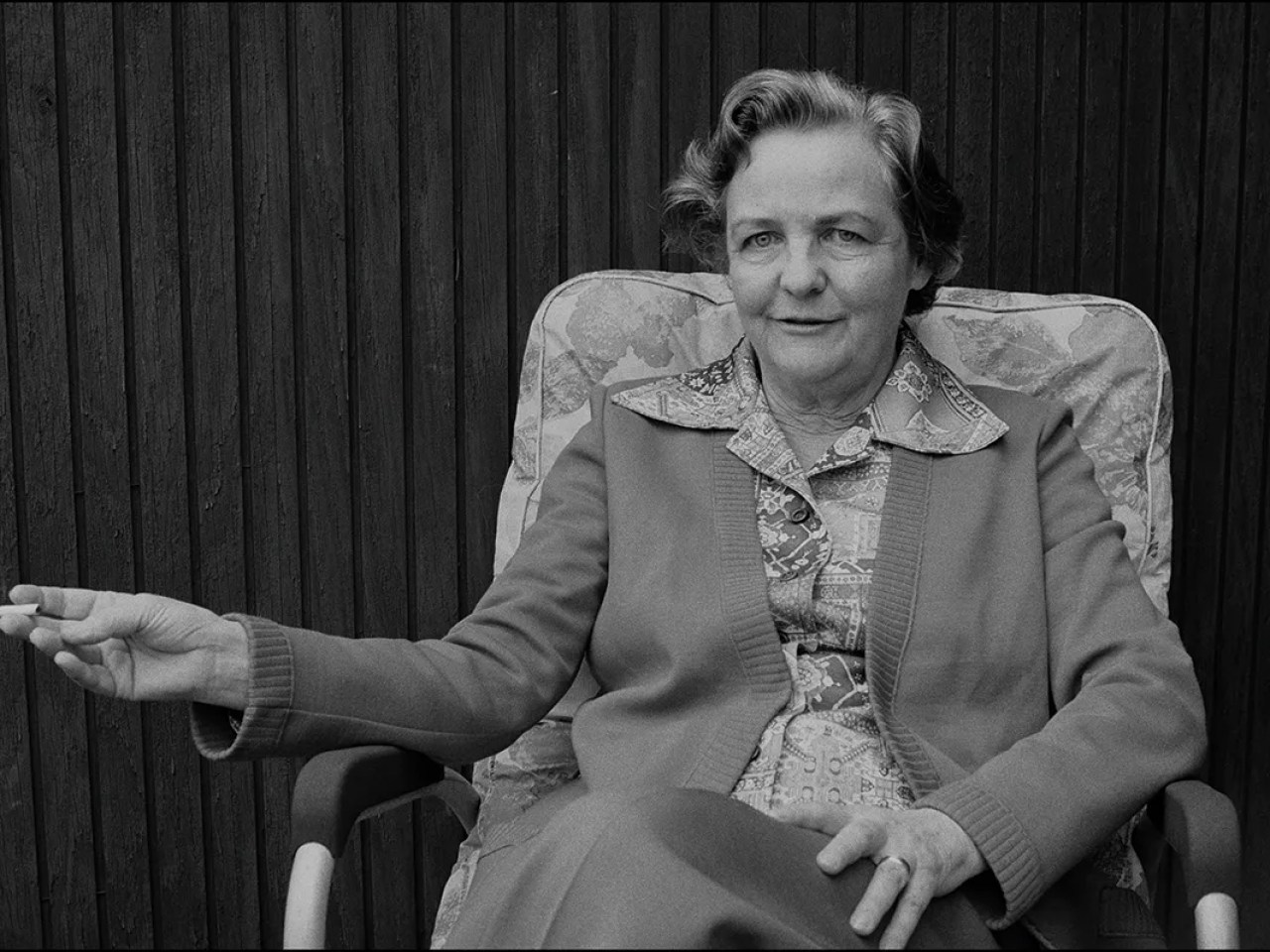
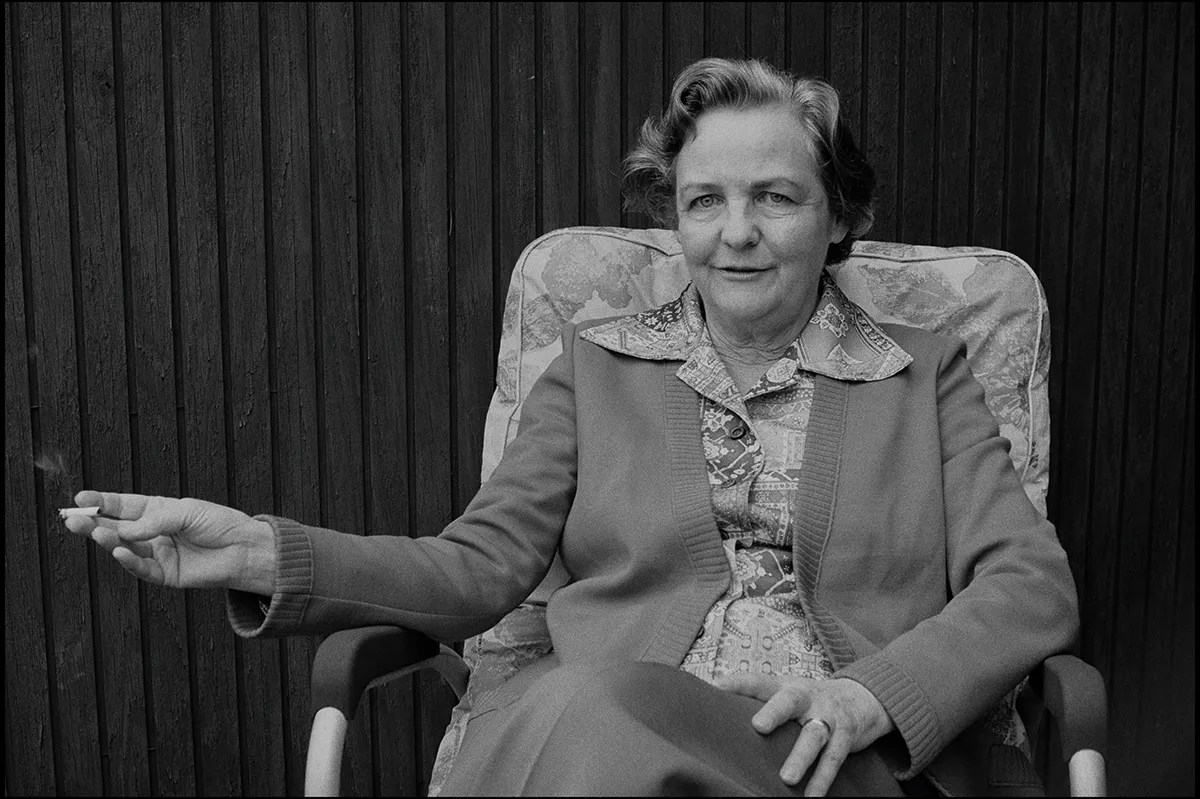
I won’t attempt to explain Mitfordmania; we’d be here all night. Suffice it to say that fascination with the British sisters – Nancy, Pamela, Diana, Unity, Jessica and Deborah, born to the 2nd Baron Redesdale between 1904 and 1920 – shows no sign of waning. This year alone, the six have inspired Outrageous, a lavish (and fatuous) multi-episode television drama available on BritBox; The Party Girls, a play by Amy Rosenthal; and Do Admit: The Mitford Sisters and Me, a graphic novel by cartoonist and fangirl Mimi Pond.
Now comes biographer Carla Kaplan’s Troublemaker: The Fierce, Unruly Life of Jessica Mitford. I did wonder if there was anything left to say. Famous for the muckraking classic The American Way of Death, Jessica also wrote two well-received autobiographies. A sizable selection of her letters was published in 2006, and she figures large in a trio of group biographies of the Mitfords, by Jonathan Guinness, Mary S. Lovell and Laura Thompson.
Yet Troublemaker turns out to be both engaging and revelatory. Kaplan’s skill at plucking telling passages from family correspondence is particularly fine and she has doggedly tracked down Jessica’s extant friends (she died in 1996, aged 78). While never hagiographic, this account leaves one with a deeper appreciation of all that Decca – to use her lifelong nickname – endured and accomplished, even if Kaplan’s prose, although serviceable, never matches her subject’s own for clarity, originality or wit.
Inevitably, the first section – the young Mitfords at home – goes over familiar ground, fictionalized in Nancy’s best-selling novel The Pursuit of Love and later recounted in Decca’s first memoir, 1960’s Hons and Rebels (initially published in the US as Daughters and Rebels). Denied her dearest wish, to go to school, Decca grew up in a drafty Cotswolds manor house with only her sisters and one brother, Tom, for company. She and Unity, the next-oldest sister, entertained themselves by making up a private language and swearing allegiance to opposing ideologies. Unity declared herself a fascist, Decca fancied herself a socialist.

It was all fun and games until Unity moved to Munich and made friends with Hitler, and Decca, impatient with the high-society ritual of “coming out” as a debutante, eloped with her second cousin and fellow left-winger Esmond Romilly, running off to the Spanish Civil War to join the Republican cause.
Kaplan’s book picks up steam when, returned to Britain and reeling after the loss of their baby Julia from measles, Decca and Esmond decided in early 1939 to try life in America. Short on money, untrained for proper careers, but provided with letters of introduction from well-connected friends and relations (Esmond was, wouldn’t you know, Winston Churchill’s nephew), the pair skipped up and down the East Coast in a madcap way, occasionally doing odd jobs. Esmond sold silk stockings door to door and Decca hawked tweed in the Ye Merrie England Village booth at the 1939 World’s Fair in New York. When they were invited for country weekends by wealthy acquaintances, Esmond proved a sparkling conversationalist while his wife looked on adoringly. “At each visit, and at Esmond’s prodding, Decca filled a large black British handbag with whatever toiletries and household supplies they could grab,” Kaplan recounts.
The author ascribes these antics to youth – the couple were still in their very early twenties – and the need to have fun in the shadow of looming war. The Washington Post ran a profile of them headlined “Blue Blood Adventurers Discover America,” and the Nazi connections of Decca’s siblings added to their notoriety. Her sister Diana had joined Unity in Hitler’s inner circle after leaving her first husband for Oswald Mosley, founder of the British Union of Fascists.
The outbreak of war brought an end to the happiest part of Decca’s life. Esmond traveled to Canada to volunteer for the Royal Canadian Air Force, leaving his pregnant wife in Washington. Constancia “Dinky” Romilly was born in February 1941. That August, Esmond shipped out for England and Decca scrambled to find a way to follow him home. At the beginning of December, just as she secured passage, she received a telegram: Esmond’s bomber had crashed into the North Sea and he was missing, presumed dead.
Churchill came to Washington later that month and invited Decca and Dinky to the White House. There, her bitterness overflowed. The then-prime minister, having made further enquiries into his nephew’s fate, informed her he had most certainly perished. Trying to be kind, Churchill assured Decca that while Diana and Mosley had been jailed as suspected enemy-sympathizers, he would try to improve conditions for them at Holloway prison. “Decca erupted,” Kaplan writes. “The last thing she wanted, she let Churchill know, was to see Mosley comfortable. Both Diana and Oswald deserved to die. She blamed them – and all their fascist associates – for Esmond’s death.”
Decca stayed on in Washington and learned typing and shorthand in hopes of contributing to the war effort. That she soon landed a job as an investigator at the Office of Price Administration proved doubly fortunate. She enjoyed rooting out characters whom she described as “war profiteers, price-gougers, greedy landlords, violators of rationing regulations.” Also, she fell in love with the boss.
Bob Treuhaft was a Jewish Harvard-educated lawyer and a progressive who relished teasing and pranks, which was probably a requirement to be wed to a Mitford. At first, Decca’s growing attraction upset her for what it seemed to say about her loyalty to Esmond and, in February 1943, she decamped with her toddler to San Francisco. Treuhaft, however, soon followed her, and they married. After the war, they both joined the American Communist party and began campaigning against racial segregation. With their passports confiscated because of their political views, they could not travel to Britain until 1955. Meanwhile, Decca kept up a lively correspondence with her family. She was only “off writers,” to use the Mitford parlance – meaning not communicating by mail (“off speakers” meant not speaking to) – with her father, who never forgave her for eloping, and with Diana, whose loyalty to Mosley and unrepentant fascism Decca abhorred.
Behind Decca’s back, the sisters traded small-minded and mean-spirited remarks about her. They disdained Decca’s “blasted causes,” her short hairstyles, her “little suburban house” and her habit of wearing pants. They considered her a slattern as a homemaker and wife. One odious comment of Diana’s stands out. “We screamed with laughter about the Treuhafts,” she wrote to Nancy, having heard about the couple from their mother who visited California in 1948. “After all the talk and trouble only ONE Mitford has ever done any harm to a Jud [Jew] – Decca.”
Whatever you think of her politics, Decca’s work ethic was formidable. In pursuing two careers, first as an activist and later an investigative reporter, she outpaced all her sisters, even Nancy, whose comic novels and biographies of Madame de Pompadour, Voltaire and Frederick the Great sold well. According to Kaplan, “Nancy liked to pose as a critic of the aristocracy, but no one more fully embodied its disdain for excess enthusiasm,” while “zeal was always Decca’s rule.”
Perhaps zeal explains Decca’s affinity for America and Americans of all classes. The work of the Bay Area Communist party, of which she was by turns financial director, press director and principal fundraiser, makes for less compelling reading than preceding chapters, and several civil rights cases are described in excessive detail, yet the intensity of her commitment shines through. Decca became much in demand as a speaker – “a big, always funny, always authoritative voice, tinged with a slight British accent, booming out from a highly animated small body she deployed with the grand gestures of a slapstick comic,” writes Kaplan. During off hours, she and Bob enjoyed throwing parties, serving cheap liquor to crowds of fellow travelers in their small Oakland home. (The house was described by her sister Deborah, Duchess of Devonshire, in a letter to Diana as having a “very peculiar” smell because, she averred, of the black family the Treuhafts allowed to live in the basement.)
Decca and her husband eventually resigned from the Communist party in 1958; their disillusionment began with the uncovering of Stalin’s grisly crimes. She was nonetheless bereft. “Something very large would have to now fill that space,” says Kaplan, to “replace both the structure the party had given her life and, just as important, the identity it had afforded and secured.”
Writing became that thing. Decca reported on unscrupulous undertakers for a regional magazine called Frontier. Further investigations into the funeral business culminated in The American Way of Death, an unlikely bestseller in 1963. She was inspired to embark on a memoir after rereading Esmond’s letters. The result, Hons and Rebels, is a terrific book. But the publishers compelled her to revise the draft manuscript to make it less “bald” – she needed to be, in other words, more self-revealing.
Although an extrovert who relished public speaking, Decca found discussing her deepest feelings difficult: one legacy of a British upper-class upbringing she never discarded. Perhaps the bitterest blow among the many she suffered in her life was the loss in 1955 of her first son with Treuhaft, Nicholas, who was hit by a bus and killed, aged ten. After the death of this “unusually bright, sweet, happy boy,” she took down all photographs of him and never mentioned him. When she came to write her second memoir, A Fine Old Conflict, she “air-brushed Nicky out of it entirely… because to relive his death… was a bit more than I could bear,” she wrote to her two surviving children, Constancia Romilly and Benjamin Treuhaft, years later.
But she did bear so much, and with a notable lack of self-pity. As her mother told her once in a letter: “You were always such a brave little D.” Maybe Nancy was cleverer, Diana more beautiful, Deborah more stylish. But Decca was the Mitford with the most courage – and for that alone she deserves our admiration and continuing interest.
This article was originally published in The Spectator’s December 22, 2025 World edition.






Comments