Features

Features

How Trump can confront the new age of terror

The world has become strangely numb to terror. Sometimes an atrocity will be sufficiently horrifying – the murder of Charlie Kirk, say – to cause mass shock and anguish. Yet now reports of car rammings or knife rampages or foiled Islamist plots feel almost routine. We have become inured to ideological violence. In the quarter-century since 9/11, the specter of terrorism has almost become a fact of modern life. Last year, America was one of the few western countries to see a rise in terrorism, with 13 recorded attacks and 28 deaths. Today even the most appalling acts generate only a brief sense of widespread outrage. And then the news cycle moves on. No mass killing has come close to the scale of the Twin Towers attacks.

Terrorism
gator

A Gator for a weekend

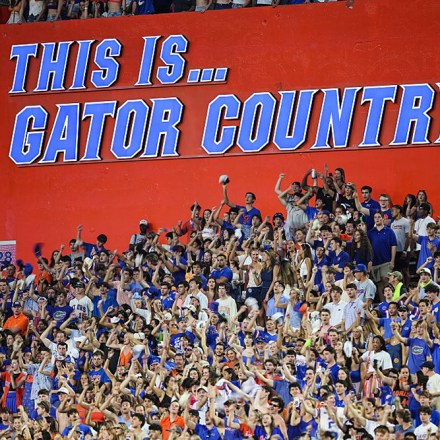
I’ve never cared about a football team larger than my high school’s. Even when my cousin walked out with the Alabama Crimson Tide a decade ago, the Southeastern Conference meant nothing to me. I saw photos of his championship ring on Instagram, shiny as a bride. Then I married a University of Texas graduate. My husband anticipated the Longhorns’ long-awaited entry into the SEC at least as much as our wedding. My family became Longhorn-in-laws, dutifully asking after Quinn Ewers at the holidays as though he were our son. “He’s lost weight,” I would say, echoing the television announcers I overheard from the kitchen, “And he’s going to church!

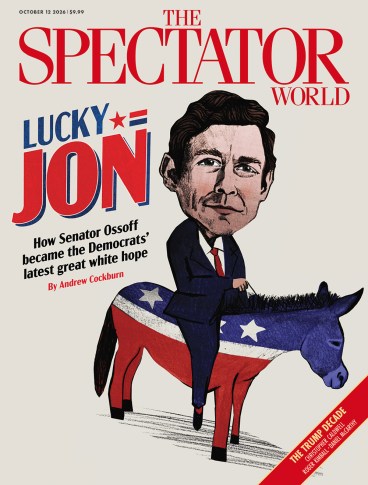
Will Jon Ossoff’s luck last long enough for a run at the presidency?

Once upon a time, the export crop of Martha’s Vineyard and Nantucket was whale oil. Nowadays it is money, harpooned by visiting campaigns from deep-pocketed donors at anchor in their summer seaside retreats. In the peak season of July and August, the islands’ social rhythms are dictated by money-harvesting events, wrangled by local hosts jostling for the social éclat that comes from securing a high-profile honoree. By late August this year, the territory had already been worked over by a series of hopeful visitors with hands outstretched, such as the rising Texas Senate hopeful James Talarico, Hakeem Jeffries in eager pursuit of the House Speakership that is almost in his grasp, Maryland Governor Wes Moore and others questing the donor dollar.

ossoff
missile

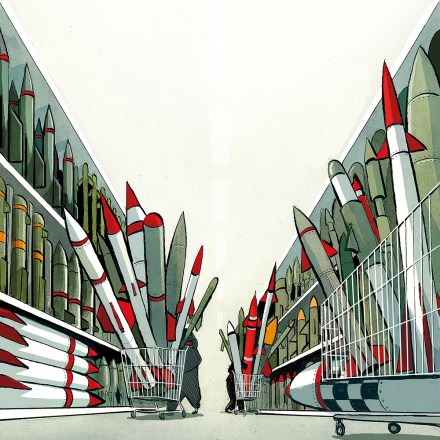
America must shore up its missile-building capabilities

America’s war with Iran is in its eighth month and stuck. On September 26, Donald Trump confirmed that he had rejected Tehran’s offer to reopen the Strait of Hormuz in return for lifting the American naval blockade and easing sanctions. He has reportedly told his staff that renewed bombing is likely after the midterm elections on November 3. He is reluctant to resume major combat any sooner. The embarrassing question is whether America actually has enough missiles to bomb Iran. The West spent a generation persuading itself that making clever weapons could compensate for making fewer of them, with even fewer factories and a thinner web of suppliers behind them. The reality of war is messier and less obliging.

Invented claims of lynchings and racist violence are irresponsible — and dangerous

“Cases of Black people found hanged in the US South are a reminder of nation’s lynching history,” read an ABC News headline last month. That phrase – “lynching” – has been used again and again in reporting on the death of a woman in Mississippi. The Associated Press used the word, as did the British state broadcaster the BBC, the Los Angeles Times and the Washington Post. You may think, with such a loaded phrase, that the suspects are members of the KKK. In fact, all three are black men, charged with the murder of Tasia Fortune, a 29-year-old woman found dead on August 3 in Jackson. Fortune’s own mother has said that she doesn’t believe the killing was motivated by race. You would hardly know it from the media’s coverage.

lynchings

What J.D. Vance’s son is learning at school

In his book Communion, J.D. Vance confesses to being a “holy terror” in school. After one incident, in which he frescoed a wall with a crayon, the school pleaded with his mother to have him diagnosed with ADHD and put on Ritalin. But she and his grandmother, his Mamaw, were skeptical: “‘He’s just a boy,’ said Mamaw. ‘That’s all that’s happening. He’s just a little shitheaded boy.’” At the Heights – the Catholic boys’ school where Vance has just enrolled his oldest child, nine-year-old Ewan – the policy is to let boys be. If students are naturally lively, loud and energetic, then simply stifling that energy goes against the school’s stated mission: forming “men fully alive.

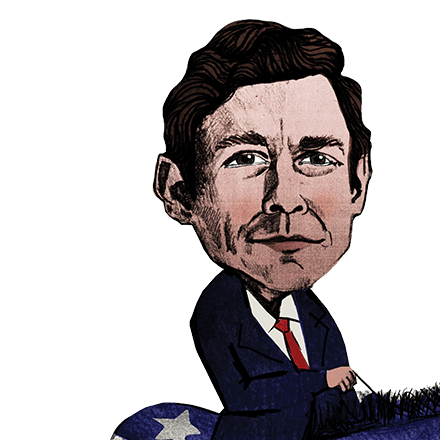
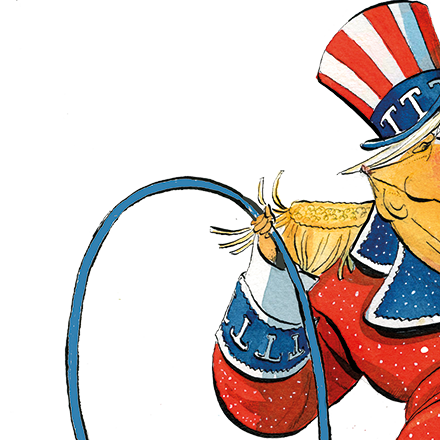
Is the Trump phenomenon an anomaly?

I suppose you could say that the Trump decade began on June 16, 2015, when Donald and Melania Trump descended the golden escalator in Trump Tower to announce his candidacy for the presidency and the birth of MAGA, the “Make America Great Again” movement. There are, however, a few problems with that start date. For one thing, the Trump decade, which may have started then, did not stop when Trump took an extended vacation from the White House beginning on January 20, 2021. It continued running, like a television set blaring in another room, all through the Biden presidency. And now, in October 2026, the Trump decade has lasted more than a decade. Really, we are talking about the Trump era.

decade

The decade of Trump has been a necessary corrective

The past two centuries have been the era of mass production, of people as well as things. To a degree unimaginable before the Industrial Revolution, all of life has become standardized. Politics is no exception. It has come to be characterized by one set of rules piled atop another, positive law on top of the Constitution, an ever-increasing body of regulations on top of the laws, all couched within quite formal rhetorical and moral norms. There are rules governing elections, rules governing how parties nominate candidates and playbook rules for conducting a winning campaign. The candidate is really just a product, as is the elected official. They’re products manufactured according to standardized procedures. But Donald Trump isn’t. This enrages and frightens his critics.

How Trump’s second term self-destructed

The past year has turned out to be the most important of Donald Trump’s political life. It loosened the ties that had constrained his character – and Trump’s character is the key to his political project. There is no sillier exercise than trying to sum Trump up in ideological terms – calling him a conservative, say, or a fascist. Whatever you think conservatism is, it does not involve using the South Lawn of the White House for mixed-martial-arts fights, as Trump did in June. As for fascism, none of the conditions that made it possible a century ago exist today: there is no rising communist movement, no large pool of recently demobilized soldiers, no military humiliation, no manufacturing sector organized on military lines.

second

Colleges are making themselves obsolete

American higher education is in retreat. It’s shrinking. The for-sale signs have gone up. It’s time for “inventory reduction.” Forty-nine colleges have closed since 2020. Forty others have merged with neighbors. The Huron Consulting Group says that 400 colleges are at risk of closing in the next decade. The prospect of insolvency has now moved beyond small colleges. Larger ones are closing programs and laying off faculty. Not counting community colleges, trade schools, online-only outfits and clandestine thinkatoriums, some 2,700 four-year institutions are currently authorized to hand out college degrees in the US. That compares with 4,150 licensed hot dog stands in New York City alone and 267,000 licensed massage parlors across the country.

Pilates is pseudoscience

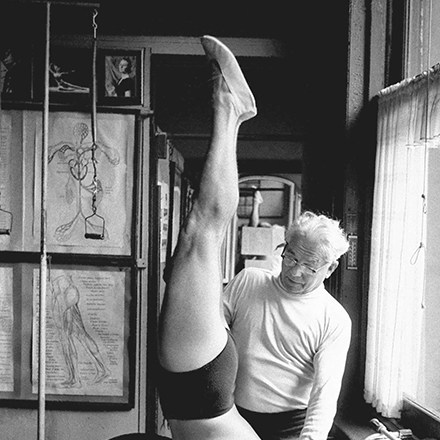
Pilates has long been mocked as the regimen of middle-aged Manhattan neurotics. Samantha from Sex and the City was an adherent and today social media is awash with so-called “Pilates princesses.” Stefon Diggs, the 6ft, 191lb Washington Commanders wide receiver, has been filmed stretching on – and falling from – a reformer Pilates machine. Since 2020, online searches for Pilates have grown fourfold. But the success of Pilates is comparatively recent. By the time of his death in New York City in 1967, Joseph Pilates’s method was not particularly well-known and, according to friends, he felt bitter about it. Science, he thought, had not recognized his contribution to physical wellness. In his latter years he drank rather too much and chain-smoked cigars.

pilates
space junk

Space junk poses a major threat to humanity

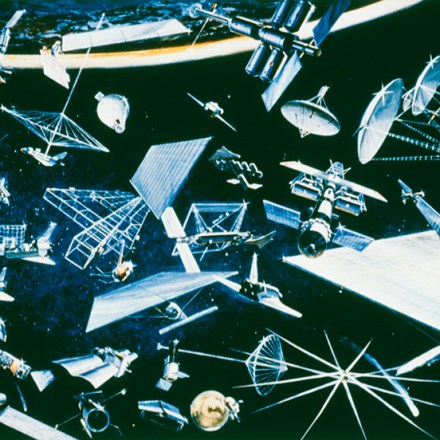
On September 14, the United States announced it had deployed a space weapon to Earth’s orbit. US Secretary of the Air Force Troy Meink declared it a response to “evolving threats.” But what is a space weapon, and what are these threats? The truth is we still don’t really know. The weapons are classified and we earthlings are in the dark. Cutting-edge military space tech ranges from maneuverable space-craft capable of tracking and shooting down enemy satellites to communication jammers that clock or swamp the enemy’s data links. But if the weapons are mysterious, the need for them is very real.

Recovering the art of the story

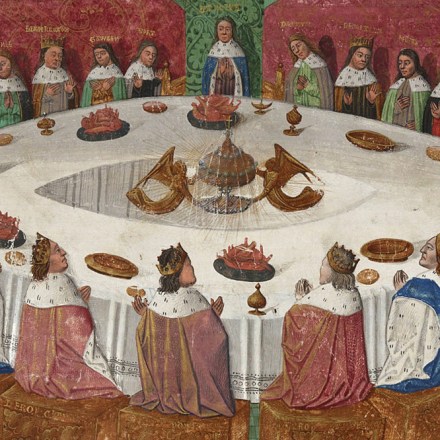
I was honored to speak with Malcolm Guite, a poet and Anglican priest, about storytelling, attention and contemporary life. Guite’s latest project is a retelling of the Arthurian legends in verse, beginning with Galahad and the Grail. Arthurian legend might seem an unusual place to start for a conversation about technology. But I believe that repairing our relationship with the internet and the devices that permeate our lives begins with changing how we pay attention. Much ink has been spilled about how the digital age has fractured our attention spans and much less on what it looks like, practically, to fix them besides the old panacea of “log off,” “touch grass.” In my estimation, the best – and most human – place to start recovering is the art of the story.

story
hurricanes

Climate-change zealots are wrong about hurricanes

A remarkable weather record was broken recently. The equinox came and went this September and yet not a single hurricane had formed all year in the entire Atlantic Ocean. It’s the first time this has happened since 1914 – which was back before the satellite era, when hurricanes were more likely to go unrecorded. September is normally peak hurricane season, when the tropical Atlantic gives birth to a series of spinning storms, dubbed hurricanes when their winds exceed 74 miles per hour. (They are usually called typhoons or cyclones in the Pacific and Indian oceans.) One year is not a trend but longer-term data does show a slight downward trend in hurricane frequency.

What the CIA and MI6 really talk about

The Special Relationship has seen more special days. Earlier this year, President Trump delivered his verdict: “How is the relationship? It’s the relationship where, when we asked them for help, they were not there. When we needed them, they were not there. When we didn’t need them, they were not there. And they still aren’t there.” Trump was referring to divisions between the US and UK over the wisdom and conduct of the war in Iran. (Even amid a spat, though, he can dish out praise. Just this week, following the arrest of five men outside RAF Fairford, used by American bombers to strike Iran, the President said the UK authorities had done an “amazing job.”) But his remarks landed at a moment of divergence in the US-UK relationship that extends well beyond Iran.

harold wilson

Harold Wilson is the new Labour lodestar

After Andy Burnham’s speech at the Labour party conference last month, one veteran factionalist declared: “We are all Burnhamites now.” Romantics love the rhetoric; cynics respect the ruthlessness. “Game recognizes game,” says one Labour figure. The Prime Minister’s address was pitched at a wounded party seeking support. Emotive and personal, yet also intensely political, it showed a keen awareness not just of Labour’s values, but of its interests too. Right to Buy, which attracted legions to the Tory ranks, will be halted for new homes; a new National Care Service will bring thousands more members into the unions’ fold.

How long has Ranulph Fiennes been under some sort of control?

It is repeatedly pointed out – I have probably written it myself – that the triple lock on the state pension is ruinous. There is a genuine difficulty, though, political and moral, about getting rid of it. No one likes to lose a benefit they already possess. The abolition will annoy 99 percent of its recipients, of whom there are 13.2 million. Besides, we pensioners have retained a traditional skill almost entirely lost to younger generations, called voting. We know how to go to a polling station and put a cross on a ballot paper. We therefore have the power to slay any party we think is making us poorer. The Tories invented the triple lock.

ranulph fiennes
wealthy

The wealthy person’s guide to fleeing Britain

Behind the scenes of The Spectator’s wealth tax debate last month there were lots of nervous whispers. “Wealthy people we work with are absolutely terrified about an exit tax,” one Westminster figure remarked. The economist Arthur Laffer, one of the debate’s speakers, couldn’t believe a wealth tax was even being considered. Britain is already near the top of his famous curve – the point beyond which taxation reduces the Treasury’s take – and seems determined to push things to destruction. The latest fiscal rumor – that we might seize millions on a wealthy migrant’s departure– is a dangerous one. According to reports, it’s also the reason Chris Rokos, the third-highest taxpayer on the Sunday Times tax list, has decided to leave for Greece.

The strange world of professional mourners

MournMate is a new online market-place that promises to connect bereaved families and funeral homes with professional mourners in the US. It was advertising for its first “500 Founding Members” when I looked and, curious to know what it was all about, I signed up. The qualifications and requirements were surprisingly broad – the site was looking for actors, musicians, public speakers, eulogy writers and anyone with experience of religious or cultural ceremonies. The advertised rate was $25 to $300 an hour, with an extra 50 percent for emergency bookings. Grief, it seems, has joined the gig economy.

gambling

From Playboy pin-up to prohibitionist: the man taking on British gambling

The August 2004 cover of Playboy features a topless Eva Herzigova (“The supermodel is supernaked”) and promises a piece about “America’s 10 sexiest bartenders.” If that isn’t enough to excite you, another article is puffed, no less conspicuously: “Weird new casino games (and the men who invent them).” Turn to page 73 and a bald, bespectacled man, with “prominent ears on a frank, slightly frowning face,” stares out at you. This, we learn, is the “Bill Gates of card game inventors” and his name is Derek Webb. The Englishman made his money at the poker tables in Derby: “I could play three times a week with a £50 buy-in and make £8,000 a night.” From 1979 to 1994, Webb split his time between the East Midlands and Las Vegas.

Should I be more like Bryan Johnson?

“Journaling” is now a good thing, which we know because it’s part of Bryan Johnson’s morning routine, sandwiched between eating algae and sauna-ing with a Bryan Johnson-trademarked ice pack on his crotch. It’s nice to check in with Johnson – the tech millionaire who wants to “defeat death” – every few hours. This week I embarked on my biggest ever stand-up tour, a tour whose scale makes it seem like a culmination of everything to this point. Venues you dream of playing, ones which seem so distant in the mud and piss of the UK’s comedy circuit. Twelve hundred people tonight, 1,500 the night before. “Only 680 tonight is it?” I shrug from the back seat of my tour manager’s Skoda, like a man used to four-figure wine rolling his eyes at a mere Château Lafite.

bryan johnson

What if AI is actually good at writing novels?

The spectacular fall from grace of Haitian-Canadian writer Thélyson Orélien in many ways resembles our own culture war over Jason Arday. The celebrated author, feted in TV studios and in the literary salons of Québec and Paris’s Saint-Germain-des-Prés for his hard-hitting descriptions of the migrant experience, was accused on X both of serial plagiarism and of using artificial intelligence to write his latest novel. His accusers decried the soft bigotry of low expectations that caused the woke intelligentsia to turn a blind eye to mediocrity because their hero was a capital-B Black man.

I like a good hypocrite

I’ve always admired Diane Abbott, one of the most left-wing British MPs, though admittedly only for one thing. Many years ago she campaigned against private schools. As a good socialist this comes as part of the ideological package, and Abbott was more than happy to join in the class war against parents who are in a position to educate their children outside the state system. However, as some readers might remember, when it came to her own school choice Ms. Abbott looked around the local state schools and decided that none of them was good enough for her own progeny. So she sent her son to the City of London School, a private school for boys. Confronted with this hypocrisy, Abbott did the sole thing that I admire her for.

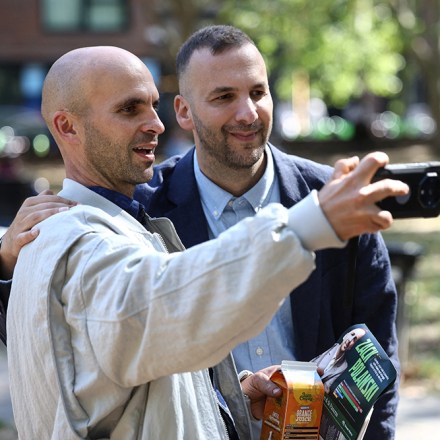
I’ll do anything to keep Zack Polanski out of Kentish Town

On the morning of the 2005 general election, the young man who sat opposite me at work asked, “How did you vote?” “That’s none of your business,” I replied, in a silly, prim voice. A cruel look passed across his face. “You voted Tory, didn’t you?” he crowed. “That’s why you won’t say!” He started to point at me. “Tory voter! TORY SCUM!” I was appalled. It was my first experience of tribal politics and I didn’t like it. I can’t remember what I said in reply, but I certainly didn’t reveal how I’d voted. If I had voted for Michael Howard’s Conservative party, I would have been too ashamed to admit it and if I had voted Labour, I wouldn’t have wanted to admit that, either – not if it meant I was now a kindred spirit to this maniac.