Spectator Life

Spectator Life

An intelligent mix of culture, style, travel, food and property, as well as where to go and what to see.

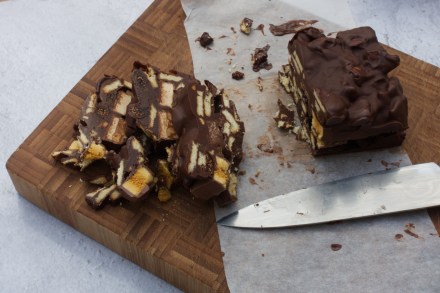
Coconut ice: a no-bake treat made for the heat

I don’t know about you, but I find that many of the things I enjoy eating most in the summer, those things I crave when the weather is blazing hot or just plain muggy, still require some level of cooking. Those chilled soups, or sticky ribs, or even ice creams still mean standing over a hob or a barbecue or turning on the oven. Mostly, I embrace it: a hot means to a greedy end. As someone who finds relaxation in baking and cooking, I’m not big into no-bake dishes. I’m willing to turn the oven on if it means soft, baked fruit that I can chill and serve with swoops of cool softly-whipped cream, or to light my barbecue if it means beautiful, charred fish alongside a sharp, zingy dressing.

The very British history of HP sauce

HP Sauce is a glorious thing. The French may have their five, gastronomic Mother Sauces but we in this sceptered isle have HP and that’s what counts. Because nobody wants a pool of hollandaise with their Full English. It first appeared on our dining tables in the late nineteenth century and has since grown to account for three-quarters of sales in our brown sauce market. Its story begins in 1884, when a Nottingham grocer, Frederick Gibson Garton invented the sauce in his pickling factory in New Basford (later also the home of Cussons Imperial Leather soap). It was a classic culinary product of Empire, with tomatoes, tamarind, dates, molasses and soy amongst its ingredients.

Swedish meatballs: a taste of Ikea at home

It’s thought that meatballs were brought to Sweden by King Charles XII. After a disastrous attempt to invade Russia in 1709, he fled in exile to the Ottoman empire. There he fell for a dish very similar to the Swedish meatballs we now know and, when he returned from exile five years later, he took those meatballs back with him. The meatballs grew in popularity and eventually became so closely associated with the country, that they took on the ‘Swedish’ name. But it would be disingenuous to write about Swedish meatballs and not mention that bastion of storage, that flatpack palace: Ikea. It’s no exaggeration to say that Ikea brought the Swedish love for meatballs to the rest of the world.

Father’s Day drinks to make Dad merry

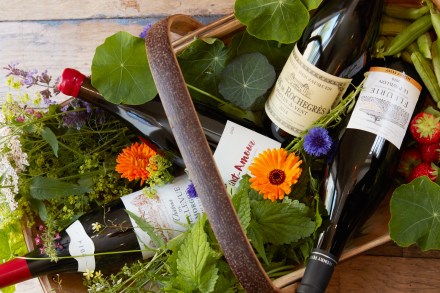
Father’s Day is rarely observed in our house for some reason, unless you count that time I was let off dishwasher duty a decade or so ago. Mother’s Day, on the other hand, is greeted with bells, whistles and klaxons, my boys having had it drummed into them that flowers, breakfast in bed, a spa day and matinee constitute the bare minimum considered acceptable by their mother. This ghastly year, though, dad deserves a bit of a fillip too (hint, hint boys). Buy him a fine bottle, one that you wouldn’t mind drinking yourself. After all, he’d love a bit of company and a natter and nothing warms the cockles better than decent liquor shared. Here, then, are my top ten tipples for Father’s Day. Drink them with the old man and make him feel special.

With Craig Brown

24 min listen

Craig Brown is an awarding winning critic, satirist and former restaurant reviewer. His most recent book One Two Three Four: The Beatles in Time, won the Baillie Gifford Prize for Non-Fiction.On the podcast, he talks to Lara and Olivia about the horrible food at Eton, his utter failure to bake a cake, and proposes that one of the least important things to him when he was reviewing a restaurant was the food.

A fresh start: delicious twists on breakfast

The chance to enjoy a proper sit-down breakfast ­– or even, I daresay, the occasional breakfast in bed – on a weekday has been one of the (few) perks of lockdown. If I’m going to be under year-long house arrest then I’m going to have a three-minute egg on a Monday dammit. But as return to the office beckons for many of us, carving out time for brekky will become trickier. I’ve always been envious of the effortlessness and speed with which Romans take their breakfast: cappuccino and cornetto eaten standing at the bar counter. Somehow gulping down cornflakes or Weetabix standing in front of the mirror whilst shaving doesn’t have the same glamour about it. But breakfast can be speedy, enjoyable and sustaining.

Seven sumptuous salads to try in London

As the weather warms up, it’s time to swap heavy dinners for fresh, light salads and outdoor dining. Often unloved and reduced to the role of a side dish, a good salad should be colourful, filling and able to take centre stage in any meal. Follow our guide to London’s most exquisite options. Zuaya The signature salad at this Latin American restaurant is a fiesta of textures. Melt-in-your mouth duck encased in a crispy batter contrasts perfectly with crunchy peanuts, silky leaves and a sticky sauce of cinnamon, cloves and fennel. The Ibérico duck is slow roasted for hours, before being rolled into balls and flash-dipped in a light tempura.

Petits pois à la Française: a sumptuous twist on summer greens

Early summer crops have been delayed in many places this year, thanks to the brutal rain and cold that preceded the recent heat wave, but finally, we’re starting to see tiny tomatoes, baby figs, and the first perfectly formed pea pods bursting into life. Of course, when it comes to seasonal eating, you can argue that it’s best to keep it simple, to allow the produce to ‘speak for itself’ – but, there is little that butter, shallots, and little cubes of smokey, fatty bacon can’t make even better. And that’s where petits pois à la Française comes into its own. The name rather gives it away: it’s a classic French dish, showcasing the best of the season’s first peas.

The perils of TikTok cooking

An iron is not your traditional cooking appliance. But then again nothing about TikTok cookery is traditional. TikTok users have grilled chicken with an iron, boiled meatballs in a percolator, and cooked steak in a toaster. And not only do they do these things, but they earn internet fame and sometimes create new livelihoods for themselves as ‘influencers’ for doing so. Dance and comedic sketches used to be the mainstay of TikTok's content but they now compete alongside cookery videos. Lockdown, which has turned all of us into home cooks, has caused a boom in cookery tutorials on social media: from amateurs looking for dinner ideas to professional chefs suddenly without restaurants to run.

Mouth-watering cocktails to try in the capital

Put down the shaker, screw the cap back on the Campari, stop trying to figure out how to make those big clear ice cubes in your little home freezer; it’s time to give cocktail duties back to the professionals. After a tough year-or-so for the industry it’s basically the duty of every self-respecting cocktailian to head out and support our favourite spots by getting a few rounds in. Just as well then, that London’s bartenders are offering new menus, honed over months of lockdown, and filed with new drinks to get acquainted with. These are some of the best new cocktails on offer in the capital right now. Cheers.

Bourbon biscuits are better home-made

I am a big fan of a tea break. I don’t mean afternoon tea or high tea (although I’m never going to say no to a finger sandwich or a tiny cake), and I don’t mean a mug of tea at my desk or standing up in the kitchen while I do something else. I believe passionately in the restorative powers of just sitting down for fifteen minutes with a mug of something hot and a plate of biscuits. Tea and biscuits have always held an important place in my days. When I was very little, I had a Spot the Dog tea set that, every morning, my mother would fill with warm milk when she made her own morning brew. At college, our librarian insisted on tea breaks in her office to carve up the days of studying – or, in my case, procrastination while waiting for the bar to open.

The curious cancellation of the Rex Whistler restaurant

We laugh at how the Victorians put plaster fig leaves on nude statues; but when the annals of the strange new puritanism that has been sweeping the British Isles come to be written, then the latest debacle over Rex Whistler's mural at the Tate must surely comprise a central chapter. As Macaulay once wrote, 'We know no spectacle so ridiculous as the British public in one of its periodic fits of morality.' In 1926, Rex Whistler was commissioned to paint a mural around the Tate’s basement restaurant. He was only 20 and still a student at the Slade, so a bold choice but one he amply justified. The resulting mural, In Pursuit of Rare Meats, shows a party of epicures travelling across a fantasy rococo landscape dotted with architectural capriccios.

With Patrick Jephson

33 min listen

Patrick Jephson is a consultant, journalist, broadcaster and New York Times best selling author. From 1988 to 1996, Patrick worked first as Princess Diana's equerry and then as her private secretary. He is also currently a historical consultant on Netfilx's The Crown.On the podcast, he talks to Lara and Olivia about bonding over mealtimes with his fellow seamen when in the Navy, having ambassadorial dinners and English Rail sandwiches with the royals, and being cooked for by Pavarotti's personal pasta chef.

Why food in Britain is so much better than France

Fifty years ago, the food in Britain was comically terrible. The Wimpy Bar was the place for a date, fish and chips was the limit of takeaway and if you were lucky you might get a packet of crisps at the pub. Everything French was better. French bread. French cheese. French wine. French restaurants, bistros, cafés. Today the positions are reversed. Britain is the land of foodie innovation, with every cuisine in the world represented, deconstructed, reinvented. Reopening after the lockdowns, even after a number of casualties, Britain will return to a cornucopia of diversity and plenty of quality.

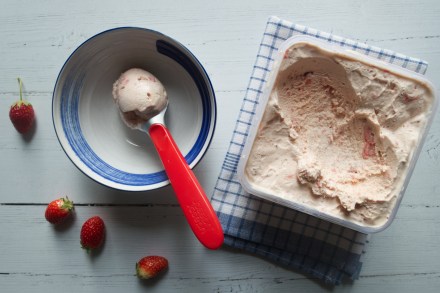
The secret to making mint chocolate chip ice cream

It used to drive me mad that, whenever my husband and I would go out for dinner, no matter how fancy or lowbrow the place, he would always ignore the puddings on offer in favour of a single scoop of ice cream. He can overlook crème brûlées, lemon meringue tarts, sticky toffee puddings – even eschew a cheese plate – if ice cream is a possibility. It just always seemed quite a boring choice to me – you can keep a tub of ice cream in your own freezer, or maybe get a cone on the beach. Why would you plump for something so simple (so boring!) when there were so many more exciting options? Of course, as is so often the case, I was wrong.

Does Her Majesty’s Sloe Gin pass the taste test?

After the miserable, heart-wrenching year that she’s had, it would be little wonder if The Queen sought solace in alcohol. That the alcohol most likely to bring a smile to the regal chops might be the monarch’s own brand is perhaps more of a surprise. The royal bean counters charged with refilling the post-Covid coffers must also be beaming for HM the Queen – whose favourite tipple is said to be Dubonnet and gin – has gone into the booze business big time and with huge success, with all proceeds going to the Royal Collection Trust, a registered charity which conserves Her Majesty’s art treasures and makes them accessible to the public.

The rise of British cheese

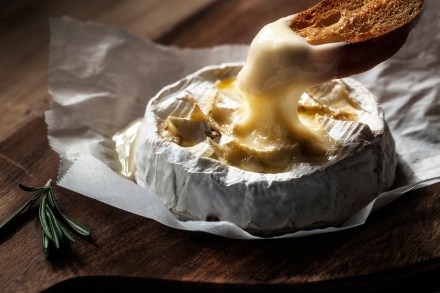
Say cheese. Now, say 'British Cheese' and what comes to mind? A nice bit of Cheddar? A wedge of Stilton? Fair enough; but would you be surprised to know there are now no fewer than 800 British and Irish cheeses, many of them new? There has been an upsurge in cheesemaking in Britain. Some of the new cheeses are novelties in conception and technique, others are Continental European in style but there has also been a welcome return of at least some old fashioned and excellent county cheeses, like Cheshire (once the aristocrat of cheeses), Gloucester, Leicester and Caerphilly. It's been an astonishing phenomenon and it has happened over quite a short time, in the last two or three decades, while most of us weren’t looking.

Where I love to eat

We can enter restaurants on Monday, and I wondered if I should tell you where to eat if you want the most fantastical or expensive or original food in London, or where I will eat in the early days of re-opening. What have you missed? A ball of ice on wheels containing champagne bottles at angles, trundling along like a mad hedgehog? (This was in Monaco). Foam? Hamburgers amid velvets at Louie, a newish supper-club near the Ivy named for Louis Armstrong and Louis XIV both? (Sometimes in life you have to choose, but not in Louie). Balthazar in the over-polished wasteland of Covent Garden, the latest central London district to be ruined by depopulation and money? Anything with Gordon Ramsay’s name falling off it, like Humpty-Dumpty and dust?

Should Marmite get back in its jar?

The reopening of pubs is not only good for those of us that have been gasping for a pint. It’s also great news for Marmite. Supermarkets were running low on the sticky brown condiment last month because of yeast shortages while breweries lowered production during the pandemic. During the first national lockdown last year, Marmite had to suspend production altogether. My local supermarket shelf was still suspiciously empty in early May. Oddly, however, the shelf below was packed with a new Marmite upstart: Dynamite Chilli Marmite. No longer is Marmite only a slightly niche savoury spread your granny layered on toast. Or what Nigella puts on spaghetti. Oh no. Today you can buy Marmite hummus and Marmite cream cheese.

Potatoes Dauphinoise: a rich dish made for sharing

There’s no getting away from the fact that potatoes dauphinoises is a rich dish. It’s a celebration of richness, of creaminess, and of carbs. If you recoil from richness, or are the first person at the table to bring up calorie counts, potatoes dauphinoises is probably not the dish for you – and frankly, any attempts to lighten it, or slim it down are misguided. But if you can resist bronzed slabs of thin, tender, perfectly cooked potato, with a garlic-infused creamy sauce bubbling up around the edges, you’re made of sterner stuff than I am. Dauphinoises hails from the historical Dauphiné region in South-East France; the region dissolved in 1789 but its potato namesake has lived on.

London’s best sky-high dining spots

Pity the poor panoramic restaurant. They might boast the best views of the capital, but the lack of outdoor space on the 42nd floor means they haven’t been able to take advantage of the easing of restrictions for the hospitality industry — until now. But from 17 May, they’ll be sashaying out of lockdown like the sequin-clad Marilyn Monroe and Jane Russell in Gentlemen Prefer Blondes.  With gala dinners, champagne cocktails and complimentary magnums of Moet to tempt you back, here’s where to go. Searcy’s at The Gherkin London’s original sky-high dining room on levels 39 and 40 of The Gherkin (30 St Mary Axe, EC3) is welcoming guests back with a series of five-course gala dinners during their opening week.

With Jonathan Drori

25 min listen

Jonathan Drori CBE is a Trustee of the Eden Project and Cambridge Science Centre, an ambassador for WWF, and was for nine years a Trustee of the Royal Botanic Gardens, Kew. In a previous life at the BBC, he was executive producer of more than 50 prime-time science documentaries and popular series, and he is now the author of Around the World in 80 Plants.On the podcast, he talks to Lara and Olivia about the diverse diet he had as a child of Eastern European Jewish refugees, how he got into botany through eating plants and the time he accidentally ordered a raw chicken milkshake.

Pistachio soufflé: a small act of faith

I often think (and write) about how much faith baking requires. Every time you entrust a batter, a dough or a sponge to the oven, there’s little you can do to change its fate. Sure, you can make sure you don’t open the oven dough (don’t open the oven door!), you can double check your temperatures and timings, but really, it’s a waiting game. Hoping, trusting that the cake or the bread or the pastry will have risen, turned golden, or crisped. Cooking is different: in general, you can fiddle when you’re cooking. You can taste, and add, and adjust. Cooking isn’t a done deal until you serve the finished dish, and you can lift the lid, remove from the oven, season and stir to your heart’s content without any detrimental effect.

How to master the Gin Gimlet

The Gin Gimlet was an unlikely hero of our socially distanced year. With their venues shuttered, bartenders were forced to get creative in order to ply their trade to a homebound audience. In a rush to create cocktails that could withstand bottling and postage, many turned to shelf-stable cordials in place of more temperamental citrus juices. After decades as a classic cocktail deep cut, the Gimlet was back on the menu. The original calls only for London Dry, Rose’s Lime Cordial, and a little ice to chill it down – but like many old favourites it affords ample room for experimentation. The Classic Scottish merchant Lauchlan Rose devised his namesake cordial in 1867 as a long-lived alternative to fresh citrus juice.

The art of arancini

As I write this, I am wearing a thick jumper and sitting under a blanket, having just put the heating on. Earlier, rain fell on our skylight so heavily, the dog jumped up as if we were being invaded. I changed my schedule this morning so I could bake, just to take advantage of the oven’s warmth. It certainly doesn’t feel like sunny days are in our near future. I’ve read that the last year has felt warped time-wise, that it’s been hard to form memories that stick in the usual way, because we don’t have the events, the change in daily routine, the hooks onto which we peg our days, our weeks, our minds.

With Sebastian de Souza

30 min listen

Sebastian de Souza is an English actor and author. On the podcast, he tells Lara and Liv about eating too much on set, enjoying cornflakes, double cream and sugar, and writing after a drink. His new book, Kid, is out now.

The best staycation hampers to take on holiday

We may as well get used to the idea that we’re going to be spending an awful lot of time on home turf this year. From 12 April we’re allowed staycations, or self-catering holidays, which can of course be lovely. But they do need a bit of forward planning. I spent a weekend in a lovely house in Norfolk where the only food in the place was bread, butter, teabags and instant coffee. (Memo to providers – a nice cake and some jam or honey is a good way to start.) And there was no shop in walking distance; only an honesty box outside a neighbour’s for eggs. If you’re staying somewhere with local shops and markets, support them. It’s sinking low not to spend your money locally; you should aim to bolster the micro-GDP.

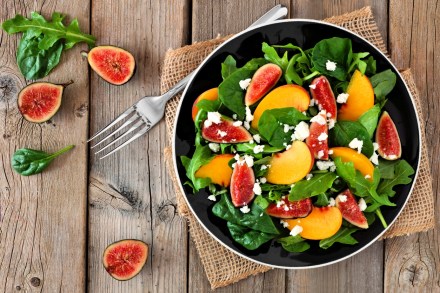
How to mix up your spring salad

Almost anything can constitute a salad. Yes dictionaries variously describe salad as cold, consisting of raw vegetables, and featuring a dressing, and often these things are true – but not always. For there are warm salads, salads with grains or seafood, and salads where the pairing of ingredients is so precise and perfect – think pear and Roquefort – that not even a dressing is required. For me what is essential about a salad is freshness and piquancy; it must be vibrant and sprightly. If you need a rule of thumb though, to use when constructing your salads, think in terms of leaf, grain, protein, and dressing.

Rum baba: a boozy, make-ahead pudding

The rum baba sits somewhere between a cake and a pudding: made from an enriched, yeasted dough, full of butter, called savarin, which is like a very dry brioche. It isn’t quite as enriched as brioche and, after baking, it can be left to stale, and dry out further, which means that when it’s soaked in the sweet boozy syrup, it will drink up even more. Savarin dough can be used to make enormous bundt cakes, often decorated with fresh cream and fruit, but I have a soft spot for the individual baba. Once soaked, they are squidgy and extremely alcoholic – put it this way, I wouldn’t want to drive after eating one.