Spectator Life

Spectator Life

An intelligent mix of culture, style, travel, food and property, as well as where to go and what to see.

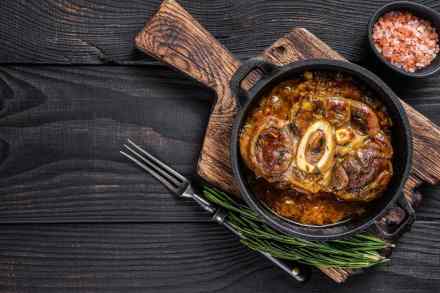
Carbonnade à la Flamande: give your stew a Flemish makeover

‘Casseroles,’ Julia Child wrote to her long-term penpal Avi DeVotos, ‘I even hate the name, as it always implies to me some god awful mess.’ On this, Julia and I are in full agreement: I have a real problem with the word ‘casserole’. And ‘stew’ for that matter. Both of them sound so unappetising, so school dinners. But Child and I are also aligned in our hypocrisy, because actually, deep down, I love a casserole, as long as you call it anything else. Like me, despite her vocal opposition to the casserole, Child loved bourguignons and carbonnades, coq au vin and poulet poele à l'estragon, and wrote about them with enthusiasm and appetite. Of course, all of these are casseroles, just with fancy (or specific) names.

With Grizelda

24 min listen

Grizelda is an award-winning cartoonist for publications including The Spectator, the New Statesman and Private Eye. She was Pocket Cartoonist of the Year in 2018. On the podcast, she tells Lara and Liv about her brother's infamous cooking, how she comes up with ideas for cartoons, and why she only knows four recipes.

Forget London – why foodies are flocking to the North

If you only read restaurant reviews, you might be forgiven for thinking that the North is a culinary wasteland: despite a few intrepid reviewers venturing further than the Watford gap, restaurant reviewing remains firmly London-centric. But there is life (and culinary prowess) beyond the outer zones of the London underground. Last month Moor Hall in Lancashire was named ‘National Restaurant of the Year’ at the prestigious Estrella Dam National Restaurant Awards. When it comes to the top spot, this is nothing new: Moor Hall has retained the top spot since 2019, when the last awards took place.

Where to dine in Hackney

Hackney’s rise in the 2000s from dangerous and affordable to cool, cooler and coolest eventually made it a kind of Chelsea of east London, with the expensive housing – house prices have grown 281 per cent between 2001 – and glamorous dining establishments to match. It may have become a magnet for Fullham exiles but Hackney never quite lost its aura of cool, and its transformation into one of the priciest areas of London has come not with a dumbing down but with the refinement of a distinctive, creative dazzle. The payoff? A proliferation of yummy, interesting restaurants.

The trick to making blackberry pie

There are some fruits which, while lovely cooked, are probably at their best fresh: nectarines and peaches, raspberries, mango. But blackberries, as delightful as they are eaten fresh from the bush mid-forage, come alive when cooked. As you heat blackberries, and they break down and give up their juices, begin to smell like violets and wine. They become more complex, perfumed; their sweet-sour flavour is softened into something more elegant, even more irresistible than when fresh. Normally in a pie, those beautiful juices are a cause for concern. They’re a one-way ticket to a soggy bottom, something we try to avoid with careful blind-baking, or pre-cooking, or layering the base with something like ground almonds to soak up any liquid.

How to make an authentic paella

The UK has something of a reputation for butchering those classic European dishes on which entire cultures seem to be founded. Think spaghetti carbonara creamy enough to make an Italian weep or the kind of rubbery, watery beef bourguignon that is the culinary equivalent of our grizzly, grey weather to any self-respecting Frenchman or woman. But perhaps no dish is more maligned or widely miscooked than Paella. Certainly, we’re not helped in this respect by our celebrity chefs. And the usual suspects are at it again – Jamie Oliver reportedly received death threats for adding chorizo to his version and Gordon Ramsay followed suit, eliciting a similar reaction.

The return of the milk round

How do you help the environment and improve your quality of life? Why, buy milk in bottles. Some of us can remember them – foil topped, left outside the door, washed, then returned…a virtuous cycle which worked because it made practical sense. Life went downhill when the milk industry was deregulated in the 1990s and milk turned up in plastic cartons, homogenised and in supermarkets, and so it has remained, until quite recently. But the rattle of the milk van is returning to the streets in parts of London and elsewhere…things, folks, are looking up. It was one of the great advances in human civilisation when we developed lactose to enable us to digest milk.

The wine bars every Londoner should know about

A funny thing happened in lockdown. Bars shut but they seeded a growing crop of bottle shops that, since freedom has been declared have either turned back into, or become, bars in their own right. And now that we can, there is pure pleasure in twisting bottles around in the light, mulling labels and wine lists first hand instead of squinting at them online. There is also a comforting intimacy to wine bars that sits at odds with the clatter of a pub: an air of sophistication, even if you have no idea what the sommelier is talking about.

French toast: an easy-peasy bougie brunch

A rose by any other name may smell as sweet, but somehow, eggy bread just doesn’t hold the same appeal as French toast, does it? The latter has become a bougie brunch dish, while the former languishes in second-hand student cookbooks. At heart, they’re the same thing: slightly stale bread soaked in an egg-based custard, then fried. Whatever pretensions French toast may have (and however delicious it might be), its origins are a cheap dish that improves and extends the life of stale bread with just a couple of eggs and a knob of butter.

With Ed Balls

18 min listen

Ed Balls is an acclaimed broadcaster, writer, economist, professor and former politician who served as shadow chancellor from 2011 to 2015. On the podcast, he tells Lara and Liv about the importance of Sunday lunches growing up, his long history of making bespoke children's birthday cakes and the times he turned his campaign team into a makeshift kitchen staff. All this and more is documented in his new book Appetite, out now.

Curry can be guilt-free (if you know how to make it)

Two of the misconceptions surrounding curry that it consistently struggles to shrug off are one, that it is unhealthy, and two, that it is difficult to make at home. I’ve always found both perplexing. Turks and Persians must be similarly bemused given the reputation of their archetypal food, the kebab. Yes the late night version, carved from a rotating trunk of greasy lamb with a mini chainsaw and then covered in garlic mayo, is a calorific car crash. But kebab as it was meant to be – meat simply grilled over charcoal and served with rice and salad – is perfectly healthy every day food. And yes a curry house korma is fattening, even before you add in the three poppadoms and pints.

Jam Roly Poly: why it’s time to revive this retro pudding

More than new pencil cases, name tapes, and the smell of school halls, back to school season always makes me think of proper puddings. There’s a category of pudding that seems reserved for properly old cookbooks, a handful of old-fashioned pubs, and dinner ladies. Spotted dick, cornflake tart, and jam roly poly. Perhaps its ubiquity at school lunches accounts for its ghoulish alias: dead man’s leg or dead man’s arm. School children have a taste for the macabre, but to be fair to them when the pudding is unwrapped and before it is sliced, it does look fairly uninspiring, and not a hundred miles away from a pallid limb. This probably wasn’t helped by the fact that, before baking parchment and foil were widespread, the pudding would be steamed in a shirtsleeve.

The rise of British gin

Any avid gin drinker will know that botanicals are all the rage at the moment. From juniper to orange peel to lavender, the ingredients list on the backs of bottles are getting more elaborate by the day, and seemingly more exotic. But what may come as a surprise is the growing number of distillers who are sourcing all of their ingredients in Britain. Tom Warner was one of the first distillers to incorporate homegrown botanicals into gin - a craze that has now taken off across the market.

How to make the perfect Spritz

Ten years ago, the United Kingdom was largely unaware of the Spritz and its bittersweet charms. The Negroni was gaining popularity in our bars, a European import that dovetailed nicely with a general levelling-up of our national cocktail programme. But most of the Aperol in these parts was gathering dust in last generation’s Italian restaurants. This all changed when some canny marketing spend by Aperol’s owner, the drinks titan Gruppo Campari, put bright orange deckchairs and branded glassware in cities up-and-down the country. In just a few years, we became a nation of Spritz drinkers – captivated by the light, appetite stimulating, low-ABV afternooner to such an extent that it’s come to overshadow homegrown favourites like Pimm’s.

French connection: how to make cherry clafoutis

My daydreams at the moment follow a predictable theme. I am on holiday somewhere balmy, with a carafe of cold white wine in front of me. Someone handsome has just brought me a large bowl of salted crisps, unbidden but very welcome, and the greatest responsibility I have is finishing the book that I’m reading. The reality has been a little more prosaic. I am at my Manchester dining table, nursing a cold cup of tea, as the rain falls so heavily it’s like sitting in a drum. I’m sure I’m not alone: changing rules, quarantines, vaccination certificates, or simply the sheer weight of anxiety mean that the majority of us have spent this summer in the UK. I would give my eye teeth for a proper holiday. If I could choose, I’d be in France.

Britain’s best Art Deco restaurants

What do you picture when you hear the term Art Deco? Fantastical ideas of Baz Lehrman’s Great Gatsby, gilded brasseries and de facto extravagance  fail to capture the pastiche of styles making up this early 20thcentury movement. Somehow, what was once a collective word for the artistic expressions that followed Art Nouveau has morphed into a dizzying, dancing circus troupe of hairbands, flapper dresses and sidecars. In Britain, the lasting legacy of the movement has been in our architecture.

The surprising history of Garibaldi biscuits

I’m not sure that many people would choose the unassuming garibaldi as their favourite biscuit. Garibaldis aren’t flashy: there’s no luxury chocolate, no pretty, brightly-coloured icing, no fancy-pants shapes. They aren’t squidgy, trendy cookies, or wholesome buttery shortbread. In fact, they’re often called squashed-fly biscuits because the currants baked into the dough resemble, well, squashed flies. And yet, they persist. Garibaldi biscuits have stuck around for 150 years, outseeing fads and fickle consumers, keeping their place on supermarket shelves for longer than almost any other biscuit. The biscuits have an unlikely namesake: Giuseppe Garibaldi, an Italian General, who fought for Italian unification.

With Charlie Stebbings

41 min listen

Charlie Stebbings is an acclaimed food director and photographer. On the podcast, he talks to Lara and Liv about photographing M&S's melt in the middle chocolate puddings, treating himself to baked beans and red wine and measuring mayonnaise from a syringe.

Jamón Croquetas: an oozing Spanish entrée

Being deeply unchic and uncosmopolitan, for a long time I assumed that croquetas were the same as the croquettes of my childhood: potato-based, probably a bit bland, and almost certainly coming from a bag that lives in the freezer. We’d often have them served with roast ham and cider sauce and green beans, as part of a main meal. To be fair to me and my culinary shortsightedness, the two bear strong similarities: both are breadcrumbed and fried or baked, soft within, and similarly shaped and sized. But, to my mind, croquetas are several levels above the French/English potato variant. Of course, Spanish croquetas don’t contain potato at all. The filling is made from a thick, thick bechamel sauce: a flour and butter roux cooked with milk to form a sauce.

The secret to drinking rum

There is surely no better way of passing the time than by doing nothing at all, fuelled by a large well-chilled drink. Nothing beats hanging out with a couple of similarly empty-headed chums in a warm patch of sun, glass in hand, watching the world go by. It turns out that those past-masters of taking it easy, the Barbadians – or Bajans – have a term for this excellent use of one’s time: liming. And given that Barbados is home to the world’s longest-established rum distillery – the peerless Mount Gay, in operation since 1703 if not before – it’s all but impossible to lime without the aid of plenty of rum.

The secret to mastering strawberry ice cream

When I was first playing about with the recipe, the sun was shining. Every day was hotter than the last, and I found myself seeking out dishes that were cooling, that were fresh, and made me feel like I was on holiday. Looking ahead to when this recipe might go out I was fairly confident that it would hit the right note at the height of summer: July might have a damp day here and there, but overall, it seemed a relatively safe bet for days and nights of heat, the kind of time where there’s a sudden run on paddling pools, and ice cream becomes near medicinal. But as I write this, August is letting me down. The early summer spells have vanished and it is looking distinctly autumnal outside the window. My neighbour has just run past the window in a raincoat.

In defence of curry

When a dear friend recently was clearing out her dad’s house following his death, she uncovered a tin of ancient Harrods’ Madras Curry Powder – several decades old and emblazoned for some reason with the name 'Ameer' on the front. This sort of attic find is considered an offending item nowadays, if the recent ‘curry is racist’ furore is to be believed. Madras curry powder is an essential ingredient of Anglo-Indian cuisine. Indeed, the flavouring is as much a part of British cuisine as Worcestershire sauce and English mustard. And it is, happily, still labelled 'Madras' – the imperial name for the city of Chennai –  when bought today. 'Chennai curry powder' doesn’t quite have the same ring to it.

Tres leches cake: a soaked pudding straight from Latin America

I confess, the idea of a tres leches cake did not initially appeal to me. A dry sponge soaked in a variety of tinned milks sounds, at best, like bland nursery food and, at worst, tooth-achingly saccharine. ‘Milky’ has never been one of the words that I hope to see in connection with anything other than ‘coffee’ or ‘Way’. But I saw it likened to trifle and curiosity got the better of me – and I’m so glad it did. Actually, a tres leches cake is not terribly like a trifle at all, although I can see where the comparison came from. Soaked puddings are nothing new, and that’s really what a tres leches cake is.

With Rory Bremner

26 min listen

Rory Bremner is one of Britain's leading comedians, impressionists and political satirists. On the episode, he tells Lara and Liv about his first impression (of a school history teacher), doing shows with Ainsley Harriott, getting stuck in a storm in Turkey at the same time as Betty Boothroyd, and helping refugees and asylum seekers through food.

Entente Cordiale: why French wine and British food are a perfect match

Hopping across the Strait of Dover remains something of an Olympian task. A mere 20 miles of water it may be but ten days of quarantine on return is unpalatable no matter how good the baguettes are across the Channel. Even once the rules change, it will be too late for the holiday hopes of many this summer. But it doesn’t mean we can’t enjoy a summery French wine. The good news is that French wine and British food make for a surprisingly strong match. I am sometimes loath to recommend anything other than English and Welsh wine given the quality of what we now produce on home soil.

Watercress soup: the lunch that keeps on giving

I’m normally averse to leftovers: it’s not a trait I like in myself. I’d far rather be able to eat the same thing for days on end, especially when it’s seasonal veg, or an enormous, hearty stew that I’ve spent ages making. It’s a sensible way of cooking: healthy, seasonal, cheap, time-saving. But I’m easily bored, and the best laid plans of mice and men the night before, clingfilmed or tupperwared up, no longer appeal the following lunchtime. I end up parcelling those thoughtful, carefully prepared dishes onto my husband and plumping instead for so-called novelty in the form of toast, or a sandwich. For some reason, soup is the one dish that doesn’t suffer this fate.

London’s best Thai cuisine

From slurping up pad thai noodles amid the petrol fumes of passing motorbikes, to dissecting a colossus king prawn from its shell under the beachy shade of coconut trees: part of the magic of eating Thai food is the experience that comes with it. It’s hard to replicate that among the skyscrapers and shopping centres of London. But for your best bet this side of the Andaman Sea, these are the seven spots not to miss. Smoking GoatSom Tum from Smoking Goat, made with Dorset clams Formerly a strip club, this Shoreditch joint still has something of a grungy look, with exposed brick walls, industrial lighting and vinyls playing in the background. However, it also serves outstanding Thai food and creative cocktails (we like the Thai-style michelada).

An ode to London’s closed restaurants

Leg of lamb à la ficelle: 'First, inherit an ancient stone farmhouse lost somewhere in the hills of the Luberon, then string up a leg of young lamb over a smoky wood fire...' As I chuckled over this sardonic intro to a recipe in one of my favourite cookery books of recent years, Sardine by Alex Jackson, my laughter quickly died as I realised that not only will I never inherit such a farmhouse — but I’ll also never again go to the restaurant that launched the book. Sardine was one of my best-loved London restaurants of the last decade, tucked away in an unlikely and not especially salubrious corner behind a drive-thru McDonald’s in the unfashionable hinterland between Old Street and Angel.

Wines to get you through the British summer

The odd torrential thunderstorm aside, the summer is in full swing. Hurrah! Of course, most of us are going to have to enjoy it here in Blighty rather than sur le continong or in the Maldives or Mauritius, so ridiculously complex and uncertain does travel abroad remain. But, heck, if we can’t neck fine Provencal rosé by some sun-dappled French pool then we can darn well drink well here. France can come to us in vinous form and we can wallow with joy in our native vino too, with English sparklers and still wines better than ever. Transport yourself with my following suggestions for a great British summer.