Spectator Life

Spectator Life

An intelligent mix of culture, style, travel, food and property, as well as where to go and what to see.

The dying art of owning a decent pen

‘I’m afraid you do not like your pen,’ says Miss Bingley to Mr Darcy in Pride and Prejudice. ‘Let me mend it for you. I mend pens remarkably well.’ You know then — if you didn’t suspect it already — that Mr Darcy could never marry Miss Bingley. Is there anything so maddening as someone interfering with one’s pen? ‘Could I borrow your pen for a moment?’ they ask as they jot down a shopping list or scribble a booking reference. ‘No!’ you want to scream in possessive anguish. ‘It’s mine!’ They are sure to split the nib, chew the end, absentmindedly tug the clip that fixes it to the front of your diary. That’s if you do get it back.

John Paul Getty: a life of miserliness, mistresses and hotel hopping

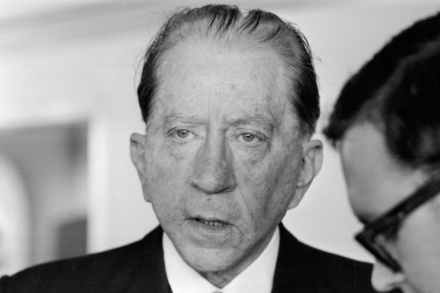
I grew up watching re-runs of ‘Thelma and Louise’ on VHS and mouthing Geena Davis’s line, ‘I don’t remember ever feeling this awake’, in the bathroom mirror, so when my agent rang to tell me that Ridley Scott had ‘responded’ to my audition tape I was a little excited. The audition in question was for the part of John Paul Getty’s mistress in Ridley’s new biopic, All the Money in the World, about the aforementioned oil billionaire who was initially played by the substantially younger Kevin Spacey in full prosthetics. Just a few months later there I was in full 70s costume shooting in Hatfield House, blissfully unaware that the film would become a huge talking point, even before its release date.

Jacob Rees-Mogg: a sartorial standard-bearer

The best-dressed politician of all time was Anthony Eden. His style was something out of an Apparel Arts illustration; long jackets, peaked lapels on single-breasted jackets (a good 60 years before Tom Ford would revive it), high-waist trousers and double-breasted waistcoats. Even the fabled hatter Lock and Co renamed the Homburg hat ‘the Eden’. Those were the days of Porfirio Rubirosa, Mountbatten and the Aga Khan, when the idea of the sartorial statesman was unexceptional. As things stand, Jacob Rees-Mogg will never leave behind that kind of legacy. By the lore of classic style, there isn’t anything particularly special about a suit, shirt, tie and polished shoes.

My great-grandfather, the World War I hero

I am not a patriotic person. I felt joy at London 2012 and like it when our sports teams and players win things; so much of Britain’s history is rich, eclectic, and impressive. But given the fact I barely have a drop of British blood in me, I don’t feel a huge amount of pride in our nation, just for the sake of it. The mindless patriotism of Americans puzzles me to the point of annoyance. Which is why I don’t bat an eyelid when people decide not to wear a poppy on Remembrance Day. Often, they have very personal, strongly held reasons for abstaining. Nobody should feel forced into it or be bullied about their choice not to wear one. My own choice is to wear a poppy, and it isn’t out of any sense of social duty.

As the left surges back, Marxism’s bloody legacy is covered up

As we approach the 100th anniversary of the Russian Revolution, it is fitting to ask whether we have learned what it tells us about its ideological root. Do we now appreciate that the Marxist ideology destroys legal order, political opposition and human rights? Do we have some idea of the death toll that has in every case followed the triumph of the ‘vanguard party’? Do we have an inkling of the human cost of collectivisation, or of what the gulag meant in terms of the humiliation and destruction of its victims? Of course the answer in each case is no. Our school curriculum dwells incessantly on the Holocaust. Several states have made denial of it into a crime, and museums and monuments to the victims of Nazism and fascism exist all across the continent.

Philip K Dick: Five of his best books

Most science fiction writers got the future wrong. That’s OK. We don’t read sci-fi for predictions and, often, books set in the future tell us far more about the times they written in. But two 20th Century authors stand out as both relevant and prescient to anyone living in 2017. The great JG Ballard is one, and Philip K Dick, the other. While the majority of 20th Century science fiction writers predicted full automation, huge advances in propulsion technology or the colonisation of other planets, Ballard and Dick were visionaries of inner space, telling us what life would feel like for 21st Century (and later) humans.

Letting the hard left off the leash

If there is one word that strikes fear and loathing into the hearts of Labour MPs, it is Momentum. This mixed bag of Trots, tankies, cranks and hipsters who delivered Jeremy Corbyn the leadership has become his Red Guards. Its name is synonymous with the new wave of hard-left entryism into Labour, calls to deselect moderate MPs, picketing offices, harassing staff and tweeting bile. So it doesn’t quite fit the public persona that its founder and chief commissar, Jon Lansman, is such an affable fellow. The 59-year-old Lansman is full of contradictions. He is the leader of Britain’s most notorious and divisive political movement, yet Labour colleagues agree he is ‘a lovely man’, ‘a loveable rogue’.

Jordan Peterson and the transgender wars

After Google employee James Damore was sacked for suggesting that inborn differences in likes and dislikes (such as preferring people to things) might explain why there were fewer female employees working in technology than men, the first person he gave an interview to was a relatively unknown Canadian professor, Jordan Peterson. To some it might seem like an odd choice. It’s true that Peterson, a professor of psychology at the University of Toronto, has a substantial online presence — his videos have had 150 million views — but all the same, Damore had the world’s media knocking on his door. Why choose Peterson? To those who follow Peterson, the reason will be apparent.

Unlike father, unlike son: the Whitehalls’ double act

‘Oh really I don’t mind. Whatever you want to pay me. I just want to do this job and I’m really looking forward it. How much were you thinking?’ says Michael Whitehall in an unctuous, good-natured, amenable voice. Then, in an instant, having been told the imaginary amount, he turns savagely nasty and bangs his fist on the table. ‘No fucking way are you paying me so little…’ Watching Michael Whitehall jokingly re-enact how he negotiated his fee for his son’s new Netflix series, Jack Whitehall: Travels With My Father, three things become abundantly clear.

Don’t waste your money on Mayweather-McGregor

This weekend boxing will be the centre of attention as Floyd ‘Money’ Mayweather steps into the ring for the 50th time to take on debutant pro-boxer and UFC fighter Conor McGregor. It is a bizarre match-up that has been made purely with dollar signs in mind – millions of them. Much of that money will be made in these final days before the two men step into the ring in Las Vegas. The TV companies will do a roaring trade as people rush to book the fight on pay-per-view and bookies will hardly be able to keep the smiles from their faces as the cash rolls in for McGregor, from those who either have blind faith in their Irish hero, are attracted by the big odds or have fallen for the ludicrous hype and believe he stands a chance.

Do parents really matter?

Parenting does not have a large impact on how children turn out. An incendiary claim, to be sure, but if you can bear with me until the close of this article I think I might be able to persuade you — or at the very least chip away at your certainty about parental influence. First, what if later today the phone were to ring and the voice at the other end informed you that you have an identical twin. You would have lived your entire life up to that point not realising that you had a clone. The bearer of this news says arrangements have been made to reunite you with your long-lost sibling. In something of a daze, you assent, realising as you hang up that you’ve just agreed to meet a perfect stranger.

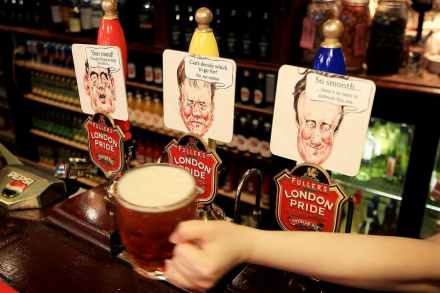
10 commandments for the public house

Good beer in good company. What could be better? But, as delightful and simple as that scenario is, it’s phenomenally easy to bugger up a good pub. There’s less agreement, however, about what the perfect pub should look like. Back in 1946, George Orwell set out in his classic article, The Moon Under Water, 10 essential features of his ideal pub: since he knew of nowhere that satisfied all of them, his Moon Under Water had to be a wonderful fiction. Some 70 years down the line, many pubs in search of perfection are fiddling with minute details or pointless frippery. For me, once the basics are sorted, it’s all a case of what not to do. So here are my 10 simple commandments to keep the perfect pub perfect. 1. Don’t be pretentious. If you serve good beer, well done.

The frock that rocked a nation

When was the last time a TV show really rocked a corrupt government? Was it one of the legendary investigative shows — 60 Minutes, Dispatches or Panorama? In fact, it was a tawdry reality show. For all the efforts of hard-digging investigative journalists, one of the biggest recent scandals that came to light as a result of TV exposure was all down to the American wedding reality show Say Yes to the Dress. No, really. It almost brought down the government of Angola. The show is a masterpiece of its type. Set in New York’s legendary and exclusive Kleinfeld bridal store, the concept is simple — every week, glamorous brides sashay in and, with the help of the brilliant cast of long-suffering stylists, they pick out their dresses.

My life as a Gogglebox star

Thanks to Stephen Fry I had never wanted to be on television. Around the time Fry made the transition from print to screen, and hence real fame, he wrote a piece lamenting the irreversible step he had taken. Now, as a result of his face being familiar, he explained, he could never again complain in a restaurant without being accused of throwing his weight around. To put his bins out risked snoopers going through the contents. He even feared cutting his toenails, he said, in case someone got hold of them and knocked up ‘an army of clones’. Joking aside, Fry knew he had lost the precious gift of privacy and would never regain it. ‘If only I’d stuck to radio,’ he said. His words had a terrible ring of truth and I’ve always remembered them.

I pity the fools who queue to get on planes

There aren’t many pleasures left in flying these days, but one of them occurs even before you’re on the plane. What’s more it’s free. It’s the smug sense of satisfaction you get from watching everyone else at the departure gate stand up and form a queue as soon as the flight is called. Bags are grabbed, elbows are readied and the entire heaving mass arranges itself into a line. People rush to be first, manoeuvring themselves past each other, desperately holding places for the rest of the family while hissing ‘come on, Brian, hurry up!’ Flights are normally so full, and seating areas so small, that the queue has to wind back on itself several times, snaking round and round and finally ending up somewhere about three gates down.

Tailored suits: the ultimate buyer’s guide

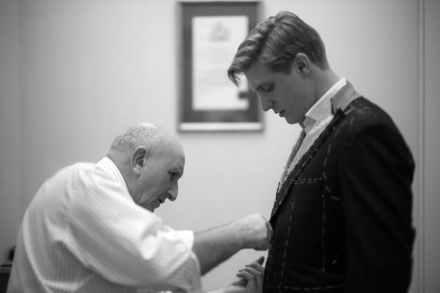
Aidan Hartley is a brilliant writer and his piece for this website on buying a gun shows mastery over a subject I have limited knowledge of. He is, however, wrong about one thing, which is the insinuation that a suit is not as fun as a shotgun. Buying a tailored suit is potentially one of the most life-affirming, ebullient and rewarding pursuits available to us. It doesn’t involve standing out in the cold and it is much less hazardous than getting shooting wrong. If you are considering buying a bespoke suit, you must remember that quality and fit are all too often forgotten in the pursuit of colour and flash, and there is nowhere better than London to find pared back elegance in menswear. You just need to know where to look. Bespoke is the highest level of suiting.

Why Enid Blyton is still the queen of children’s books

As a child, I couldn’t get enough of Enid Blyton’s books. From the moment I discovered the Malory Towers series, set in a girls’ boarding school on a windswept Cornish clifftop, I was hooked. My strict grandmother called me a spendthrift for frittering all my pocket money (the princely sum of two shillings and sixpence a week) on paperback editions of Malory Towers, St Clare’s, The Naughtiest Girl and the Famous Five but I was too engrossed to care. Blyton’s first book, a slim volume of poetry called Child Whispers, was published in 1922 and she went on to publish more than 800 titles before her death in 1968.

How to make simple Scotch pancakes

There is something terribly cheering about Scotch pancakes. Even the best normal pancakes are a bit floppy, a bit (whisper it) flabby. They give the cook the choice of eating them one by one as they cook, or resigning themselves to the reality of a mostly tepid, slightly clammy pile. Scotch pancakes are not like this. So let’s get this straight: what are they? A Scotch pancake, sometimes known by its other name, a drop scone, is a leavened and griddled pancake. It is far thicker and smaller than its unscotched sister, and although on the face of it bears a strong a resemblance to its American sibling, it’s really rather different.

WH Smith has become a national embarrassment

There are few more iconic British brands than WH Smith, nor many more ubiquitous. 90% of people can reach a store within twenty minutes from their door, and 73% make at least one visit a year. For many, the name conjures up childhood memories of first encounters with classic literature, sumptuous atlases or a beguilingly niche magazine. But something is deeply wrong with this erstwhile national staple: it has become a travesty of trade, a grim parody of twenty-first century consumerism. In this age of mission statements, WH Smith’s goal is ‘to be Britain’s most popular high street stationer, bookseller and newsagent’. But popular is a slippery term. WH Smith has sacrificed customer satisfaction at the altar of high-margin products.

Greece is the word for Paul Mason and Labour

When Paul Mason was covertly recorded by the Sun newspaper divulging his private view that Jeremy Corbyn does not appeal to the working classes, there wasn’t much surprise in the Labour leader’s office. The relationship between Corbyn and his celebrity guru has always been complex. Kremlinologists point to a meeting of Corbyn’s closest comrades earlier this year at Esher Place, a £6 million, Grade II country house in Surrey owned by Unite. The guest list was a who’s who of the hard left: John McDonnell, Diane Abbott, Len McCluskey, Labour strategy chief Seumas Milne and Momentum boss Jon Lansman were all in attendance. Corbyn had also invited Mason to join this star chamber.

A handy guide to Left-wing people for the under 10s

Left-wing people in the olden days Left-wing people used to like working-class people. Lots of left-wing people used to be working-class people. These people were known as socialists and joined trade unions. Sometimes working-class people used to frighten left-wing people, but they pretended that they weren't frightened and were nice to them. Left-wing people supported working-class people, gave them money, sat in rooms with them and wore badges to show that they cared more than right-wing people, who wore ties instead of badges and didn't care. Nowadays Nowadays, working-class people are bored with socialism because it hasn't made them rich and happy. Nowadays left-wing people are middle-class people. Working class people are a big disappointment to left-wing people.

Five reasons why the Jack Reacher novels are brilliant

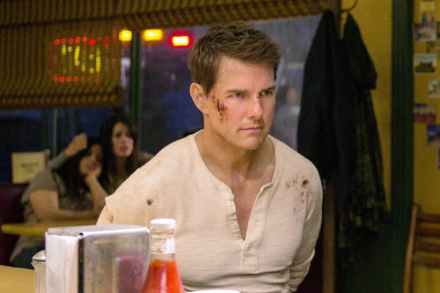
Lee Child’s Jack Reacher is back with the release earlier this month of The Midnight Line, the 22nd book in the series. The Reacher books are hugely popular, but fail to garner much in the way of critical respect. Here are five reasons why the public love Reacher and why critics should… Jack Reacher Reacher is without a doubt one of the most original, complex and compelling characters in crime fiction. An ex-military policeman turned drifter, he has nothing tieing him to the world except for his relentless (and almost psychopathic) desire for justice. He’s the archetypal existential avenging angel – John Wayne, Bogart and Brando rolled into one.

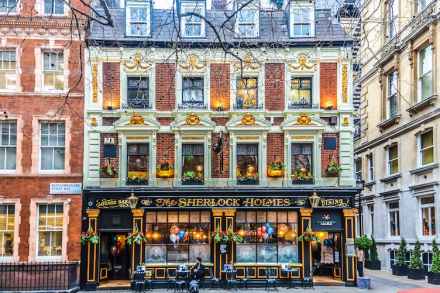
The good, the bad and the ugly: a guided tour of Westminster’s pubs

My phone vibrates with a three-letter text message heralding another inevitable Westminster hangover: “MoG?”. The Marquis of Granby pub on Romney Street is an old-fashioned sort of boozer: mahogany-panelled bar with a chandeliered burgundy ceiling and a gents you have to wade through. There’s none of your poncey hipster food served on slabs of wood here; if you head to the upstairs dining room you’re having a pie and a pint. You can see why Nigel Farage loves this place for a photo opportunity. I’m meeting another journalist for an ale and a gossip, but this used to be a Tory haunt before Conservative Central Office moved from Smith Square.

Great British Bake Off’s move to Channel 4 is a recipe for disaster

The Great British Bake Off (GBBO) is like a steaming spotted dick, moist and dense and delicious, and speckled with dried fruit. Paul Hollywood is the flour. He binds it all together. Mel and Sue are the milk and butter. They’re rich and creamy, and maybe a bit naughty in their comedic charm. Mary Berry? She’s the sugar, of course. Were she not there, the pudding wouldn’t be a pudding at all. It would just be a mound of carby sadness. Spotted dick is a fine pudding. And so terribly British, just like GBBO. Yesterday, gasps were heard when it was announced that the show will, as of the end of series seven, move to Channel 4. The maker, Love Productions, could not agree a deal with the BBC. Shockingly, the disagreement between the BBC and Love Productions is over money.

Universities’ war against truth

Young people today are very reluctant to assume that anything is certain, and this reluctance is revealed in their language. In any matter where there might be disagreement, they will put a question mark at the end of the sentence. And to reinforce the posture of neutrality they will insert words that function as disclaimers, among which the favourite is ‘like’. You might be adamant that the Earth is spherical, but they will suggest instead that the Earth is, ‘like, spherical?’ Whence came this ubiquitous hesitation? As I understand the matter, it has much to do with the new ideology of non-discrimination.

Labour’s next great battle

In February, a member of John McDonnell’s team accidentally forwarded his diary to a Labour party colleague. The errant email has been a source of gossip among Corbynistas ever since. Among the mundane schedule of meetings were a series of slots allocated for something rather out of the ordinary: ‘Transition planning.’ McDonnell’s aides swear up and down that these meetings are nothing untoward and warn against ‘putting two and two together and coming up with a million’. But the fact that it even raised eyebrows is telling.

Is Lewisham really so ’orrible?

When we said we were thinking of moving to Lewisham four years ago, the locals in our pub in Bethnal Green thought we were mad. ‘It’s fuckin’ ’orrible,’ one of them said. Coming from people who’d lived all their lives in the East End, this was worrying. Nevertheless, swayed by a cheap ex-council flat, we moved to a hill that runs between Blackheath and Lewisham station. A good way to imagine Lewisham town centre is as the village in Asterix, surrounded on all sides by the forces of gentrification. Hither Green, Ladywell, Forest Hill and Brockley have delicatessens and artisan bakeries. Deptford has hipsters whereas Blackheath is proper posh, the Hampstead of the south. Even grimy old Catford has a gastropub. But Lewisham central resists.

A School of Anti-Semitism?

As a teacher and lecturer, I’ve had a fair amount of indirect contact with Soas — the School of Oriental and African Studies at London University. I first met one of its doctoral students in 2001, around the time I began to send my A-level students to join its impressive list of alumni, which includes government ministers, ambassadors, diplomats, judges and a Nobel laureate. It has also produced impressive research tomes of international renown and is always high up in the university league tables. A sea of diversity under one scholastic sky, with so much to learn through intercultural exchange. For many, the Soas library is a place of pilgrimage. But I’d now think twice before writing a Ucas reference to send one of my young students there.