Spectator Life

Spectator Life

An intelligent mix of culture, style, travel, food and property, as well as where to go and what to see.

The hypocrisy of the fame-shy famous

Three years ago, I started employing actors, when I had my first play in the Brighton Fringe. I always think they slightly disapprove of me as I’m a fidget and tend to leave rehearsals early (as I remarked to my husband and co-writer of the latest one as we hightailed it off to the pub one day after only an hour of watching our cast run lines: ‘We didn’t ask them to sit in the room and watch us write the ruddy thing, did we?’) but I love to observe them. In fact, I find it almost too affecting an experience, which could explain my reluctance to watch them too much. That and being a booze-hound. I even made up a word, ‘limberessence’ - a fusion of limbo, limbering up and luminescence - which describes that perfect moment between privacy and performance.
The descent of the Cambridge ball

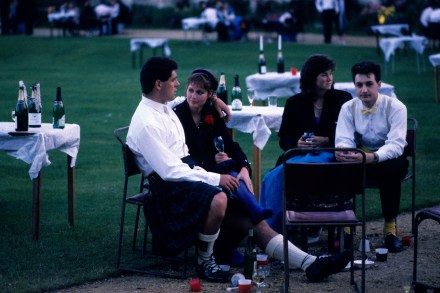
I went to quite a few May balls in my three years as an undergraduate at Cambridge. As an editor at the student newspaper I blagged my way into the top ones – Magdalene, Trinity and John’s – since they were stupidly expensive and even as a 20-year-old student I had the sense to feel it should be many years before anything to do with enjoyment was worth more than £20, let alone £100-plus. The university now packages its student experience, from the academic to the social, in the neurotic, righteous language of ‘safety’ and ‘inclusion’ The price certainly ensured a very high degree of pretentiousness – even by Cambridge standards – but it was impossible not to marvel at the splendour of the famous acts (Dizzee Rascal, Amy Winehouse) and the food and drink.

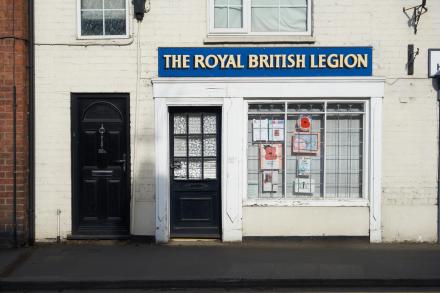
Join the Royal British Legion!

One of the things I really regret is that I didn’t spend more time down the British Legion with my dad. I was a bit snooty about it, I suppose. All those ex-squaddies talking about the army and playing darts and having a pint or two.I was an indie-kid, heading to university to read English. I preferred Camden to Greenford. But now I’d choose the Legion any day. And if more us don’t then you might see your local club closing as a result of the cheap pints at a local Wetherspoons. I realise now that the old British Legion clubs and the Legion itself is of such importance that we need a national drive to support it. To get into one of the clubs you need a membership, but that’s not difficult. Everyone is welcome, even with no connection to the military at all.

Why British women are so unhappy

I must admit to being somewhat taken aback on reading – in a new survey by the Hologic Global Women’s Health Index, whatever that is when it’s at home – that we women of Blighty are sadder and more ‘stressed’ than our sisters on the European mainland. Odd because I’ve always found us a cheerful bunch; after all, we were churning out the Carry On films, graced with Babs Windsor’s lusty chuckle, while French, Italian and Scandinavian film actresses were all looking like they’d lost a fiver and found a euro.

AI is coming for artists

It’s a famous theme in science fiction: the idea that, one day, humanity and the thinking machines will somehow go to war. It’s the narrative spine of The Terminator films. It’s implied in 2001, A Space Odyssey. You can find it in Neuromancer, The Hyperian Cantos, Ex Machina, The Creator and I, Robot (the Asimov stories and subsequent film). In one of the fundamental texts of sci-fi, Frank Herbert’s Dune, this apocalyptic conflict is given a name: the ‘Butlerian Jihad’. Personally, I’ve always dismissed the concept of Butlerian Jihad as fanciful, even as I accept that Artificial General Intelligence – machines as smart as the best of us – is coming at us fast. And yet in recent weeks I’ve started to wonder.

There is nothing common about the northern lights

It was 10.45pm and our film had just finished. I checked my phone and saw a friend claiming he had just seen the northern lights — in Wembley. It had been trailed as a possibility, but I hadn't given it much credence. Not with the light pollution inside the M25, surely. You’d need to head up to the Chilterns at least, and even then be incredibly lucky.   But I dashed to the back garden anyway. The night sky certainly had an unusual clarity, almost shimmering, and you could clearly make out the whole of the moon behind the shining crescent. But no colours. My Wembley pal must have mistaken the glow of an all-night garage for the celestial cosmos.  I went back inside and poured another glass of wine.

Women will be disappointed by the Garrick Club

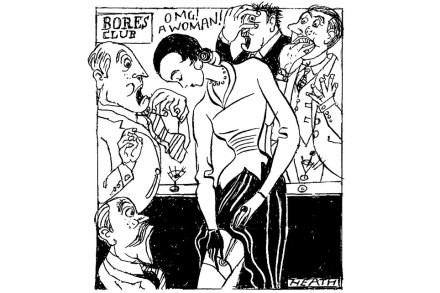
Perhaps it was the anachronistic use of the term ‘gentlemen’ that finally put paid to the idea of the gentlemen’s club. If only these illustrious institutions had thought to rename themselves ‘cis-male inner-city safe spaces’, we probably wouldn’t be looking on aghast as another centuries old tradition is summarily flushed down the memory hole.

My mother’s peculiar approach to death

Back in February, a friend forwarded me a profound and joyous article written by Simon Boas about his terminal cancer diagnosis. (I knew Simon a little at university, where he was both much cleverer and much cooler than me). Originally published in the Jersey Evening Post, it’s since been reproduced here, and seems to have, as they say, gone viral. In the age of mindless clickbait, where cute animal memes and chest-feeding men dominate the internet, it’s reassuring that something so beautiful, which mines the fundamentals of human existence, still resonates. And does it with such humour and grace and intelligence and warmth that while Simon is devoid of bitterness, it’s hard for the rest of us not to feel aggrieved.

C.J. Sansom’s Tudor England is a mirror of our divided world

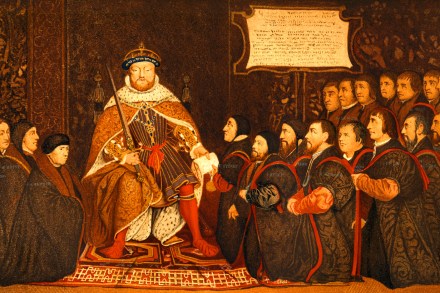
Among the many appreciations of C.J. Sansom, the author of bestselling historical mysteries who died last week aged 71, one of the most eloquent came from Rear Admiral John Lippiett. A friend since Sansom first researched the sinking of Henry VIII’s flagship the Mary Rose (Lippiett headed the Mary Rose Trust in Portsmouth after he retired), the admiral recalled ‘a very remarkable man, private and modest, fascinating in his conversations, caring about individuals, generous in the issues that moved him’. Sansom, he acknowledged, was a ‘card-carrying socialist’ who wobbled during the Corbyn years but ‘remained true to Labour’s overall policies’.

Harry and Meghan’s desperate rebrand

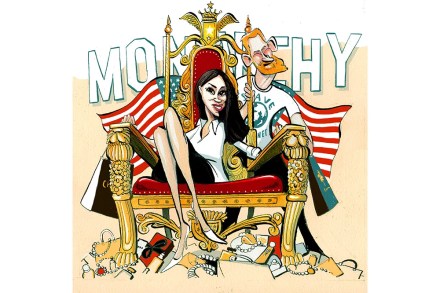
Harry and Meghan are at it again – launching themselves into another rebrand – this time embarking on a faux-royal tour to Nigeria, hiring new PR staff in the UK, promoting strawberry jam on Instagram and – good grief! – touting Netflix shows about friendship and polo. There’s a certain sadness about this latest effort, since the Sussexes’s entire past year has been spent branding and rebranding themselves with practically no effect, and the whiff of desperation now hovers over them. You’d feel sorry for the couple if they responded to their misfortune with some degree of humility Their annus horribilis of branding mishaps and misfortunes kicked off last April when Meghan signed up with the glitziest of the Hollywood PR giants – William Morris Endeavor.

Sean Thomas, Kara Kennedy, Philip Hensher, Damian Thompson and Toby Young

35 min listen

On this week’s Spectator Out Loud: Sean Thomas worries that Paris has lost some of its charm (1:21); Kara Kennedy reports on US-style opioids arriving in Britain (8:43); Philip Hensher describes how an affair which ruined one woman would be the making of another (15:32); Damian Thompson reflects on his sobriety and his battle with British chemists (23:58); and, Toby Young argues a proposed law in Wales amounts to an assault on parliamentary sovereignty (29:26). Produced and presented by Patrick Gibbons.

Why unorthodox thinkers are embracing Christianity

Russell Brand was baptised on Sunday, he says – in the River Thames, despite his tongue-in-cheek fear of catching a virus – and he’s thrilled about it. He thanked those who embraced his decision, while expressing understanding of those who are cynical. He’s not perfect, he explains; he knows he’s going to make mistakes, but ‘this is my path now,’ he says. ‘I’m so grateful to be surrendered in Christ.’ Speaking as a Catholic, this writer can’t but consider the advantages of baptism in church: waters freed from viruses and demons through exorcism, holy oils, and proper storage, might have been preferable.

The myth of trauma

Everything is trauma. From Barbie’s Oscars snub (very traumatic) to Taylor Swift’s new album (also deeply traumatic), profound emotional distress appears to be everywhere. According to the Diagnostic and Statistical Manual of Mental Disorders (DSM), trauma requires ‘actual or threatened death, serious injury, or sexual violence’. A horrific car crash, a terrorist attack, an armed robbery, these all fit the bill. An Oscar snub does not. Why, then, do so many people appear to think of themselves as traumatised? It’s certainly a clickbaity concept, but it's not a scientific one This raging fire of self pity is being fuelled by unqualified influencers who call themselves ‘trauma coaches’.

Taylor Swift is the tortured voice of millennials

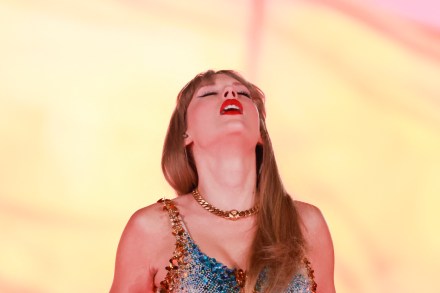
I gave Taylor Swift’s new album, The Tortured Poets Department (which I need to stop calling The Dead Poets Society) a cursory listen on Friday morning, a few hours after it was released. Maybe it was because I listened to half of the self-indulgent songs while walking my dog through a moody forest before I’d had any human contact that day, but for an hour and five minutes (I haven’t made it through the extended Anthology yet, which adds 15 extra songs), I was entranced. Tortured Poets poignantly captures the collective one-third-life crisis we millennials are experiencing together. What Swift doesn’t acknowledge though, is what we all really need: it isn’t more romance, but religion. Taylor Swift needs Jesus. I was prepared not to like the album.

What Beatles critics don’t get

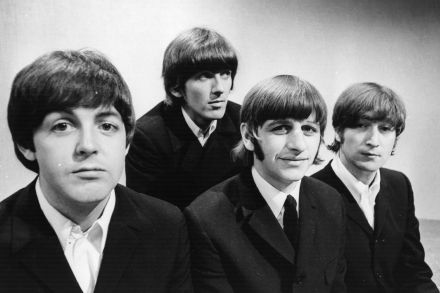
Not everyone likes The Beatles. That said, trashing cultural icons is a modern phenomenon amplified by social media and done, largely, to attract attention. Yet whether you hate them or love them (yeah, yeah, yeah), their influence on pretty much everything pop music has offered since is, surely, undeniable. Sixty years ago they left an indelible imprint on both music and film that continues to this day. In April 1964, John Lennon and Paul McCartney sat down in a hotel room and wrote a song to accompany the title of the band’s first (and best) feature film, ‘A Hard Day’s Night’. The song itself is typical of their early output. A sugary song about love, less than three minutes long yet its significance cannot be underestimated.

Why we read crime fiction

An exhibition dedicated to 20th century British crime fiction has opened at Cambridge University Library. The artefacts on show range widely through the history of the genre, from items associated Charles Dickens, Wilkie Collins and Conan Doyle right up to modern exponents of the form, Val McDermid and Ian Rankin.  Lurking somewhere in many of us is the awful capacity to commit the worst of crimes What’s surprising about the exhibition in a way is that it’s so relatively unusual – when, after all, was the last time you heard of a show dedicated to crime fiction? It remains the biggest seller by genre and continues to inspire some of the most popular television and film.

Life lessons from the oldest people in the world

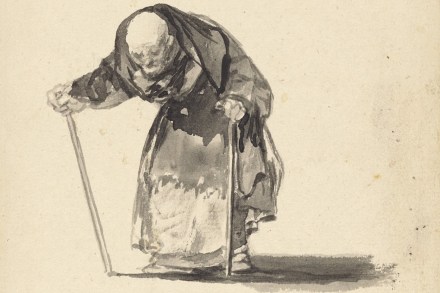
María Branyas Morera, aged 117, is the oldest person in the world. She was born in California on 4 March 1907 to Spanish parents who decided to return home in 1915. The voyage was an early lesson in adversity: her father died and María lost the hearing in one ear after she fell from the upper deck. The family settled in Catalonia and María worked as a nurse during the Spanish Civil War. After contracting pneumonia in 1993, she moved into a nursing home in Olot, some 70 miles north of Barcelona. There she played the piano until she was 108 and recovered from Covid-19 in 2020. A resilient, pragmatic approach to adversity and rapidly changing circumstances also helps María is one of about 20,000 centenarians in Spain.

My old friend went viral for all the wrong reasons

Last week, an old acquaintance went viral. Charles Withers had, according to his pregnant wife, disappeared around a year ago, leaving her to bring up one young child alone with another on the way. The pretty Massachusetts blonde posted a plea for information on Facebook. It was, she wrote, surprisingly difficult to divorce someone who refused to return your calls.  In an age of near-constant surveillance, how does it feel when the choice to disappear is taken from you? Not long after the story surfaced, I received a message from a friend. ‘Do you remember Charlie Withers?’ he asked. I did. He had been part of our wider social circle, one of the boys at the neighbouring school.

Britain’s roads are becoming a Soviet nightmare

In the dog days of 2021, I spent a grey Sunday afternoon driving around a part of London with a view to an eventual flat move. Why take the car? Because the bus routes didn’t match where I planned to go, I wanted to stay over ground, and I would be able to cover more territory than on foot. It seemed an innocent enough way of spending my time, and the traffic was blissfully light.  So I was surprised to receive – with remarkable speed – a Penalty Charge Notice for using what was called a prohibited road. The notice was supported by two photos of my car, which I am happy to report was perfectly positioned on said road, not encroaching by so much as a millimetre into the bus lane.

Why we pity beautiful women

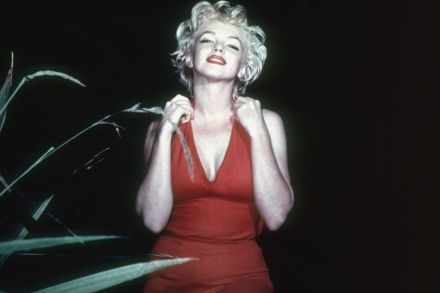
What do we talk about when we talk about Marilyn Monroe? Sex, death and everything in between. Unlike other legendary film stars from Garbo to Bardot, Monroe has become (to use that awful and over-popular word) ‘iconic’ – which is ‘problematic’ in itself. Being recognisable as a hank of blonde hair and a white dress failing to preserve her dignity dehumanises Marilyn – and we know that being treated as a ‘thing’ contributed towards her terminal sorrow. We want to have our cheesecake and eat it, without adding the heavy weight of posthumous complicity in the death of this likeable young woman – which is what Monroe was, beneath all the glamour and the pain.

The scrambling of Scrabble

When you’re playing a word game, don't you sometimes feel how horribly unfair it is that players who know more words prosper? Wouldn’t it be better to have word games that didn’t rely so heavily on knowledge of the dictionary, that weren’t so, y’know, wordy? And, come to that, wouldn’t a kindler, gentler sort of word game be, like, collaborative – so that players helped each-other to celebrate their diversity rather than competing to, ugh, ‘win’?  This upside-down is a game which will bear the same relationship to Scrabble that tennis does to Junior Bake-Off Mattel has you covered. The company has announced that Scrabble sets will now have double-sided boards.

Women don’t want women-only clubs

In my experience, men offer this infuriating comeback when challenged about the continuing exclusion of women from clubs such as the Garrick (for now at least – the Garrick is voting on 7 May on the admission of women as members). ‘But why don’t you set up your own women-only clubs,’ they sulk, ‘and leave us alone?’ My interlocutors are often members of not one but multiple men-only clubs. My husband, father and brothers, for example, frequent a combination of White’s, the Beefsteak, Pratt’s (men-only until last year) and the Garrick. Two of my siblings à l’époque graced the Bullingdon at Oxford.

My life of genteel poverty

Every year at the beginning of April, I tell myself I must top up my Isa before the 5 April deadline. And all my friends tell me I must. My financial adviser tells me I must. Articles in the press and adverts on social media tell me I must. And every year on 6 April I ask myself: why didn’t I top up my Isa? Yes, I know investing in an Isa is the smart, sensible thing to do – so why haven’t I done it for the past ten years? Every year I have an excuse. Capitalism is about to collapse; it’s government-sanctioned tax avoidance; I should give the money to some worthy group of activists. But the real reason is fear. I can face almost anything – childhood trauma, root canal work, prostate examinations – but when it comes to personal finances, I’m a coward.

The problem with MrBeast

Jimmy Donaldson, more commonly known as MrBeast, is the world’s most successful YouTuber. More than 250 million people follow his channel. His videos are mostly absurd challenges involving obscene amounts of cash generated from his YouTube advertising revenue. In one video, he eats $100,000 worth of gold leaf ice cream; in another, he pays a participant $10,000 a day to see how long they’re willing to live in a supermarket. His most popular video, a remake of the Korean survival horror TV show Squid Game, has over half a billion views.

Kurt Cobain’s life was an American morality tale

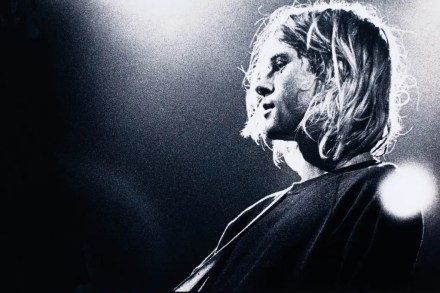
The Peaceable Kingdom probably isn’t the first place you would have looked for Kurt Cobain. Of all the ironies and confusions of his brief life, perhaps none was as pointed as his choosing to kill himself in a room overlooking that sign, announcing Seattle’s upscale Leschi neighbourhood, with its views of Lake Washington and the snow-capped mountains beyond. It was here that, one morning in April 1994, Cobain – then in the third year of his marriage to his fellow musician Courtney Love – first injected himself with heroin and then took a shotgun and blew his brains out.

The person who edited this will soon be redundant

Whenever I write about AI on The Spectator (which is a lot) I always get comments like ‘Yawn. Wake me up when AI actually does something’. And, to a point, these are fair comments. For all its remarkable feats, its photos of Shakespeare with weird fingers, its videos of dogs typing in spacesuits, the new wave of AI hasn’t really done something simultaneously concrete and astonishing, something where you can draw breath and say ‘Wow, that is definitely replacing this particular job’. In my experience, these AI chatbots respond better if you are polite, an uncanny fact Well, now I can address that.

The cult of Camille Paglia

There’s a spectre floating inside the head of a certain type of young woman. It’s the fast-talking, sex-realist American academic Camille Paglia. She was big in the 1990s but my parents haven’t heard of her. ‘Did she write Fear of Flying?’ asks my dad. On sections of the internet she has become a folk hero. She’s an ideological guiding force for the female hosts of Red Scare, an influential left-ish podcast which was described by the Cut as ‘a critique of feminism, and capitalism, from deep inside the culture they’ve spawned’. Paglia is equally popular among some conservative factions: a 2017 debate between Paglia and Jordan Peterson has amassed 3.5 million YouTube views.

A.A. Milne and the torturous task of writing

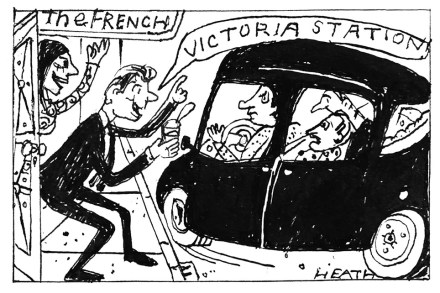
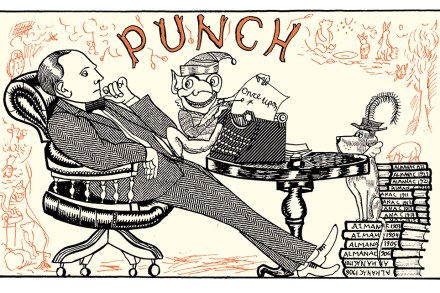
For those of us lucky enough to have been regular contributors to Punch magazine, April is a slightly crueller month than most, since it was on 8 April 32 years ago that the last edition collapsed, exhausted, on to the newspaper stands. By then it was way past its best, but in its day it had employed some of the very best brains in the business, led by some of the very best editors. I was lucky enough to be around when Alan Coren was in his prime. He led the magazine from the front, literally, and set a standard that the rest of us did our hardest to emulate, but rarely achieved. If ever.

Youth is wasted on our anxious young

The old should envy the young; it’s part of the natural order of things. When I was young, I was gloriously aware that old people (anyone over 30) envied me; though I was a virgin until I went to That London at 17, my mum and her mates thought I was up to all sorts – and as soon as I was able to escape from my poor-but-honest home for the fleshpots of the capital, I was. Two poems by Philip Larkin sum up how old people used to feel about the younger generation.