Latest from Coffee House

Latest from Coffee House

All the latest analysis of the day's news and stories

Putin can smell Washington’s desperation

Donald Trump has staked a big chunk of his political credibility on finding peace in Ukraine – and by doing so in partnership with Vladimir Putin, and on the Kremlin’s terms. But is Putin ready to play ball and help save Trump’s backside, politically and economically? The answer is yes: Putin will probably play along with small gestures like partial ceasefires and prisoner releases. But when it comes to the big stuff like actually stopping what Putin calls his “special military operation,” the Kremlin is likely to stick to its guns and ignore Trump’s special pleading while it continues pulverizing Ukraine’s cities. A summit between China’s Xi Jinping, Putin and

donald trump russia

Has Netflix missed a trick with Meghan Markle?

Now that Meghan Markle has successfully – in her own estimation, at least – once again won the battle for hearts and minds in Britain after her trip to Nottingham with Prince Harry, her thoughts have turned once again to her resumption of her former profession. I refer, of course, to acting, and to the rumors that she was to be given a plum starring role in the third series of Guy Ritchie’s The Gentlemen, in which she was said to be reading for an unspecified but pivotal part. A fly-on-the-wall documentary following their return to Britain would have been a guaranteed ratings hit These rumors have now been shut down. And, true to form with all things involving the Duchess of Sussex, there is a spat about who is telling the truth.

In Texas, it’s Musk vs Talarico

Here’s an update on the state of Trumpism in America: last month, the richest man in world history threw $158 million into a last-ditch attempt to rescue the worst candidate for US Senate in American history.  It’s part of what one US media outlet is calling “Elon Musk’s massive Texas rescue mission.” But even a trillionaire’s fortune may not be able to rescue the execrable Ken Paxton from defeat on November 3.  That $158 million donation followed a $10 million gift in August from the “Elon Musk Revocable Trust” to a political action committee closely tied to Paxton.  If Paxton, the sitting Texas Attorney General, loses to Democrat James Talarico, historians will remember it as a massive defeat for Donald Trump and Trumpism. Why?

Elon Musk

Barbarism cannot triumph in France

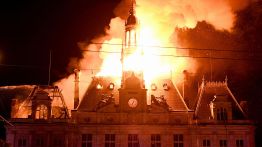
On Bastille Day, 1883, the people of Limoges inaugurated a beautiful new town hall, paid for from the legacy of a rich burgher with no children. On Saturday, rioters set fire to it. “Barbarism is not the prehistory of humanity but the faithful shadow that accompanies its every step.” That was Alain Finkielkraut, but I know it because Clive James quoted him when he wrote of how to keep our societies and values alive. He said we liked to think being cultured warded off barbarism, but that barbarism doesn’t care if we are cultured or not. He was only half right. Barbarism does care: it hates us for being cultured. Barbarism, whether imported or home bred, wants to see our culture burn.

The utter absurdity of the Sally Rooney affair

Last week I got an email from a colleague I respect on another magazine, prefaced with the assertion that it concerned “a matter we feel will be of importance to you as an artist, writer or journalist” and inviting me to subscribe my name to an open letter in support of the Irish novelist Sally Rooney. The issue in question, in case there are any readers of this who missed the news story, is that Rooney's publisher Faber has announced that with the full support of their author they are withdrawing all Rooney's novels from publication in the UK.  Governments shouldn't, if they can possibly avoid it, put themselves into the position of being arbiters of hermeneutics. The absurdities proliferate fractally That's a big deal. Sally Rooney sells a lot of books.

Americano Presents

Is libertarianism dead? Daniel McCarthy vs Robby Soave

Why the US bombers left RAF Fairford in a rush

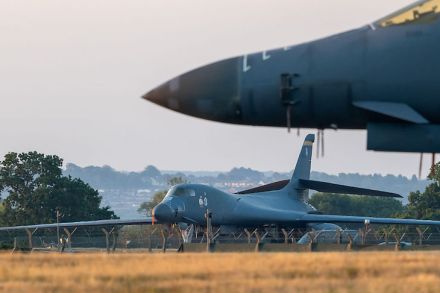
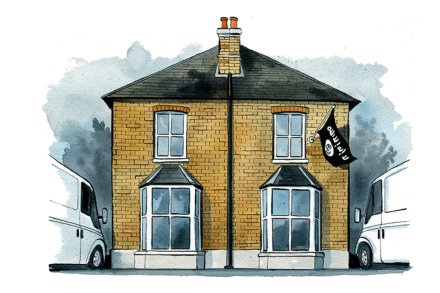
The hasty withdrawal by the United States of its 12 B-1 Bombers from Royal Air Force base Fairford, without explanation by the Pentagon, has fueled much speculation. The most obvious conclusion is that there is an ongoing security threat to the airbase in Gloucestershire, even after the foiling of last week’s attack, if that is what it was. The lesson for the UK from the sudden departure of the US bombers should be clear: we are now primarily responsible for own defense and security The US, while initially pleased with what they said was a good British reaction to that incident on September 27, seemed as bemused as many others as to why five men, who were initially arrested on suspicion of terror offenses, were subsequently released on bail.

Why do we know so little about the RAF Fairford affair?

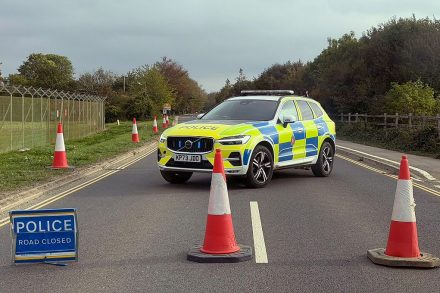
On Sunday, three suspicious trucks were spotted speeding toward the Royal Air Force airfield in Fairford, England. Shortly after, five masked men, later identified as British nationals, were detained under the Terrorism Act of 2006 and the Explosives Act of 1875. Had a bomb attack just been foiled? If so who planned it, and to what end? Then, on Monday, the five suspects were abruptly released on bail.  President Trump seemed nonplussed by the move. “I would not have released them,” he told reporters, but was full of praise for the conduct of the British authorities. The safety of RAF Fairford is a matter for the American President – it is operated by the US Air Force, the only airfield in Europe that can accommodate its heavy bombers.

raf fairford
Assata Shakur

Why Chicago Teachers Union lionized a terrorist

When I first saw the Chicago Teachers Union's post honoring Assata Shakur, I thought it was a headline from the Babylon Bee. But no, this one was real, and beyond parody. The union, entrusted with educating Chicago's children, used its official social media account to mourn the death of a convicted cop killer, calling her a "revolutionary fighter" and "leader of freedom." Shakur was found guilty of murdering New Jersey State Trooper Werner Foerster in 1973 and later escaped prison, landing on the FBI's Most Wanted Terrorists List with a $2 million bounty. To make matters worse, CTU Vice President Jackson Potter doubled down, declaring on X that "Assata was a freedom fighter!"The tone-deaf post is a glaring sign that the CTU can't be trusted to educate children.

Twenty-five years after 9/11, is America growing complacent?

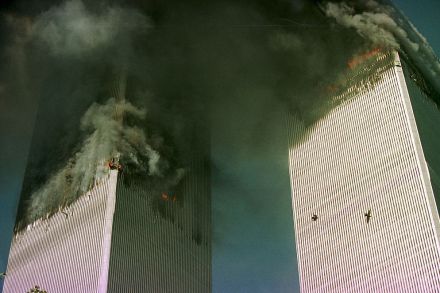
The ghostly silence and calm that settled over Washington, DC is what many in the city remember most about the aftermath of the 9/11 plane hijackings and ensuing destruction of the Twin Towers and a portion of the Pentagon.  City streets were emptied of traffic. The airports closed and most public transit came to a halt. Not since British troops burned the Capitol and the White House during the War of 1812 had there been an attack of that magnitude on mainland America. The threat has not gone away. It has since morphed into smaller-scale events carried out by lone actors  Virtually all of the nation’s elected leaders and much of its bureaucratic workforce were evacuated.

9/11 saudi

When will we learn the truth about Saudi involvement in 9/11?

Will Saudi Arabia ever be held to account for the 9/11 terror attacks? For decades, the Kingdom has successfully parried lawsuits in the United States accusing it of providing logistical and financial support to a network of Islamic extremists who launched a global terror campaign, culminating in the September 11 attacks on the Pentagon and the World Trade Center. Those attacks occurred 24 years ago and since then survivors and victims of the 9/11 hijackings have had to counter not only vigorous Saudi denials mounted by their well-funded American legal team but also repeated attempts by the US government to thwart the lawsuits. But there are signs the pendulum has begun to swing the other way. On August 28, US District Judge George B.

We should politicize the Berlin Pride attack

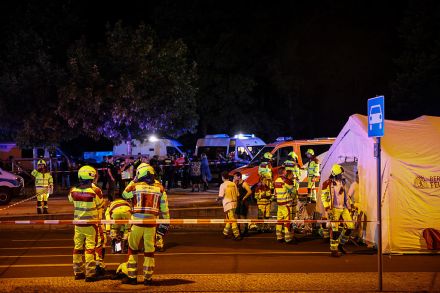
Of all the platitudes trotted out after an Islamist attack, the maddest has to be: “Don’t politicize this tragedy.” The bodies of our fellow citizens are barely cold before we’re being pre-emptively told off for “exploiting” their deaths for “political ends.” But it’s already political. When a religious hysteric takes up arms against innocents, that’s a political attack. ‘Don’t be divisive’ is a demand for self-censorship masquerading as a plea for social peace The “no politics” rule was swiftly enforced following the atrocity at Berlin Pride. The minute it was announced that the suspect was an ISIS fanboy known for mingling with other Islamists, the cry went out: “Don’t politicize this. Don’t let it divide us.

berlin pride

The problem with the Widdecombe suspect’s ‘fair trial’

It’s hard to hold anyone responsible for anything today in British politics. That’s because no sooner have the facts emerged than everybody in Westminster has played another game of musical chairs. If the word ‘amusing’ can be used in the same paragraph as ‘attempted beheading’ allow me one amusing example. Last month, a 30-year-old asylum seeker from Sudan allegedly attempted to behead a local man on the streets of Belfast. The attack was apparently caught on video. Everyone was geared up to make their points. The left was preparing to argue ‘So you’re saying all asylum seekers are beheaders, are you?’, while the right was gearing up to say: ‘We must hold people accountable.

Is Sebastian Gorka brave enough to face Tucker Carlson?

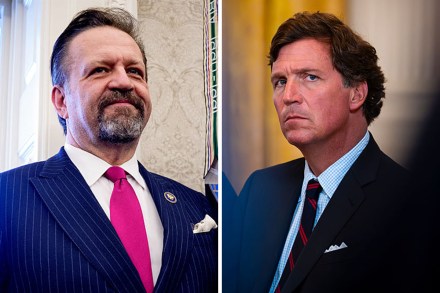
Strange things are happening with Dr. Sebastian Gorka. In a clip that circulated widely yesterday, the deputy assistant to the President was asked by Breitbart's Alex Marlow whether he thought right-wing terror is currently a threat in the US. Gorka brought up Tucker Carlson and Nick Fuentes – unprompted – claiming they had lauded Sharia law and said Muslim states were better than America. “I’m not sure that Nick Fuentes or Tucker Carlson are conservatives... If you remove those individuals and you understand that they're not conservatives, what's left?” Judging by those comments, it seems that Gorka, as Trump’s senior director of counterterrorism, regards the two podcasters as domestic security threats.

gorka tucker

Britain is facing an Islamist insurgency

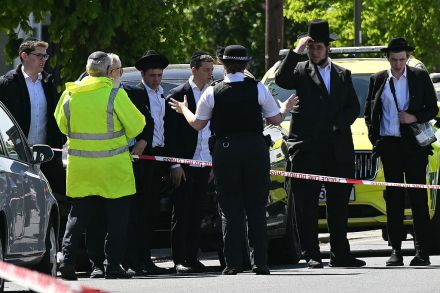
The recent horrific attack in Golders Green has generated much anger and despair at this latest in a series of concerted, violent assaults currently aimed primarily at the Jewish community, but with a clear lineage to earlier Islamist outrages such as the murder of Fusilier Lee Rigby and the London Bridge attacks of 2017 and 2019. The UK terrorism threat level was raised to "severe" following the attack on Thursday. But terrorism, "an action or threat designed to influence the government or intimidate the public," is an inadequate descriptor of what we face in Britain. Instead, I believe we face a different problem: a full-blown insurgency.

islamist

Bondi Beach and the heroism of Ahmed al-Ahmed

As the appalling story of Sunday’s anti-Jewish mass shooting at Sydney’s Bondi Beach continue to unfold, and 16 people are now dead, there have been few glimmers of light in the darkness. The men identified as the shooters are a father and son, Sajid Akram, 50, and Naveed Akram, 24. The father was shot and killed by police last night, and the son was overpowered and taken into custody. The New South Wales police commissioner says little is yet known about the pair, but Sajid Akram was a licensed gun owner, with six guns in his possession. Old social media posts have also emerged of Naveed Akram being praised for his Islamic studies in 2022.

ahmed

Prevent’s purpose is drifting from terrorism

From our UK edition

When I was a Prevent counter terror officer a decade ago our case load was largely focused on Islamist terrorism – clear, defined ideological extremism. Today the picture looks very different. The majority of cases involve ‘mixed, unclear or unstable ideologies’ or a simple 'fixation with violence'. In other words, many people being referred no longer seem to have any specific ideology. The programme is looking at behaviours that are 'violence-oriented', which risks blurring our understanding of the real terror threat in the UK. According to the Home Office, there were 8,778 referrals to Prevent in the latest reporting period, up roughly 27 per cent on the previous year. At first glance these numbers appear to show a surge in radicalisation and extremism.

Does being right-wing make you violent?

From our UK edition

I notice that the police are not treating the killings of those children in Southport as a terrorist attack. While the principal suspect has been charged with allegedly producing ricin and allegedly possessing a PDF document called ‘Military Studies in the Jihad Against the Tyrants: the al Qaeda training manual’, we have been told that no terror motive has been established.  The possibility that the perpetratoris a bit wacko is not allowable: it’s the politics that’s to blame My friend and colleague Douglas Murray dealt, admirably, with the Southport business last week.

Do Jews have a future in Britain? 

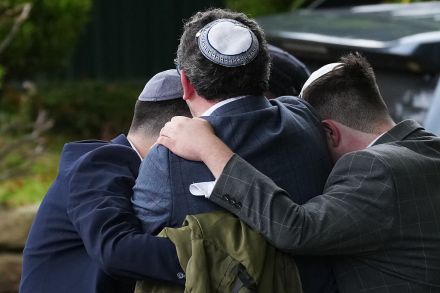
I was on my way to synagogue yesterday when I got news that was surprising and unsurprising at the same time. That there had been an attack at a Manchester synagogue on Yom Kippur was a shock, but only the location and the timing. The fact that terror had struck our community felt like the confirmation of our worst fears – and something that was grimly predictable.  For as long as I can remember, Jewish life in the UK has been closely guarded and protected. My childhood synagogue in the leafy London suburb of Surbiton was behind locked gates with security guards posted outside when anyone was in the building. My Jewish newspaper office today has similar protections and an address we’re told must never be made public.
Don’t project your lifestyle agendas onto Tyler Robinson

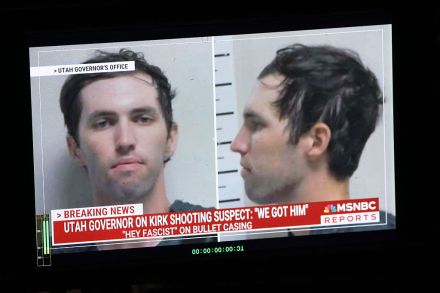
Charlie Kirk, conservative commentator and essential piece of the Trumpworld media ecosystem, is dead, allegedly at the hands of an individual whose inner life has, needlessly, been the subject of conservative speculation for the past few days. Seemingly, every faction of the American right has their own explanation as to how this young man might have been inspired to commit such an atrocity. Many of these are myopic but perhaps have a kernel of truth to them. Others are plainly wrong. The worst of them play right into the hands of the left, and deserve serious reconsideration. Details about Tyler Robinson, the suspected gunman, continue to pour in.

Charlie Kirk Tyler Robinson

Is Antifa a terrorist organization?

One side of the political aisle can only accuse the other of “fascism” so many times before a young, impressionable person subsumed within a social-media echo chamber takes matters into his own hands. This seems to be exactly what transpired in the case of Tyler Robinson: bullet shell casings found at the scene of Charlie Kirk’s assassination were reportedly etched with the words “Hey fascist! Catch!” Robinson seems to have been influenced by Antifa or Antifa-adjacent ideology. In response to the killing, Congress and commentators have renewed calls to designate Antifa a domestic terrorist organization. But this would have little effect. Antifa is a collaboration of autonomous cells with the ostensible goal of opposing fascism and racism.

antifa

The unspoken truth about 7/7

From our UK edition

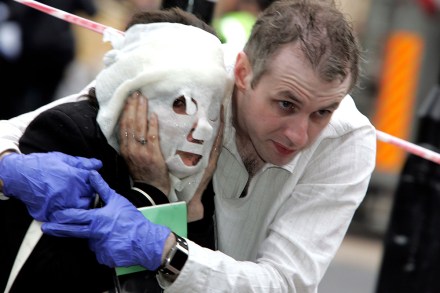
Did you take part in any of the mysterious commemorations last weekend? The newspapers were full of it – something called 7/7, apparently. I read a long report on the BBC’s website about this tragedy but remained entirely unclear as to who killed the people on those trains and bus. The report said ‘bombs were detonated’ on the Tube, as if the bombs – anxious to fulfil their purpose in life – had blown themselves up, without the aid of any external agency. Nowhere in the report did it mention who brought the bombs down from Yorkshire and then set them off. Nowhere in the entire article were the words ‘Islam’ or ‘Islamist’ or even ‘Muslim’ mentioned, nor even the names of the murderers.

My plan for Prevent

From our UK edition

In the autumn of 1940, British cities were being bombed every night by large aeroplanes whose provenance was apparently of some considerable doubt. While the public almost unanimously believed the conflagrations to have been caused by the Luftwaffe, the authorities – right up to the government – refused to speculate. Indeed, when certain members of the public raised their voices and said ‘This is all down to Hitler and Goering and the bloody Germans!’, they received visits from the police who either prosecuted them for disturbing the peace or put their names on a list of possible extremists. The nights grew darker. The number of towns and cities subjected to these nightly bombardments widened.

How to bring down Britain’s power grid

From our UK edition

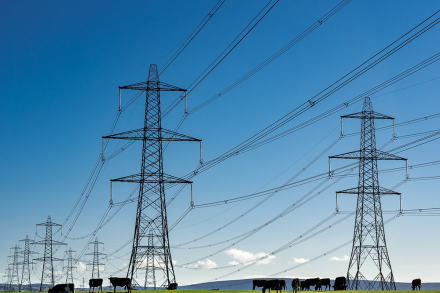
At the end of last month, a fire at an electrical substation in Maida Vale caused chaos in west London. Homes lost power. Transport services ground to a halt. It came in the same week as outages across Spain and Portugal and just a few weeks after a fire at another substation caused Heathrow airport to shut down. We also know that the British government is drawing up contingency plans for Russian attacks on energy infrastructure. All of this raises an important question: how resilient would the British state be in the face of a determined effort to cripple its power grid? The blunt answer is: not very. David Betz, at King’s College London, has long warned that Britain’s national infrastructure is dangerously vulnerable to simple tools such as hammers and hacksaws.

The law that is choking civil society

From our UK edition

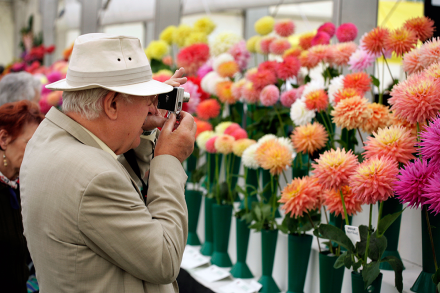
If one were to ask for a quintessential display of the British character it would be hard to better the Shrewsbury Flower Show. Officially the world’s ‘longest-running flower show’, according to the Guinness World Records, it is held over two days in August, attracting 60,000 visitors. This summer should be the show’s 150th birthday. Last week, however, the Shropshire Horticultural Society abruptly cancelled it. Rising costs were cited as a factor. But the main reason was the Terrorism (Protection of Premises) Act – known as Martyn’s Law. The legislation, which was given royal assent this month, requires organisers of events with more than 200 people to engage in lengthy bureaucratic and state-monitored protocols to protect visitors from terror attacks.

Why were the Abedis here in the first place?

From our UK edition

In recent days parliament has been recalled on a Saturday to debate the renationalisation of the British steel industry. Then, after a month-long strike by binmen in Birmingham, army planners have been called in to help address the issue of large amounts of refuse piling up in the city. Absent a major ideological split on the right, it is hard to see how much more reminiscent of the 1970s Britain could become. I don’t however want to join the legions of people who are carping. Rather, I should like to suggest an answer to some of these things.

The West must not look away from what’s happening in Syria

From our UK edition

Tony Blair’s former spin doctor Alastair Campbell has many talents. But his understanding of Middle Eastern politics leaves much to be desired. Last month he welcomed Syria’s new leader Ahmed al-Sharaa on to the podcast he hosts with the former Conservative minister Rory Stewart. Reflecting on the encounter afterwards in a newspaper column, Campbell was anxious to give the ‘gently smiling President’ the benefit of the doubt. He was ‘definitely saying a lot of the right things’. There was, Campbell acknowledged – ‘one big blot on the Syrian landscape’ – the ubiquity of men smoking. But otherwise everything seemed in order. It was the case, he said, that ‘virtually everyone you meet says that they feel happier than they did under [Bashar al] Assad’.

Why won’t Keir Starmer use the word ‘terrorist’?

From our UK edition

Why does Keir Starmer find it so hard to use the word ‘terrorist’ when talking about a man who buys ricin and a machete online, reads up about killing people in an al Qaeda training manual – and then goes out and stabs to death three young girls attending a dance class? When asked this week whether he regarded the crimes committed by Axel Rudakubana as a terrorist act, the Prime Minister couldn’t quite bring himself to do so, instead referring to it as an act of ‘extreme violence clearly intended to terrorise’. The fight against terrorism seems to have been infected by the fear of appearing racist or Islamophobic Starmer has obfuscated over the Southport killings since they occurred in July. Like the police, he immediately declined to treat the attack as terrorism.

The truth about Southport

From our UK edition

When I first saw the headline I was highly optimistic. Sir Keir Starmer had identified the threat to society posed by ‘young men in their bedrooms’. What would follow, surely, must be a polemic in the style of Robert Baden-Powell or John Harvey Kellogg on the dangers of masturbation. It’s about time this was politicised, I reckoned – the terrible sapping of a young man’s strength and soul by the indiscriminate spillage of his precious bodily fluids. Perhaps Sir Keir would demand that parents order their wayward teenage offspring to put down the Kleenex, open the bedroom door, come downstairs and either eat a bowl of nutritious cornflakes or join the Boy Scouts.

Isis will not die

From our UK edition

The Isis caliphate in Syria and Iraq was defeated at a cost of billions of dollars and the loss of thousands of lives. And yet the ideology of violence and hatred espoused by the Islamic State lives on and has spread into cities in the West like a poison with no antidote. The black flag attached to the pick-up truck which ploughed through crowds of people in New Orleans celebrating the new year was both a symbol of the Islamic State and a message from the terrorist jihadists that they have ‘sleepers’ ready and willing to carry out atrocities. For western governments this poses a never-ending challenge.

Europe’s blind spot over anti-Semitism

From our UK edition

You would think that we Europeans might have learned a thing or two about anti-Semitism over the past century or so – and perhaps come to understand pragmatically, if nothing else, that what begins with the vicious persecution of Jews usually moves on to murdering lots of other people, too. But no. Or if we did, then it has conveniently slipped our minds, as things tend to do in these complicated times. Or perhaps we think that the persecution of the Jews we are seeing right now in Europe is of a different marque to that which began in the early 1930s in Germany. Yes, it’s sort of anti-Semitism – but it’s of a nicer kind than that instigated by that psychotic little Austrian with the performative moustache. A little more excusable.

The futility of Martyn’s Law

From our UK edition

There have been few acts of terrorist violence on British soil as grotesque as the Manchester Arena bombing in May 2017. An Islamist extremist, Salman Abedi, detonated a bomb at an Ariana Grande concert killing 22 and injuring 1,017. An evening of enjoyment for hundreds of young people turned into a spectacle of wanton cruelty. The law does nothing to address the real state failures that have allowed extremism to flourish One of those who died was 29-year-old Martyn Hett. His mother, Figen Murray, has campaigned ever since for legislation to better protect potential victims of terrorism. This week the Commons debated the measure she has fought for – the Terrorism (Protection of Premises) Bill – to be known as Martyn’s Law.

Gangs of Tehran: how Iran takes out its enemies abroad

From our UK edition

‘It was Friday afternoon, around 2.45. I came out of the house and was going towards the car on the driver’s side,’ Pouria Zeraati says casually. Zeraati – a presenter at the London-based TV station, Iran International – is recounting what was probably an Iranian state-sponsored attack. ‘I was approached by a man who pretended to be someone asking for £3. The second man then approached. They held me strong, very firmly, and the first person stabbed me in my leg.’ The Iranian regime is reshaping the murder-for-hire market in the US and parts of Europe Zeraati is talking on his first day back at work since he was knifed on Good Friday in Wimbledon. It’s still too painful for him to sit down, so we’re standing for our conversation.

Is terrorism really a mental health problem?

From our UK edition

When news first broke of the terrorist attack last Saturday in Paris, the French government rushed out a statement describing the suspect in custody as a French citizen born in France. His name was given as Armand R.   More details gradually emerged and the picture painted of the man accused of stabbing to death a German tourist was what every western government dreads – that of a man who bit the hand that fed him. It is a story not too dissimilar to that of Salman Abedi, who detonated a bomb at the Manchester Arena in 2017, killing himself and 22 others. Abedi was born in Manchester to Libyan parents who had fled their homeland for a new life in the West.

America has lost the war against Islamist terror in Africa

From our UK edition

After 9/11, the US built a network of military outposts across the northern tier of Africa to fight a shadow war against Islamist groups, and Niger became central to the effort. From Base Airienne 201, known to locals as ‘Base Americaine’, US drones were sent across the region to track down Islamist terrorists. The coup against President Bazoum marks another disruption in this long-running, mostly secret, war on terror. American troops in Niger are currently confined to their bases. The future of America’s two-decade counterterrorism campaign there is in doubt. In 2008, about 2,600 US military personnel were deployed in Africa, but today, there are around 6,500 troops and civilian contractors.

Afghan leaders say country is a terror haven

The Biden administration is using every tool at its disposal to paint a rosy picture of Afghanistan as a terrorist-free state as the two-year anniversary of its disastrous withdrawal approaches. But a coalition of Afghan generals, diplomats and civil servants is writing to Congress to explain that in reality, “today’s Afghanistan under the Taliban and their al-Qaeda allies, is again the greatest terrorist safe haven in the world.

afghan taliban

AMLO sides with the cartels

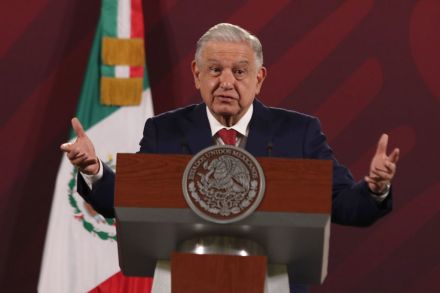
Mexico’s president, the increasingly authoritarian and erratic leftist Andrés Manuel López Obrador, aka AMLO, visited Veracruz this past Friday to commemorate the 1914 American occupation of that city. In his remarks was a startling declaration: the Mexican state and military, under his leadership, will defend Mexico’s criminal cartels from the Americans.  “There is talk in the United States,” said AMLO, “of intervening and confronting organized crime, drug traffickers, treating them as terrorists and that for this reason they will come to 'help' us, to 'support' us to confront organized crime... we do not accept any intervention... if they did, it will not be only the sailors and soldiers who will defend Mexico, all Mexicans will defend Mexico.

mexico amlo

The coming fight over the government’s surveillance powers

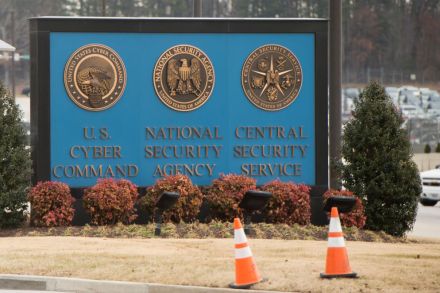
You've been warned: a fight over the government’s ability to spy on its own citizens is coming to Congress. Section 702 is up for renewal again in December. Section 702 grew out of an illegal post-9/11 program called Stellarwind, exposed by NSA whistleblower Tom Drake. It refers to a provision of the Foreign Intelligence Surveillance Act (FISA) that was enacted in 2008. It authorizes the government to collect the communications of non-Americans located outside of the United States for the purpose of obtaining foreign intelligence information. But the program also allows for the incidental collection of information about Americans who may be communicating with the targeted foreigners.

Turkey’s heavy price for pressuring the Russians

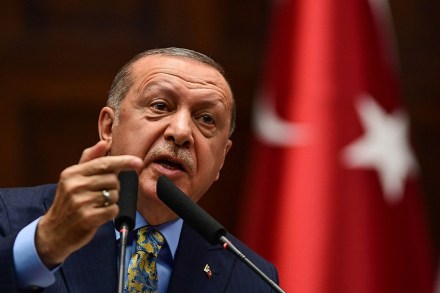
If you enjoyed the weeks-long intra-NATO spat about whether to send heavy tanks to Ukraine, then you’re going to love the ongoing kerfuffle about whether Sweden and Finland should be admitted into the transatlantic alliance. Whereas Germany was the lone holdout in the first instance, Turkey is the obstacle in the second — and going by the fiery words of Turkish President Recep Tayyip Erdogan, the squabble won’t end soon. Erdogan, in the midst of his toughest election campaign in two decades, has been using his veto over Sweden's and Finland’s NATO memberships to press both countries on one of his top priorities: cracking down on the Kurdistan Workers’ Party, a group Turkey, the US, and the European Union all label a terrorist organization.

greece

Risk aversion and the failure of our emergency services

From our UK edition

The litany of errors in the emergency services’ response to the Manchester Arena attack has been widely detailed this week, from a senior police officer who failed to pass on crucial information, to a key fire officer who spent an hour driving in from his home, and a specialised paramedic unit that took 44 minutes to arrive from Stockport. The only paramedic to turn up in that three quarters of an hour – because he had ‘self-deployed’ – was supposed to triage patients but forgot his triage cards and never went back to his vehicle to get them. A ‘risk averse’ senior fire officer set off a chain of events that led to a two hour and six minute delay in their arrival to the arena, despite knowing they might be needed to extract patients.