Economy

  • AAPL

    213.43 (+0.29%)

  • BARC-LN

    1205.7 (-1.46%)

  • NKE

    94.05 (+0.39%)

  • CVX

    152.67 (-1.00%)

  • CRM

    230.27 (-2.34%)

  • INTC

    30.5 (-0.87%)

  • DIS

    100.16 (-0.67%)

  • DOW

    55.79 (-0.82%)

UBI will make us miserable

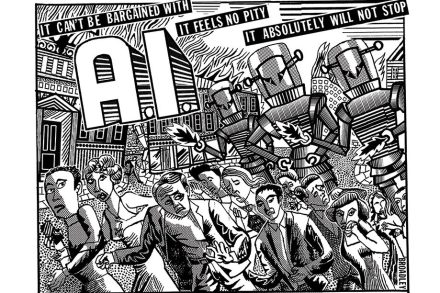
It’s hard to avoid the constant prophecies of doom about how AI is going to take our jobs – with some of these already being borne out. However, AI leaders such as Elon Musk have declared that the population will be supported by Universal Basic Income (UBI) instead, in which the government will financially support everyone through the huge revenues produced by AI. “Universal HIGH INCOME via checks issued by the Federal government is the best way to deal with unemployment caused by AI,” Musk posted on X earlier this year. Musk imagines that we wouldn’t be unemployed but rather liberated – UBI would allow us to live without the mundane tasks of everyday life, like making PowerPoint presentations, writing emails or finding synergies in our deliverables.

Spotlight

Featured economics news and data.

Cutting Britain’s giant welfare bill would be an act of kindness

Does having money really matter that much? There are those, usually with quite a bit of it, who want us to care less about materialism. But, unequivocally, money really does matter – not because of any status it supposedly brings, but for the freedom it buys: freedom to choose how we live and how we look after others. Considering this, it seems that the deep disillusionment with mainstream politicians in recent years stems from a protracted and ongoing period of stagnant living standards over which they have presided. But the truth is that the average person has not got poorer since the global financial crisis. They have got a little bit richer. Employment levels are still exceptionally high. And, both historically and internationally, we are a very rich country.

Justin Trudeau is tanking Canada’s economy

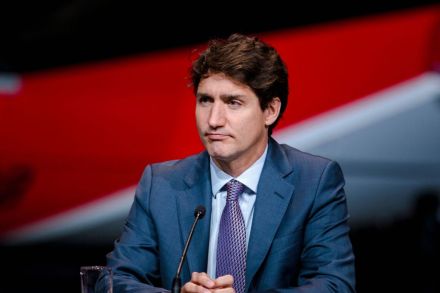
In September the leaders of the world’s most powerful nations met in New Delhi for the annual G20 Summit to address such heady matters as the war between Russia and Ukraine, the future of energy production and the criticality of food security. Everyone smiled for the cameras, shook hands politely and agreed to do their best to do something about everything, just so long as they weren’t asked to make any enforceable commitments. At the end of the weekend, all the great men and women of the world put their shoes back on, took one more group photo and bid adieu to their friends (and enemies). Then they all headed for home. All, that is, except one.

trudeau
doormen

The secret lives of New York’s doormen

The first test was the audacious cockroach that sidled into our apartment about three days after we moved in. Hardly enough of a native Manhattanite to calmly swat it and flush it and go on eating my pizza, I pollyannaish-ly sprinted downstairs instead. “Excuse me,” I breathlessly announced to the crossword-solving bald guy manning the front desk — I hadn’t even had the courtesy of introducing myself to him yet. “There’s a cockroach in my living room.” Visibly unimpressed but with an air of professional politeness that almost hid what he actually wanted to say (“suck it up, princess”), he looked up at me sympathetically: “The exterminator comes Tuesdays.” It was Friday.

Conservatives should cheer Dove’s new ‘fat liberation’ spokesperson

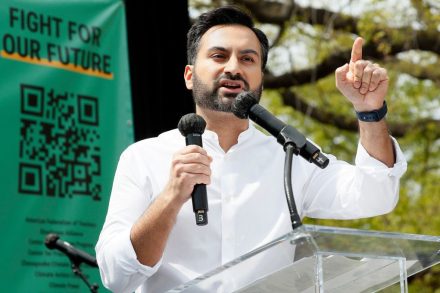
Zyahna Bryant, a “fat acceptance” and Black Lives Matter activist, has been named the new face (and body?) of Dove, the company known primarily for its soaps. Conservatives are up in arms over the new campaign, and a Dylan Mulvaney-style boycott has begun among conservative consumers opposed to "wokeness" and also to Bryant’s role in attempting to get fellow University of Virginia student Morgan Bettinger expelled from UVA for “racist” comments she didn’t make. https://www.instagram.com/reel/CwnKlIGybvO/?utm_source=ig_embed&ig_rid=ddb08da2-6f29-4243-b80e-e93e92bba4ee Newsweek provides a brief recap of Bryant’s unsuccessful headhunt: “In the summer of 2020, Bryant claimed that she heard Bettinger refer to BLM protesters as ‘good speed bumps.

dove zyahna bryant

The problem facing US cemeteries

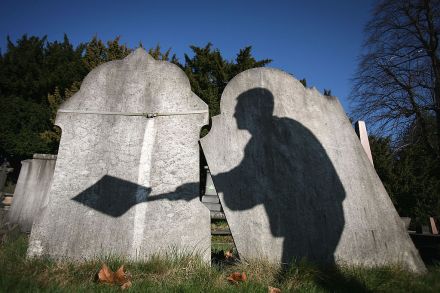
On a hillside on the outskirts of my town is an expansive cemetery where more than 20,000 of Philipsburg’s ancestors have been laid to rest since 1869. For decades, its thirty or so acres have been cared for by three dedicated men who dig and fill graves, mow and trim the grass, repair equipment, patch and plow roads, maintain old headstones and gather leaves “for next to nothing,” as Paul Springer puts it. This work must “go on constantly,” says Paul, but changes in the mores surrounding death mean “generating the income necessary to support these activities is becoming impossible.” Paul is my friend and one of those indispensable do-ers small towns across the country rely on to keep things ticking.

cemeteries
klein

How does Michael Klein do it?

Soon after the stunning news broke on June 7 that LIV Golf and the PGA were burying the hatchet, dropping the litigation between them and joining forces, my phone started blowing up. My Wall Street sources were nearly dumbstruck. The deal itself was a stunner, of course, conducted so secretly by the leaders of both the PGA and LIV that the professional golfers who make the two warring organizations possible had been clueless about what was happening. But that’s not what my people wanted to discuss. All they wanted to talk about was how Michael Klein — a longtime Wall Street investment banker with an eponymous advisory firm, M. Klein & Co. — had once again tapped into his deep relationships with Saudi leaders and was representing them in the LIV merger with the PGA.

The high odds of a Chinese black swan

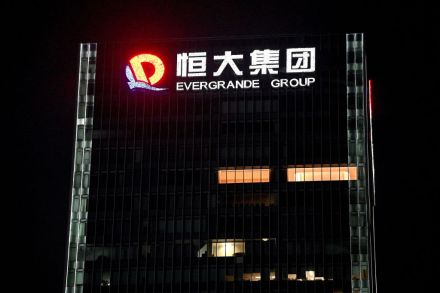
I have a memory picture of an urban highway in Shenzen, southern China. Recently built, with abundant flowering shrubs planted along its central reservation, it was lined as far as the eye could see by uncountable apartment towers, many of them unfinished. This was 2009 and it was my first glimpse of the debt-fueled property bonanza that had begun to grip the Chinese economy — alongside the export-led manufacturing boom that was also plainly visible, thanks to satellite maps of the vast agglomeration of factories surrounding the new-rich residential areas. It’s easy to be a permanent bear in any market, because history tells us they all come crashing down in the end.

Evergrande

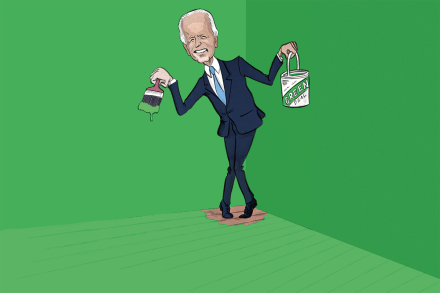
Biden’s green agenda pokes a big hole in America’s social safety net

With the current inflation rate still well above the Federal Reserve’s 2.0 percent target, it is only natural that critics of President Biden’s Inflation Reduction Act (IRA) treated its recent one-year anniversary as an opportunity to once again stress that the bill never had anything to do with inflation. Biden himself has finally admitted as much. But what has received almost no attention is the degree to which big spending programs like the IRA — whose estimated cost has already spiraled up from $384.9 billion to $1.5 trillion — will further erode America’s social safety net. Especially the Medicare hospital insurance fund (Medicare Part A), which its trustees say will be depleted in 2031, and Social Security, which runs out of money just three years later, in 2034.

energy green biden

Is the era of the corporate DEI officer coming to an end?

Barely three years after the death of George Floyd, it appears the era of the corporate DEI officer is rapidly coming to an end. Or at least experiencing a major contraction. Across American business, the number of Diversity, Equity and Inclusion roles grew by 55 percent following the protests of summer 2020, reported the Society of Human Resource Management. At the start of 2022, the entire DEI “industry” was worth an estimated $9.4 billion. In 2023, it’s a very different story. According to the workplace trends consultancy Revelio Labs, DEI jobs shrank by one-third last year. The key problem with the DEI industrial complex is not the idea that American workplaces should be more representative of America — but the means often used to achieve those ends.

DEI
patriot

Has the patriot economy’s moment finally arrived?

It’s Saturday. You just rolled out of your MyPillow Giza Dream sheets, spent a little extra time trimming your beard with your Jeremy’s Razor, and brewed yourself a fresh cup of MAGA Dark Roast COVFEFE. You call your best friend on your Patriot Mobile cellphone to shoot the breeze. Hell, it’s five o’clock somewhere. Go ahead and crack open an Ultra Right beer and waste away the afternoon. Welcome to life in the patriot economy — the parallel economy being developed by conservative entrepreneurs and investors. Or at least an exaggerated version of it. The idea of the patriot economy is fueled by two convictions. The first is that the right needs its own economic infrastructure so consumers aren’t forced to buy goods from “woke” corporations.

The end of American retirement

Cockburn has been mulling over in his mind a gloomy new report about his retirement prospects. “In a July poll conducted jointly by Axios and Ipsos,” the Hill writes, “29 percent of workers under fifty-five answered a retirement query with, ‘I don’t think I will ever retire.’ Asked why not, three-quarters of the never-retire group said they could not afford to stop working. A smaller share said they didn’t want to.” With inflation doing a number on folks’ 401ks and future inflation fears rising, Cockburn is not surprised by people’s responses to this poll (except for those who don’t want to stop working — seek mental evaluation). Still, he wonders: what does our future workforce look like if it’s composed of geriatric personnel refusing or unable to retire?

retirement

The elite’s war on wealth

Wealth comes from ownership. Being involved in the financial industry for nearly thirty years, and spending the past dozen-plus years in the media helping people create economic freedom and wealth for themselves and their families, I know that wealth being derived from ownership is an indisputable truth. More concretely, wealth comes from the ownership of assets that increase in value over time. Ownership is a subject people tend to greatly misunderstand. We misconstrue where wealth comes from, and we misinterpret the benefits of hard work and taking risks. You can meet a poor construction worker putting in eighty hours a week for someone else. You can find professional athletes declaring bankruptcy as soon as their multimillion-dollar contracts end.

Shipping company Yellow could lose Walmart, further worsening US shipping woes

Walmart has reportedly stopped using Yellow as the shipping company stares down bankruptcy and a major strike by the International Brotherhood of Teamsters. Craig Fuller of FreightWaves tweeted that Walmart was one of Yellow’s largest customers, meaning their exit will cost the company dearly. The implosion of Yellow could magnify the impact of any potential IBT strike against UPS, which alone could have ground the US economy to a halt. Yellow had received a $700 million federal loan during the Covid pandemic, but has run into challenges paying it back, and the New York Times reports that the company had $1.5 billion in debt in March 2023.

Teamsters
ups teamsters

Could the Teamsters’ fight with UPS shut down America?

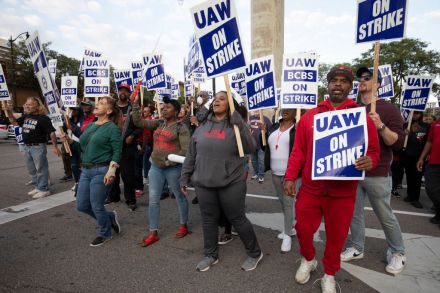
A pugnacious union president is setting up a little-noticed showdown with United Parcel Service (UPS), in what would be the largest labor strike in American history, potentially complicating President Joe Biden’s rollout of “Bidenomics.” At issue is mainly wage increases for part-time Teamsters, who earn roughly $20 an hour; Teamsters want that increased by around 30 percent. Earlier this month, both sides made significant progress on core issues like ending forced overtime on drivers’ days off and establishing Martin Luther King Jr. Day as a holiday.  However, talks soured earlier this month and both sides are barreling towards the July 31 deadline; if no deal is reached by the end of the month, the Teamsters will fully strike.

The new corporatism that’s killing capitalism

Over the years since the financial crisis, economic power and wealth has become ever more concentrated in fewer hands. This is something leaders have acknowledged, and policymakers have tried to do something about. And yet, despite brave talk of breaking up mega-giant companies, anti-trust efforts have been anemic, as most recently demonstrated by the failure to stop Microsoft from swallowing game maker Activision. The future looked a little brighter in the immediate aftermath of the pandemic. There were signs of a grassroots resurgence, with a strong uptick in new business formations in the United States. But since then, as interest rates have risen and regulatory pressures have increased, there has been a slackening off of new firms.

the new corporatism

How sovereign wealth funds could decide our AI future

Most of the attention paid to sovereign wealth funds inevitably lands on the Middle East. But it’s Norway’s $1.4 trillion national investment fund that is actually making the most noise.   Case in point: in April the fund’s CEO, Nicolai Tangen, said he believed global “authorities and governments should regulate” the use of artificial intelligence. “We are not seeing a pipeline of regulation coming yet,” Tangen lamented, without specifying the precise guidelines he’d like implemented. But no matter; he then added that Norway’s trio of SWFs — the world’s largest — are developing operational protocols for companies using AI which will be folded into the larger ESG (environmental, social and corporate governance) efforts that power their entire operation.

sovereign wealth funds

How AI could shrink government

Recent advances in artificial intelligence have led many observers to worry that computers will soon replace far more jobs than imagined just a few years ago. The World Economic Forum now predicts that over 85 million positions could be lost to automation by the year 2025, many in law, medicine, accounting and other fields once thought immune to electronic substitution. Industry experts like IBM CEO Arvind Krishna argue that the worries about this dramatic change are vastly overblown. Like every past technological innovation, he says, AI will eventually create many more employment opportunities than it eliminates, producing jobs in which a person’s productivity will be enhanced by his or her ability to use smart and dexterous machines.

ai artificial intelligence

Has America checked out of Airbnb?

Airbnb is in trouble. Nick Gerli, CEO of real estate consulting firm Reventure, reports, “The Airbnb crash is real,” along with a list of the top ten cities where the company’s revenue has collapsed. “Watch out for a wave of forced selling from Airbnb owners later this year,” Gerli forbodes. https://twitter.com/nickgerli1/status/1673774695693385728 Last month the Wall Street Journal reported, “Airbnb reported higher revenue and profit in the first quarter, but customers reserved fewer-than-expected stays and the company gave a mixed outlook for the second quarter, spooking investors.” And while Investors Business Daily this week forecast “a new, more promising comeback attempt” for Airbnb stock, murmurings of an “Airbnbust” are hard to ignore.

airbnb

Why conservative boycotts should terrify corporations

Nike. Ulta. Bud Light. Anthropologie. Target. My boycott list is growing larger by the day. For the record, I’m pretty darn good at shopping according to my values. I haven’t purchased a single Nike product since the company pulled a planned shoe line featuring the Betsy Ross American flag because anthem-kneeler Colin Kaepernick convinced them it was racist. I quickly pivoted to purchasing Adidas products instead. Well, that is until Adidas started advertising women’s swimsuits using male models. Sigh. This boycotting business can be tough, especially when it means forgoing otherwise quality products or paying a higher price for alternatives.

boycotts
lobster maine lobstermen

Maine’s lobstermen are a dying breed

It’s 5 a.m. in early May in Harpswell, Maine — “a working waterfront” community. I’m sipping coffee on the deck of Mark and Judy Sgantas’s charming home. The Sgantases are distressed about the government overreach and so-called “green energy” initiatives their neighbors have told them are apt to destroy the New England maritime economy and communities. We keep our voices soft so as not to disturb sleepy Casco Bay and the peach-and-plum masterpiece gradually unveiling itself in the sky and reflecting on the still water.

Confront thieves, get fired: welcome to retail in America’s cities

“Chill, bitch, shut your ass up,” graciously replied a shoplifter to former Lululemon assistant manager Jennifer Ferguson earlier this month, when she told him and two accomplices to stop robbing the suburban Atlanta store where she worked. Ferguson and her colleague Rachel Rogers had good reason to be fed up. The same trio, which was arrested the following day after bystanders reported a separate robbery to the police, had allegedly burgled the same store a dozen times in recent weeks. When Ferguson told them “No, no, no, you can march back out,” the alleged thieves had already raided the store’s shelves yet again and were preparing for a second round, which they then carried out.

lululemon thieves