Economy

  • AAPL

    213.43 (+0.29%)

  • BARC-LN

    1205.7 (-1.46%)

  • NKE

    94.05 (+0.39%)

  • CVX

    152.67 (-1.00%)

  • CRM

    230.27 (-2.34%)

  • INTC

    30.5 (-0.87%)

  • DIS

    100.16 (-0.67%)

  • DOW

    55.79 (-0.82%)

UBI will make us miserable

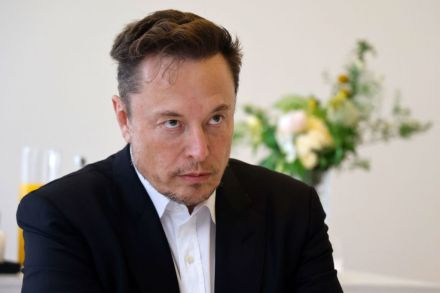
It’s hard to avoid the constant prophecies of doom about how AI is going to take our jobs – with some of these already being borne out. However, AI leaders such as Elon Musk have declared that the population will be supported by Universal Basic Income (UBI) instead, in which the government will financially support everyone through the huge revenues produced by AI. “Universal HIGH INCOME via checks issued by the Federal government is the best way to deal with unemployment caused by AI,” Musk posted on X earlier this year. Musk imagines that we wouldn’t be unemployed but rather liberated – UBI would allow us to live without the mundane tasks of everyday life, like making PowerPoint presentations, writing emails or finding synergies in our deliverables.

Spotlight

Featured economics news and data.

Cutting Britain’s giant welfare bill would be an act of kindness

Does having money really matter that much? There are those, usually with quite a bit of it, who want us to care less about materialism. But, unequivocally, money really does matter – not because of any status it supposedly brings, but for the freedom it buys: freedom to choose how we live and how we look after others. Considering this, it seems that the deep disillusionment with mainstream politicians in recent years stems from a protracted and ongoing period of stagnant living standards over which they have presided. But the truth is that the average person has not got poorer since the global financial crisis. They have got a little bit richer. Employment levels are still exceptionally high. And, both historically and internationally, we are a very rich country.

Coca-Cola’s ‘Indigiqueer’ Pride workshops for kids

Coca-Cola is kicking off Pride Month by sponsoring events for preteens that are taught by Native American "Indigiqueer" and two-spirit artists. On the first day of Pride Month, Coca-Cola is partnering with the Smithsonian’s National Museum of the American Indian to bring workshops from “across the Western Hemisphere working towards equity and social justice for Indigenous peoples” to middle- and high-school students. “Fashion is often used to confirm identities, challenge social structures and display personalities,” the event description reads. “Discover the joy of fashion in our conversation celebrating PRIDE month.” There are four panelists.

coca-cola

The Karens of Uber get their DEI chief suspended

Karens are, to use a leftist term, “problematic.” In use as a pejorative for four or five years now, “Karen” appropriates a common Generation X girl’s name to refer to an entitled middle-aged woman who demands exceptional treatment, undeserved deference and unearned “privilege” to make her way through life or to express power through unwarranted concern for others. Karens are generally believed to be middle-class or slightly above, sport an unsmiling no-nonsense mien and favor a pert bob hairdo that stylists now routinely call the “speak-to-the-manager,” after a request Karens commonly make when they encounter disappointment.

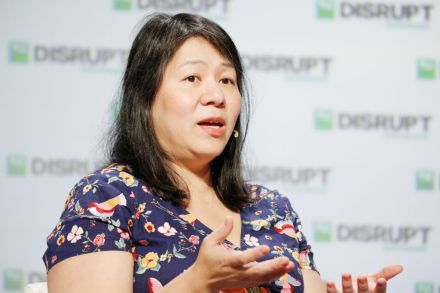
uber bo young lee

Welcome to the crypto winter

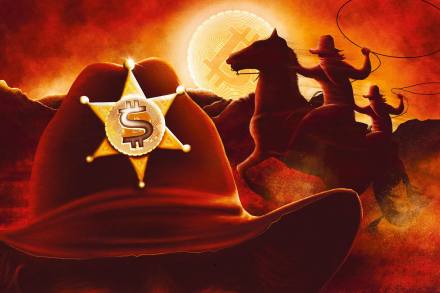
Last year, Austin scored a major coup when it landed Consensus 2022, a big in-person conference focused on the digital finance industry, specifically cryptocurrencies like Bitcoin and Ethereum. CoinDesk, a news and research company focused on the cryptocurrency industry, chose the Texas capital for its return to an in-person conference and it arrived splashy and huge, taking over not only the Austin Convention Center but several adjacent hotels and event spaces, its 17,000 attendees swarming downtown. This was June of last year. Three months earlier, South by Southwest, the city’s long-running big tech and culture conference had been a veritable playground for NFT enthusiasts, and dozens of panels hyped the transformative importance of the blockchain.

crypto

Is Elon Musk’s war on remote work moral?

Remote work isn’t just killing productivity, according to Elon Musk: it's morally wrong. In an interview with CNBC on Tuesday, Musk accused at-home workers of hypocrisy for expecting those in service and manufacturing industries to go into work. The “laptop class” needs to get off its “moral high horse” with its “work-from-home bullshit,” Musk said.  "You’re going to work from home and you're going to make everyone else who made your car come work in the factory? You're going to make the people who make your food that gets delivered that they can't work from home? The people that fix your house — they can't work from home? But, you can? Does that seem morally right?" Musk asked. “That’s messed up.

elon musk remote work biometric data

Does downtown deserve a comeback?

The downtowns of America’s biggest cities are facing a crisis as thousands of office buildings sit vacant. They were abandoned first by occupants forbidden from gathering during the Covid pandemic — and they remain empty as many took a liking to remote work that enables them to “stay home in [their] pajamas all day,” as New York City mayor Eric Adams describes it. Building owners are no doubt panicking as the value of their real estate continues to plummet, as are those affected by all the lost tax revenue. (A recent study, “Work from Home and the Office Real Estate Apocalypse,” found a 39 percent decline in long run value of New York City offices.

downtown philadelphia

Don’t ban harmless office humor

Work is hard, no matter what form it takes. I’ve toiled away as a waitress at a busy chain restaurant and I’ve also worked in the biggest newsroom in London. Both were highly stressful, both had me swearing like a sailor — and both were more fun when it was hectic. Silence is far more anxiety-inducing than marginally-orchestrated chaos.  Tucker Carlson, fired from Fox News last week, has been chastised for his office etiquette after videos surfaced showing him bantering with colleagues and guests.

vice president tucker carlson
coca-cola

Coca-Cola shareholders snub ‘woke’ suggestions

Coca-Cola’s shareholders overwhelmingly rejected a series of left-wing proposals that demanded an audit on Coke’s impact on non-white stakeholders, “a report on risks from state policies restricting reproductive rights” and more. During its annual meeting of shareholders, the Coca-Cola board’s voting recommendations carried the day over every single shareholder proposal — and none of the votes were particularly close; most lost by several billion votes.  The Coca-Cola votes come during a time when American companies are seeing a widespread rejection of woke capitalism, fueled by the Bud Light backlash.

Epstein revelations from beyond the grave

Four years after he died in jail, stories about Jeffrey Epstein continue to surface. Cockburn took in the Wall Street Journal’s deep-dive into the demonic sex offender’s emails, which reveal that Epstein was meeting with even more well-known and influential people than previously thought. From top government officials to leaders in the banking world, Epstein was never far from the corridors of power. The question is why these people would have any interest in meeting with someone like Epstein. CIA director Bill Burns and Epstein had multiple meetings around the time the then-deputy secretary of state was leaving government. Three meetings are recorded in the documents seen by the Journal, one at a law firm and two at Epstein’s Manhattan residence.

jeffrey epstein
west

Why bad jobs are the root of America’s problems

Low wages are bad for everyone in the United States — not just for the working poor. Every major social crisis Americans face today — falling fertility, the loneliness epidemic, bitter conflicts over racial and gender identity, and growing partisan polarization in politics — is worsened if not caused by the proliferation of low wage jobs caused by the collapse of worker power. For centuries, children in the English-speaking countries have learned a proverb that has equivalents in other European languages (“want of” in this context means “lack of”): For want of a nail, the shoe was lost. For want of a shoe, the horse was lost. For want of a horse, the rider was lost. For want of a rider, the battle was lost. For want of a battle, the kingdom was lost.

Inside Pennsylvania’s gas station wars

Travelers road-tripping across Pennsylvania this summer, take heed: a war is brewing in the center of the state. Buildings have been flattened. Families have been torn apart. The threat of an emerging third power regularly captures headlines and fuels the local rumor mills. I am referring to the competition among three gas stations-cum-convenience megastores — Sheetz, Rutter’s and Wawa. It is said to be the “most heated food rivalry in the country.” Food? A lot of what these places pass off as “food” is up there with the cosmic chicken sponge found at airports. Nonetheless, the rivalry is real. It’s palpable. It’s all-American. And as for the rural places benefiting from this capitalism, as the kids like to say, we’re here for it.

wawa
Neumann

Inside the unlikely return of WeWork’s Adam Neumann

Imagine for a moment you are Adam Neumann, the slick, smooth-talking Israeli-born entrepreneur who took the world by storm thirteen years ago with WeWork, his ultimately failed effort to rethink the way we office. After your start up took a tumble and your IPO failed, you nonetheless walk away with roughly $600 million in cash, plus another $400 million loan, and a new lease on life. You head underground, lick your wounds and claim to be trying to learn from what went wrong, including the relentless overhyping, the mismanagement and the enormous losses that your investors suffered. When you re-emerge, you decide to start again and persuade one of Silicon Valley’s most respected investors to back you. Whoa.

Bud Light: from Spuds MacKenzie to Dylan Mulvaney

Goodbye Spuds MacKenzie, the original party animal and pitch man for Bud Light, the nation’s leading beer. The most clever ad campaign ever, Spuds debuted during the 1987 Super Bowl game. The nation instantly fell in love with the bold bull terrier in dark glasses and a Hawaiian shirt. https://www.youtube.com/watch?v=0K5BgCI-U7c&ab_channel=STEVEHEROLD There’s Spuds, looking good in baggies on a surfboard in an ad titled “Hang Twenty.” Now that’s fun, appealing and catchy — and, most importantly, apolitical — in a way that TikTok’s dreary Dylan Mulvaney and Anheuser-Busch’s Alissa Gordon Heinerscheid are not and cannot be.

spuds mackenzie

The ESG winter is here. Just ask Larry Fink

In some ways, Larry Fink is an unsurprising villain. Wall Street titans aren’t in the business of being loved, and as the Chairman of BlackRock, the world’s largest asset manager assets, Fink isn’t a Master of the Universe. He’s the guy they work for. Paradoxically, though, it isn’t good, old-fashioned greed that has made Fink a figure of popular contempt, but his quest for political approval. With a foray into win-win talk of responsible capitalism and ethical investing, Fink has turned himself, and his firm, into a punchbag for both the left and the right.  In recent years, Fink has become the face of ESG — the multifarious push to put environmental, social and governance concerns at the heart of investment decisions. At first, Fink leant into the role.

larry fink

What’s going on with Dylan Mulvaney and Bud Light?

Transgender TikTok star Dylan Mulvaney infuriated beer drinkers around America on Saturday after posting about an alleged partnership with Bud Light. Mulvaney, who has amassed over 10 million followers on TikTok and 1.7 million on Instagram by documenting his transition from male to female, dropped a video on Instagram that showed the influencer sipping from the famous blue can while wearing a black cocktail dress and matching elbow-length opera gloves, à la Audrey Hepburn in Breakfast at Tiffany's. Toward the end of the video, Mulvaney reveals that Bud Light sent him a custom can with his likeness printed on the side and a congratulations for spending an entire year as a girl.

Is trans TikToker Dylan Mulvaney a Bud Light partner? (Instagram Screenshot)

Nassim Nicholas Taleb, the anti-confidence man

Dealing with the writer, statistician, Twitter warrior and self-described flâneur Nassim Nicholas Taleb is no simple matter. First there was the initial approach, months ago. I ventured to email him and ask for an interview despite his long-held and often-expressed low opinion of journalists. (Heuristic: those who make the biggest deal out of disliking the media care about it the most.) To my surprise, Taleb agreed to it almost immediately even though he “doesn’t do interviews.” Some logistical back and forth ensued. Then a twist: he would only agree to be interviewed if he wasn’t photographed. Why? Because in photos he is “made to look sickly and weak.

taleb

The unstoppable march of the gambling giants

There’s an old adage in the gambling business: “You never hear anyone say ‘I used to be a bookie but then I went broke.’” So if you’re betting on the DraftKings sportsbook app going under soon, even though the company lost $242 million in the fourth fiscal quarter of last year, you’re as big a sucker as the people who think they’re going to get rich by hitting a ten-team parlay. The company brought in $855 million in revenue in the same time period, up 81 percent from the previous quarter, and increased its user base to 2.6 million, up 31 percent. It only lost money because it spent a fortune on advertising and promotions, which, given the other numbers, have clearly been successful.

gambling

Credit Suisse lingers still. Why?

If G-SIBs were a gentlemen’s club rather than a category invented by the Basel-based Financial Stability Board, Credit Suisse would have been kicked down the front steps months ago. G-SIBs are the thirty "global systemically important banks" and even within that list, Credit Suisse counted among those with the lowest "required levels of addition capital buffers": in short, regulators considered it rock-solid. But that was a judgment on its end-2021 balance sheet, not its management. Credit Suisse has been so badly run for so long — so riven by tension between the dull Swiss wealth business it ought to have been and the global player it imagined itself to be — that some of us wondered how it survived.

credit suisse

The last banking crisis and its architects, Dodd and Frank

The Dodd-Frank law, enacted in 2010 following the financial crisis of 2007-08, was named for two of its chief architects, Senator Chris Dodd, Democrat of Connecticut, and Representative Barney Frank, Democrat of Massachusetts. It's ironic that both had been involved, politically or personally, in exactly what had caused the financial crisis in the first place. In the 1930s, only about 10 percent of American non-farm families owned their own homes. But that began to change with the New Deal. The Federal Housing Administration was established in 1934 to guarantee mortgages, making banks much more willing to initiate them.

How hidden fees spiraled out of control 

Last week, a friend was halfway through a Hollywood wax when she complained to her beautician about stubborn hairs that were often missed. “That’ll be extra,” she was told. Apparently now the outcome of a Hollywood — famously meaning that your entire vagina is left completely bare — depends on what the beautician you have at the time can be bothered to do. She paid the money. What’s worse is that she didn’t even recount this story to me with pure, incandescent rage. When she finished talking and saw me red-faced and flapping my arms about, she laughed calmly and said, “It happens all the time now.”  Tragically, this does happen all the time. Last week, I went to Rome and decided that I’d get my hair done for the trip. A treat, I know.

hidden fees

How mediocre employees are forcing companies to be woke

Why are so many American corporations espousing progressive social views? It doesn’t seem to make much sense on its face. Companies that publicly endorse left-wing politics and internally subject employees to Diversity, Equity & Inclusion, or DEI, initiatives risk alienating a huge portion of their customer base and excising talented staff to appease a vocal minority of progressive keyboard warriors. As I write in my upcoming book, The Snowflakes’ Revolt, one major reason is that the woke left "create[s] a culture of fear in which everyone — including the adults who are supposed to be in charge — is terrified of stepping out of line and becoming a target of the bullies.

esg woke