Economy

  • AAPL

    213.43 (+0.29%)

  • BARC-LN

    1205.7 (-1.46%)

  • NKE

    94.05 (+0.39%)

  • CVX

    152.67 (-1.00%)

  • CRM

    230.27 (-2.34%)

  • INTC

    30.5 (-0.87%)

  • DIS

    100.16 (-0.67%)

  • DOW

    55.79 (-0.82%)

UBI will make us miserable

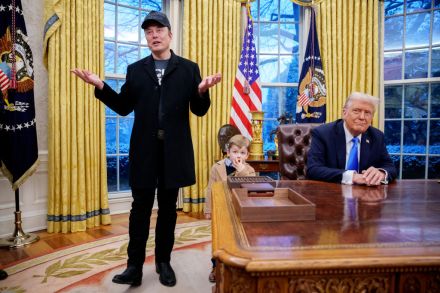
It’s hard to avoid the constant prophecies of doom about how AI is going to take our jobs – with some of these already being borne out. However, AI leaders such as Elon Musk have declared that the population will be supported by Universal Basic Income (UBI) instead, in which the government will financially support everyone through the huge revenues produced by AI. “Universal HIGH INCOME via checks issued by the Federal government is the best way to deal with unemployment caused by AI,” Musk posted on X earlier this year. Musk imagines that we wouldn’t be unemployed but rather liberated – UBI would allow us to live without the mundane tasks of everyday life, like making PowerPoint presentations, writing emails or finding synergies in our deliverables.

Spotlight

Featured economics news and data.

Cutting Britain’s giant welfare bill would be an act of kindness

Does having money really matter that much? There are those, usually with quite a bit of it, who want us to care less about materialism. But, unequivocally, money really does matter – not because of any status it supposedly brings, but for the freedom it buys: freedom to choose how we live and how we look after others. Considering this, it seems that the deep disillusionment with mainstream politicians in recent years stems from a protracted and ongoing period of stagnant living standards over which they have presided. But the truth is that the average person has not got poorer since the global financial crisis. They have got a little bit richer. Employment levels are still exceptionally high. And, both historically and internationally, we are a very rich country.

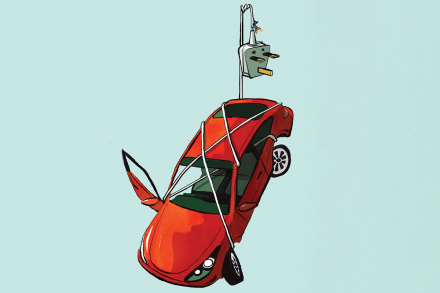
The war on Tesla

“Don’t buy Tesla! Don’t buy Tesla!” protesters were chanting in front of the brand’s showroom in my neighborhood in the northwest of Austin, Texas, at 10:30 on a Saturday morning. The anti-Tesla resistance – “nonviolence division” – was making a stand in the city where the company has its headquarters. Somewhere between 100 and 200 people waved US flags and carried signs. “Elon: You’re Fired,” read one of them. “Deport Nazi Musk,” said another. “When you ride with Tesla, you ride with Hitler,” one proclaimed. I saw as many swastikas as I’d expect to see at an actual Nazi rally. But these were resistance swastikas, I was told, so that made them acceptable. The protesters circled the Tesla dealership but didn’t actually enter company property.

Tariff haters don’t live in the Rust Belt

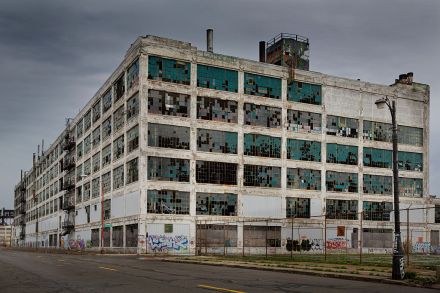
There is a vacant lot at the edge of downtown Philipsburg, Pennsylvania, my hometown. Three years ago, a handsome, sturdy brick factory building stood in that lot, albeit most of the windows were broken, as it had been abandoned for years. After it closed, the building became a favorite hangout for ne’er-do-wells, whose act of arson forced its recent demolition. For decades, though, the clothing factory employed thousands of people and made downtown hum, as workers crowded the restaurants and took care of errands on their lunchbreaks. They – along with the hundreds of people employed by a cigar plant on the outskirts of town – also bought houses and rented properties here and supported locally owned pharmacies, barbers, hardware stores, grocery stores, and the hospital.

Elon wants Trump to understand how a pencil gets made

“I-Pencil,” the fable-like essay by the economist Leonard E. Reed, remains one of the best introductions to the free market. It shows the ways in which the mass production of even simple things – like the humble pencil – involves the work of numerous people, most of whom do not know each other and who are all motivated at some level by self-interest. Above all, Reed shows that this extremely complicated process occurs without someone planning it from the top-down. This is, in short, the classic argument for market liberalism. But Reed’s essay also illustrates the follies of central planning or imagining that humans can somehow live an entirely self-sufficient existence.

pencil free trade
control chaos

Trump loves chaos. What happens when he loses control?

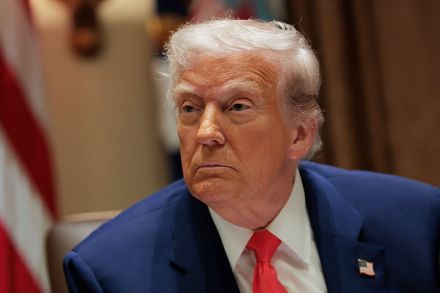
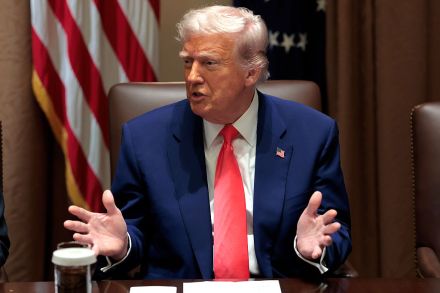
“Don’t be a PANICAN,” the President shared on his Truth Social account this morning, as the Dow was dropping 900 points. This is Donald Trump’s new word for his tariff critics, who he has grouped together as the “new party based on Weak and Stupid people!” There is another way, the President insists: “Be Strong, Courageous, and Patient, and GREATNESS will be the result!” It’s another post in a long line of all-caps messages shared by the President over the weekend. “ONLY THE WEAK WILL FAIL!” was Friday’s update. “WE WILL WIN. HANG TOUGH,” was Saturday’s inspirational message.

Trump is playing a high-stakes game of international poker

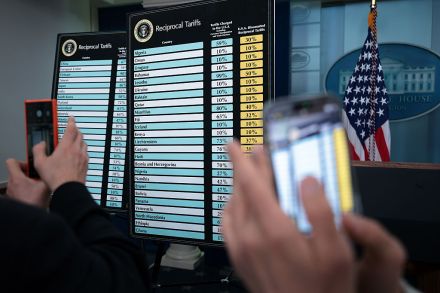
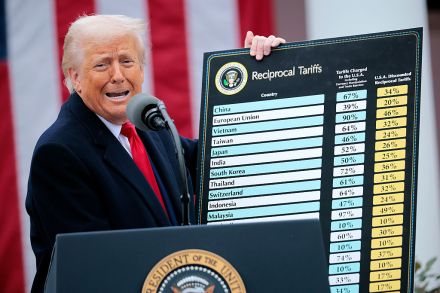
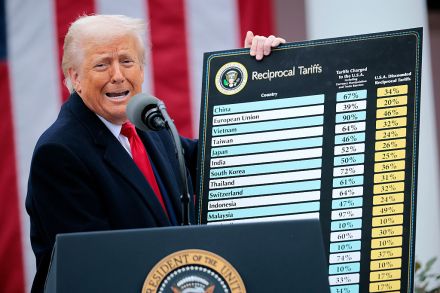
On what he called “Liberation Day,” President Trump announced a new tariff schedule. While the markets had been up in anticipation, they are down sharply, with the Dow dropping 2,200 points, perhaps surprised by the extent of them. Basically, Trump has laid tariffs equal to about half what other countries charge on US exports, inviting them to lower theirs in exchange for reciprocity. What the final result will be is anyone’s guess, for the Trump tariffs are chips in a high-stakes game of international poker. They have already had an effect. Canada has promised retaliatory tariffs while Israel has dropped all tariffs on US goods. A tariff is a tax laid on goods passing through a port.

trump

Give Trump’s tariffs a shot

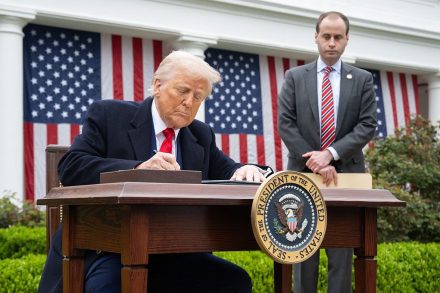
So the big question is: will it work? Will Trump’s protectionist policies, announced with some fanfare at a Rose Garden event at the White House yesterday, increase American prosperity? Or will they harm the economy?  Opinion on that matter is sharply divided. In one corner we have the free traders. They are wringing their hands and warning about higher prices, disruption of international trade and a trade war no one can win.  In the other corner are – what to call them? Most are not “anti-free traders” or “economic protectionists” (though some are).  Let’s call them “fair traders.” They like the idea of free trade – in theory. What they don’t like is the ethic of “free trade for thee but not for me.

tariffs grandeur

The grandeur of Trump’s tariffs

The first thing revealed by the high and wide-ranging new tariffs President Trump announced on “Liberation Day” is just how limited other recent American presidents have been in their thinking. Their ambition was to get elected and re-elected, then retire comfortably into a tranquil post-presidency. They would finish their days lending their names to charities and writing their memoirs (or rather, commissioning ghostwriters to fulfill their publishing contracts).   The idea of destroying and remaking the global economic order never crossed their minds. But Trump is thinking bigger. He doesn’t want to go to his grave as just another has-been ex-president.

Tariffs make sense in a world of predatory mercantilism

The classical defense of free trade, the one found in Econ 101 textbooks and Ricardo’s comparative advantage model, goes something like this: countries should specialize in what they can produce most efficiently, export the surplus and import the rest. Trade allows global output to increase, everyone gets richer and any government interference – like tariffs or subsidies – just gums up the works. But that’s not the world we live in. David Ricardo, the early 19th-century British economist who developed the theory of comparative advantage, illustrated it with a now-famous example: even though Portugal could produce both wine and cloth more efficiently than England, both countries would benefit if Portugal specialized in wine and England in cloth, then traded.

tariffs
tariffs

Could Trump’s tariffs damage the dollar?

Donald Trump says his tariffs are about liberation. But his aggressive turn toward protectionism may signal the start of a shift away from the foundations that have upheld American prosperity for decades. The dollar’s status as the world’s reserve currency has long enabled the United States to consume far more than it produces, run massive deficits without consequence, and project unparalleled geopolitical power. Trump’s decision to impose tariffs of up to 25 percent on imports could put all that at risk. When French President Valéry Giscard d’Estaing referred to the United States’s “exorbitant privilege,” he wasn’t talking about America’s central position in the post-WWII world order.

Is Trump’s tariff zeal beginning to wane?

The President can’t stop talking about his favorite word – tariffs – although this week his comments are having a new effect. Rather than plummeting, the stock market is showing signs of life – climbing by more than 1 percent – on the news that Donald Trump’s plans for “reciprocal” tariff seemed to have been scaled back significantly.  For weeks the President has been suggesting that come April 2, trade retribution would really kick in: any country that has an “unfair” trading partnership with the United States (Trump was even thinking of extending this to taxes like VAT) would see an equal import tariff imposed on the country.

Trump witkoff

Is the Trump Slump over?

Tariffs would destroy supply chains and drive up inflation. Elon Musk’s savage cuts would bring the government machine grinding to a halt. And chaotic policy making would drive investors out of the United States. As the Dow, the S&P 500 and the Nasdaq all fell sharply over the last month, there were plenty of factors driving the “Trump Slump,” as it became known on Wall Street. But hold on. Sure, equities have corrected. But right now it looks as if the rout is already over, and the markets have steadied again.  Last week, US stocks finished in positive territory for the first time in a month, chalking up modest gains over five trading days. On Monday, they carried on climbing, with the Dow up by more than 500 points, and the Nasdaq by more than 300.

Can Trump fix eggflation?

"You can’t make an omelette without breaking eggs" is a maxim attributed to leaders on both sides of the French Revolution. "Move fast and break things" is today’s equivalent, emanating from Silicon Valley and amply demonstrated by Donald Trump and Elon Musk in their approach to government and geopolitics. "You can’t make omelettes at all if you can’t afford eggs" might be the next variant: inflation and scarcity afflicting America’s favorite breakfast have become a major political issue. In brief, a dozen US eggs used to cost $2 or less but by January this year the supermarket price was $5 and rising – in some places $9 was reported, rationing had to be introduced and Mexican suppliers were spotted smuggling truckloads across the border.

eggs

Recession? What recession?

The stock market, traditionally a leading indicator, entered correction territory last week. But does that indicate that a recession is coming? Well, it’s an old saying on Wall Street that the market has predicted ten of the last three recessions. Markets hate uncertainty, and no one knows how President Trump’s efforts to use American tariffs to force our trading partners to lower theirs will turn out. But foreign trade is increasingly important to all countries, so it’s likely that, after some political Sturm und Drang, deals will be struck and international trade will continue the strongly upward path it has been on since the end of World War Two. By definition, a recession is two consecutive quarters of contraction.

shares

The US has entered a bear market

Could it be that Donald Trump actually wants a bear market now? At some point, one was bound to happen on his watch — after all, US equities weren’t going to keep up their stunning gains from the past two years for the rest of his term. A market correction was inevitable, and it seems we’ve already seen that, as the S&P 500 dipped into correction territory this week. And a bear market was almost certainly coming, given that there have been 27 of them in the S&P index since 1928. Hartford Funds provides a good summary here, showing that the average decline in a bear market is 35 percent, and they typically last 9.6 months. By contrast, the average bull market lasts 2.6 years, with prices rising 110 percent. Overall, bear markets occur about every 3.

bear market

Team Trump’s incoherent plan to change GDP measurements

If there is anything that all governments watch carefully, it is GDP growth. Without substantive and ongoing increases in what GDP measures — the total monetary value of all final goods and services produced in the economy over a specific time period — societies are in big trouble. That’s one reason why recessions usually result in electoral death for whoever holds office at the time. To accurately estimate total growth in an economy, everything that contributes to GDP must be measured. That presently includes consumer spending, private domestic investment, net exports, and, lastly, government consumption and spending. Now, however, Trump officials ranging from Elon Musk to Howard Lutnick are stating that we should consider excluding the latter category.

Can the MAGA coalition survive a recession?

The color red splashed across every news channel yesterday, as Donald Trump’s seemingly blasé attitude towards a possible recession wiped $4 trillion off the United States’s stock market. All day and all night, the airwaves were dominated by talk and speculation over the future of the US economy, as the President pushes forward (and pulls back) certain parts of his tariff agenda.  It’s the sheer uncertainty that has investors spooked, leading to one of the worst days on Wall Street in years. The details of this “period of transition” for the economy that the President alluded to are so vague, and so unclear, that you can make of the comments almost whatever you want.

recession

How likely is a Trump-induced bear market?

China doesn’t like tariffs, but big money in America dislikes them even more. If one thing has become clear amid the chaos of the past week, it’s that financial markets will be what constrain Donald Trump. China’s foreign minister, Wang Yi, criticized Trump on Friday for imposing tariffs, adding that major powers “should not bully the weak.” While people in Taiwan might find that statement a bit ironic, his stance on tariffs aligns with Wall Street’s reaction. The markets don’t like it. Last week, the NASDAQ Composite index, which tracks high-tech companies, entered a “correction” — a 10 percent drop from its peak. Only one of the Magnificent Seven tech giants, Meta Platforms (which owns Facebook), is up this year.

The economic blackout movement trying to stop capitalism in its tracks

For weeks, I’ve been seeing calls for a February 28 “economic blackout” spread across my social-media feed like dandelion tufts in the wind. From midnight on February 27 to the following midnight, anyone participating in the blackout should avoid spending money at Amazon, Walmart or Best Buy. Do not buy fast food or gas, says “the People’s Union,” which is organizing the blackout. Don’t shop at major retailers. If you have to shop, make it only for essentials, like food to feed your kids, and emergency supplies, and only do it at small, local businesses. It’s possible I could participate in the blackout by accident, but I wouldn’t ever do something like this willingly. Obviously, I’m not the target audience.

oligarchy tech capitalist pigs

How Trump’s Mexico and Canada tariffs could change trade history

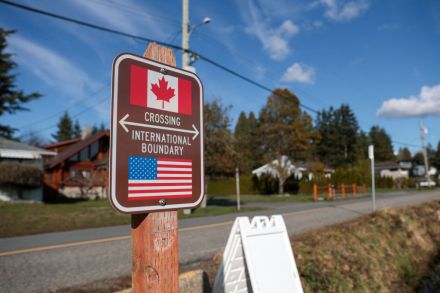
President Donald Trump has set Saturday as the deadline to impose 25 percent tariffs on Canadian and Mexican imports. From the Oval Office earlier this week, Trump explained that the move aims to push the US’s neighbors to take swift action to curtail illegal immigration and fentanyl, as well as to address growing trade deficits. The tariffs may or may not include oil, with Trump saying Thursday that determinations were still being made. Following Trump’s tariff feud with Colombian president Gustavo Petro Sunday, with the Trump forcing his Colombian counterpart to welcome deportees, his latest move signifies an expansion of his revamped “FAFO” foreign policy.

Is it worth it for Trump to buy Greenland?

"The art of the deal" is President Trump’s much-vaunted modus operandi as well as the title of his 1987 bestseller. But how smart would he be to make an offer for Greenland to the Danish government? Leaving aside issues of military sites and future unfrozen shipping routes, would the currently still-frozen north Atlantic island be worth a rich price for its mineral deposits alone? I consulted an intrepid investor who spent six years there prospecting for tantalum, a "transition metal" used in capacitors for mobile phones. His answer was not encouraging. There’s no disputing the potential to find everything from gold and uranium to rare earth elements such as neodymium and dysprosium, in demand for advanced electronics. But the operating difficulties are truly formidable.

Greenland