Society

Marine Le Pen’s Muslim headscarf ban is popular, not populist

Marine Le Pen has promised to ban women wearing Muslim headscarves if she becomes president next year. The leader of the National Rally declared on X: “I will submit to the French people, by referendum, a bill to combat Islamist ideologies with numerous powerful measures, including the banning of the Islamist headscarf in public spaces.” Le Pen may be out of step with the rest of the political class but she is speaking for a majority of the people France has led the way among European countries on the issue of conservative Islamic dress. In 2004, for example, a law was passed prohibiting the wearing of conspicuous religious symbols in schools. It applied to Christians, Jews and Muslims, but France was accused of using the bill to persecute Islam.

We are ignoring the biggest threat the world faces

In my mid-twenties, my one-bedroom in Astoria, Queens, developed a roach problem. I don’t mean the odd single scurry disappearing irretrievably beneath the fridge, either. Oh, it started that way. But I didn’t take measures when the situation was manageable because roaches gave me the creeps, and so many activities beckoned that were much more fun. Between a small shelf and the kitchen wall I stored spare brown paper bags – from which I began to detect a rustling. At some point, the bags began to move. Beside them, the wall gathered an undulating shadow that I trained myself never to look at directly; like Faye Dunaway in Little Big Man, I would “avert my eyes at the necessary moment.” One night a friend came to dinner and stared at that wall in frank revulsion.

‘Clean cocaine’ isn’t worth it

Cocaine has a tendency to get the press all aflutter. So it's probably no surprise that the Daily Mail had a splash earlier this summer with a feature about a legal energy supplement compared – at least in the headline – to “clean cocaine.”  What on earth is this product, I wondered. It turns out that the reality is slightly less dramatic than the tabloids might suggest: Wildkraut – also known as Energy Sniff – is a powdered supplement from Austria which combines the dosage of caffeine you might otherwise get from a Red Bull with some esoteric alpine herbs. The one thing that it does have in common with cocaine is that it is intended to be snorted.  As someone more than partial to energy drinks, I was immediately curious.

clean cocaine
cripple

Call me a cripple

In case you missed it (well done, if so), last week Will Self wrote an extraordinary rant on Substack attacking various journalists for how they wrote about Jason Arday and demanding they be held responsible for his death. It reminded me of one of those dogs in a pub that starts barking at some imagined threat to its owner, then gets carried away with the excitement of its own barking until it totally loses its mind and has to be taken outside to calm down.

Ali G and the death of comedy

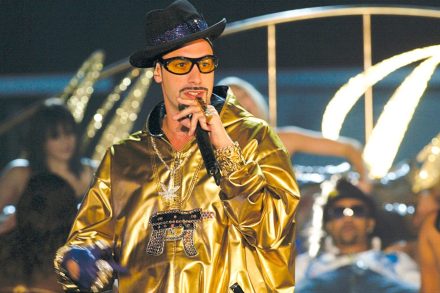
Ali G: Who Iz I? is set to hit cinema screens next month. The return of this bling-bedecked denizen of the West Staines Massive, first seen on TV in 1998, is a disquieting symptom of our century’s static culture. Back in 1998, it would have been inconceivable for the big new comedy film to have been a revival of TV characters from 1971 – On The Buses or The Liver Birds. Today, along with Ali G, we are also blessed by Alan Partridge and Have I Got News For You, even older comedy institutions. And there are endless reiterations of old shows and formats: Star Trek, Spiderman and similar, Blankety Blank, Bergerac. Mass culture has essentially stopped.

milo yiannopoulos

The unlikely defenders of Milo Yiannopoulos

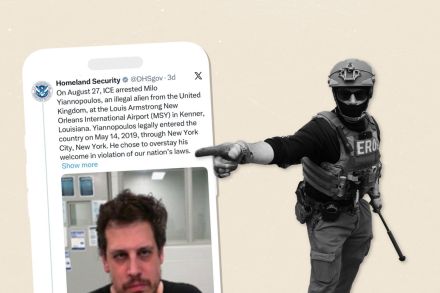
Immigration and Customs Enforcement agents detained and deported British provocateur Milo Yiannopoulos last week. The official X account of the Department of Homeland Security posted his unflattering mugshot online, which has roughly 24 million views as of this writing. You would never guess, looking into that defeated face, that Yiannopoulos had been one of the earliest supporters of the President whose administration ultimately sent him packing.   Yiannopoulos built his brand as a habitual line-stepper who danced through the highest halls of right-wing celebrity, pioneering political provocation through the power of the internet.

The trouble with humanities

Sociology is an academic discipline that I generally steer clear of. It seems as full of trendy guff as Education. But there is a minority report, a subculture that questions progressive orthodoxies. A new book co-written by Jennie Bristow and Ellie Lee called Growing Up in the Culture Wars, out in the US in January, is in this frail tradition. They offer some excellent insights into what has gone wrong. One insight is that mainstream sociologists have become confused about the idea of normality; it has become seen as an oppressive threat. They acknowledge that there is a healthy sociological tradition of criticizing “normativity,” meaning the way in which societies reinforce the status quo by presenting it as natural.

humanities

Does it matter that Jason Arday’s memoir is made up?

Bloomsbury’s former editor-in-chief Alexandra Pringle popped up on British television this week to argue that the late Jason Arday’s publisher could not have been expected to fact-check his book Great and Unfortunate Things. The argument she made raised a lot of eyebrows and has precipitated a lot of self-righteous ridicule online.   The problem with Arday’s book is that a great deal of what he says in it seems to have been codswallop “I think questions of truth and accuracy in memoir are very, very blurred because they are subjective accounts of a bit of someone’s life,” she told listeners. “A memoir is not an autobiography, and it’s important to make the distinction between the two.

Harry and Meghan deserve a second chance

A little while back I came across a copy of Ted Hughes’s Laureate poems which had an inscription to some friends. Inside was an unpublished squib by the late poet laureate which read: “The Royalist/ Is afraid/ The Queen’s a pin/ In a hand-grenade.” If I understand the poet’s meaning correctly then I count myself such a royalist. I dislike criticism of the royal family, especially of the monarch. When it happens it feels too much like people hammering at something fundamental – far more fundamental than the critic appreciates. If criticism is to be made it seems to me that it should be done privately, so as not to disturb the fragile equilibrium of the rather magical arrangement we have on these islands.

Why the world loved Dolly Parton

Dolly Parton was all-American. Born into the dirt-poor Tennessee hills of the Great Smokey Mountains, her upbringing reflected the indigent nature of country life in the South, even as the urban and suburban United States reaped the rewards of peacetime. Her father was, among other things, a tobacco farmer but struggled to support his wife and 12 children, all but one of whom survived infancy. It was a childhood steeped in hard work, mountain wisdom, and most important of all, the Bible. Dolly Parton’s fame and fortune were built on talent, toil, personality and moral character But unlike some country singers, Parton did not wallow in her hardscrabble childhood.

Is short-form video rotting our brains?

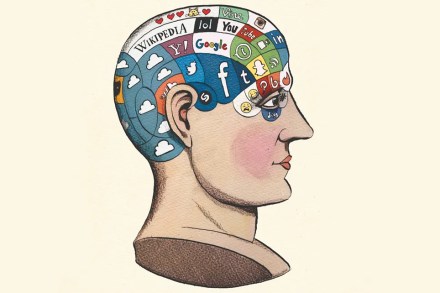
When I read that a new scientific study had shown impacts on the brains of those watching short form videos I was delighted. As someone who doesn’t have a television, doesn’t let my daughter use any screens and refuses to watch videos – I always ask friends, “is there a transcript you can send me?” – I felt vindicated. Perhaps now I could gloat I told you so, videos are bad to everyone I know. Participants were shown short videos they liked they “exhibited significant deactivation” in parts of their brains responsible for “cognitive control” – demonstrating a mechanism which might mean that short-video consumption makes people prefer instant gratification and lowers their self-control. Is this backed up by other studies?

Who should pay for Meghan and Harry’s security?

It isn’t long now until the joyous day that Harry and Meghan once more make Britain their home, but several aspects of their return are still clouded in mystery. We have no idea, for instance, where they are going to be living – although the Cotswolds have been mooted. Once they arrive there, there is also the rather vexed question as to whether their no doubt hugely expensive security is going to be privately funded or the taxpayer’s burden. Two former home secretaries have gone public to argue that there should be at least some level of taxpayer-funded protection for the Sussexes. This may not be a wildly popular perspective but can at least be justified on humanitarian grounds.

Cambridge’s Farah Ahmed: study engineering ‘to produce weaponry for jihad’

Cambridge University’s education faculty – former home of Jason Arday – has appointed as assistant research professor a woman who wrote that Muslims should study engineering and computers “to produce advanced weaponry for Jihad in order that the deen [Islam] may dominate over all other deens.” This is the fourth in our series of articles about Farah Ahmed, a former activist in the racist, extremist and separatist group Hizb ut Tahrir, now banned as a terror organization, who has been given a senior role by Cambridge training the future leaders of the teaching profession.

I want to be a good father – like Machiavelli

Dante’s Beach, Ravenna When Machiavelli was tortured, then banished from Florence in 1513 to his modest farm in the Tuscan countryside, in the afternoons he used to “sink into vulgarity,” as he put it, and play cards and backgammon with the local men in the tavern next to his small house.

Is the ADHD myth unraveling?

Last week, a documentary called The Great ADHD Myth aired on British television, which took a long overdue look at attention deficit hyperactivity disorder. The program has since faced a significant backlash online and a tidal wave of complaints to Ofcom (Britain’s version of the FCC). Perhaps this says more about ADHD than it does about the documentary. Because as the program revealed, many scientists now see the condition as more of a “social construct” or “identity marker” than a real illness. At the center of this row, and one of the star witnesses of the documentary, is Dr Sami Timimi, a Fellow of Britain’s Royal College of Psychiatrists and a consultant child and adolescent psychiatrist.

The myth of the Third World

America is rediscovering the work of Spectator writer Shiva Naipaul. His 1980 book about the Jonestown massacre, Journey to Nowhere: A New World Tragedy, was reissued by Outsider Editions last month. There has also been much talk recently about so-called “Third-Worldism,” a quasi-ideology that some on the right blame for the West’s ills. The Third World is a concept about which Naipaul had much to say. Below is an essay he published in The Spectator in 1985. We do not see people as they are anymore. Instead, we see – or learn to believe that we see – those ghostly entities we call “relationships.” There’s me, there’s you – and, somewhere in the middle, there’s our relationship.

third

The questions Cambridge still has to answer about Jason Arday

If poor Jason Arday killed himself, it will be necessary to work out why. To do so, it will help to know why he resigned his professorship. It seems highly unlikely he resigned if Cambridge University did not want him to. It had defended him in public throughout, after all. Yet if he had been confident of Cambridge’s continuing support, why did he sacrifice the benefit of its protection? If Cambridge suggested to him that its protection would, for whatever reason, shortly cease, what caused its change of mind? What a terrible shock for him if the institution which had raised him so high was now ready to cast him out. Is the institutional attack on the press over this matter a deflection from the truth?

cambridge jason arday

Enjoy Anglican priests while you still can

Something amazing happened as I was walking my 91-year-old mother through Ledbury: we saw a bobby on the beat. He was even in a helmet, not a baseball cap. “A real policeman!” squealed various people, reacting as they might to a steam train or an Austin-Healey, reminders of more distinctive days. The same surprise may soon be evident when we see dog collars. A new scheme, oversight ministry, adopted by some Church of England dioceses, is taking vicars off the streets. Instead of being front-line clergy they will become “oversight ministers” and “area deans,” managers of lay, unpaid “focal ministers.

anglican priests

Dear Mary: what is the ‘proper’ way to shoot grouse?

Q. I have a good relationship with a neighbor. She has a labrador and I have a Jack Russell. If I cannot walk my dog she will do it and vice versa. Yesterday my daughter visited unexpectedly and was at the top of the house when she heard my neighbor open the front door and call my dog for his walk. Five minutes later she heard the dog being returned to the house. I don’t want to fall out with my neighbor but I would always walk her labrador for at least 45 minutes and my dog needs a proper walk every day. How should I proceed? N.B., Stockbridge A. Fitness trackers for dogs are all the rage – attached to the collar, they count steps and provide GPS tracking.

grouse

Will the heatwaves make this year’s French wines better?

It has been a punishing summer in France. Heatwaves, drought and forest fires have driven away tourists and made life hell for firefighters. The nation’s winemakers have also had an anxious time of it, but there is now cautious optimism that the exceptional weather may work in their favor. Since late May, France has been swept by a succession of heatwaves as well as a series of destructive wildfires. The worst of these was in the Gironde, west of Bordeaux, which lost 42,000 hectares to flames. Swathes of Provence have also been ravaged by fires in recent weeks. As a result of the fires and the heat, France’s Ministry of Agriculture decided to postpone its annual grape harvest forecast from early August to early September. The announcement was welcomed by the industry.

heatwaves