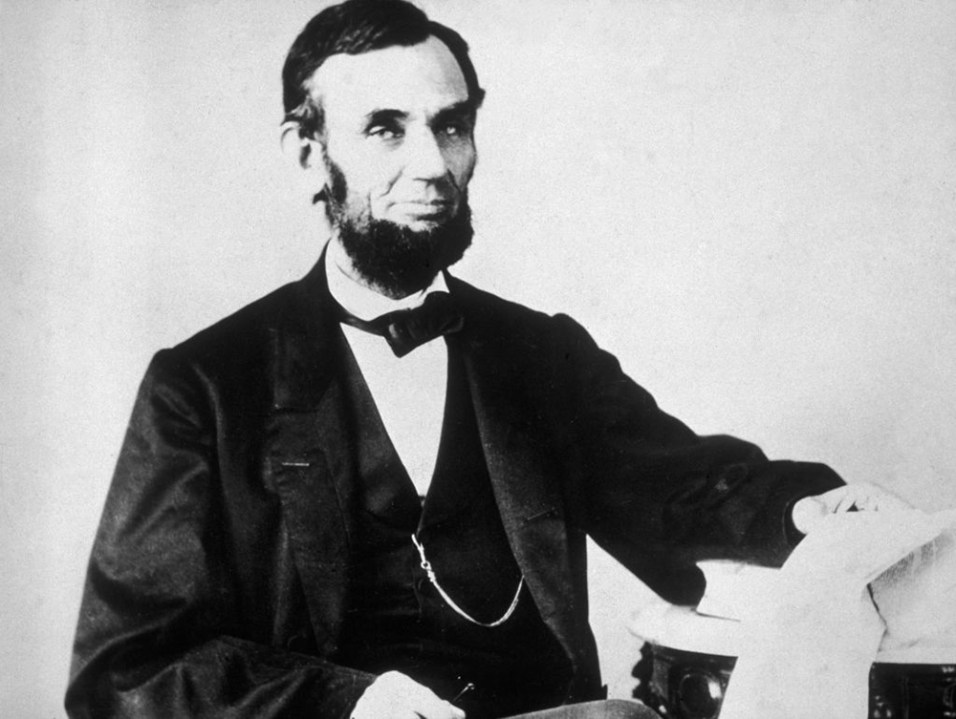


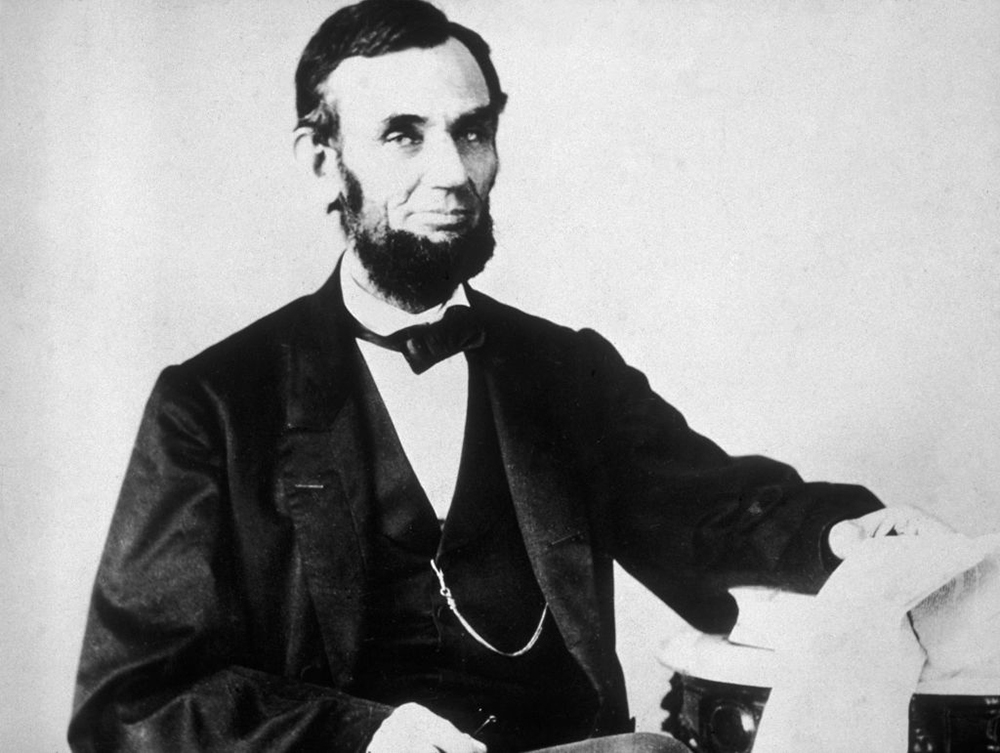
If Americans are feeling gloomy as the nation’s 250th birthday approaches, they might look back to what Abraham Lincoln thought about the condition of the country in 1838 to get some perspective on present discontents. That was the year a young Lincoln, then just a state senator, delivered a speech at the Young Men’s Lyceum in Springfield, Illinois, on “the perpetuation of our institutions.” Lincoln perceived trouble ahead, but not exactly of the sort that would lead to the Civil War.
He was already concerned about the lawlessness arising from racial strife, and there’s a hint of his future insistence upon the truth of the Declaration of Independence’s assertion that “all men are created equal.” “In any case that arises, as for instance, the promulgation of abolitionism,” he said on this occasion, “one of two positions is necessarily true; that is, the thing is right within itself, and therefore deserves the protection of all law and all good citizens; or, it is wrong, and therefore proper to be prohibited by legal enactments…”
‘The perpetuation of our institutions’ has never been something we could take for granted
But in the Lyceum address Lincoln warns of a danger arising from “outrages committed by mobs” even when race and slavery were not involved. Such outrages “have pervaded the country, from New England to Louisiana… among the pleasure-hunting masters of Southern slaves, and the order-loving citizens of the land of steady habits” and the threat was “common to the whole country.”
Lincoln thought the American people would lose confidence in government if it were feckless in the face of mob violence. If government at any level couldn’t maintain order, why should the public feel any attachment to it? And if Americans felt so alienated from their institutions of government, what was to stop them from siding with anyone who might come along and try to overthrow those institutions?
He added two psychological insights. First, eventually there would arise ambitious men who desired to overthrow the existing order simply because there was no glory or greatness to be had in merely maintaining what others had built. Lincoln even acknowledges that America’s revolutionary founders were motivated by the desire to do something daring and new. His second psychological point is that as the emotions associated with the Revolution and the men who fought it fade, no similarly strong attachments to America will replace them.
Again, he doesn’t romanticize. His portrait of human nature is not flattering: “The jealousy, envy, and avarice, incident to our nature, and so common to a state of peace, prosperity, and conscious strength, were, for the time” – during the Revolution – “in a great measure smothered and rendered inactive; while the deep-rooted principles of hate, and the powerful motive of revenge, instead of being turned against each other, were directed exclusively against the British nation.”
“And thus,” he continues, “from the force of circumstances, the basest principles of our nature, were either made to lie dormant, or to become the active agents in the advancement of the noblest cause – that of establishing and maintaining civil and religious liberty.”
Lincoln’s answer to the problem he’s set out in such stark terms is simple and, in this speech, not at all persuasive: he calls for reverence of the law to become “the political religion of the nation,” and he means that quite literally. More than 20 years later, Lincoln as president will speak of the principles of the Declaration of Independence with such eloquence, and in such harrowing circumstances of civil war, that they do take on an aura of sanctity, or something very close to it. Today’s debates about “credal nationalism” may invoke Thomas Jefferson and the declaration he drafted, but it’s Lincoln who more than anybody else made Jefferson’s words scripture.
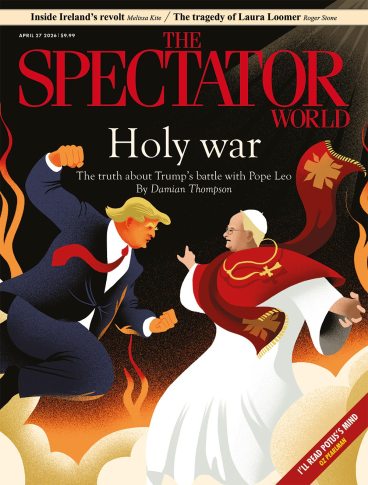
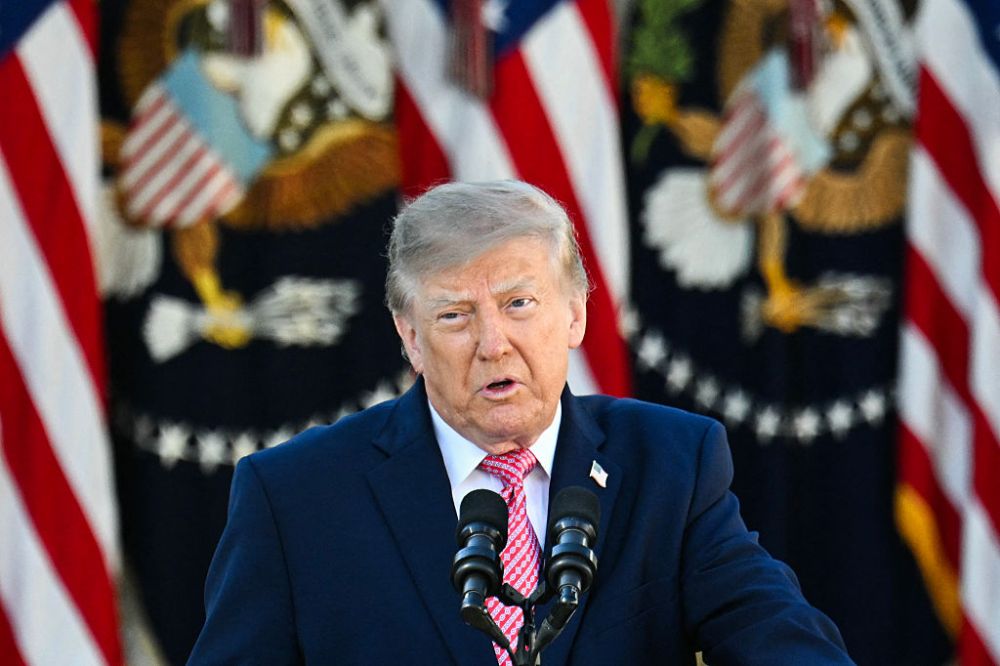
Today that’s well known, in no small part thanks to the intellectual labors of Harry V. Jaffa, known on the American right (and beyond) as the patriarch of the “West Coast Straussians.” Their institutional flagship, the Claremont Institute, is today one of the most influential think tanks aligned with Donald Trump and has played a notable role in staffing his administration – much to the consternation of progressives who decry Claremont for its scholars who are anti-immigration and, in the left’s telling, “Caesarist.”
Of course, Lincoln was also accused in his time, and after, of being a Caesar, not least by the man who murdered him. Lincoln’s own words gave rise to suspicion for Edmund Wilson, who in 1962 wrote in Patriotic Gore: “In that speech made so long before in the Young Men’s Lyceum in Springfield, he had issued his equivocal warning against the ambitious leader, describing this figure with a fire that seemed to derive as much from admiration as from apprehension.” Yet Lincoln was a psychological realist, not a political Caesarist, and the scenario he describes in the Lyceum speech depends on popular alienation as much as singular ambition.
When progressives read that speech today, they’re likely to think of Trump and January 6, while conservatives think of the mobs mobilized against law enforcement in the name of George Floyd or Renée Good. What’s more, “Caesar” may himself be a mob, and its organizers claim unlawful power for themselves by appealing to what in their eyes is the most righteous and holy of causes. Political religion isn’t always an obstacle to Caesar.
America may be divided and demoralized in different ways today than in the past. But “the perpetuation of our institutions” has never been something we could take for granted. The country still endures – as Adam Smith, whose Wealth of Nations also turns 250 this year, once wrote, “There is a great deal of ruin in nation.” Ours has a capacity for regeneration, too, if we don’t succumb to apathy.





Comments