Society

The real reason Birmingham isn’t safe for Jews

The decision to ban Maccabi Tel Aviv fans from attending their Europa League game against Aston Villa next month has led to a major row about two-tier policing. Why exactly is the arrival of several thousand Israelis in Birmingham expected to precipitate a major, violent riot? And shouldn’t West Midlands Police, rather than advising the local council that the ban should go ahead over safety concerns, have simply pledged to come out in force to allow the game to proceed as usual? The focus on the police and the ‘optics’ here has the whiff of displacement activity The outrage and apparent shock at this decision has been oddly fulsome. Sir


Why does the Met think the Star of David is offensive?

Two years ago I started wearing a Star of David necklace, for the first time in my life. The regular weekend hate marches had led to many Jews feeling so intimidated that they no longer felt able to be in central London on Saturdays. Added to that, the more general explosion in anti-Semitic incidents was creating an atmosphere in which many were worried about showing their identity as Jews. It has long been clear that the mantra ‘anti-Semitism has no place on the streets of London’ – or anywhere else – is nonsense My reaction to such hate has always been to try to turn it on its head. So

In defence of the rules-based order

The last time I saw my cousin, the former Tory MP Danny Kruger, I found myself trying to ginger him up a bit. I said, which I thought then and thought now – and which I can’t think it is betraying a confidence to say publicly – that the low state of the Conservative party was a bummer for those who sat on its benches, but also an opportunity for the likes of him.   After years of drift, venality, lurching ideological changes and idea-free opportunism, they had the chance to rebuild. Danny looked well placed to take a leading part in that project. Tory intellectuals are thin on the ground these days, and he is one. He’s certainly the only current MP who once

Anti-Jewish sentiment has poisoned our police

Amid the grim fluorescence of a police interview suite, a glimpse of where we are and where we are heading. The place is Hammersmith police station, the date August 30, and the time a little after 2 a.m. An unnamed lawyer in his 40s, whom we are told is Jewish, has been detained for allegedly repeatedly entering an area set aside for anti-Israel protestors.  He was there, he says, as an independent legal observer and was documenting a demonstration outside the Israeli embassy in Kensington and the police response thereto. Since October 7, 2023, Jewish and pro-Israel groups have grown concerned at the Metropolitan Police’s handling of pro-Palestine marches. This

Only Harry Potter can charm Devon's drivers

As a title, Harry Potter and the Potholes of Devon wouldn’t survive the editor’s pen – but sometimes life is more spellbinding than fiction. Just ask the villagers of Lustleigh, a few miles from where I live on Dartmoor, who have J. K. Rowling’s franchise to thank for making one of the lanes of their chocolate-box home usable again.  For years, Lustleigh residents have been cursed by gaping holes in the road surfaces. But last week the TV company HBO, which is filming in the village for its adaptation of the young wizard’s exploits, was forced to do what Devon County Council apparently couldn’t and fill in the holes on

Why football fans stopped watching Match of the Day

That hoary aphorism ‘be careful what you wish for’ may be a hackneyed one, but there’s nothing football pundits like more than a sagacious cliche. I dare say Gary Lineker used it on more than one occasion during his long tenure as Match of the Day presenter. And many people were glad and relieved when the lavishly-remunerated pundit was forced to relinquish that role in May, following a stream of unwise political interventions on social media. But, as the saying goes, they may now regret that their wish came true. The new direction taken by Match of the Day represents the thin end of the wedge The new incarnation of

How did faith shape Thatcher?

38 min listen

How did faith shape Margaret Thatcher’s politics? To mark the centenary month of Margaret Thatcher’s birth, Damian Thompson introduces a conversation between the Spectator’s Natasha Feroze, Thatcher’s biographer Lord Moore and Bishop Chartres who delivered the eulogy at her funeral. They discuss her relationship with faith, how both her family background and her training as a scientist influenced her beliefs and her understanding of the relationship between wealth and society based on Jesus’s parables. Plus – what would Thatcher have made of the much talked about ‘Christian revival’ in the West? Produced by Patrick Gibbons and Natasha Feroze.

The flag wars have come to the Netherlands

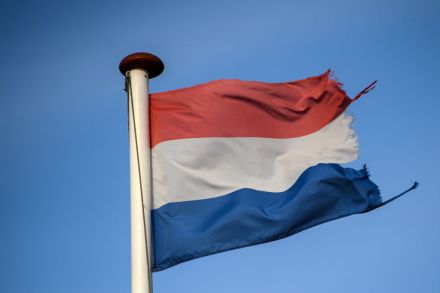
The small community of Uithoorn, just outside Amsterdam, has unexpectedly found itself on the front line of Europe’s flag wars. Late last week, Dutch national flags – in bold red, white and blue – began appearing across the town. Their purpose? Perhaps a spontaneous show of resistance to a planned asylum centre earmarked for the suburb. Or perhaps something more calculated: a shrewd piece of political theatre ahead of the country’s elections on 29 October. No one can say for sure. But the response was immediate. With Pavlovian swiftness, the town council began removing flags from public spaces – although they left those flying from private property untouched. The council

How sumo wrestling bounced back

Sumo is the featured attraction at the Royal Albert Hall this weekend in a rare foray for the ancient sport outside of its spiritual home of Japan. The five-day tournament started on Wednesday and features 40 rikishi (wrestlers) (about six-tonnes’ worth) squaring off in a specially constructed dohyo (ring). Reinforced chairs and upgraded toilets have been installed for the exclusive use of the 28-stone ‘naked ambassadors’ (as they are being called here in Japan). Like test cricket, sumo wrestling is set apart and sustained by its antiquity It has been a huge success so far. Tickets sold out long ago but can be picked up for hundreds of pounds on

The farce of the Maccabi ban

Tel Aviv Bemusement seems to be the main emotion in Tel Aviv following the UK’s mad ban on Maccabi fans. A Maccabi supporter sipping an espresso in bustling Dizengoff Square doesn’t get it. ‘You’re keeping the fans out because you’re worried they’ll be attacked?’ He screws up his face. ‘You should stop the attackers, not the fans.’ He has a point. Britain seems to have rustled up a novel way to deal with Jew hatred – just hide away the Jews. No Jews, no anti-Jewish mob. No Maccabi fans, no violent outbursts of Israelophobia from that unholy, unhappy union of Islamists and leftists who think Israelis are demonic. Problem solved. 

The battle for free speech in universities has only just begun

Earlier this week at HMS President – the Royal Navy Reserve’s base on the Thames – the government’s free-speech tsar, Arif Ahmed, delivered a quiet but unmistakable warning to the higher-education sector. Academic freedom, he told an audience of academics, politicians and policymakers gathered for a conference on the future of open inquiry, could not be regarded as secure merely because Parliament had legislated for it. It felt oddly appropriate that the message was delivered on the famous Tideway, just ‘downstream’ of Whitehall. At Durham University, ajob advert posted this month still contains requirements that appear to breach the new guidance At first glance, his claim might sound counter-intuitive. After

Piers Morgan: Woke Is Dead with Andrew Doyle

Watch Piers Morgan in conversation with Andrew Doyle to discuss Piers’s provocative new book, Woke Is Dead, and share their unfiltered views on the state of the world today, exclusively for Spectator subscribers. Rather than celebrating the death of woke, Piers’s book advocates for the return of common sense and a less divided, more sensible society. Piers Morgan: Woke Is Dead with Andrew Doyle will explore why Piers believes woke culture is on its way out, what a return to common sense might look like, and how the cultural tide is shifting across politics, the media and everyday life.

Banning Israeli football fans from Villa Park is a disgrace

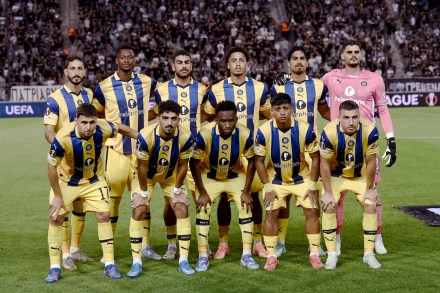
The message could not be clearer: Israeli football fans are not welcome in Birmingham. I am no lover of football, but that doesn’t stop me feeling outraged and sickened by Maccabi Tel Aviv fans being told not to attend their Europa League game against Aston Villa next month. The seats at Villa Park that had been allocated to the Israeli visitors for the fixture will now remain empty. In Amsterdam, Maccabi supporters were attacked by anti-Semitic mobs The appalling decision to tell fans of the Israeli club that they are not permitted to attend the 6 November game – meekly accepted, of course, by West Midlands Police and Villa –

The harrying of a Met firearms officer

‘No case to answer’. Those were the four words that finally ended an outrageously protracted legal and disciplinary case against a police firearms officer who fatally shot a man during an operation targeting a violent organised crime network in north London.  The firearms officer, whose name has not been revealed and is referred to only as W80, had to wait almost a decade to hear the chair of a misconduct panel utter those words. But the case should never have been brought in the first place, and its inevitable outcome is confirmation the police misconduct system needs urgent reform. The firearms officer, whose name has not been revealed and is referred

Nick Boles, James Ball, Andrew Rosenheim, Arabella Byrne & Rory Sutherland

27 min listen

On this week’s Spectator Out Loud: Nick Boles says that Ukraine must stand as a fortress of European freedom; James Ball reviews If Anyone Builds It, Everyone Dies: The Case Against Superintelligent AI, by Eliezer Yudowsky and Nate Sores; Andrew Rosenheim examines the treasure trove of John Le Carre’s papers at the Bodleian; Arabella Byrne provides her notes on skip-diving; and, in the battle of the sexes, Rory Sutherland says the thing to fear is not feminisation, but emasculation. Produced and presented by Patrick Gibbons.

Who’s to blame for Britain’s slowing economy?

The economy is slowing down. GDP grew 0.3 per cent in the three months to August. As ever, services propped up Britain, growing by 0.4 per cent, while the production sector shrank by 0.3 per cent, according to Office for National Statistics data. We could have news of a stagnating economy confirmed just in time for Rachel Reeves’s Budget That growth over the last three months though was helped by a bumper June with the economy flat over the latest two months. If things don’t improve in the September data, then we could have news of a stagnating economy confirmed just in time for Rachel Reeves’s second Budget. Inflation too,

Nato is far too complacent about Russian drones

Something is afoot in Nato’s airspace – but the alliance’s complacent response to the various incursions is rather troubling. In recent weeks, suspicious drones have intruded into the jurisdictions of Belgium, Germany, Denmark and Norway; identifiable Russian drones were tracked over Romania and shot down over Poland. Three Russian Mikoyan MiG-31 fighters violated Estonia’s airspace and loitered for 12 minutes before retreating when Italian F-35 aircraft were scrambled to intercept them. Putin is testing the alliance, pushing it little by little, upping the ante by increments to see what response he finds You might think that these various incidents would shake Nato’s secretary general, Mark Rutte, out of his usual

Georgia Toffolo: In defence of my husband James Watt

Rough justice Sir: The Church Commissioners’ plan to establish a £100 million (rising to £1 billion) fund for ‘reparative justice’ is indeed ‘the most egregious example of lanyard Anglicanism’ as your leading article says (‘Laud’s prayer’, 11 October). It is deeply flawed in conception, substance and process – and is especially ill-judged when parish clergy are atrociously paid and many parishes face an existential crisis. The critique made by the Policy Exchange paper ‘The Case Against Reparations’, written by Professor Lord Biggar, Dr Alka Sehgal Cuthbert and me, is reasonably well known. What is less appreciated is that since at least May last year, the Commissioners have known they have