Scotland

The nationalists’ vaccine fallacy

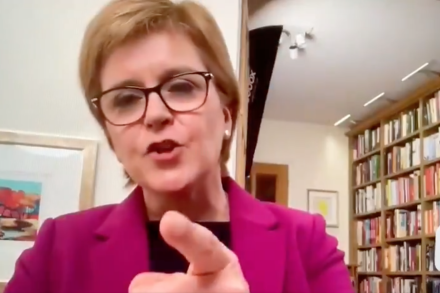
The trouble with nationalism of any and every sort is that, in the end, it eats your brain. As evidence of this we may simply note Nicola Sturgeon’s assertions this week that the success of Britain’s vaccination programme should in no way encourage the thought an independent Scotland might have struggled to match this happy development. According to Sturgeon, there is 'absolutely no evidential basis to say Scotland would not have vaccinated as many people as we’ve vaccinated right now' if it were an independent state. This is, to use the technical term, bollocks on a tartan pogo-stick.
Pollster consistently overstated Scottish independence support

Few events are as eagerly anticipated in Scotland as the release of a bombshell new poll. Unionists and nationalists eagerly refresh their Twitter feeds at the anointed hour, awaiting to praise or castigate the company in question for its latest figures on the all important question of independence. For both sides know the figures will be seized on by the media as 'proof' that their side is winning, their cause is just and their campaign's triumph inevitable. One poll that made more headlines than most was a Savanta ComRes survey in December which found that support for a 'Yes' vote to Scotland leaving the Union was polling at 52 per cent compared to 'No' on 48 per cent.

Scotland’s Mean Girls election

Presented for whatever is the opposite of your edification, an exchange between the leaders of Scotland’s main political parties. The setting is Tuesday night’s Holyrood election hustings, hosted via Zoom by the National Union of Students. We begin with Nicola Sturgeon accusing Scottish Conservative leader Douglas Ross of being inconsistent on who gets credit for the Covid vaccination programme in Scotland. Nicola Sturgeon: Make your mind up. Douglas Ross: No, I was saying your rollout was poor. Your rollout was poor. NS: But the point is, the UK chose to— DR: But answer the question— It’s like watching a very dressed-down remake of Mean Girls. Totally not fetch.

Why we need a new Act of Union — and what to put in it

For the last century the United Kingdom has regarded itself as a voluntary union of four home nations. Consent, rather than the force of law, has been the glue that has held us together. This is not normal. Most countries hold themselves together with something rather more robust. In Spain, the courts, applying the constitution, ruled that it was unlawful for Catalan separatists even to hold a vote on Catalan independence. In the United States the position would be even stricter. Its leading case on the law of secession was admittedly decided in the immediate aftermath of the US Civil War, but the US Supreme Court’s authoritative decision on the matter was unequivocal.

Watch: Matt Hancock factchecks SNP health claims

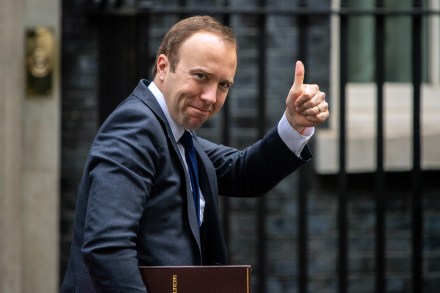
At health questions in the House of Commons yesterday, Angus MP Dave Doogan popped up to compare the funding in health services either side of the border. Sporting a well groomed lockdown beard, the SNP man came out with a nice line of boilerplate party rhetoric: The Secretary of State knows that the SNP has committed to increase NHS funding in Scotland by 20%. Will he commit to a similar uplift for NHS England in order to help drive the recovery of the NHS after coronavirus and truly build back better?

Why a ‘Unionist alliance’ will never work in Scotland

When a commentator first referred to the ‘Ulsterisation’ of Scottish politics, he was jumped on by people keen to take offence at the parallel. But whilst Scotland does not stand on the brink of civil war – and the coiner of the phrase did not claim otherwise – there is no disputing that Northern Ireland offers an insight into what politics looks like when it gets polarised around the constitutional question.

Why Scotland loves Nicola Sturgeon

Nicola Sturgeon has two houses and they could hardly be more different. Her official residence, Bute House, in the heart of Edinburgh’s New Town, is a Robert Adam designed early 19th century masterpiece with all the grace and elegance appropriate to the office of First Minister. Her life-size portrait hangs on its walls. Her other home — her own — is an anonymous detached modern house on an ordinary estate in an unglamorous Central Belt town. Only the Neville Johnson bespoke bookcases and, it is said, a £1,000-plus coffee maker mark it out as unusual in this relatively deprived part of Scotland. Sturgeon and her husband, SNP chief executive Peter Murrell, come and go and the neighbours hardly notice anymore.

When will Boris next visit Scotland?

Poor Douglas Ross had a difficult outing on Radio 4's Today show this morning, being asked repeatedly as to whether the prime minister will visit Scotland prior to Holyrood polling on May 6 next month. A squirming Ross argued: I’m not sure if he’s going to come up in Scotland in this campaign. He had hoped to come up, and I thought he may come up, but given the pandemic and the restrictions to campaigning I’m not sure that’s likely now.

Scottish Greens are Sturgeon’s solar-powered sock puppets

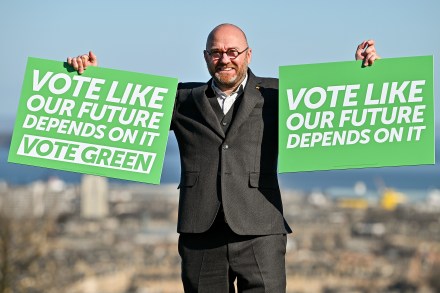
When Scottish Green Party co-leader Lorna Slater urges people to vote as if ‘their future depends on it’, she’s not warning the electorate about the planet’s climate crisis. Independence is what Ms Slater, a Canadian-born engineer and trapeze artist, really craves. Scotland’s Greens may brand themselves as guardians of the environment, but observers could be forgiven for thinking their primary political purpose is to act as the Waitrose wing of the SNP. The Scottish Greens exist to allow middle-class revolutionaries to reconcile their belief in solidarity with their conviction that it stops at Gretna Green and their deeply-held egalitarianism with their concern that the average SNP voter is a bit council scheme.

Sturgeon goes on spending spree with UK credit card

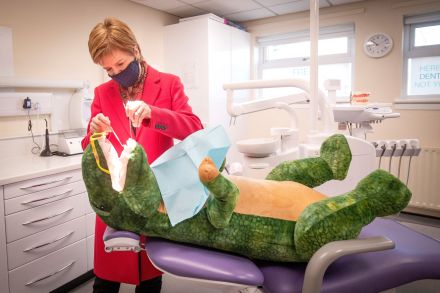
There isn’t much I agree with in the SNP’s manifesto for the Holyrood elections, so it seems peevish to cavil about the policies to which I am generally sympathetic. These are: a national care service, 100,000 new houses, abolition of dental charges, free school meals, investment in closing the attainment gap and more money for skills and training. I might quibble with the universalism of some measures because I would rather see resources redistributed from those with means to those without them. Even so, the Nationalists are making some of the right noises, if purely for their own electoral benefit rather than any late conversion to social democracy. The obvious question, then: How do they intend to pay for it?

Sturgeon’s foreign policy power grab

There is certainly a lot to catch the eye in the SNP’s manifesto published on Thursday. If you look you will find a promise of free bicycles and laptops for schoolchildren, a national care service, and a £33bn National Infrastructure Mission, not to mention an undertaking that there will be no income tax rises to pay for it all. Rather less expected, however, is the large proportion of the document devoted to another topic: Scottish foreign relations. Foreign relations in the context of elections to a purely regional assembly in a country where international issues are reserved for decision centrally? Absolutely. Here are a few examples.

The SNP cannot win a mandate for indyref2

This week's Holyrood election debate should not be allowed to pass without noting how it highlighted the dismal state of Unionism. Nicola Sturgeon revisited a point she has been underscoring heavily during this campaign: that a majority of nationalist MSPs returned after May 6 would represent a mandate for another referendum on Scotland seceding from the United Kingdom. Scottish nationalists have a curious relationship with popular sovereignty, seeing no contradiction in espousing this doctrine while harking back to the Declaration of Arbroath, a pledge of aristocratic fealty and an apologia for the divine right of kings. Among Sturgeon’s statements during the STV debate was: ‘The future of the country should be for the people in Scotland to decide. That is democracy.

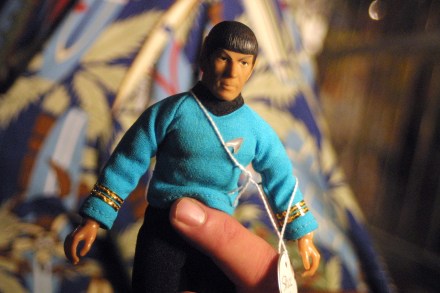
How Star Trek can help beat the SNP

I’m a big fan of Star Trek. Something to do with being raised on a heavy diet of sci-fi, leading to my overly optimistic outlook and faith in unions and federations. For those less familiar with the sci-fi staple, the series often has episodes that take key crew members into alternative, dystopian futures to provide an opportunity to change the present or prepare for a coming event. With that in mind, bear with me and fast-forward to 8 May: the votes from the Holyrood election have been counted and the SNP has won a majority in the Scottish Parliament. A letter has been issued to Number 10 demanding a Section 30 order, the constitutional mechanism that permits another referendum on ending the United Kingdom.

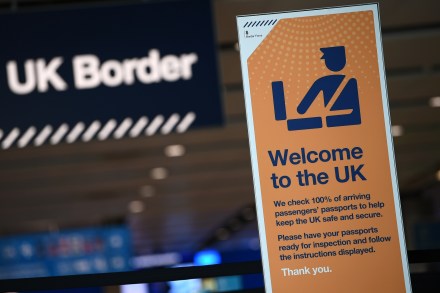
Sturgeon’s hard border with England comes into view

When it comes to making the case for removing Scotland from its most important trading bloc, Nicola Sturgeon takes her lines directly from the Brexiteer playbook. Asked about the possibility of a post-independence hard border between Scotland and England, Sturgeon's standard response has been to tell people what she would want instead of the reality of what would be. Just as Brexiteers started off under the delusion that both frictionless trade with the EU and the freedom to trade on UK terms with the rest of the world was what they wanted and was achievable, so too Sturgeon liked to suggest she was aiming for an independent Scotland with all the benefits of open trading relationships to EU and remaining UK markets.

The SNP’s England obsession

There is a whiff of something in the current Scottish Parliament elections. It’s not quite strong enough to call it foul but nor is it faint enough to go undetected. What I can tell you is this: it doesn’t smell right. Yesterday, Alex Salmond’s new party, Alba, released a video depicting throngs of flag-waving nationalists with a voiceover delivered by an actor from the imagined perspective of Robert the Bruce. (If that seems like an odd idea for an election ad, welcome to Scotland.) ‘Bruce’ described the Battle of Bannockburn thus: ‘People power by the small folk of Scotland was the straw which broke the spine of English superiority’.

Nicola Sturgeon defends her Covid border

For some time now, Scots living in England have been placed in an unfortunate position by Nicola Sturgeon and the SNP. Since November last year, the Scottish government has barred people from moving between Scotland and England for non-essential reasons, effectively creating a cross-border travel ban. The move has been particularly painful for those with family or friends stuck on the wrong side of the border. You might have thought then that today would have brought them some welcome reprieve, as Nicola Sturgeon used a press conference to announce that travel restrictions will be lifted across Scotland from Friday, to allow people to socialise outdoors. Unfortunately though, the Scottish First Minister declined to extend her munificence to those in England.

In defence of second chances

When I was 11 years old, I was taken away in the back of a police car and delivered to a building with tall, imposing gates. Beside them was a sign protesting the building’s existence. This was a Glasgow children’s home and was billed as a ‘therapeutic environment’ for vulnerable young people. Locals resented its presence. As far as they were concerned, the children who called this facility home were young thugs hellbent on intimidating local people. We were criminals who were fire-raising and house-breaking in between committing all manner of sexual offences. This was the world portrayed to the people of Glasgow by a popular newspaper of the time. It bore no relation to the truth about us or our lives, but the scare stories put people on edge.

Downing Street is clueless on Scottish independence

It has been pointed out before that the SNP and the Scottish Conservatives have something of a symbiotic relationship. Bitterly opposed as they are on the constitutional question, they nonetheless share an electoral interest in keeping that question front and centre. This explains the otherwise baffling (to put it politely) decision by the Tories to put the nationalists’ central election message – that an SNP majority means another referendum – at the top of their own election materials. This is contrary to government policy; indeed, contrary to Conservative Party policy. Boris Johnson has said that he will not grant the Section 30 order necessary for the Scottish government to hold another referendum.

Salmond and Galloway are the worst of both worlds

The death of the Duke of Edinburgh has paused campaigning in the Scottish Parliament election, which provides an opportunity to reflect on just how bizarre the election is proving to be. Naturally, the SNP is far ahead in the polls, on 53 per cent of the constituency vote in this week’s Ipsos-MORI research. SNP dominance is now as hard-wired into Scottish politics as Labour dominance once was and the new religion is just as unmoved as the old one by heresies about policy failings or poor governance. What is uncanny is that nationalists and Unionists have simultaneously gone into revolt against their own side weeks out from polling day.

How Anas Sarwar can save the Union

Scottish opinion polling seems to hold little cheer for those who favour holding together this barely united kingdom. Despite a torrid few months for Nicola Sturgeon, the SNP is still riding high, apparently invincible in its quest for another majority government in 2021 to match that of 2011. Another independence referendum is the boldly asserted implication of such a result. So how has the under-fire First Minister not just survived but seemingly thrived up to this point? One reason is that her primary opposition, the Scottish Conservative and Unionist Party, has chosen almost exclusively to oppose her on her safest and surest ground.