Scotland

What now for Scottish nationalists?

The Scottish parliament does not have the power to legislate for a referendum on independence. The Supreme Court has made that clear and it is a rare piece of good news for Scotland’s embattled Unionists. What, though, of the other side? Not Nicola Sturgeon and the SNP; Iain Macwhirter has written insightfully about that elsewhere on Coffee House. I mean the voters, the roughly half of Scots who consistently tell pollsters they favour independence. What do they do now? It’s important to note, first off, that believing in independence does not equate to wanting another referendum any time soon. An October YouGov poll found 51 per cent of Scots would vote No in a second referendum while 49 per cent would vote Yes.

Sturgeon’s referendum plan could ruin the independence dream

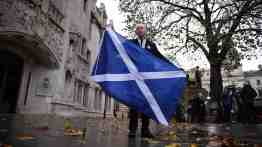
So much for Plan B. Supporters of Scottish independence are putting a brave face on the emphatic ruling by the Supreme Court that – surprise, surprise – the Scottish parliament does not have the power to call a referendum on independence. Lord Reed cast aside the sophistry that ballot would be ‘merely advisory’ — so are all referendums under the UK constitution. And of course a referendum on Scottish independence would ‘relate to' the constitution which is reserved to Westminster. Sturgeon will now be unable to proceed with her referendum scheduled for October next year – not that anyone serious thought it likely to happen. Why anyone believed that the Supreme Court of the UK would facilitate the break up of the UK is a mystery.

It could soon be game over for Nicola Sturgeon

The idea that a referendum on Scottish independence could be held without it having any bearing on the constitution of the United Kingdom was – though Lord Reed did not quite put it like this – utterly preposterous. This was what the Scottish government argued, however: Holyrood could legislate for a referendum because such a plebiscite would be of no consequence. As a matter of common sense this was evidently specious nonsense; as a matter of law, it is an argument which has been rejected by the Supreme Court today.  Sturgeon’s response was risible. Lord Reed’s judgement that Scotland is neither a colony nor an oppressed nation actually demonstrates that it is.

Nicola Sturgeon is running out of road

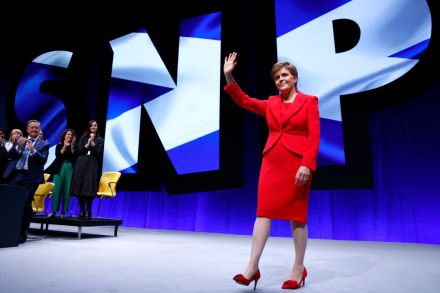
Nicola Sturgeon gave a predictable response to the Supreme Court's ruling that the Scottish government does not have the power to legislate for a referendum on Scottish independence. The First Minister dialled up the grievance factor by claiming the decision ‘exposes as myth any notion of the UK as a voluntary partnership’. If only there was a vote in the past eight years which disproves her point.  The court's ruling, delivered in the clipped tones of the Edinburgh-educated Lord Reed, was a fitting coup de grace in response to the grandstanding of the Scottish government and Scottish National Party. Rallies and protests are reportedly being scheduled the length and breadth of Scotland by the faithful of the nationalist movement in response.

Scottish independence was never a matter for the courts

It is testament to the SNP’s tactics that today’s Supreme Court judgment on a Scottish referendum happened at all. Of course, the Scottish parliament doesn’t have the power to call referendums: this was an explicit condition of its creation. Schedule 5, part 1 of the Scotland Act spells out the things Holyrood is not allowed to legislate on: among other things, ‘the Union of the Kingdoms of Scotland and England’ and ‘the parliament of the United Kingdom’. So this was never in question, never a matter for the courts. But Nicola Sturgeon pretended otherwise – the better to rally her troops, who always want to believe that battle lies just around the corner. Now that the Court has restated the law – that she cannot call any such referendum – her job is made harder.

Can Scottish nationalists tolerate media scrutiny?

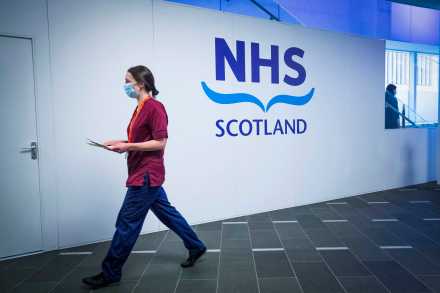
BBC Scotland’s news department has issued what must be one of the strangest clarifications in the Corporation’s history. It’s not a correction of a factual error or a retraction of an inaccurate or misleading item. It’s a statement justifying their journalists’ decision to report a major news story to the public, accurately and with all relevant parties given a right of reply. The statement reads: https://twitter.com/bbcscotnewspr/status/1594666616163536902?s=20&t=mw66p8sMol82W1NFWvRtvw That is, BBC Scotland felt the need to explain itself for doing journalism.  The story was about a sensitive document BBC journalists had got their hands on. These were the draft minutes of a meeting of Scotland’s top NHS executives in September.

Scotland is getting sicker

For Scotland to stay at its current levels of health in 20 years’ time it would have to entirely eradicate cancer. That’s according to the Burden of Disease study published this morning by Public Health Scotland.   The report found that although the country’s population is projected to fall in the next two decades, its annual ‘disease burden’ – the impact of morbidity and mortality on population health – is forecast to increase by some 21 per cent. ‘In order to achieve a similar level of disease burden as 2019’, they say it would need to be reduced by 17 per cent by 2043 – ‘which is equivalent to eradicating the entire disease burden of cancer in 2019.

Indyref2 supporters embarrass themselves (again)

Oh dear. The nationalists are at it again. In the past 48 hours, two examples have shown how –despite being Scotland's main governing party for the past 15 years – old habits die hard in the SNP, where protest and grievance are the de facto response to any minor irritation. First, consider the BBC News story that NHS Scotland chiefs had discussed abandoning the founding principles of the health service by having the wealthy pay for treatment. The basis for the story could not have been stronger: mention of a 'two-tier' health service had appeared in draft minutes of a meeting of the country's NHS leaders in September. Yet that did not stop furious pro-independence supporters from enacting a pile-on against the BBC for having the audacity to publish an accurate and truthful story.

Is the NHS in Scotland about to ‘fall over’?

Will NHS Scotland withstand the winter? According to draft minutes of a meeting of CEOs from each health board in September, there is growing concern the health service will not be able to operate normally over the winter months. It ‘is not possible to continue to run the range of programmes’ it reads, before stating that ‘unscheduled care is going to fall over in the near term before planned care falls over’. The warning fits a pattern.

Ian Blackford clings to power following attempted coup

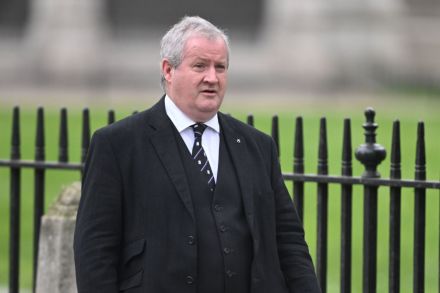
Last night was shaping up to be a night of the long sgian dubhs for the SNP’s Westminster leader Ian Blackford. SNP backbenchers have grown unhappy with Blackford's leadership after several scandals during his tenure. Yesterday a challenge briefly emerged from Aberdeen South MP Stephen Flynn, though Blackford has managed to survive the attempted coup.  Flynn has reportedly been on manoeuvres against Blackford for months. Yesterday he made his move, informing the party’s compliance officer Ian McCann he planned to challenge Blackford at the Westminster group's AGM in December. The next step of the plan was for a gang of so-called men in grey kilts, led by culture spokesman Brendan O’Hara, to tell their leader he had to go before the meeting.

Does Westminster even care about the Union?

The Supreme Court will hand down its judgment in the Scottish independence referendum case next Wednesday. This is the reference brought by the Lord Advocate, Scotland’s most senior law officer, over Nicola Sturgeon’s proposed Scottish Independence Referendum Bill. Downing Street has refused to grant a re-run of the 2014 referendum, in which Scots voted to remain part of the United Kingdom. Sturgeon has said her government will simply hold a referendum of its own. Going to the Supreme Court is a political move, and presumably reflects Sturgeon’s suspicion that Holyrood holding a referendum in defiance of Westminster is unlawful.  The issues before the justices are threefold. One, whether this is a ‘devolution issue’.

Crossing the ‘gender-bread’ border: what Scotland’s gender bill means for England

'A man's a man for a' that' said Robert Burns. Well, perhaps not for much longer. The Scottish Parliament has recently voted in favour of legislation to allow lads to become lassies, and vice versa, merely by declaration. No medical intervention or diagnosis of gender dysphoria required. Under the Gender Recognition Reform (Scotland) Bill, which enters its committee stage this week, Scots will be able to change their legal sex at ages 16 and 17 after six months of living in their new gender, and after three months if aged over 18. First Minister Nicola Sturgeon has enthusiastically embraced the claim made by her coalition partners, the Scottish Greens, that ‘transwomen are women’.

The SNP’s misinformation campaign on Scottish renewables

SNP MP Stephen Flynn was emphatic when he used a certain statistic in Parliament last month: ‘Scotland’s potential in this regard is huge – absolutely enormous... We have 25 per cent of Europe's offshore wind capacity – 25 per cent!' he told his audience. It is not the first time Flynn has used the statistic, and neither is he the only SNP MP, or MSP, to use it. 'With more than 25 per cent of Europe’s capacity in wind energy, Scotland is set to become a massive producer and exporter of renewable energy,' wrote Angus Robertson MSP, the SNP's External Affairs and Culture Secretary at Holyrood, in a newspaper column in January.

Scotland’s avoidable death rate is on the rise

Scotland is witnessing a concerning uptick in ‘avoidable’ deaths. With an increase of 4 per cent on the previous year, there were almost 18,000 preventable deaths in Scotland in 2021. As the rising pressures on the NHS continue to expose cracks, this week's report on avoidable mortality from the National Records of Scotland does little to diffuse concerns. Things don’t look much rosier when Scotland is compared to the rest of the UK. Although no British data for avoidable deaths in 2021 has been made available yet, historically Scotland has seen the highest rates of avoidable mortality in the UK over the last 20 years. Using the latest comparable data for England and Wales, this trend continues: Scotland is predicted to once again outdo both countries.

The SNP’s ferry fiasco is a very Scottish sham

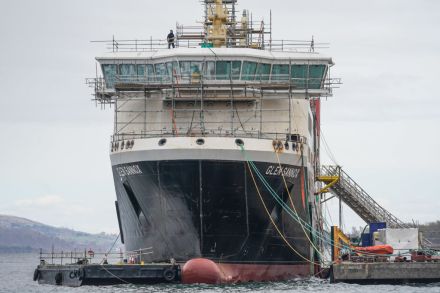
‘As first minister I am ultimately accountable for every decision that the Scottish government takes,’ Nicola Sturgeon announced on Friday as she gave evidence to the Scottish parliament’s public audit committee. Scotland’s ferry procurement fiasco is being closely scrutinised, and the latest developments have put Sturgeon’s record under the microscope.  In a performance reminiscent of her evidence session during the Salmond inquiry, the first minister spoke confidently, asserting several times that she was trying her best to be open – while dodging any actual accountability. It was classic Sturgeon.  There have been accusatory murmurings that the Scottish government may have corrupted the ferry procurement process for political reasons.

Nicola Sturgeon’s oil paradox

Is oil extraction a form of environmental vandalism which threatens life on the planet, or a source of revenue which could propel Scotland and its people to new levels of wealth? It is little use asking Nicola Sturgeon: she appears to believe it is both. Three years ago, when striking schoolchildren and Extinction Rebellion were telling us that the world must become carbon-neutral by 2025 or face massive loss of life, she told the SNP spring conference: ‘I met some of the young climate change campaigners who’ve gone on strike from school to raise awareness of their cause. They want governments around the world to declare a climate emergency. They say that’s what the science tells us. And they are right.

How a tweet got me sacked 

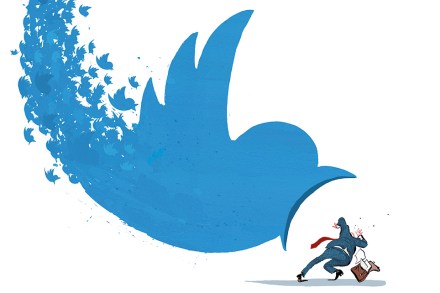
I always advise younger journalists never to use irony or make jokes on social media, so when I was effectively sacked for alluding to an edible fruit of the palm family, I should have known better. And of course I did know better. I deleted my three-word tweet within minutes. But screenshots live for ever. There are no second thoughts on Twitter, no clarifications allowed. No second chances either. It is judge and jury and will take away your career, reputation and livelihood at the click of a mouse, if pusillanimous employers allow it to. I’d been in countless Twitter storms in the past over Scottish nationalism, hate crime, gender. It’s what Twitter does.

The dire state of Scotland’s hospitals

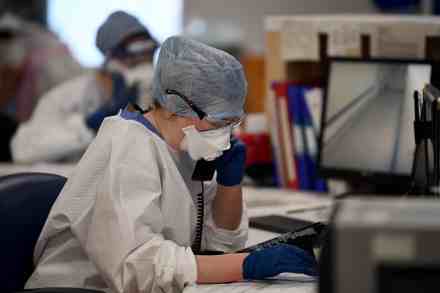
In hospitals, waiting lists have become so long that people have to queue for over two days to be seen. Patients are advised to avoid turning up if they can help it. Bed shortages mean people spend nights on corridor floors. Over 30 patients markedly deteriorate or even die each week as a result of delays. You could be forgiven for thinking this dire situation is unfolding in a developing country, perhaps without proper health infrastructure. It's not: this is happening all across Scotland. Since the pandemic, A&Es in Scotland have gone from bad to worse. Extreme wait times have increased tenfold: over 4,000 people spent more than 24 hours waiting in emergency departments over the last year. Almost 250 patients had to wait more than two full days.

In defence of Ash Regan’s gender bravery

Ash Regan’s decision to resign as Nicola Sturgeon’s community safety minister will not have been taken lightly. The Scottish parliament has today passed stage one of the Gender Recognition Reform Bill, legislation championed by Sturgeon which will make it easier to access a gender recognition certificate, remove medical experts from the process and lower the applicable age to 16. Regan told Sturgeon in her resignation letter that ‘my conscience will not allow me to vote with the government’.  Regan was one of a handful of SNP politicians who signed an open letter in 2019 warning ministers: ‘Changing the definition of male and female is a matter of profound significance. It is not something we should rush.

Three ways Nicola Sturgeon will attack Rishi Sunak

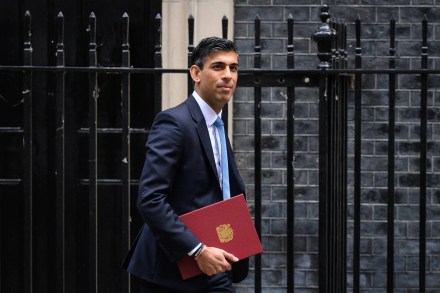
Rishi Sunak’s first order of business will be restoring stability to the government and, thereafter, regaining the confidence of the markets. But the incoming prime minister will eventually have to confront a looming threat of even greater import: Scottish independence. Lawyers for the UK and Scottish governments are currently battling over the matter before the Supreme Court. Nicola Sturgeon wants to hold another referendum on independence next year, but Westminster has refused to grant one like it did in 2014 – so now Holyrood is testing whether the Scotland Act, which set up the devolved parliament, bars the Scottish government from holding a plebiscite of its own.