Scotland

Sunak and Sturgeon are heading for a clash over gender self-ID

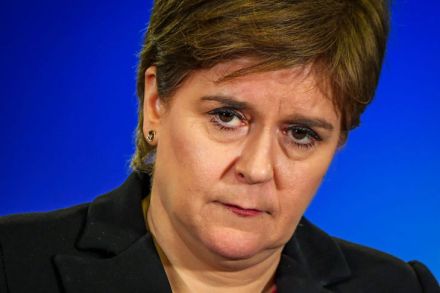
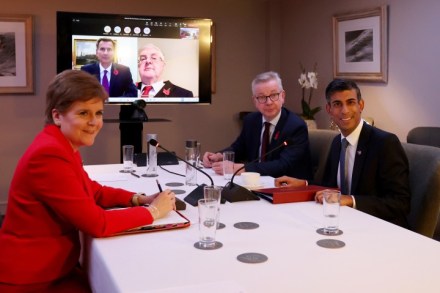
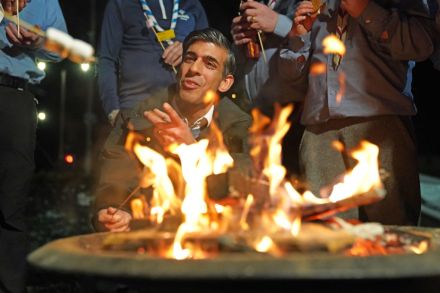
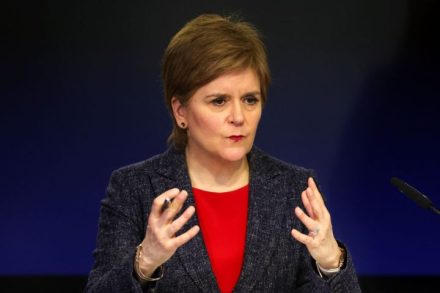
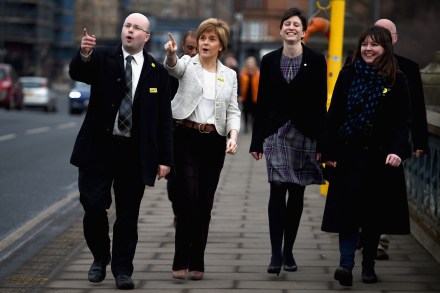
Rishi Sunak is keen to distance himself from Liz Truss over Scotland. Shortly before she became prime minister, Truss suggested it was best to ‘ignore’ the ‘attention seeker’ Nicola Sturgeon. But Sunak is adopting a more conciliatory approach towards the SNP leader. The pair enjoyed a working dinner last night in Inverness on Sunak’s first trip to Scotland since becoming Prime Minister. They discussed the NHS, the economy and strikes. While there was a ‘robust’ exchange on independence, the post-match report does not point to a war of words between the pair. Yet cordial relations between them could prove short-lived. Speaking earlier today on BBC Radio Scotland, Sunak voiced concerns

Bed blocking is crippling Scotland's NHS

The NHS in Scotland is under enormous strain. Three health boards north of the border have stopped non-urgent elective care as the crisis worsens. Urgent treatment and cancer care is being prioritised as patient demand continues to rise past unmanageable levels. The last time we saw this happening was during the pandemic. What’s going so wrong? One of the major issues in Scottish hospitals is bed-blocking: wards are full of patients who can’t be discharged. This means there is no room for those who turn up to A&E requiring overnight admission. The shocking part, though, is that many of those patients stuck in hospitals don’t need to be there. On

Sturgeon's gender bill poses a problem for the Tories

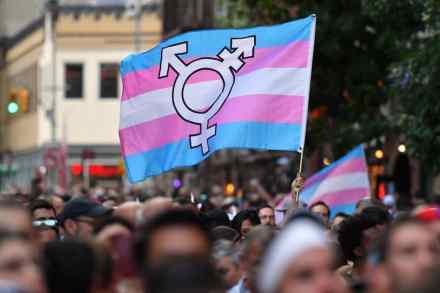
Ministers will come under increased pressure to block Nicola Sturgeon’s gender legislation with the publication of a new Policy Exchange paper today. This examination of the Gender Recognition Reform Bill concludes it will have serious impacts on the rest of the UK. The Bill removes the safeguards involved in obtaining a gender recognition certificate, the means by which a man can have the law treat him as a woman, and vice versa. It was pushed through the Scottish parliament before Christmas with little time for debate At present, the law requires an applicant to be 18 or older, to have been diagnosed with gender dysphoria by a clinician and to prove they have lived in their

Nicola Sturgeon has been exposed

The Scottish parliament returned from its Christmas recess today and held its first debate of 2023. Take a guess what it was about.  Yes, independence. Holyrood occasionally touches on other matters – the NHS, the educational attainment gap – but these are mere throat-clearings in a never-ending dialogue between the SNP government and its hardline followers.  This strategy, though counter-intuitive, has thus far proved pretty useful to Nicola Sturgeon: the more she gins up her supporters with talk of breaking away from the UK, the less they seem to notice that she hasn’t taken them a single inch in that direction in eight years as SNP leader.  Today’s debate was

SNP welcomes sex pest back with open arms

A new year beckons but old habits die hard. So it’s no surprise then that the SNP have opted to begin 2023 by welcoming one of their disgraced brethren back into the fold. Patrick Grady, the party’s former chief whip, has this morning had the SNP whip restored at Westminster – despite being found to have sexually harassed a teenage party employee. Is that what the nats meant when they talked about preserving ‘Scotland’s future’ eh? Grady was reported to have ‘resigned’ last summer from the nationalists after the Commons authorities ruled he had made an unwanted sexual advance towards a male staff member. But now Kieran Andrews – the

Are Holyrood and Westminster heading for another Supreme Court showdown?

The UK government’s threat to block Nicola Sturgeon’s Gender Recognition Reform Bill took many by surprise. The powers, under Section 35 of the Scotland Act, have never been used before. The assumption from some observers, this one included, was that this was a negotiating tactic ahead of inter-governmental discussions on the Bill’s implementation and cross-border issues that might arise. That assumption appears to be wrong. I understand that raising the spectre of Section 35 is not a negotiating tactic: ministers are seriously contemplating it and legal advice is being sought. Among ministers’ concerns are questions over passports, driving licences and public safety. Michael Foran, a lecturer in public law at

Scotland’s Gender Recognition Reform Bill is an open goal for unionists

Having just squandered a quarter of a million pounds on her fruitless Supreme Court independence challenge, Nicola Sturgeon’s government could be headed back to Little George Street sooner than they might have expected. If the UK government deems the hugely controversial Gender Recognition Reform Bill unlawful, a Section 35 order blocking the legislation from going to royal assent could be invoked by Scottish Secretary Alastair Jack. This would oblige Sturgeon’s government to take the matter to court. Is this what the First Minister wants? Many have been perplexed at her stubbornness in pursuing this contentious legislation, warts and all. (She wouldn’t even countenance a few common-sense safeguarding amendments, such as

Labour is wrong: it's not 'hate speech' to question trans rights

MSPs were up until the early hours last night at Holyrood debating amendments to the Gender Recognition Reform (Scotland Bill). Make no mistake, this is an exceptionally bad piece of legislation in the making – though it might have been less bad had a few more of those amendments been accepted by Nicola Sturgeon’s government. But the SNP weren’t the only party painting Scottish politics in a bad light. During the debate, Labour MSP, Mercedes Villalba, took it on herself to start policing the language of others in the chamber. Villalba aimed her fire at the SNP’s Kenny Gibson – for daring to say something that many people also believe:

What Sturgeon’s Gender Recognition Act could mean for England

One of the fundamental flaws in the Scottish devolution settlement set up by Labour and radically expanded by the Tories is the ability for policy divergence in Scotland to impact on the rest of the UK. The Gender Recognition Reform Bill, on the cusp of being passed by the Scottish parliament, might prove an object lesson. The Bill overhauls the process by which a person obtains a gender recognition certificate (GRC). This is the document which recognises an applicant’s gender identity in place of their biological sex. For example, a male who identifies as female and acquires a GRC becomes female in the eyes of the law.  The Bill being

Scotland’s messy Gender Recognition Act is a symptom of Holyrood’s weaknesses

The Scottish parliament will today consider final amendments to the Gender Recognition Reform Bill. The Bill, a key priority of Nicola Sturgeon’s SNP-Green government, will update the Gender Recognition Act 2004, the legislation governing the acquisition of a gender recognition certificate (GRC). Once a person obtains a GRC, ‘the law will recognise them as having all the rights and responsibilities appropriate to a person of their acquired gender’.  At present, a man who wishes the law to recognise him as a woman, or vice versa, must be at least 18 years of age and must undergo a long process based on medical evidence of gender dysphoria. The Bill will change this by

SNP purge their best in Westminster

In recent years, the SNP haven’t always covered themselves in glory in Westminster. Whether it’s silly stunts in the chamber or the botched complaint against the-then Chief Whip, Scotland’s party of government always seems to be at the centre of some various embarrassment. Still, one nat has managed to impress on both sides of the House: Stewart McDonald, the party’s longtime spokesman for defence. McDonald held this post for more than five years in the Commons and joined the Foreign Affairs Committee (FAC) too in March 2020. In the latter role he won plaudits for his tough talk on China and foreign disinformation, earning a reputation as one of the

The SNP’s tax hikes won’t work 

Two self delusions have sustained the SNP through the past couple of decades of devolution. The first is the perennial grievance that deteriorating public services are the result of Westminster austerity. The second is that Scotland’s social problems can be solved through redistribution – by taxing the rich. Both have now collapsed in the face of harsh reality. Low-growth Scotland generates less wealth each year, there are precious free rich left to tax and the public sector remains utterly dependent on financial life-support from the UK exchequer. This is an economy of almost colonial dependency, far removed from the image of independence propaganda. Deputy first minister John Swinney’s latest Scottish

There's worse to come in Scotland than the Hate Crime Bill

The Scottish Government has courted controversy with its social policy agenda: sweeping hate crime legislation, and gender recognition changes that undermine women’s rights. But what’s coming down the tracks at Holyrood looks even more troubling. In fact, the next item on the agenda could be one of the most controversial seen since devolution. Following activists’ demands, politicians’ promises and the rowing back on parallel plans by the UK government, the Scottish government is moving towards a ban on so-called ‘conversion practices’.  Some readers might take umbrage with this suggestion. Most of us agree that trying to forcibly change a person’s sexual orientation or gender identity – perhaps through pseudo-scientific quack ‘treatments’ – is

Is Scotland's strike momentum slowing?

Finally, good news on the strike front: NHS staff in Scotland have decided against walking out after voting to accept an improved pay offer from the Scottish government. The deal means healthcare workers will get pay rises ranging from £2,205 to £2,751. But this isn’t an offer to end all strike threats yet – nurses and physiotherapists are yet to decide whether they will halt strike action after the government’s latest offering. For now, Nicola Sturgeon is hailing the announcement as a victory: the SNP’s health secretary Humza Yousaf – who has faced calls to resign as NHS waiting lists continue to grow – welcomed the decision by Unite and

Is the SNP falling apart?

The SNP should be basking in its recent formidable polling success. Not only does support for independence appear to be on the rise – with 56 per cent in favour, according to the latest Ipsos Mori poll – but there is evidence too that the SNP could win an outright majority in the next Scottish parliament elections. So why does the party appear to be falling apart? Three front bench resignations in as many days doesn’t look like a party at peace with itself.   The Westminster group of SNP MPs is roiled by divisions and rancour. The palace coup by the 34-year-old Stephen Flynn against veteran Westminster leader Ian Blackford

Pete Wishart's resignation letter is damning for the SNP

No matter how heavily it snows today nothing will be as frosty as Pete Wishart’s resignation letter. The senior SNP MP has exited the front bench following the coup that replaced Ian Blackford with relative newcomer Stephen Flynn.  Blackford is an ally of Nicola Sturgeon and discontent had grown in the party’s Westminster group of MPs about his perceived lack of independence from the leadership in Scotland. Flynn, who at 34 only entered Parliament in 2019, is expected to put distance between his Westminster group and the SNP government in Edinburgh. As MP for Aberdeen South he is seen as less hostile to the North Sea oil and gas industry than Sturgeon,

Nicola Sturgeon’s Stephen Flynn-sized headache

Nicola Sturgeon did not want Stephen Flynn to be the new leader of the SNP at Westminster. His victory represents not only a generational shift – Flynn is 34 and his deputy Mhairi Black is 28 – but a sharp left turn in political sensibilities. Where outgoing Commons leader Ian Blackford was cautious and loyal to Sturgeon, the Flynn-Black team is expected to be more independent-minded.  Their instincts are closer to those of the SNP grassroots: they are impatient with the pace of progress towards another referendum. The Supreme Court ruling on where the power to call a referendum lies has only thrown such frustrations into relief. The SNP will

Gordon Brown is deluding himself about the SNP

Gordon Brown needs a hobby. Golf, perhaps, or jazzercise. Anything but meddling in the constitution. He means well but his answer is always the same: make things worse but in a way that sounds really clever to Westminster types. To a hammer everything is a nail and to Gordon Brown there isn’t a problem in all Creation that doesn’t call for a commission, a committee or a convention.  His own commission into ‘the UK’s future’ has now reported and all I can say is the future ain’t what it used to be. A New Britain is a backwards-looking prospectus, its new constitutional settlement largely doubling down on the old settlement. That old settlement has

Gordon Brown doesn’t understand what Scottish voters want

Only Gordon Brown could come up with a 40-point plan for constitutional renewal. ‘Less is more’ is not a principle with which the former Prime Minister is familiar. When his UK constitutional commission was launched in 2020 we were promised a ‘radical alternative to nationalism’ and a ‘constitutional revolution’ to remake Britain along federal lines. What has emerged looks like fiddly, modish reforms with lots of hubs and clusters and the inevitable citizen’s juries. Plus, of course, more devolution to Scotland and a reformed upper house that Conservatives will no doubt portray as a new battering ram for the SNP. Has Brown’s review landed well? Sir Keir Starmer has certainly endorsed his proposed

The SNP's colonialism myth

There have been strange goings on in Scotland. A few weeks ago, the Supreme Court clarified that the Scottish parliament does not have the power to unilaterally call a second independence referendum. The ruling was never going to have gone down well with the SNP, but has the Supreme Court’s slap down sent the nationalist movement doolally?  Take the strange case of Michael Russell’s comparison of the current UK government to the British Raj in the days of the Empire. On Sunday, the president of the SNP and former Scottish government minister defended an article he had written in the pro-independence newspaper The National which appeared to draw this parallel.