Politics

Read about the latest political news, views and analysis

Sturgeon: Nato shouldn’t rule out no-fly zone

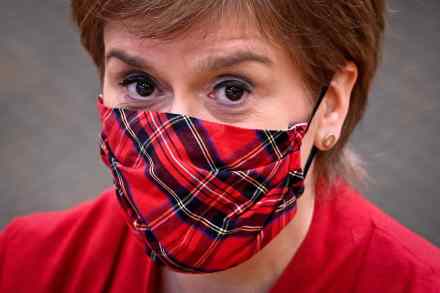
Fresh from apologising for the persecution of witches in the sixteenth century, Nicola Sturgeon has now jumped on to the next big challenge. You'd have thought the energy, cost-of-living and health crises might keep the First Minister occupied, not to mention the various issues around Scotland's schools, transport links and criminal justice system.  Not a bit of it. For the nationalist-in-chief has found a new cause to involve herself in: international relations, an area specifically reserved for Westminster. Despite having no powers, mandate or army, Sturgeon today decided to take a swipe at Nato, using an interview with ITV to argue the defence bloc should review the idea of a 'no-fly zone' over Ukraine on a 'day to day basis.
PMQs: Johnson struggles to defend refugee policy

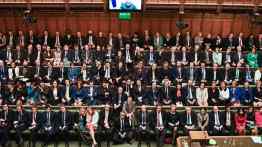
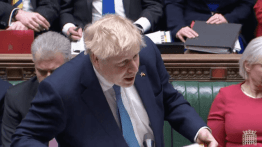
Today's Prime Minister's Questions clash between Sir Keir Starmer and Boris Johnson focused on the domestic implications of the Russian invasion of Ukraine. The Labour leader started by calling on Johnson to force Chancellor Rishi Sunak into a U-turn on his policy of a £200 loan to help with energy prices.  Starmer's argument was that this loan had been developed on the assumption that prices were going to fall, but Ukraine had changed that. Johnson argued that Starmer would be 'absolutely out of his mind' to be arguing that the Chancellor should U-turn on the help he was already offering.

Mail man changes his ‘Russian-sounding’ name

Sanctions, boycotts, bans, penalties of all kind: there's no end to the punishments being slapped on Moscow. But amid the frantic rush of institutions and individuals to distance themselves from Russia, some seem to be somewhat overstepping the mark.  The Cardiff Philharmonic has today cancelled an all-Tchaikovsky programme as ‘inappropriate at this time’; Russian conductor Valery Gergiev was sacked last week by the Munich Philharmonic Orchestra for failing to condemn Putin. In Italy, the University of Milano-Bicocca has been forced to backtrack after trying to cancel a Dostoevsky course while at least three MPs in the UK have suggested stripping Russians in Britain of their citizenship.

Why is Britain so useless at helping Ukrainian refugees?

Some MPs were in tears yesterday when President Volodymyr Zelensky addressed the House of Commons, and understandably so, given the soaring rhetoric and bravery of a man who knows his days on earth could be numbered.  One kind interpretation is that the caseworkers at the Home Office haven't been trained sufficiently for them to use the initiative But across Westminster over the past few days, MPs and their constituency teams have also been crying tears of frustration at the Home Office's handling of the visa application process. Not only has there been intense confusion between the different arms of government about how many routes there are for refugees – with Home Secretary Priti Patel claiming she was creating a third one, only for No.

Eight embarrassed Bercow backers

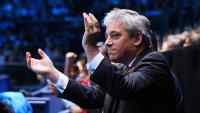
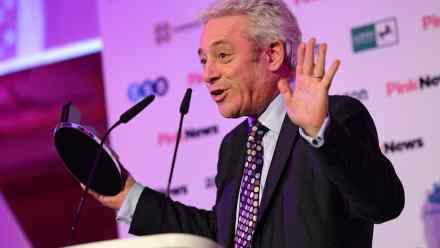
The verdict is in and it's not good for John Bercow. Yesterday finally saw the publication of the independent expert panel report into his behaviour as Commons Speaker, with 21 separate allegations of bullying being upheld against the former Buckingham MP. The conclusions of the report were damning: Bercow was judged to be a 'serial bully' and a 'liar' who 'repeatedly and extensively' bullied staff and exhibited 'behaviour which had no place in any workplace.' It will be seen as vindication for the members of staff who spoke out against Bercow for years before yesterday's publication. It's also damning of those who continued to prop up and cheer on the former Speaker in office, purely on the cynical grounds of derailing the Brexit process.

Putin is bored

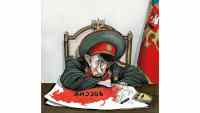
At the beginning of this year, Vladimir Putin was sitting comfortably in the Kremlin: his legacy so far a steady leader who had saved his people from the helter-skelter of robber capitalism in the 1990s and given them a modicum of stability and pride. He must have known that if he waged war on a country of 45 million brother Slavs, he risked losing it all. Liberty and life are now less certain. So why did he do it? Having spent four years in Moscow and more than two decades of Russia-watching, I have never believed that Putin was a chess grandmaster. While his apologists in the West lauded his cunning, I have always seen him as an improviser. Like the best at his favourite sport – judo – he prepares for combat, studies his opponent, and considers various eventualities.

Online scams: how best to fight back?

28 min listen

During the pandemic, we spent more time online than ever before and this has seen a boom in online fraud. It's estimated that scam adverts have tricked 1 in 10 people on the biggest online platform into paying for fake products. In 2020, almost 150,000 fraud cases were recorded with losses reported of up to £500 million.For the scammers, they will do anything to convince you to key in your card details and this problem has shown no sign of slowing down. The online safety bill is expected to pass Parliament in March 2022. As things stand, the government hasn't included online fraud as a type of harm when it comes to certain adverts. So could the online safety bill be an effective solution?

Zelensky’s address was strange, but sensational

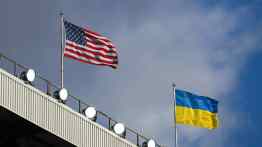
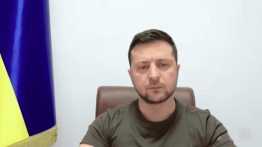
This afternoon, the Ukrainian President Volodymyr Zelensky addressed the House of Commons. A single flat-screen TV broadcast his speech to a packed chamber. Zelensky appeared in plain green fatigues next to Ukraine’s blue-and-yellow flag. He looked pale, tired, fearless and determined. Squads of foreign killers are roaming his homeland trying to find him. His words were spoken in English by a translator who probably had no advance sight of the text. The halting, ungrammatical phrases made the address strangely powerful. ‘I would like to tell you about the 13 days of war. The war that we did not start.’ Zelensky’s goal is simple. ‘We do not want to lose what is ours.

Zelensky’s Churchillian address to the Commons

Ukrainian President Volodymyr Zelensky was greeted with applause and a standing ovation this evening when he appeared before the House of Commons. The Ukrainian president – who addressed MPs by video link – gave a short but impassioned speech. He said that he was addressing the UK parliament ‘as a citizen, as a president of a big country, with a dream’ – comparing his country’s fight against Russia to the British war effort against Nazi Germany: ‘You didn’t want to lose your country when Nazis wanted to take your country.’ He drew parallels between the UK’s decision to fight then with Ukraine’s now – offering an update of the circumstances the Ukrainian people now find themselves in.

Labour flounders to define the word ‘woman’

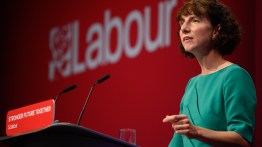
Happy International Women's Day! To mark this auspicious occasion, the Radio 4 programme Woman's Hour today hosted a conversation between presenter Emma Barnett, former Home Secretary Amber Rudd and the Labour shadow minister for women and equalities, Anneliese Dodds.  Unfortunately, amid all the amicable chatter about why Dodds' post does not have a full-time dedicated Cabinet minister, Barnett decided to raise a difficult question for any right-on Labour MP. Referencing the query of one listener called Jill, Barnett asked the Labour chair if a future government led by Keir Starmer would legislate to define what a woman actually is.

Will Zelensky’s intervention change the mood among MPs?

13 min listen

Former Speaker of the House, John Bercow has been banned from the Commons after the publishing of a review that reveals the extent of his bullying behaviour towards members of his staff. How will Labour react to this after welcoming him in with open arms? Also, Ukrainian president Volodymyr Zelensky will today address a number of UK MPs and is expected to ask for more aid on all fronts: sanctions, humanitarian and military. But just how much more can the UK offer without causing an escalation in Putin's brutality?And finally, one look at the Spectator's Data Hub will show a shocking rise in the price of gas in the UK in reaction to the war in Ukraine, but has Boris Johnson prepared the public enough for this shocking rise in cost?Sam Holmes talks with James Forsyth and Katy Balls.

Why is Britain reluctant to open its doors to Ukrainians?

Among opposition politicians there is a new question being asked of the war in Ukraine: why has the UK not taken in more refugees? A mere 50 visas were initially issued by the Home Office. Meanwhile, Poland had taken in more than a million Ukrainians, Hungary 180,000, Slovakia 128,000 and even little Moldova 83,000. Labour shadow home secretary Yvette Cooper, whose now-ancient personal offer to accommodate refugees in one of her own homes remains mysteriously unmentioned, hit out at a Home Office update that 300 family scheme visas had in fact been issued. She branded the revised number 'shockingly low & painfully slow'. Never mind that the countries listed above actually border Ukraine, while the UK is more than 1,000 miles away.

Ukraine isn’t Boris’s ‘Falklands moment’

What should we make of Boris's response to war in Ukraine? The verdict from one Tory MP is already in: 'History will look back at this as his Falklands moment,' said Jonathan Gullis, who represents Stoke-on-Trent. But if Conservatives are hoping that conflict will transport the PM from a beleaguered position into one of national dominance – as it did for Margaret Thatcher in 1982 – they are in for a nasty surprise. It is certainly true that Thatcher’s position did improve after her quick victory in the Atlantic to such an extent contemporaries talked of a ‘Falklands factor’ to explain it. But it is less clear how far defeating Argentinian forces was the cause of it or just coincidental.

Will Keir Starmer purge John Bercow?

Well that's that then. This morning's report by the Independent Expert Panel into John Bercow's behaviour makes for damning reading for the former Commons Speaker. It finds him guilty of bullying House of Commons staff and has banned him for life from holding a parliamentary pass for former members. The move effectively kills his chances of getting a peerage. Poor Sally. The report on Bercow concluded he was a 'serial bully' who 'repeatedly and extensively' bullied staff. In all 21 separate allegations were proved and have been upheld. It finds that: This was behaviour which had no place in any workplace. Members of staff... should not be expected to have to tolerate it as part of everyday life.

The problem with International Women’s Day

Am I the only one wondering how long it'll be before the organisers of International Women’s Day are forced to rename their campaign? How, depending on what they mean by 'women', it'll need to be called 'International People-with-a-cervix Day' or 'International People-who-identify-as-a-woman Day?' Quite what the founders – a group of American workers who back in 1909 demanded shorter hours, better pay and voting rights – would make of the word 'woman' being gradually pushed out of the lexicon as a meaningful term we will never know. But on a better note, they would surely be overawed by the progress made in the past 113 years. Women account for over half of all workers employed in management, professional and related occupations in the US, for instance.

Now JK Rowling takes on the critics

Away from the scenes in eastern Europe, a very different terf war was playing out on Twitter yesterday between JK Rowling and former New Statesman journalist Laurie Penny. The latter is a consistent and very public critic of Rowling's views on sex and gender, having previously suggested the Harry Potter author is a transphobe for whom the label 'terf' – 'trans exclusionary radical feminist' – seems applicable. Penny, one of Tatler's top 100 'people who matter' in 2012, has been complaining bitterly that her latest literary offering has been panned by the critics.

Where’s the outrage over Trudeau’s trip to Britain?

As Justin Trudeau waltzed through the UK, visiting Boris Johnson and the Queen, did anyone spare a thought for Canadians struggling under Trudeau’s authoritarian Covid power moves? In 2016, the British parliament debated whether Donald Trump, then running for the US presidency, ought to be banned from the UK for inflammatory 'hate speech'. When Trudeau announced his visit to the UK, did the House of Commons ask itself whether he should be made welcome?  Trudeau invoked the never-before-used Emergencies Act to resolve a parking problem Trudeau is no stranger to inflammatory language – having called the unvaccinated in Canada 'extremists', 'misogynists' and 'racists'. But it’s far worse than that.