Politics

Read about the latest political news, views and analysis

The Suella Braverman Edition

37 min listen

Suella Braverman is the Conservative MP for Fareham and became the first female elected Attorney General in 2020. Formerly known as one of the Brexit Spartans, she talks on the podcast, about growing up surrounded by politics where she first lay the foundations for a career as a Conservative politician. As a young woman, she studied law in Cambridge, the US and in Europe where she could excel as a linguist. Since taking her role as Attorney General, she made history by rewriting the law to become the first female Cabinet Minister to take maternity leave - named Gabriella's Law after her daughter who is now one year old.

Chernobyl Two?

The electricity supply to the ruined nuclear plant at Chernobyl in Ukraine has been cut off. According to one knowledgeable source I spoke to, this is a serious problem as power is needed to pump water around spent nuclear fuel rods stored there. There is a back-up diesel generator, but it has just one day’s supply of fuel left and once that runs out, the temperature could start to climb. If the water evaporates, the zirconium metal ‘fuel assemblies’ could start to melt – with radioactive material released into the atmosphere. This would not be anywhere near as bad as the original Chernobyl disaster, in 1986, when a reactor had a power surge and exploded – but still bad enough.

Border farce

42 min listen

In this week’s episode: is the UK dragging its feet when it comes to Ukrainian refugees?For this week’s cover piece, Kate Andrews and Max Jeffery report from Calais, where they have been talking with Ukrainian refugees hoping to make it to Britain. Kate joins the podcast along with former MEP Patrick O’Flynn to discuss the UK’s handling of the refugee crisis. (00:48)Also this week: are commodity traders finding a moral compass?In the wake of colossal sanctions on Russia are commodity traders feeling pressured to look more critically at the people they buy from? In this week’s issue, Javier Blas, Bloomberg’s commodities columnist and the co-author of The World for Sale, reveals what’s going on in the world of commodity trading.

What is the significance of the sanctioning of Roman Abramovich?

13 min listen

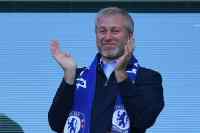
After seemingly dragging its heels for weeks, the government is ramping up its individual sanction measures against those close to the Kremlin. When Roman Abramovich bought Chelsea football club it was seen as a symbol of closer Russian and British ties, we will now see what signal him losing it creates. Kate Andrews hosts Fraser Nelson and James Forsyth to talk through sanctions, peace talks and Eurovision.

BBC redundancy costs triple

It's been a difficult year for the BBC. Whether it's Emily Maitlis or Peter Crouch, Andrew Marr or Simon McCoy, a whole host of stars have departed the Beeb as the corporation battles to remain relevant in the twentieth first-century. Budget cuts and increased competition mean that journalists with more than 1,000 years of experience have taken redundancy, retired or accepted big money deals from commercial rivals over the past two years. The mass exits have prompted fears of a 'brain drain' of talent with insiders expressing concerns about the difficulties of filling the smorgasbord of top posts which are currently vacant. Now a Freedom of Information request by Mr S has revealed the cost of all these departures to the corporation's hard-pressed coffers.

Lessons from history: improving UK railways for passengers

30 min listen

The UK has recently lifted almost every Covid restriction and with that, thousands of commuters will return to their offices. Will those memories of delays, cancellations, costly tickets and overcrowding come back to haunt the commuter? Most of the problems are linked to the patchwork of Victorian infrastructure that has struggled to meet the demands of the modern-day passenger. With grandstanding projects like Hs2 dominating the headlines, is this the kind of investment that's best spent for the consumer? And with other issues on the rise, such as extreme weather conditions, inflation and flexible working patterns, how will the industry prepare itself?

Dostovesky and Putin’s useful idiots

When I was 17 I heard the name Dostovesky, and was enthralled. Just the name felt so glamorously intellectual, so deep. I began to read some of his novels, and my hunch was vindicated. A bit later I delved into his ideas, and my admiration became more nuanced. I partly admired his defiance of the rational humanist arrogance of the West, but I was also wary of his reactionary mystical nationalism, his faith in the anti-liberal Russian soul.  It seems that a lot of religiously minded intellectuals struggle to get past stage one. They are so taken with the flinty glamour of this writer that their critical faculties atrophy. They allow their aesthetic admiration to influence their religious politics.

This is what liberal war fever looks like

In a private letter written in 1918, the recently deposed German chancellor Theobald von Bethmann-Hollweg admitted that in the run-up to the Great War, 'there were special circumstances that militated in favour of war, including those in which Germany in 1870-71 entered the circle of great powers' and became 'the object of vengeful envy on the part of the other Great Powers, largely though not entirely by her own fault'. Yet Bethmann saw another crucial factor at work: that of public opinion.'How else,' he asked,'[to] explain the senseless and impassioned zeal which allowed countries like Italy, Rumania, and even America, not originally involved in the war, no rest until they too had immersed themselves in the bloodbath?

Universities stand by Bercow

Normally when a public figure is 'cancelled' there is an ungainly rush by institutions to distance themselves from the individual in question. Fortunately for John Bercow, his impact on public life was so limited that there are few bodies left to cut him off. Certain actions though must sting the former Speaker's pride: his suspension from the Labour party for instance and the decision of the parliamentary gym to rename the spin room named after him.  Following Tuesday's publication of the report into bullying claims against him, Bercow is now without an office, without a seat, without a party and without a legacy.

Sanctioning Roman Abramovich will change football forever

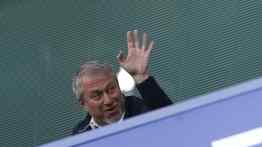
With refugees fleeing Ukraine, shells raining down on civilians, and threats of chemical weapons being used on the battlefields of Ukraine, it was surely only a matter of time. Today the British government finally added Roman Abramovich to the list of sanctioned Russian oligarchs, freezing his assets, and making sure that he could not profit from any sales. That will impact his entire fortune, of course. But most of all, it will hit Chelsea Football Club – and radically re-shape the fortunes of the Premier League. Abramovich’s departure will mark the beginning of an exodus of global money from British football In the two decades since a then relatively unknown Russian tycoon took control of Chelsea, the economics of the game have been completely transformed.

Abramovich sanctioned for ‘destabilising Ukraine’

Following criticism in recent weeks that the UK government has lagged behind both the US and the EU when it comes to sanctioning oligarchs, this morning the Foreign Office announced fresh sanctions for seven businessmen with alleged links to Vladimir Putin. On that list is Chelsea FC owner Roman Abramovich. The billionaire Chelsea FC owner is among those to have their assets frozen and facing a travel ban. Others on the list include Igor Sechin, Oleg Deripaska, Andrey Kostin, Alexei Miller, Nikolai Tokarev and Dmitri Lebedev – with the justification for each sanction available here.

BBC political editor race narrows to final four

Laura Kuenssberg leaves her post at the end of this month, with the incumbent BBC political editor receiving a suitable send-off from her female lobby colleagues last night. After nearly seven years in the post, Kuenssberg will step down from the biggest job in political journalism on 31 March. But can anyone fill her shoes? Efforts to replace her thus far have resembled something like Wacky Races as candidate after candidate has cleared the pitch – whether by personal volition or the BBC powers that be. Early favourite Vicki Young declined to put herself forward while Yorkshireman Chris Mason opted to keep his Any Questions? slot.

Is it time to break up the Home Office?

When was the last time the Home Office produced some good news? Even in the middle of a crisis that most will concede the government has handled quite well, the department has managed to generate the usual abysmal headlines. Even the Foreign Office, slow as it was in cracking down on Russian oligarchs, couldn’t steal the limelight. There may perhaps be a narrow defence to be made over particular policies. Sources in the department point out that the Ukrainian government would prefer refugees to remain in neighbouring countries than come all the way to Britain. But take a step back and such arguments start to look ridiculous. Britain wouldn’t have to take millions of refugees to create an easier pathway for the few fleeing war with family here.

Rising energy bills are a price worth paying to stop Putin

Nato countries are being careful not to do anything that Russia could claim is an act of war. Just look at the reluctance from the US to provide Ukraine with Polish fighter jets. Yet Britain and other Nato members are involved in a huge effort to break Vladimir Putin’s war machine through supplying Ukraine with weapons and imposing financial pressure on Moscow. Russia, a G20 country, has been severed from the world economy. It has now surpassed Iran as the most sanctioned country on Earth and it is beginning to occupy a similar economic position. The speed with which Russia has been hit by these economic measures has been a display of the West’s financial power. Yet western politicians now have to rally their publics to accept the cost of the sanctions.

Is Boris in denial about the looming economic crisis?

The priority for the UK and other rich democracies is to protect the people of Ukraine from the depredations of Putin's forces. A close second should be protecting the poorest people in our countries and vital public services from the cancerous impact of soaring inflation, made much worse by the West's economic warfare against Putin's Russia. The most basic costs of living are soaring. And that means a devastating recession that has already begun for all those but the richest. This blow to living standards will be the worst in living memory, more pernicious than the impact of either the banking crisis or Covid. Talking to ministers and MPs, it is clear to me that they as yet fail to appreciate the scale of the economic shock that is upon us.

Tom Burgis: Kleptopia

53 min listen

In this week's Book Club podcast, I'm talking to the investigative reporter Tom Burgis – just days after the High Court threw out an attempt from a London-based company run by eastern European oligarchs to suppress his book Kleptopia: How Dirty Money Is Conquering the World. Tom tells me how massacres in Kazakhstan connect to the City of London, how western legal frameworks struggle to cope with international crime, how international kidnapping can be perfectly legal, why Tony Blair helped launder the reputation of a blood-soaked dictator – and how the conflict in Ukraine is the new front line of an ongoing world war between kleptocracy and democracy.

What’s behind the Tory revolt on refugee relief?

14 min listen

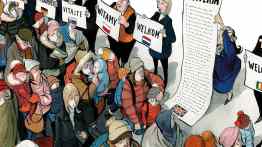
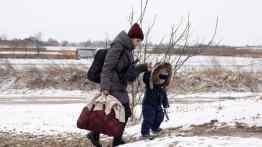
While Europe opens its arms up to the Ukrainians fleeing war, the UK is taking a much slower approach. While people are allowed to come in relatively quickly if they have family here, that definition of family is extremely limited. Our response is causing confusion with the public but seemingly also within the Conservative party.Katy Balls and James Forsyth are joined by Kate Andrews from Calais who has been spending the last two days talking to refugees on the ground looking to seek refuge in Britain.

The SNP won’t be happy until Boris is charged with war crimes

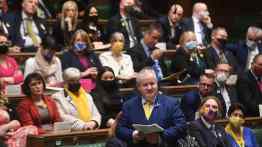
Blood streams through Ukraine. Tears run through parliament. At PMQs today, numerous members urged Boris to show more compassion towards Ukraine’s refugees. Poland has already taken 1.2 million. Barely a thousand have been received here, as Boris confirmed, but the number will rise sharply. Leading the pro-refugee campaign was the SNP’s Ian Blackford who seems to represent every region on earth apart from his own constituency. In a venomous speech he charged the home secretary, Priti Patel, with imposing a ‘hostile environment’ on refugees for ‘ideological’ reasons. Well, well. No one could accuse the SNP of embracing xenophobia for political gain. Blackford lambasted the government for ‘putting up barriers and bureaucracy’.