Politics

Read about the latest political news, views and analysis

Progressives are right about our rotten prisons

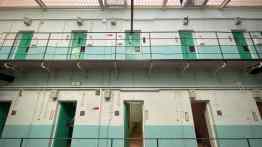
When we talk about ‘under-served communities’, we typically think in terms of an absent or neglectful state. Yet one of the most under-served groups of all is one for whom the state is never absent: prisoners. Justice secretary Dominic Raab is in the headlines after he sent prison and probation staff a style guide instructing them to avoid ‘woke’ terminology such as ‘service-user’ and ‘room’ and stick to ‘inmate’ and ‘cell’. On the face of it, Raab’s orders are another salvo in the culture wars and a bit of positioning by an ambitious deputy prime minister, but the Lord Chancellor might be onto something, if perhaps inadvertently.

Will Scotland’s census extension ruin the results?

The debacle over Scotland’s census will not, it seems, have a happy ending. Nearly a quarter of households (some 604,000) are yet to complete their return, and had been facing £1,000 fines from today. It could have been a prosecution of unprecedented scale, but the deadline has been extended to the end of May. Sir Tom Devine, perhaps Scotland’s best-known historian, has said he thinks all is lost. ‘Such is the scale of the disaster the authorities have had little choice but to offer a new deadline,’ he said. ‘Will the extension work? It is very doubtful.

Right-to-buy won’t fix Britain’s housing crisis

The biggest long-term threat to the Conservatives is neither partygate nor even the cost of living crisis – but declining rates of home ownership. As Mrs Thatcher understood, when people are able to afford their own home, they become more conservative in outlook. They put down roots in their local area and they gain a vested interest in capitalism – just look how Mrs Thatcher won and held on to aspirational areas such as the new towns. That the rate of home ownership plunged from 70.9 per cent to 62.6 per cent between 2003 and 2017 (it has since recovered slightly) goes quite a long way to explaining why Jeremy Corbyn became such an attraction for young people in the general election of that year.

How Eurosceptics seized power over the French left

In Britain it was the Tories who tore themselves apart over Europe, but in France it is the left for whom Brussels has long been a battleground. Jean-Luc Mélenchon, the de facto leader of the French left following his impressive performance in last month’s presidential election, is an unabashed Eurosceptic, as are most in his La France Insoumise (LFI). The Socialist Party, on the other hand, share Emmanuel Macron’s view that Europe is the future and if France must sacrifice some of its sovereignty in the pursuit of closer integration then so be it.

Googling Neil Parish, I came across a porn website

It really is quite easy to click on internet pornography by accident. There’s a persuasive argument that the whole of the modern world, as shaped by the internet, is an accidental by-product of the insatiable global market for new, easier, cheaper, faster and more private ways of looking at bare boobies. The clean and useful bit of the web is, in this account of it, but an apologetic cluster of barnacles hitching a ride on a great grizzled baleen whale of filth. I look back on partygate (‘BJ punishment’) and the Libor scandal (‘rate pegging’) with a shudder. Far and away the most plausible thing about Neil Parish’s account of himself, then, was his claim that he’d arrived on a pornographic website by mistake.

Alastair Campbell rides to Labour’s rescue (again)

Milestones are always a time for reflection. So the 25th anniversary of New Labour's election triumph this weekend has prompted an outpouring of dewy-eyed reminiscences from commentators of a certain vintage about how great it all was.  Cool Britannia, the minimum wage, PFI deals and the Millennium Dome. Truly, a golden age: things really could only get better. To mark this auspicious occasion, a familiar face from those halcyon days has re-emerged to remind voters about the best that New Labour had to offer.  Alastair Campbell, the king of spin, has popped up with a new report by Labour in Communications urging Sir Keir Starmer to revamp his approach to PR ahead of the next election.

Cathy Newman ducks the questions

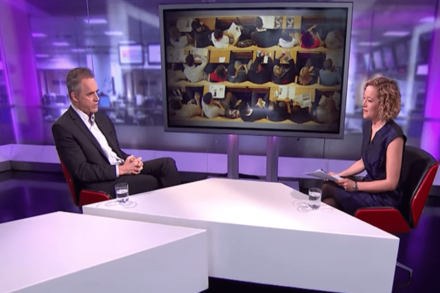
Privatisation isn't the only issue currently worrying Channel 4 bosses. The network's eponymous news programme has been facing questions for months about its alleged use of non-disclosure agreements (NDAs) amid mounting concern that they could be used to silence staff in equal pay, discrimination, harassment and victimisation cases. Campaigners, MPs and whistleblowers are among the dozens of high-profile women calling on C4 to release its 'traumatised' and 'gagged' former staff from such confidentiality agreements. Not the best look, perhaps, from a self-styled 'progressive employer'... Not all of Channel 4's staff though seem keen to publicly back the campaign to free the broadcaster's former staff from their NDAs.

Sunday shows round-up: No ‘culture of misogyny’ in parliament, claims minister

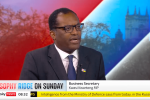
Large parts of the UK vote in local council elections on Thursday. In Westminster, however, the focus is on the so-called ‘pestminster’ scandal after the revelation that as many as 56 MPs are under investigation for some form of sexual misconduct. The case that has most recently sparked headlines is that of the Conservative MP Neil Parish, who has admitted watching pornography while on the parliamentary estate. Sophy Ridge spoke to the Business Secretary Kwasi Kwarteng about the culture in parliament, asking him if the environment was a safe workplace for women: https://twitter.com/RidgeOnSunday/status/1520668894205292546?

Lib Dems take a leaf out of Labour’s book

'Secret election pact to stitch up Boris' roars the front page of today's Mail on Sunday. Ahead of Thursday's local elections, Oliver Dowden, the Conservative party's chairman, has written an angry letter to Sir Keir Starmer. He claims Labour is standing down candidates ‘in swathes of the country’ where Lib Dem support is strong to avoid splitting the anti-Tory vote. His fellow knight, Sir Ed Davey, is accused of doing the same where Labour is dominant elsewhere. Playing politics in an election campaign? It'll never catch on. It marks a change of course from, er, Thursday when Labour were found to have spent a small fortune on online adverts attacking the Lib Dems.

After 25 years it’s time to finally break with New Labour economics

The state would be prioritised over everything else. Taxes would be constantly, if stealthily, raised. Spending would be reclassified as investment, and shifted off the balance sheet wherever possible. And macro stability would be out-sourced to the Bank of England, while the Treasury would take total control of domestic policy. A quarter of a century ago this weekend, as New Labour was swept into power in a landslide election victory, Gordon Brown, then a relatively fresh-faced Chancellor, completely overhauled economic policy. In a whirlwind week, he put in place the most far-reaching reforms in a generation. And yet, 25 years on, that consensus is still in place. Twelve years of Conservative rule, either alone or in the coalition, has barely shifted it.
Tony Blair was a victim of his own success

Napoleon is said to have placed a high value on lucky generals, though no one has succeeded in identifying the source of the quote. Then again, he would hardly have been in favour of unlucky ones. Luck is equally important in politics. For ten years, Margaret Thatcher had it, and exploited it ruthlessly. Her successor, John Major, was less fortunate. Events, and his opponents, seemed determined to give him the doubt of every benefit. He hardly had any luck, and his enemies were also ruthless, in exploiting its absence. What a contrast with Tony Blair – who celebrates the 25th anniversary of his 1997 election win today. No British politician has ever enjoyed such a cornucopia of good fortune. In his political career, he had started out as Gordon Brown’s younger brother.

Watch: SNP MP appears to break Scotland’s alcohol ban on trains

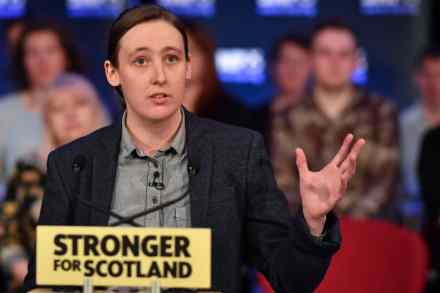
Last night, Mr Steerpike was on his way back to Glasgow Central station from a game between Ayr United and Partick Thistle, sipping a hot water and lemon. He would have liked something stronger, only the Scottish government — which took control of Scotland’s railway services on April 1 — has extended the Covid-era ban on the consumption of booze on trains. Some rebellious passengers were flouting the government’s rules, however. Among them, Mr Steerpike observed, appeared to be Mhairi Black — the SNP MP for Paisley and Renfrewshire South (and subject of Tracey Ullman parody).

What is the new right?

34 min listen

Freddy Gray talks to the journalist James Pogue about his latest piece for Vanity Fair magazine, in which he details the key figures and thinking behind the 'new right'. Pogue is the contributing editor at Harper's Magazine and author of 'Chosen Country: A Rebellion in the West'.

James Bartholomew, Freddy Gray and Kate Andrews

20 min listen

On this week's episode, we’ll hear from James Bartholomew on how taking in a Ukrainian refugee has improved his social clout. (00:50) After, Freddy Gray on the Republican fight against Disney. (06:27) And, to finish, Kate Andrews on overcoming her arachnophobia. (13:46)Entries for this year's Innovator Awards, sponsored by Investec, are now open. To apply, go to: spectator.

Why is it so hard to become a British citizen?

20 min listen

A big congratulations to Linda Nelson who has just become a British citizen. Fraser details the long and taxing journey it took for his wife to reach this point in his Telegraph column this week and asks why as an immigrant nation do we make becoming British so challenging for new arrivals? On the podcast, Fraser talks with Cindy Yu and James Forsyth about this question. And Cindy brings a few questions from the citizenship test, to see if her colleagues would pass.

Britain needs Kemi Badenoch – but not just yet

It seems to many of us that British society is falling apart and that this – even more than our present economic difficulties – is the biggest problem politics has to deal with. This falling apart is not by accident, but by the design of a new cult of leftism that seeks to divide people into rigid identity groups ranked in a hierarchy of vice and virtue based upon the privilege they are said to have enjoyed or the oppression they have suffered.