Politics

Read about the latest political news, views and analysis

Seven key battlegrounds at the 2022 local elections

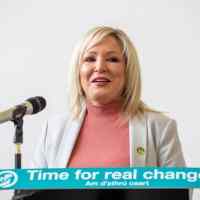
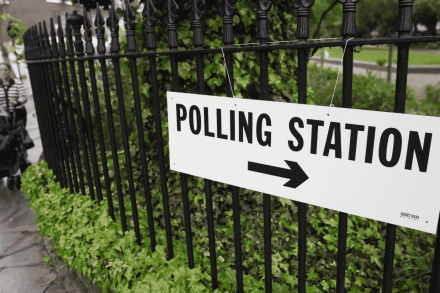
It's polling day across the United Kingdom. Elections are being held for all London borough councils and every local authority in Wales and Scotland. Most seats in England were last up for election in 2018 and in Scotland and Wales in 2017. Elsewhere in Northern Ireland, there are assembly elections, with Sinn Féin poised to become the largest party at Stormont. This year's contests may lack the prestige of last year's mayoral races but they will nevertheless serve as a useful indicator of the public's mood towards Boris Johnson's government. Questions about Covid parties and the cost of living have dominated the campaigns in England.
Can anyone stop Emmanuel Macron?

If they weren’t insufficiently weary of politicians, the French will be invited to vote all over again for the Assemblée Nationale, the nation’s parliament, on 12 and 19 June. Citizen lassitude notwithstanding, the election may produce a louder, if not assuredly more effective, opposition to the prolongated reign of the second Sun King, the newly reelected President Emmanuel Macron. When fresh-faced Macron was first elected in 2017 in a stonking landslide, his portmanteau political movement, La République En Marche!, went on to win a commanding presidential majority in the National Assembly elections that followed.

China’s secret property empire

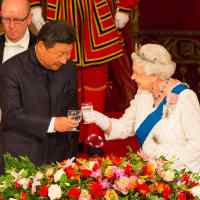
The Russian bear might be back but the Chinese dragon waits in the wings. Moscow's spectacularly mismanaged invasion of Ukraine might have diverted Western attention away from Beijing but the CCP clearly poses a much greater long-term threat to the West than Putin's kleptocratic regime. With that in mind, Mr S was intrigued to see the business minister Lord Callanan recently confirm that the People’s Republic of China is the registered owner of no less than 60 titles in the Greater London boundary.  Combined, they are likely worth a small fortune. Intrigued, Steerpike asked the punctilious pen-pushers over at the Land Registry for a list of all these properties.

What we get wrong about local elections

Friday morning’s headlines can pretty much already be written: Conservatives suffer heavy losses in local elections; a humbled Boris Johnson addresses the nation saying that lessons have been learned; backbench MPs resume plotting, trying to decide whether to move now or in a few months’ time. Former Tory voters will be feeling pleased with themselves that they have left the government with a bloody nose, and who knows? Maybe it will be the jolt that succeeds in getting the government to concentrate on what really matters at the moment – the cost of living crisis – and to stop faffing around with other things.

Are Northern Ireland’s unionists about to hand Sinn Fein victory?

'Ulster stands at the crossroads,' Northern Ireland's prime minister Terence O'Neill famously declared in 1968 as the Troubles began to take hold. A crossroads moment is once again looming into view. If current polling is to be believed, Sinn Fein will be returned as the largest party following Thursday’s assembly election. Such a victory would pose an existential problem for Northern Ireland’s unionists – and the governments in London and Dublin.  Unionists only have themselves to blame for this crisis. While what they stand for – the preservation of the Union – is obvious, the means by which they want to achieve it is anything but.

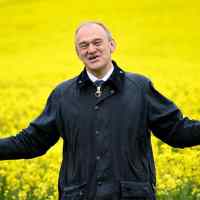
The Liberal Democrats’ strategic ambiguity

This week’s local elections have mostly been framed as a contest between two options: first, whether the Tories will be given a punishment beating by the electorate over recent scandals; or, second, whether Labour will underperform, giving a second thought to whether or not they can win big again. But there is a third dynamic concerning how the Lib Dems will do, especially how well they will perform in parts of the south of England and particularly in Tory-held constituencies that they will be targeting at the next general election. The Lib Dems have managed some remarkable breakthroughs in recent by-elections, namely in Chesham and Amersham and North Shropshire, the latter being particularly impressive given it had always been a safe Tory seat.

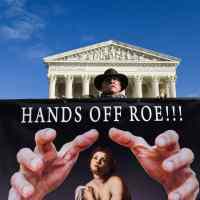
Revoking Roe v. Wade is not an assault on democracy

The leak of a draft Supreme Court decision overturning Roe v. Wade has sparked a furious reaction in Britain. Yet for all the backlash in British political circles, the reality is that the proposed shake-up of abortion laws in the United States doesn't really matter here. Our nominally conservative-leaning parliament just voted to make abortion easier, and the issue is nowhere near as salient for the British right as it is in the US. Those who are furiously denouncing the ruling are wading into an issue that will have little to no impact on their own lives. Yet there is something significant for Brits to take from this furious debate: we're lucky that we live under the rule of law rather than the rule of lawyers. How much longer will this be the case?

Why is Boris Johnson suppressing the incomes of the poor?

As the Prime Minister pointed out this morning, looming recession and soaring inflation are not uniquely British problems – though right now the UK economy is slowing faster than many of our rich country competitors. In the US for example, the IMF’s former chief economist Ken Rogoff has warned just today that the Federal Reserve’s official interest rate may have to go as high as five per cent to suppress rampant inflation. Which is one of the reasons I was nonplussed when the PM told Susanna Reid on ITV's Good Morning Britain that he’s reluctant to increase universal credit and benefits and protect poorer people from the ravages of inflation because doing so would stoke inflation and force the Bank of England to put up interest rates.

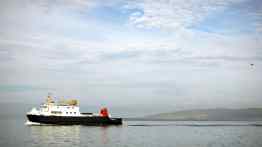
What happened to the SNP’s dodgy dossier?

In the final weeks before the 2014 Scottish referendum, the last independent Clydeside shipbuilder went bust. The SNP was boasting about ‘one of the world’s wealthiest nations’ going it alone, so when it went pop something had to be done. A millionaire adviser to Alex Salmond was lined up to buy it on the understanding that he’d bid for government contracts. A year later, a £100 million deal was struck to build two ferries. That deal quickly ran aground. There was no sign of the ferries by 2018 and the bill had doubled to £200 million.

What does victory look like in the local elections?

13 min listen

Campaigning in the local elections is entering its final few days. But what are the expectations for the Tories and Labour and can they be met? Both leaders Boris Johnson and Keir Starmer have already put their foot in it to some degree, with the Labour leader getting rather too defensive about his lockdown mid-work beer and Boris seeming out of touch over the cost of living crisis. Isabel Hardman talks to Katy Balls and James Forsyth about the state of the race.

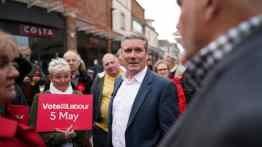
Beergate is coming back to bite Starmer

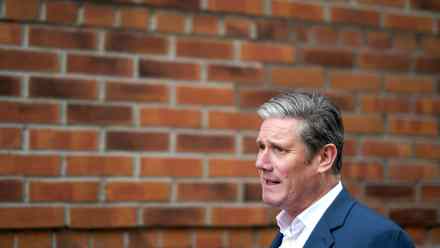
Labour had planned to continue its offensive on partygate and the cost of living during this week's local elections. In recent weeks, that tactic has been yielding results: Boris Johnson has come under pressure for receiving a fixed penalty notice for attending an event in Downing Street involving birthday cake. Now it's Keir Starmer who is facing the toughest questions about Covid rule breaches. The problem? Beergate.  This all relates to an event last year on 30 April where Starmer was pictured with a bottle of beer in the office of City of Durham MP Mary Foy ahead of the Hartlepool by-election. When it surfaced several months ago, there was an effort by Tory MPs who tried to draw equivalence with this event and the various allegations facing Boris Johnson's No.

The nanny state is making us poorer

As household budgets face their worst squeeze for decades, one wonders whether the public health establishment feels any remorse for their role in driving up the cost of living. The kinds of taxes – on food, alcohol, tobacco, and soft drinks – that nanny statists have dedicated entire careers toward delivering are proven to have taken a greater share of income from the poor than the rich. An average family that indulges in drinking and tobacco will now spend £891 in cigarette levies and £216 in alcohol duty every year. Advocates for sin taxes argue that their tactics are progressive if they improve the health of the poor more than the rich.

All talk and no trousers: is Oxford really to blame for Brexit?

Attacks on British elitism usually talk about Oxbridge, but Simon Kuper argues that it is specifically Oxford that is the problem, which has provided 11 (out of 15) prime ministers since the war. So what’s the explanation? Kuper thinks it’s all the fault of the Oxford Union, which fosters chaps who are clever at debating without particularly caring which side they are on. As a result, they acquire enough rhetorical skills to enable them to beat opponents who rely on thoughtful, fact-based arguments. Such arguments are ‘boring’, and being boring in the Oxford Union is the worst crime you can commit. This wouldn’t matter if it were confined to undergraduates but, Kuper argues, the Union is often the rehearsal for, and gateway to, a Westminster career.

Tories braced for ‘Blue Wall meltdown’

Just 48 hours out from polling day and in Tory circles the expectations are that the local election results will be OK in some places and disastrous in others; there are predictions of ‘carnage in Surrey and Oxfordshire’. ‘Things are particularly bad in Scotland, bad in London, not great in the South West, but in the Red Wall marginals the mood is not that bad’ is how one Johnson ministerial loyalist sums up the mood. One cabinet minister predicts headlines about a ‘Blue Wall meltdown’, saying that the ‘the Libs are now detoxified post coalition’ and have, once again, become seen as a safe repository for a protest vote.

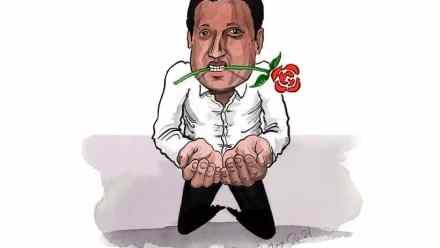
Starmer squirms on beergate

Schadenfreude is a funny thing. Once it was Labour laughing at Boris Johnson dodging questions about food and drink: now it's their turn to face them too. Sir Keir Starmer had a somewhat excruciating appearance on this morning's Today programme when he was asked repeatedly about his attendance at a work event in April 2021, at which the Labour leader was photographed holding a beer. Four times the Labour leader was asked by Martha Kearney about whether Durham Police had been in touch with him about the gathering; four times he dodged the question. Starmer claimed that the picture was taken before 10 p.m and that thereafter he and other Labour campaigners resumed their campaigning efforts. What exactly were they doing that late – stuffing letters perhaps?

Roe v Wade and RBG’s legacy

There are tears aplenty across America this morning as millions awake to the news that the Supreme Court is set to overturn Roe v Wade. The initial majority draft was leaked overnight, suggesting that the country's highest court will strike down the landmark ruling that legalised abortion nationwide. With Republican legislatures passing restrictive measures across America, the decision is expected to allow each state to decide whether to restrict or ban abortion. At least it'll give the Democrats something to run on in 2024. Already the rhetoric is ramping up across the country, with accusations flying as to who is to blame.

Boris Johnson’s Red Wall blunder

Oh dear. It seems that Boris Johnson's passionate electioneering doesn't extend to, er, knowing where he actually is. The Prime Minister has been out and about on the campaign trail, touring the country to drum up support for his party's flagging fortunes, three days before voters cast their verdict on his government's recent woes. Posting a photo of himself eating an ice cream in Whitley Bay, Johnson tweeted that it was a 'fantastic day to be out campaigning in Teesside, where we’re delivering a massive programme of investment as part of our plan to level up the whole of the UK.' Unfortunately, Whitley Bay is actually in Tyneside, not Teesside, prompting opposition parties to accuse the PM of paying little attention to the area outside of election periods.