Politics

Read about the latest political news, views and analysis

Will Boris break the Stormont deadlock?

12 min listen

Boris Johnson is in Belfast today in an attempt to repair relations between the DUP and Sinn Fein. In a 2000 word article for Belfast Telegraph, the Prime Minister laid out his intentions not to scrap the Northern Ireland Protocol, but instead to fix it. Can these two polarised parties find a middle ground? Also on the podcast, Jeremy Hunt was on a media round over the weekend to publicise his new book on the NHS. Yet he was unable to avoid questions about his party. All to be discussed as Isabel Hardman speaks to Katy Balls and James Forsyth.
Boris Johnson’s Northern Ireland gamble

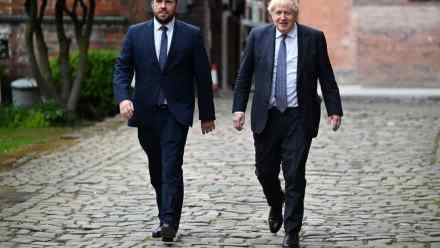
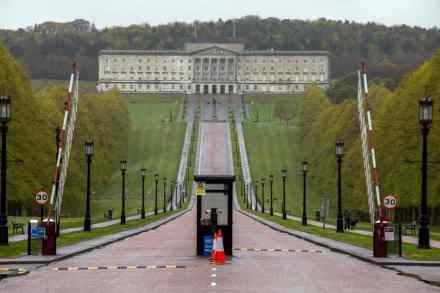
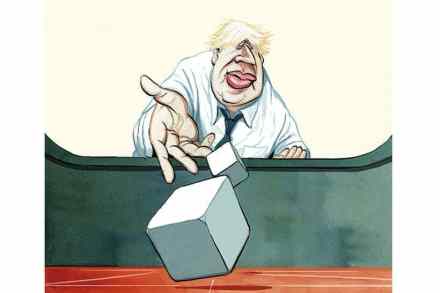
Boris Johnson will head to Northern Ireland today as the government lays the groundwork to unilaterally overwrite parts of the protocol. Tomorrow, the Foreign Secretary is expected to unveil plans for a new law to change the protocol if the EU refuses to grant concessions. Given Johnson's frayed relationship with the DUP – the party hasn't forgiven him for agreeing the current Brexit deal – his call for party leaders in Northern Ireland to get 'back to work' and form an executive is likely to have only a limited effect. However, a 2,000-word article by Johnson in the Belfast Telegraph lifts the lid on the UK strategy when it comes to changing how the protocol is implemented.

What Jack Monroe has in common with Lee Anderson

In 1966, during the Republican primaries for the Californian gubernatorial race, the internecine fighting amongst the GOP candidates had grown so vicious – and particularly targeting a disruptive actor turned politician (whatever happened to those?) – that the state Republican chairman, Gaylord Parkinson, proposed an eleventh commandment: ‘Thou Shalt not speak ill of any fellow Republican.’ The actor, a certain Ronald Reagan, loved it, and adopted it as a personal maxim; sticking to it, he would go on to win that election. In time it came to be known as ‘Reagan’s eleventh commandment’ and its meaning more broadly paraphrased as ‘thou shalt not speak ill of a fellow conservative.

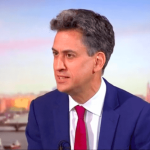
Sunday shows round-up: Ed Miliband backs Starmer over ‘beergate’

Boris Johnson is set to pay a visit to Northern Ireland tomorrow to try and smooth things over following the Assembly elections earlier this month. With Sinn Fein securing the most seats for the first time, and the DUP threatening not to form part of the government at all, it does not promise to be a particularly stress-free day at the office. The issue at the top of the Prime Minister’s in-tray is what to do about the Northern Ireland Protocol – the part of the Brexit Withdrawal Agreement that creates regulatory barriers with Great Britain. The Business Secretary Kwasi Kwarteng joined Sophy Ridge this morning. She asked Kwarteng if the government would be prepared to tear up parts of the Protocol, in the face of pressure from the European Union: https://twitter.

Severing ties with the poisonous NUS is long overdue

Full marks to Michelle Donelan, the minister for universities, who has announced that the government is severing all ties with the National Union of Students (NUS). In recent years, the NUS has become a disgrace, infested with levels of anti-Israel obsessiveness that would make your eyes water. One story that stands out in my mind involved a scheduled performance by the Corbynite rapper Lowkey at the NUS conference in Liverpool in March. As a window into the performer and hard-left activist’s worldview, consider the lyrics of his song ‘Long Live Palestine’: ‘You say you know about the Zionist lobby. But you put money in their pocket when you're buying their coffee. Talking about revolution, sitting in Starbucks.

How the Channel defined Britain’s destiny

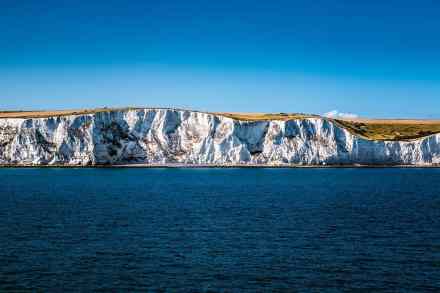
Geography matters. Everyone knows that. It defines Britain’s current relationship with Europe and its battle over the Northern Ireland protocol and is visible every day that people cross the Channel in small boats. But while geography clearly drives a country’s history, it also important to remember how much technological and historical change can turn that geography on its head as well. This flux holds the key not only to Britain’s past but also to its future. Two geographical facts have dominated Britain’s story since 6000 BCE, when melting ice age glaciers lifted the sea to a level that physically separated it from the continent. First, the British Isles (obviously) became islands; and second, they still remained incredibly close to Europe.

Wakefield Labour rocked by ‘stitch up’ claims

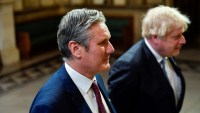
It seems that Labour's bid to recapture Wakefield isn't off to the best of starts. The resignation of Tory MP Imran Ahmad-Khan last month over historic sex offences gave Sir Keir Starmer's party a chance to take back the seat it lost in 2019 and prove that Labour is on track to make gains in the Red Wall at the next election.  Unfortunately, a row has now broken out over attempts to 'parachute' favoured candidates into the constituency. The entire executive of the local Wakefield branch has this week resigned after party HQ shortlisted two members in its process to pick Labour's candidate in the forthcoming by-election. Quite something, given that Sir Keir ran on a pledge in 2020 to 'end' central imposition of candidates if he was elected leader.

What is the future of Nato?

15 min listen

Finland this week has expressed its wish to join Nato and Sweden is expected to follow suit. But with an America more focused on China, an ever aggressive Russia and Turkey with a membership veto card what does the future of this organisation look like?

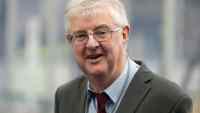
Mark Drakeford’s mission to create a Welsh super state

Few appreciate how mischievous Welsh devolutionists are when it comes to embedding themselves in the national consciousness. Take the Welsh translation for ‘first minister’, prif weinidog, which means ‘prime minister’. What was once a linguistic trick has now become an informal touch point in Wales. Regardless of his title, Mark Drakeford behaves, looks and sounds like a powerful national leader rather than a devolved minister. Few politicians exude such confidence but it should be no surprise: in the last year, Drakeford guided Welsh Labour to two triumphant victories in national and, more recently, local elections. He lectures the British Prime Minister on the future of the Union and then calls for him to resign.

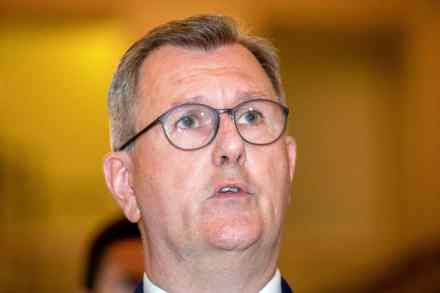
Why the DUP is blocking Northern Ireland’s assembly

It was known that the DUP would not agree to the power sharing executive in Northern Ireland until it felt that its concerns with the protocol had been addressed. What was not known was whether it would consent to the election of a speaker for the assembly. Today it said it would not and so no speaker has been elected. This means that the assembly cannot function. The DUP’s aim is to increase the pressure for compromise on the protocol. It is saying that it will not allow the devolved institutions to function until it gets the changes it wants. Boris Johnson will go to Northern Ireland on Monday. We can expect him to urge the parties to form an executive while repeating his view that there must be changes to the protocol.

Why is the government planning to cull the civil service?

12 min listen

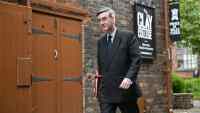
Jacob Rees-Mogg has said that the government plans to axe 91,000 posts within three years from the civil service. The argument for it is that the reduced tax burden will help the public deal with the ever-growing cost of living crisis. But will this have the desired effect and will it be anywhere near enough?Kate Andrews talks to James Forsyth and Fraser Nelson about if the Prime Minister has the right temperament to weather this particular storm.

Is the Tory press now a danger to the Tory party?

Despite cable TV, streaming services and social media providing 1001 distractions, the Tory press charges on like an old, angry bull, its rage undiminished by the losses the technological revolution has inflicted on its readership and finances. You can fool yourself today that its power is back to its 20th century peak. The police had investigated Keir Starmer’s Durham campaign event and found he and his colleagues had broken no Covid rules. But day after day the Daily Mail, the Sun and the Daily Express hammered away at the story – fake or otherwise – and the cops felt they had no choice but to reopen the inquiry. I could go on about the Tory press’s double standards and its bootlicking of the ruling clique.

The Kemi Badenoch Edition

39 min listen

Kemi Badenoch is the MP for Saffron Walden and a minister in Michael Gove’s Levelling Up department.On entering parliament in 2017, Kemi was quickly pegged as one of the Conservative Party’s rising stars and an example of what she calls the “British Dream”, going from immigrant to parliamentarian in the space of one generation. After a career as a software engineer, she made her move into politics as a Conservative member of the London Assembly. Then beat Theresa May’s own special advisor to the ballot of Saffron Walden. On the podcast, Kemi talks about her childhood in Nigeria and the golden ticket that was her UK passport, hacking Harriet Harman and how her conservative views were formed.

Speaker hits back in press gagging row

Rows in Parliament usually occur on the floor of the House of Commons, between opposing members of different sides. But a fresh storm is brewing elsewhere in the chamber, between the journalists who comprise the parliamentary press gallery and the man who occupies the Speakers' Chair. After the grandstanding of the John Bercow era, Lindsay Hoyle was hailed by the lobby as a breath of fresh air when he was elected to the Speakership back in November 2019.  But now two-and-a-half years on, there are signs that all is not well between Hoyle and members of the Fourth Estate. First, there was last month's row over Angela Rayner's legs, which prompted the Speaker to summon the Mail on Sunday's editor to appear before him and explain the newspaper's coverage.

How bad could ‘Biden-flation’ get?

14 min listen

Though inflation has recently gone down a little in the States, it is still at a 40-year high. Inflation is an issue affecting most of the world due to several external factors, but many critics of Biden say that his policies are worsening this crisis rather than fixing it. Is that the case?Freddy Gray sits down with The Spectator's economics editor Kate Andrews to discuss what this cost of living crisis will mean for the future of the Biden administration.

Yet more SNP bullying hypocrisy

Oh dear. It seems that the sainted Sturgeon has slipped up again. Much as Jesus was betrayed by his disciple, so too has the Blessed Nicola been let down by one of her own. In this case, it's Fergus Ewing – scion of the First Family of Scottish nationalism. The former rural economy secretary stands accused of bullying civil servants: allegations which Sturgeon government's has now been forced to investigate. That probe is believed to have concluded but (quelle surprise) the First Minister is refusing to disclose the outcome of the inquiry, citing 'data protection laws' as the reason why she is unable to discuss the case. What a convenient excuse for Sturgeon. It is, however, not a terribly plausible one.

Sadiq Khan shows why London doesn’t need a mayor

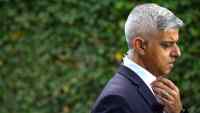
Sadiq Khan doesn’t seem to know what his job is. The Mayor of London announced on Thursday morning that he was setting up a review to examine whether cannabis should be legalised. Just a few hours later, the Home Secretary Priti Patel reminded him that ‘the mayor has no powers to legalise drugs’. Duh. Labour didn’t seem that happy either. Yvette Cooper also gave Khan a ticking off, saying that the national party already had a policy and, no, they wouldn’t be pushing for legalisation. So please be quiet Sadiq. But we all know what the mayor was really up to. Sadiq Khan wants attention. He wants to be a national politician by using a local politician’s platform.