Politics

Read about the latest political news, views and analysis

Can Keir escape?

43 min listen

This week Lara Prendergast and William Moore talk to Katy Balls and the journalist Paul Mason about the future of Labour (00:40). Followed by historian David Abulafia and the Sunday Times education editor Sian Griffiths on the announcement of Cambridge University's plans to limit the number of their private school students (15:20). Finally, a debate between author Michele Kirsch and Laura Biggs from the Menopause Mandate on the question 'Are we talking about menopause too much?' (31:50).Hosted by Lara Prendergast & William MooreProduced by Sam HolmesSubscribe to The Spectator today and get a £20 Amazon gift voucher:spectator.
Rishi Sunak’s net zero u-turn

How time flies when there’s a real crisis. Just six months ago at the Glasgow climate conference, the Chancellor Rishi Sunak was pledging to rewire the entire global financial system for Net Zero. Sunak boasted that he was going to make London the world’s first ‘Net Zero Aligned Financial Centre’. It would mean forcing firms to publish plans showing how they will decarbonise and meet net-zero targets to be overseen by a transition taskforce. There was little fanfare when the transition plan taskforce was launched last week.

Six graphs that show how the NHS is collapsing

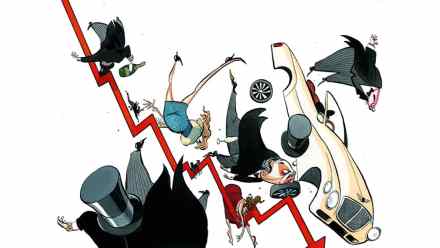
If you called an ambulance last month you probably faced quite a long wait. Figures released this morning show the average time for an ambulance to arrive after a ‘category two’ call-out was 51 minutes, only slightly down from 61 minutes in March. This is still nearly three times longer than the 18 minute target for category two emergency calls, which include serious conditions such as strokes or chest pain.  Pressure is mounting within hospitals too, with 12 hour A&E waits reaching a new high: one in 20 patients now have to wait half a day or more for treatment after arriving at hospital.

Lee Anderson is wrong about food banks

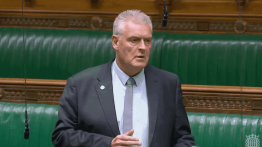
Who says the Tories don’t understand the cost-of-living crisis? So far obliviousness to the desperate circumstances of low-income (and not so low-income) families has been in evidence on the posho wing of the Conservative party. There was Rishi Sunak who said it would be ‘silly’ to provide more help with energy bills right now and better to wait and see what things looked like in the autumn. Not to mention environment secretary George Eustice who, offering some belt-tightening tips to struggling Brits, suggested ‘going for some of the value brands rather than own-branded products’ as a way to ‘contain and manage their household budget’.

Is Boris about to bin the Northern Ireland protocol?

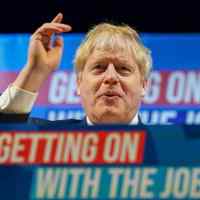
Here we go. The UK is on the brink of another Brexit battle as ministers consider unveiling legislation that would unilaterally overwrite parts of the Northern Ireland protocol. This morning the Foreign Secretary spoke to the European Commission's vice president Maroš Šefčovič – warning that the protocol has 'become the greatest obstacle to forming a Northern Ireland Executive'. Liz Truss said that the situation in Northern Ireland is a matter of internal peace and security for the United Kingdom so if the EU did not show the required flexibility, the government would be left with no choice but to act. Suella Braverman’s legal advice to No. 10 is that legislating to override the protocol would be legal What does that action look like?

CCHQ’s briefing backfires

Boris Johnson has sought to reboot his premiership this week, unveiling a package of eye-catching measures as he tries to calm Tory tensions about last Thursday's election results. Such efforts though have been somewhat undermined by the announcement of the Metropolitan Police today that another 50 fines have been dished out to Downing Street staff over partygate.  Yet even before that, there were signs that the Queen's Speech on Tuesday hasn't gone down quite as well as expected. For one of Steerpike's spies has got in touch with a briefing from the bright young things over at Conservative Central Headquarters which was found lying in the House of Commons tea room.

New Aussie rules: Conservative values have fallen out of fashion

The election campaign is under way in Australia, barbs are being exchanged, candidates denigrated and abused, and promises – many of which are just fantastic in the literal sense of the word – are being made. The Prime Minister, Scott Morrison, who is the leader of the Liberal party, is being challenged by the Labor leader, Anthony Albanese. Although Morrison has the edge over Albanese as preferred prime minister, neither is much loved. The leaders are unlikely to be a decisive issue in the election. What is the deeper mood of the country? That needs to be put into its historical context. Ever since the mid-1970s, Australians have expected political parties to be economically responsible.

Why Russian literature shouldn’t be cancelled

Vladimir Putin makes no secret of his love for Russian culture, and Russian literature in particular – a body of work whose achievements, Dostoyevsky once claimed, justifies the existence of the entire Russian people. But if that same oeuvre now inspires a man instigating unprovoked war, doesn’t that raise urgent questions about its contemporary validity? For some, these concerns are best expressed via cancellation. In Wales, the Cardiff Philharmonic recently pulled the plug on performances of Tchaikovsky’s 1812 Overture, Marche Slave and Second Symphony, the ‘Little Russian’ (an old and patronising name for Ukraine).

The problem with Macron’s vision for Europe

The Ukraine crisis has transformed international affairs, forcing countries the world over to rethink their alliances and interests. New patterns are forming that will probably stay in place for many years – and one outcome is that global deals are being seen as more effective than regional ones. Sweden and Finland look set to join Nato, and Britain has agreed a defence deal with Japan. In theory, EU countries are required to come to the help of any member that is attacked, but Sweden and Finland feel that only Nato membership (which offers a place under America’s nuclear umbrella) can afford them true protection. As they wait for the applications to go through, they have signed a defence deal with Britain which promises them interim protection.

Parliament’s £36,000 ‘cot mobile’

The art of politics is one thing but what about the politics of art? Over in Parliament, MPs have been fussing about what item to hang in the corridors of power to belatedly mark the 2019 general election. But now, at last, those bigwigs who sit on the Speaker’s Advisory Committee on Works of Art have finally come up with a solution: a brightly coloured, carousel-like suspended sculpture. It currently hangs near Parliament's main public entrance, acting as 'a dazzling, eye-catching and thought-provoking addition to the space it inhabits' – according to the Commons press release, at least which claims: The abstracted shapes signify political characters from all the relevant parties as well as members of the electorate.

The problem with Nicola Sturgeon’s latest independence drive

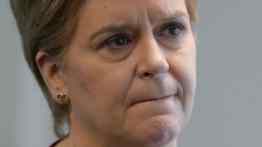
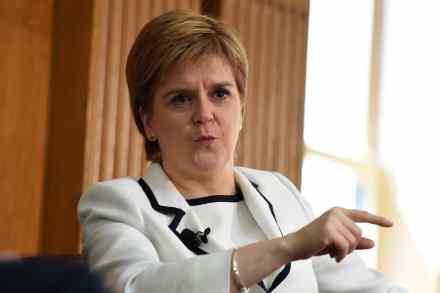
The Scottish government will start refreshing the ‘very positive case’ for exiting the UK, Nicola Sturgeon said this week, in the aftermath of Scotland’s local council elections. Can we expect anything radical to come out of this series of papers? Will there be a big departure from the last major overhaul of the independence pitch, the 2018 SNP-commissioned Sustainable Growth Commission report? That report advocated an emerging market-style currency arrangement – with Scotland unofficially using pound sterling for a prolonged period after secession – and a decade of austerity to put the new state’s public finances in shape.

Sadiq and Nicola’s American sojourns

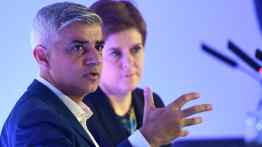
Junkets are like buses: you wait ages for one to come along and then two do at once. For this month, it's not just London mayor Sadiq Khan on a transatlantic taxpayer-funded jolly: Scotland's First Minister Nicola Sturgeon launches her American charm offensive next week too. Good thing that all is going well currently in both parts of the UK then. While both politicians sit for different parties in different assemblies, they both share a similar love of the limelight, with a penchant for selfies, statements and sojourns abroad. And it's for that reason that both politicians are seeking to go above and beyond their constitutional remits on both their respective trips. Take Sadiq Khan, the achingly right-on manager of the metropolis.

The SNP’s latest ferries farrago

Hurrah! A Scottish Government press release announces, with no small modicum of pride, that it has at last located the mysterious missing documents in the ferries saga. Audit Scotland, the public body which runs the rule over Holyrood’s spending of taxpayers’ money, recently conceded defeat over this matter. It had spent considerable time and effort trying get to the bottom of the SNP’s 2015 decision to buy two ferries from a shipyard owned by a Scottish Government economic advisor — against the advice of its own ferry agency. Seven years on, the initial cost of £97m has ballooned to £250m and neither of the ferries has been completed. The outstanding questions were: who took the decision to award the contracts — and why?

What’s behind the Swedish security pact?

15 min listen

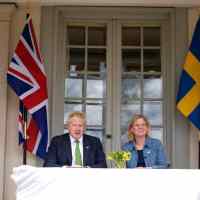
Today Boris Johnson pledged his support to protect Sweden and Finland in a mutual defence pact. As non Nato members, the deal is intended to protect these two countries from unexpected attacks. Will Putin see this as provocative? And how might this deal clash with Macron's view of a European defence bloc?'I think we can see the phrase Global Britain taking some meaningful form now' - Fraser Nelson.All to be discussed as Cindy Yu speaks to Fraser Nelson and James Forsyth.

Why are progressives scared of Elon Musk?

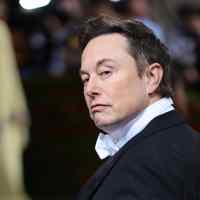
Billionaire edgelord Elon Musk has just given progressives another reason to dread his ongoing attempt to buy Twitter. The founder of Tesla and SpaceX has confirmed that, should he succeed in acquiring the social media site, he would rescind the ban on Donald Trump’s account. Musk told the FT’s Future of the Car conference he would ‘reverse the permaban’ because it was ‘a morally bad decision and foolish in the extreme’. Twitter had managed to ‘amplify (Trump’s voice) among the right’, which was ‘morally wrong and flat-out stupid’. The culprit, Musk said, was the company’s ‘strong left bias’, adding: ‘Twitter needs to be much more even-handed.

Can the Tories bounce back before the next election?

When David Cameron was prime minister, the Tories flirted with the idea of a Queen’s Speech with no bills in it at all. The aim was to show that more legislation was not the answer. This idea was quickly abandoned on the grounds that it would make the government look like it was out of ideas. This week’s Queen’s Speech contained 38 bills. Yet little of the proposed legislation will have made a difference to the most significant challenges facing this country by the next election. The biggest issue for Britain, the cost-of-living squeeze, won’t be solved by legislation: inflation can’t be brought back to its two per cent target by a bill. But even so, the point of all these bills seems unclear.

Does Macron dream of the Nobel Peace Prize?

Emmanuel Macron has taken it upon himself to tackle the delicate diplomatic situation of the war in Ukraine with fresh vigour following his victory last month. This week he addressed the EU parliament on the question of the future of Europe. France has the rotating presidency of the EU Council until June 30 and Macron therefore is the de facto head of the 27 member nations, a role for which his gargantuan ego is well suited. The main takeaway from Macron’s address was the question of Ukraine’s application to join the EU. They began the process in February, days after Russia invaded, but any hope that president Volodymyr Zelensky had of his country being fast-tracked was quashed by Macron.

The perils of ‘Bidenflation’

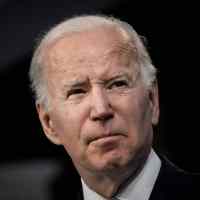
Has inflation peaked in the United States? Today’s update from the Bureau of Labor Statistics shows the annual rate of inflation has fallen slightly, from 8.5 per cent in March down to 8.3 per cent in April. There are signs of slowdown in the monthly figures, too: prices rose 0.3 per cent between March and April, after rising 1.2 per cent between February and March. The Democrats will struggle to hail this relatively small dip as any kind of meaningful victory Still, markets don’t seem particularly encouraged by the news. US stock futures immediately took a dip when the figures landed. Emphasis seems to be on the fact that inflation once again outpaced predictions, with CPI up 0.3 per cent on the month, despite the consensus predicting a rise of 0.2 per cent.