Politics

Read about the latest political news, views and analysis

Partygate fines: The five stages of grief

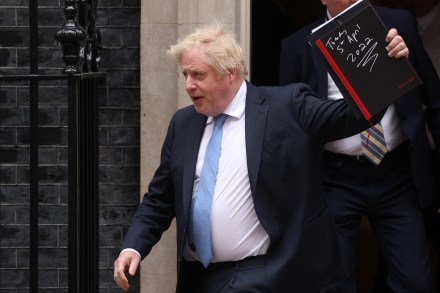
So, the verdict is in: Boris only broke the law once during lockdown. Like it or not, today’s findings by the Metropolitan police will no doubt be received with delight by those in No. 10, relieved that the PM looks to have got away with it once again. Even if there are nerves over the imminent publication of Sue Gray's report.  As with any victory in life, there are undoubtedly winners and losers. Having applauded the force for beginning their investigation in January, there are figures in Westminster who may take a different view of the findings of the Met – with any warm sentiments for London’s finest have suddenly evaporated.
Zelensky’s choice

31 min listen

This week Lara Prendergast and William Moore talk to James Forsyth and the academic, Dr Alexander Clarkson about Zelensky's possible path to peace (00:42). Followed by Owen Matthews, The Spectator's Russia correspondent on Turkey's power over Nato expansion (13:28). Finally, a chat between two bowls fanatics, Michael Simmons, The Spectator's data journalist and Andrew Gibson from the bowls green in Streatham (22:00).Hosted by Lara Prendergast & William MooreProduced by Sam HolmesSubscribe to The Spectator today and get a £20 Amazon gift voucher: spectator.

Is Boris Johnson out of the woods on partygate?

10 min listen

The Met police have today announced that their investigation into No. 10 parties is now over, and No. 10 have confirmed that neither the Prime Minister nor his wife have received more fines. Is Boris Johnson out of the woods? Katy Balls speaks to James Forsyth and Isabel Hardman.James points out the fortunate timing of the Met police's announcement – at a time when the Durham police are investigating Keir Starmer for his potential breach when he was having a beer and curry, leaving the Labour party handicapped when the Sue Gray report comes out next week.'The Gray report, though, I think is still very dangerous for Johnson, because it will highlight a lot of cultural and leadership problems within No. 10', Isabel says. Conservative MPs may yet have another wobble.

The return of Tory sleaze should trouble Boris

For those of us who were reporting on politics way back in the 1990s, 'Tory sleaze' is a phrase that echoes down the ages. Though there had been plenty of run-of-the-mill scandals involving Tory MPs in the first couple of years of John Major’s premiership, things really took off after his 'back to basics' conference speech of October 1993. 'It is time to return to core values, time to get back to basics, to self-discipline and respect for the law, to consideration for others, to accepting responsibility for yourself and your family,' Major said. Within days the tabloid press was making merry, highlighting cases of Conservative parliamentarians apparently taking more of an interest in other people’s families than in their own.

Revealed: partygate probe cost £460,000

At long last the Metropolitan Police has concluded its four month long investigation into the Downing Street lockdown-breaking parties. A team of 12 detectives working on Operation Hillman sorted through 345 documents including emails, door logs, diary entries and witness statements, 510 photographs and CCTV images and 204 questionnaires. And the results of this are now clear to see, with 126 fixed penalty notices (FPNs) being issued for eight events – nearly 1 per cent of the total Covid FPNs handed out by the Met during the pandemic.

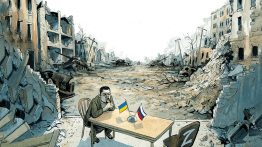
Zelensky’s choice: can Ukraine force Russia to negotiate?

When Russian forces first rolled into Ukraine, most thought that President Zelensky would have to flee. Boris Johnson said Britain could host a Ukrainian government in exile. The Americans offered to get Zelensky out of Kyiv to protect him from the hit squads that Moscow had sent to kill or capture him. Zelensky, with the courage and flair that has defined his war leadership, replied: ‘I need ammunition, not a ride.’ Well, the Ukrainians now have the ammunition – and three months in, the war looks very different to how on 24 February anyone imagined it would. Yes, the Russians have taken Mariupol, opening the way for a land corridor from the Donbas to Crimea, which they annexed in 2014.

It’s time for the chop, Boris

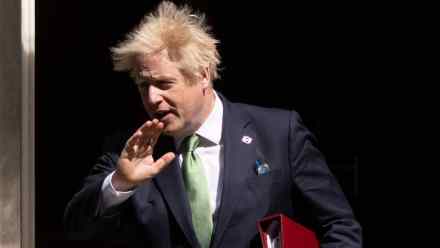
Thinking about it, there is only one thing that my father-in-law Stanley and I really agree about: it’s the hair. His oldest son’s policies, achievements, claims (and other things) strike us both in very different ways: in Stanley’s case with a farmyard cockerel’s swelling red-breasted pride; in mine with a deep-rooted despair of the type the dwellers in the Cities of the Plain must have felt before Jehovah smote them. But we agree about the hair. When it first went on the public stage, the hair was a glorious diversion, like Tommy Cooper’s Turkish fez, Rod Hull’s Emu or, perhaps more nobly, the playful, streaming flags and banners of the French aristocrats on the eve of Agincourt.

TfL’s £39,000 ‘intrusive staring’ campaign

Making his way home from Westminster the other night, Mr S was intrigued to see a new series of eye-catching posters on the Tube. ‘Staring', it screamed 'Intrusive staring is a form of sexual harassment and will not be tolerated.’ It's part of an ongoing campaign by Sadiq Khan's Transport for London (TfL) to get commuters to behave better: hardly surprising given that more than 19,000 crimes were recorded on the capital's public transport last year. Given TfL is effectively broke post-pandemic, Steerpike wondered just what this all cost.

Boris’s plan to divide and conquer

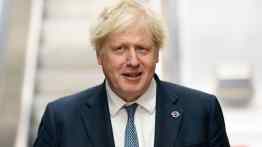
Boris Johnson has never quite been able to decide whether he wants to be a great unifier or a great divider. Does he want to govern like he did at City Hall – the ‘generous-hearted, loving mayor of London’, as he once described himself – or is his best chance for re-election a return to the Brexit-style wars that landed him in Downing Street? These days, there are plenty of signs that the government is in fight mode. The Prime Minister is risking a trade war with Brussels with threats to unilaterally rewrite the Northern Ireland Protocol, going to battle with civil servants over home-working and planning to deport asylum seekers to Rwanda. Johnson can see the pros to a public fight.

Is the SNP now pro-nuke?

At the rate he’s going, the SNP’s hawkish spokesperson on defence, the MP Stewart McDonald, will soon be talking about an independent Scotland having a weekly armed forces day where citizens don camouflage and wargame defending the nation. McDonald is tasked with making the SNP sound sensible when it comes to defence and western collective security. His latest manoeuvre appears to be to turn his party’s long-standing anti-nuclear weapons position on its head. This would move the SNP on from merely pretending it wants to be a part of Nato to credibly backing an independent Scotland’s membership of the alliance.

Is a windfall tax inevitable?

13 min listen

With the cost of living crisis looming large, pressure is on the government to come up with effective solutions. With Labour snapping at their heels for an emergency budget and a windfall tax on oil and gas companies, will the Conservatives eventually bend to this pressure? And if they do, will these solutions even work?Katy Balls talks to Isabel Hardman and Kate Andrews.

David Cameron bags a new job

Poor David Cameron has had a tough few years since leaving No. 10. Few of his post-premiership ventures seem to be doing well. First there was the collapse of Greensill capital; then his enforced resignation from Afiniti after the firm's founder was accused of sexual assault. There's also the flatlining performance of his flagship legacy project, the National Citizen Service, and the underwhelming sales of his memoirs. So Mr S was intrigued to see that 'David Cameron' trending on Twitter in Scotland's third biggest city. Clicking through, a headline in Aberdonian organ Press and Journal flashed up: 'Local ‘champion’ David Cameron named new Lord Provost of Aberdeen.' Was the granite city the scene of an unlikely political comeback?

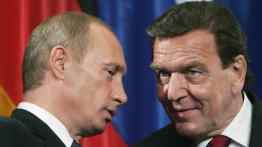
Sanction Gerhard Schröder

From the start of the war in Ukraine, the democratic world has shown striking unity in the economic boycott of Russia. But sanctions are always a blunt instrument: aimed at the regime, they end up harming the whole population. Ordinary Russians, too, are victims of Vladimir Putin’s corruption and misrule. Far better to target the Kremlin and those close to it. The system of targeted sanctions on named individuals is one way of doing this. Action has now been taken against 1,086 people, with assets suspended and travel bans imposed. To go after the rich and powerful is always a test for democracies, especially if such people are generous in their donations to political parties or have close political connections.

Is the MAGA saga coming to an end?

Did the Trump movement get a bloody nose in last night’s Republican primaries? It’s a story that most of the media and important parts of the Republican party – desperate to move on from the Orange Years of 2016 to 2020 – really want to be true. But the evidence so far is mixed. In North Carolina, the wheel-chair bound Trump devotee Madison Cawthorn, once a darling of the Make America Great Again movement, was ousted by state senator Chuck Edwards. Cawthorn had faced a number of scandals in recent weeks, but the Donald called on voters to look past his sins. On his new social site Truth Social, the 45th President wrote: ‘Recently, he made some foolish mistakes, which I don’t believe he’ll make again ...

Mervyn King: Needless money-printing fuelled inflation

Some £500 billion was printed by the Bank of England during the pandemic – a staggering sum that caused very little public debate. Those sceptical about so-called ‘quantitative easing’ argue that it causes inflation – and with today’s news that inflation rose 9 per cent on the year in April, is anyone linking the two? Step forward Mervyn King, former governor of the Bank of England, who was surprisingly critical when speaking to Andrew Marr on LBC last night. One of the major problems, Lord King said, was that the Bank went too hard and too fast with its money printing. ‘Governments stepped in and put in a lot of money for furlough schemes or raising unemployment benefits. That was very sensible,’ he said.

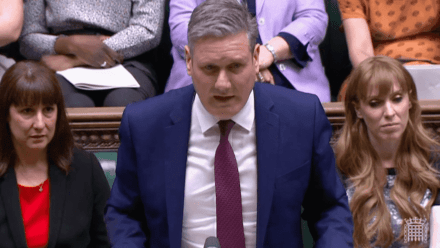
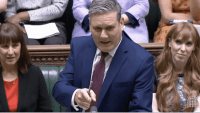
Starmer exposed Boris’s chaos and confusion at PMQs

Boris Johnson and his ministers are inching ever closer to U-turning on a windfall tax on the profits of energy companies. Today the Prime Minister refused to rule out such a tax, telling Labour leader Sir Keir Starmer that 'we will look at all the measures' possible to tackle the cost of living crisis. Starmer retorted that the U-turn was now 'inevitable' and that the Prime Minister should just get on with it. Such is the extent of the government's chaos and confusion on this matter that the Prime Minister spent much of PMQs answering questions about why he wasn't adopting a variety of Labour measures including this tax and an emergency budget.

A private girls’ school is the latest transgender battleground

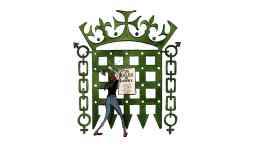
The ugly nature of the transgender debate – and the viciousness of those who seek to silence others who disagree with them – has arrived in the playground. At a private girls' school, a sixth form student was surrounded by a mob of dozens of fellow pupils who spat and screamed at her. Her 'crime'? Questioning a visiting politician's views about trans rights during a debate and making the point that 'sex exists'. That girl has now left school and is studying at home. Schools should be places where children can develop their own ideas and debate them. So what has gone so badly wrong? Only a few years ago, there was an A-Level, which I used to teach, in critical thinking.