Politics

Read about the latest political news, views and analysis

Why is Boris cutting the civil service?

16 min listen

The government wants to cut the civil service by over 90,000 people to 2016 levels. Part of the plan is to suspend the Fast Stream recruitment scheme, which hires high-achieving graduates out of university. Why is the government so set on the cut, and is this really the best way to do it? Cindy Yu speaks to Fraser Nelson and James Forsyth.James Forsyth: ‘If these graduates go and work in the private sector instead, frankly the civil service won't be able to afford them in three, five or seven years time.’Subscribe to The Spectator’s Evening Blend, Britain’s most-read politics email, to get an update on the day’s politics every weeknight: https://spectator.com/blendAnd subscribe to The Spectator magazine too.
Nadhim Zahawi and the sad state of student radicals

When did student radicals become so pathetic? There’s a lot of talk – often rightly so – of how sinister woke student activism can be today. Think balaclava-clad blokes protesting against Kathleen Stock at the University of Sussex over her alleged ‘transphobia’ – that is, her heretical belief in biological sex. Or students at Essex University condemning gender-critical academic Jo Phoenix and proclaiming in a flyer ‘SHUT THE F**K UP TERF’ next to an image of a gun. But much of the censorious agitation that goes on on campuses today is often just embarrassing – the wail of entitled, overgrown infants afraid of hurty words. Events at the University of Warwick on Friday are a case in point.

Johnny Depp and the truth about male domestic abuse victims

James looks nothing like Johnny Depp. For one thing, he is a lot taller than the 5 foot 8 star; and unlike Depp, he doesn't sport 37 tattoos. But James identifies with much the Pirate of the Caribbean star is telling the court in Virginia (and the millions following proceedings through social media).   The first time James was attacked by his wife, he convinced himself it was a one-off. They had had a row over the quality of a meal they’d shared at the local restaurant. Suddenly his wife rushed at him, battering him with her fists. He was shocked, but thought she must have drunk too much. He caught her hands in his and spoke soothingly until she stopped trying to hit out. Life resumed as normal.

A confidence vote for Boris is a matter of when, not if

When, not if, is fast becoming the sense among Tories about a no confidence ballot. One former cabinet minister tells me that he expects the 54 letters to be in even before the two by-elections on 23 June. But, interestingly, he thought that Boris Johnson would win the confidence vote, albeit not handsomely. Another former minister, who thinks the Tories would be best served by a new leader, argues that it would be better for the rebels to wait until after the two by-elections next month before triggering a ballot as that would increase the chances of Johnson losing it. The fundamental problem for the Tories is that they are deeply split on the leadership question.

Suella Braverman is right: schools shouldn’t pander to trans pupils

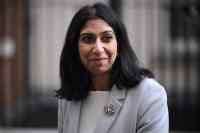
For saying that teachers shouldn't pander to trans pupils, Suella Braverman has found herself in hot water. The Attorney General suggested in an interview with the Times that male pupils should not be able to use girls’ toilets, and that single-sex schools can indeed restrict admission to children of just one sex. These are hardly revolutionary ideas, but they appear to have upset the National Education Union. Dr Mary Bousted, Joint General Secretary of the NEU, took just a few hours to respond to Braverman: 'Discrimination against transgender pupils is illegal under 2010 Equalities Act,' she warned, adding that: 'Schools should ignore the misleading advice from the Attorney General and continue to treat their trans pupils with the dignity and respect they are entitled to.

Jesus College plots overhaul of its China Centre

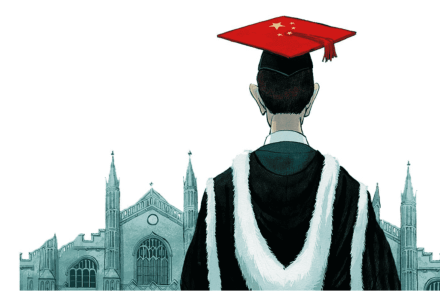
During the past two years Jesus College has been a regular in the newspaper headlines. The Cambridge University college was last month found to have accepted cash from a 'very high risk' Chinese university for research into China’s prime tool of foreign influence. It came after a string of stories which contrasted the willingness of Jesus to accept donations from controversial Chinese sources with its efforts to remove a historic memorial linked to the slave trade from its chapel. Now though, it seems that the college has been moved to act. According to an email seen by The Spectator, 'following a detailed review by a panel of Fellows, the college has today announced the restructure of the China Centre, including changing its name and funding model'.

Boris is fast approaching his moment of maximum vulnerability

Another day, another couple of Tory MPs calling on Boris Johnson to go — this time it is Jeremy Wright, the former attorney general, and Elliot Coburn, who was elected in 2019 and has a wafer-thin majority over the Liberal Democrats. The worry for No 10 is that this trickle of letters does not appear to be coordinated and seems to be just individual MPs making up their minds. Having to fight a vote of no confidence would be a huge blow to the Prime Minister’s authority. The steady, if not spectacular, flow of letters since the Gray report was published indicates that it isn’t the end of the matter that No. 10 hoped it would be. Most Tory MPs just want this story to go away, but even since the Gray report came out there have been claims about more events.

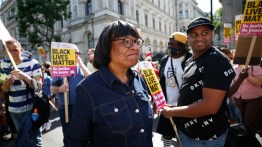
Is Diane Abbott against migration?

It's a strange time in British politics. Brexit signalled the ongoing political re-alignment that is underway. Red Wallers and blue shires united; old alliances are at an end. Still, Mr S is surprised to see a surprising new addition to the legions of Tories in parliament who are concerned about the ongoing levels of high migration to the UK. Step forward Diane Abbott, who today found herself in the unusual position of being criticised from the left of British politics for being too hostile to the free movement of people. Abbott of course distinguished herself during the Corbyn years as Shadow Home Secretary when she refused to answer questions about Labour's approach to illegal immigrants, among other issues.

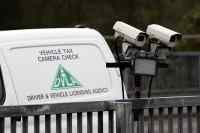
Bungling DVLA claims it’s ‘a great place to work’

Which government agency has performed the worst in this pandemic? It's a difficult question to answer. The Passport Office has its critics; delays at HMRC have meant tax rebates have gone months overdue. But for Steerpike's money, the Driver and Vehicle Licensing Agency (DVLA) is hard to beat. In March, the Times reported that some 3,400 civil servants there had done no work on full pay for significant periods of the pandemic. Some staff even boasted to undercover reporters that they had watched Netflix at the expense of the public, all while thousands waited for their driving applications to be processed. Still, such public embarrassments appear to be of little concern to those still employed there.

Could Boris be toppled by accident?

11 min listen

The Sue Gray report came in last week, but we haven't seen a coordinated effort to either stand behind the Prime Minister, or kick him out. Instead, there has reportedly been a drip of letters of no confidence letters coming in from individual Tories, rather than an organised group. Could we finally see the 54 letters needed to trigger a vote on Johnson's leadership?Cindy Yu, Fraser Nelson and James Forsyth discuss.

Wanted: tech support for Rishi

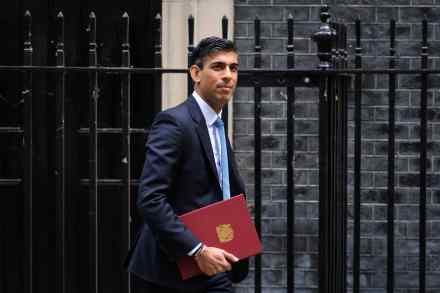
Rishi Sunak may be a big fan of Instagram but he hasn't always demonstrated such a sure touch for tech. The Twitter-savvy politician made headlines earlier this month after claiming that he couldn't raise welfare benefits to shield the most vulnerable because of a 'technically complicated' IT system. Pressed a fortnight ago on further support, Sunak said that such a move was 'not necessarily possible' as 'many of the systems are built so it can only be done once a year, and the decision was taken quite a while ago.' Hardly the white heat of technology, eh?

Is the Financial Times ashamed of capitalism?

It seems no-one has a good word to say about capitalism these days. For now, even the Financial Times – that bible of our captains of industry – seems to have gone off the filthy rich. Once, the newspaper's 'How To Spend It' supplement was an unashamed paean to conspicuous consumption; a veritable smorgasbord of plutocratic excess. The FT itself still describes it in near-orgastic terms, writing that the 28 year-old pull-out is 'the benchmark for luxury lifestyle magazines' with an 'affluent readership' of whom one in five 'has or would consider using the service of a private jet'. But it seems such tributes to the tastes of the rich and powerful are now somewhat déclassé in these times of economic hardship.

Imperial measures are culture war bait

The idea of reintroducing imperial measures in honour of the Queen’s Jubilee has one quality that will have commended it to No. 10’s wizard wheezes department. It seems to have driven remoaning liberal elite types pleasingly bananas. It’s the perfect culture war bait, because it plays into the stereotype: if you are unshakeably complacent in your conviction that Brexit, and the government which advanced it as a project, are pandering to empty symbols of trad patriotism and little Englander nostalgia, you’ll shriek with a sort of delighted horror at the news. Here is confirmation of everything you imagined.

Poll: voters pick VAT cut over windfall tax

This has been Boris Johnson's worst week in politics since last week. Under-fire over partygate, accused of watering down the Sue Gray report and facing yet more letters of no-confidence, inflation and the cost-of-living crisis look set to further erode his standing still further. On Thursday, Rishi Sunak unveiled a package of measures to try to alleviate voters' economic pain, announcing a £400 reduction for energy bills and a £650 for eight million families on benefits. This will be paid for by a £5 billion windfall tax on energy companies. Not all voters though seem that impressed by Sunak's choice.

Sunday shows round-up: Minister ‘absolutely confident’ No. 10 did not pressure Sue Gray

Andrei Kelin – Russian war crimes allegations are ‘a fabrication’ Clive Myrie took the reins of the BBC’s Sunday Morning show, and the centrepiece was a pre-recorded interview with the Russian ambassador Andrei Kelin. Myrie confronted Kelin with evidence of war crimes by Russian soldiers in Ukraine, as in the town of Bucha and the razing of Mariupol. Kelin spent the interview stonewalling most of Myrie’s claims: https://www.youtube.com/watch?v=dGIN1qtMhrg Brandon Lewis – If we don’t stand up to Russia now, what’s next? Myrie went on to interview the Northern Ireland Secretary Brandon Lewis. He asked Lewis if the UK government was prepared to ask Ukraine to cede territory to Russia in order to end the war: https://www.youtube.

How our pro-Brexit group was hacked by Russia

Britain is not at war with Russia but in cyberspace Russian activity against Ukraine and its allies is unrestrained, as I have recently found. Indeed, it is flattering 18 years after my retirement as head of MI6 to be still considered a worthwhile target of a cyber-attack by the Kremlin. The story of how I and a small group of pro-Brexit individuals were hacked by the Russian state and accused of plotting to overthrow the British government begins in 2017. A number of citizens, concerned that the Brexit vote of 2016 was being subverted, met in a pub to see whether they could do something about it. As a joke, they nicknamed this ‘Operation Surprise’ after the pub we were in.

What does the Tory party have against families?

Conservatism used to look to the individual, and just as importantly, to the family to cure society’s ills. That no longer seems to be the case. This week Rishi Sunak’s energy package for struggling households saw wealthy pensioners benefit the most, while those with large families and children lost out. At present the whole tax system is rigged against traditional two parent families, particularly those who get married. Recent analysis conducted by economists at the campaigning outfit, Tax and the Family, found that a couple with two children need to earn more than twice as much as a single childless person to achieve even a basic standard of living.