Have the Tories lost their way?
19 min listen
Katy Balls speaks to Fraser Nelson, James Forsyth, and Kate Andrews about Rishi Sunak's latest support package to aid with the cost of living, including the windfall tax on energy companies.
Read about the latest political news, views and analysis
19 min listen
Katy Balls speaks to Fraser Nelson, James Forsyth, and Kate Andrews about Rishi Sunak's latest support package to aid with the cost of living, including the windfall tax on energy companies.
20 min listen
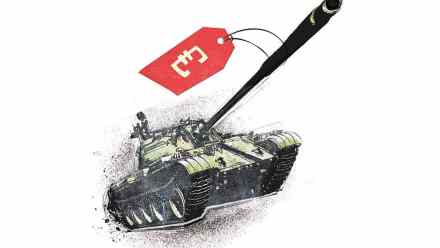
On this week's episode, Douglas Murray says the world is becoming claustrophobic, (00:55) Lionel Shriver struggles to get through South African airport security, (08:29) Julian Glover maps out the countryside battle lines, (16:52) and James Bartholomew buys a tank. (22:13) Produced by Angus ColwellEntries for this year's Innovator Awards, sponsored by Investec, are now open. To apply, go to: spectator.

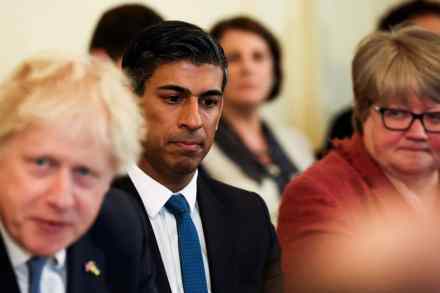
When the Sue Gray report was published on Wednesday, the most noticeable response was the silence among many Tory MPs. While a handful of Tories came out to criticise the Prime Minister and several came out to back Boris Johnson, the majority kept their powder dry. Since then, there hasn't been a mass backlash against Johnson. But there has been a steady trickle of Conservative MPs coming out to say Johnson should go (the full list is here). Since Wednesday, MPs Julian Sturdy, Stephen Hammond and Bob Neill are among those to submit letters. Meanwhile, 2019 MPs Angela Richardson, Alicia Kearns and Paul Holmes – who resigned as a PPS this week – have expressed their dismay at the situation.

There are two ways to see Rishi Sunak’s rescue package. One is an obviously needed and politically unavoidable boost to the economy and a relief for the cost-of-living crisis. The other is worrying jump towards the tax and spend policies that he once promised to avoid – and a sobering note for those who expected anything different from him. James Forsyth is inclined to the former, Kate Andrews and I are inclined to the latter. We all discuss in today’s Coffee House Shots podcast. There are many ways a Tory government could have helped households this week. Fuel costs are soaring but about 25 per cent of all electricity bills are green taxes: why not cut them? What about making things better by not making things worse in the first place?

Tony Blair believes the way forward for Britain is to seek guidance from Emmanuel Macron. The former British prime minister has a reputation for outlandish claims but the suggestion that the United Kingdom can benefit from pearls of wisdom proffered by the most divisive president in the history of the Fifth Republic is baffling even by Blair’s standards. According to Politico, Blair will host a Future of Britain conference on June 30, which is a collaboration between his eponymous Institute and the Britain Project, a centrist think tank that was established in the wake of the 2019 general election and which is described by Politico as the ‘British version of Emmanuel Macron’s La République En Marche’.
Almost five years ago to the day, Amber Rudd had her finest hour in politics. Standing in for the frit Theresa May at the BBC leaders’ debate on May 31, 2017 – even though her father had died only two days earlier – Ms Rudd rescued a Conservative election campaign that appeared to be collapsing. Fixing Jeremy Corbyn with a confident stare, she declared: ‘There isn’t a magic money tree that we can shake that suddenly provides for everything that people want.’ The phrase was such a hit that Mrs May repeated it a week or so later after she had finally emerged from the wreckage of her ‘nothing has changed’ U-turn on the dementia tax. The Labour advance was arrested and Mr Corbyn was kept out of Downing Street.
What planet do our politicians live on? Labour’s video memorialising George Floyd, and pledging radical change to education and justice policies to combat the sort of 'structural racism' that led to his death, suggests which country. All this time I’ve believed I live in Britain, when in fact we’re all living in America. What other explanation could there be for a party pledging to radically reshape the nation based on events in Minneapolis two years ago? Why else would British politicians like David Lammy line up to say 'he could have been me'? If we didn’t live in America, comparing a Harvard-educated London lawyer to a man living in a city on the other side of an ocean based on little more than the colour of their skin seems facile.
I love the NHS and with good reason: it saved my dad’s life twice, it saved my friend’s sight; and two weeks ago, it saved the life of my friends’ five-year-old daughter. At its best, the NHS is remarkable. But the post-pandemic NHS is anything but. It was this side of the health service – stressful, inefficient and downright upsetting – I experienced when I waited hours for urgent treatment for chest pains last week. It's also a side of the NHS more and more Brits are seeing, as waiting times soar and hospitals resemble war zones. Is that an exaggeration? The A&E waiting room in Ashford was certainly no advert for the NHS.
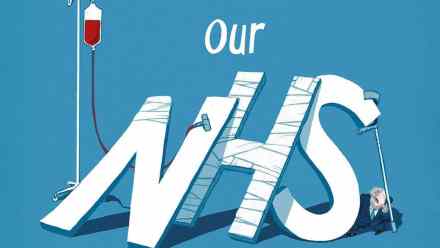

13 min listen
There have been mixed opinions following Rishi Sunak's announcements in the House of Commons yesterday. The £15 billion budget is targeted to help the whole country with a particular emphasis on those most in need - but has it gone far enough? Or will we pay the price for the Chancellor's handouts in the future?Kate Andrews speaks to Katy Balls and James Forsyth.
40 min listen
Freddy Gray speaks to award-winning author and Spectator columnist Lionel Shriver about mass shootings and gun culture in the United States, in the wake of the tragedy at Robb Elementary School in Uvalde, Texas.
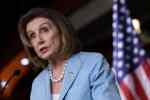
The Eucharist has, to use the current jargon, been weaponised in the standoff between Nancy Pelosi, Speaker of the US House of Representatives, and Archbishop Salvatore Cordileone of San Francisco. He has banned her from receiving holy communion anywhere in his diocese because of her outspoken support for abortion. She’s been sounding off for Roe v Wade after the leaked Supreme Court draft judgment suggesting it may be reversed. Now, on a talk show, she’s counterattacked. When asked about her ban, she observed: 'I wonder about the death penalty, which I am opposed to. So is the church but they take no action against people who may not share their view.
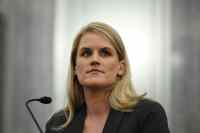
39 min listen
Frances Haugen is an American data scientist, most well known for her whistleblowing of Facebook's failures at controlling misinformation. Her insider knowledge allowed the Wall Street Journal to publish a series of exposés about the social media platform, which became known as 'The Facebook Files'. She has testified before the US Congress, the European Parliament and the British Parliament on online safety and Silicon Valley.
11 min listen
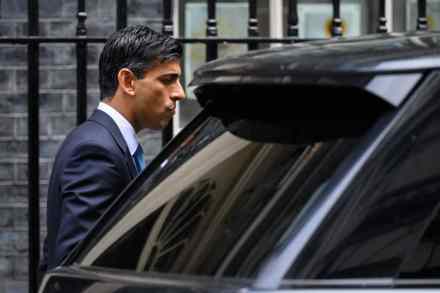
Rishi Sunak has announced a new tranche of economic measures designed to help ease the cost of living crisis in the UK. The new payments will be funded by a windfall tax on energy companies, which comes as the government U-turns on its previous opposition to the policy. On the episode, Katy Balls talks to James Forsyth and Kate Andrews about these measures – and especially the windfall tax.Kate doesn't mince her words, arguing that 'This tax grab is possibly going to be a nail on the coffin for a Tory party that has been hiking taxes for the last two years'.Produced by Natasha Feroze and Cindy Yu.
37 min listen
In this week’s episode:Ian Williams, author of The Fire of the Dragon: China’s New Cold war, and Alessio Patalano, Professor of War and Strategy in East Asia at King’s College London, talk about how the war in Ukraine has changed the thinking in Taiwan. (00:37) Also this week: Was Sue Gray’s report on Downing Street parties a game-changer or a damp squib? The Spectator’s editor, Fraser Nelson, and our political editor, James Forsyth, join the podcast to discuss the fallout from partygate. (15:39) And finally:If rising restaurant prices are causing you grief, you're not alone. Writer Yesenda Maxtone Graham and The Spectator’s Wikiman columnist, Rory Sutherland, join the podcast.

A £400 rebate on electricity bills. A cash handout to the poorest households. And a windfall tax on the energy companies that generate the power to keep the lights switched on to try and pay for it all. Chancellor Rishi Sunak was back to doing what he likes to do best today: handing out vast quantities of free money, while making the UK a less and less attractive place for businesses to operate. It was billed as a fix for the ‘cost of living’ crisis. Yet very soon it will become clear it was nothing of the sort. After all, you can’t tax your way out of inflation; taking the approach Sunak has opted for will only make things worse.

Scotland could pioneer a scheme to cut drug deaths by allowing users to consume narcotics under supervision and with medical assistance on hand. The establishment of overdose prevention centres (OPCs) is proposed in a consultation launched yesterday by Labour MSP Paul Sweeney, who believes his Bill will 'implement changes that will save lives'. Sweeney, a former Royal Regiment of Scotland reservist, previously volunteered in an unofficial safe injection van in Glasgow and has told the Scottish parliament that he saw people saved from overdose. These centres would take what volunteers have already done and give it a legal framework. Although these centres are already used in parts of the US and Europe, Scotland would become the first UK jurisdiction to introduce them.
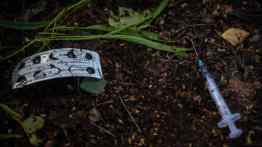
It was only three months ago that Chancellor Rishi Sunak was announcing a £9 billion support package to help people with their energy bills – which totalled £350 worth of support for most households. At the time there were calls for the Chancellor to go further, but he explained that he could not shield the public from every price hike, or pretend adjustment didn’t need to take place. It would be ‘wrong and dishonest,' he said. Those appeals have not worked out. Households are feeling poorer and poorer as prices continue to shoot up month-on-month. So Sunak has announced today a staggering £15 billion support package, changing and adding to the schemes he laid out in February.
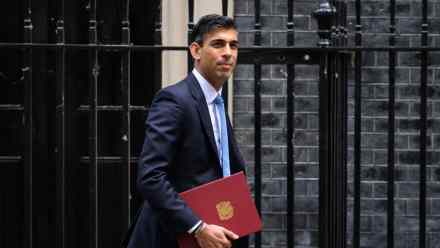
Like so many SNP Scottish government initiatives, it was launched to great fanfare but has made questionable progress since. Established in November 2020 as an investment vehicle for delivering long-term, ‘patient capital’ to Scottish businesses, the creation of the Scottish National Investment Bank (SNIB) was described by Nicola Sturgeon as ‘one of the most significant developments in the lifetime of this parliament.’ The ‘mission-led development bank’ is being funded by the Scottish government to the tune of £2 billion over ten years.

I’ve been writing about sex and gender for a few years now, largely because it’s a subject that needs to be better understood. Far too much about this issue is shrouded in misinformation and dishonesty, not least because some of the people and groups interested in the issue have made considerable efforts to keep this stuff out of the public gaze. Slowly, the veil is being lifted and questions of sex and gender more freely discussed. It’s not yet getting the media coverage it deserves, but the employment tribunal case of Allison Bailey is helping.
Should MPs be allowed second jobs? In the wake of last year's Owen Paterson scandal, in which it was revealed the Tory MP had breached lobbying rules, there was a clamour to clamp down on Parliamentarians’ outside income. The Commons Standards Committee toyed with the idea of placing some restriction on the time MPs could spend on extra-Parliamentary employment, or on the amounts they earned from it. But now the Committee has decided against taking action. Voters will be unhappy, but this is a decision that should be welcomed. Why? Because outside work by politicians is not a distraction to be avoided, as some more puritanical MPs have it. More often it's something that usefully informs debate and Committee work.