Politics

Read about the latest political news, views and analysis

Cold War

41 min listen

In this week’s episode:Can Russia turn off Germany’s gas?Wolfgang Münchau and Katja Hoyer discuss Germany’s looming energy crisis (0.51).Also this week:What are relations like between Boris Johnson and Prince Charles? The Spectator’s diary editor, James Heale joins Camilla Tominey from the Telegraph talk about the growing tensions between the Prime Minister and future King (19.56).And finally: Are sex parties becoming a cliché?Emma Sayle, CEO of Killing Kittens and James Innes-Smith, talk about the rise of sex parties and why they’ve become an open secret. (27.48)Hosted by Lara Prendergast & William MooreProduced by Natasha FerozeSubscribe to The Spectator today and get a £20 Amazon gift voucher: spectator.

Is the privileges committee a kangaroo court?

11 min listen

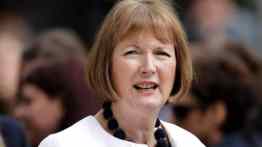
After an eight-day world tour, Boris Johnson is back on British soil to face Tory MPs for the first time since the two by-election defeats. Meanwhile, the privileges committee begins with Harriet Harman as its chair. Critics have suggested this inquiry into whether the Prime Minister misled parliament over partygate risks becoming a 'kangaroo court'. Will this allow Downing Street to disregard the outcome of the inquiry?Also on the podcast, food tariffs might be cut in order to curb the cost of living crisis. But what difference will this make?'You'll have to eat an awful lot of olives for this to make a difference' - James Forsyth.Cindy Yu is joined by James Forsyth and Katy Balls.Produced by Natasha Feroze.

The Blob is back with a vengeance – and the Tories aren’t ready for it

In what I supposed we should see as a sign of progress, the government has decided not to destroy its own school reforms, by revoking the first 18 clauses of the recently-published Schools Bill. I disclosed two weeks ago in the Daily Telegraph that many ex-ministers were up in arms at what they saw as the revenge of ‘The Blob’, the bureaucratic forces that have been against school reform.

Foreign Office slashes China centre funding

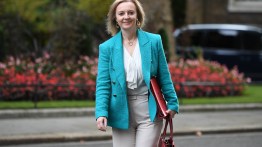
Liz Truss has been in Madrid this week, talking tough on Taiwan. In the face of continued Chinese aggression, Truss is keen to support the island republic, such as by boosting arms sales there. Yet when pressed this morning on LBC, Truss struggled to add more detail, suggesting that 'the defence that Taiwan need is already being provided through commercial providers by a variety of nations.' It comes after a mixed performance at the Foreign Affairs committee on Tuesday, in which Truss appeared baffled about reported delays to the UK's China strategy, which was supposed to be passed to the cabinet last week. Her top official, Sir Philip Barton, claimed it was almost finalised but that he couldn't remember when he last saw it.

The sinister side of Pride

So we come to the end of Pride month. We’re all now familiar with the rituals: the rainbow flag plastered across everything from sandwiches to mouthwash, the vapid statements of obeisance from big businesses and institutions. 2022 has seen a bumper crop of these. Rainbow bullets displayed on Twitter by the US Marines. Central London bedecked with the ‘progress Pride’ flag and its ever-expanding mysterious arrows and circles. Even the Halifax piled in, suggesting its customers close their bank accounts if they oppose a policy allowing staff to display their personal pronouns on name tags.

I’m proud of my son Danny Kruger, but I don’t agree with him on abortion

Most of the time I have an easy time of it on social media, with tweeters being nice about my colourful attire, liking my cooking hacks or flowers. But this week I had a dose of toxic hate. My son, the MP Danny Kruger, was unwise enough to join a debate in the Commons, saying he didn’t think women should have complete ‘bodily autonomy’ in the case of abortion as there’s another body – the baby’s – involved. I don’t agree with him, any more than I agree with his stance on assisted dying. He’s anti, I’m in favour. But that’s fine. I still love and admire him.

Sturgeon’s case for Scexit doesn’t add up

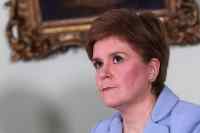
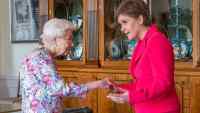
No one should be too perturbed by Nicola Sturgeon's latest referendum pronouncements. There will not be a referendum next year. The thought of the First Minister flying to London to start secession negotiations after gaining a majority of votes in Scotland at the next general election is Pythonesque in its absurdity. At some point this century a politician might emerge who kicks off an era-defining trend of breaking apart established liberal democracies – but that politician is unlikely to be Nicola Sturgeon. Scotland can, and will, ultimately shrug its shoulders at this week's Holyrood melodrama. The same goes for the First Minister's latest attempt to create an economic narrative to justify exiting the UK.

HS2 seeks a new narrative

What with Covid, Ukraine and the levelling-up agenda, fiscal probity is somewhat old-fashioned now in Westminster. So it's unsurprising then that the billion-pound boondoggle of HS2 carries on winding its way through the political process, despite mounting costs and time delays. Having dragged on for more than a dozen years, the, er, high-speed rail project has acquired something of a reputation for mismanagement. So it's perhaps unsurprising then that the company between the scheme, HS2 limited, is now hiring for a new 'narrative manager' to develop and maintain the 'core HS2 story' on a salary of up to £45,000. Looks like the 'story' will have a happy ending for the lucky hire at least.

In defence of ‘Stop Brexit Man’ Steve Bray

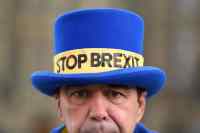
It is a great and ancient right of all freeborn Englishmen, stretching back far beyond the reaches of our recorded history. From Magna Carta to the Glorious Revolution, it has been woven into each of the defining constitutional moments of the British story, a principle bled and died for on the battlefields of Europe. It is, of course, the right to make a tit of yourself. Whitehall’s Stop Brexit Man has been the most vociferous pursuer of that right in recent years. Steve Bray, with his Brussels blue top hat and shouty megaphone demeanour, loves to make a tit of himself. He marches around Westminster barking inanities at any unsuspecting Tory MP, usually something demented about Russia and Brexit.

The Church of England’s misguided quest for ‘racial justice’

As if the Church of England didn’t have enough to worry about with leaky roofs, empty churches and lack of money to pay priests, it now has the Archbishops’ Commission for Racial Justice, or ACRJ. Appointed a year ago, this group of twelve of the great and good, under ex-Labour Cabinet minister Paul Boateng, has just published its first report. This document is certainly full of good intentions. Whether it has much to offer the ordinary churchgoer, or for that matter the Church of England as a whole, is rather more doubtful. Go into any church this Sunday, and it’s a racing certainty that you won’t find much old-fashioned racism.

Captain Tom’s charity gets probed

Oh dear. We all remember Captain Tom, KBE, beloved national icon and centenarian philanthropist. In the depths of Covid, the second world war veteran raised Britain's spirits with his 100 laps of his back garden to raise oodles of cash for the NHS. But now the charity set up in Moore's memory could be in a bit of a jam. For the foundation is facing a formal inquiry into its set up following concerns about the way in which it is spending its funds. Whoops! Earlier this year the Charity Commission started probing the foundation amid concerns about the way it is governed. But now that has escalated into a full inquiry after fresh evidence emerged of potentially serious misconduct.

‘There are three possible outcomes to this war’: Henry Kissinger interview

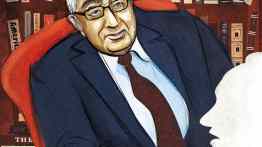
Andrew Roberts: Henry, at Davos, you said the dividing line between Russia and Ukraine should return to the status quo ante because pursuing the war beyond that point could turn it into a war not about the freedom of Ukraine but into a war against Russia itself. You came under a good deal of criticism for that, not least from Mr Zelensky. How is the world going to find a new equilibrium after this, however the war ends? Henry Kissinger: The purpose of the Davos statement was to point out that the issue of war aims needed to be faced before the momentum of war made it politically unmanageable. When Zelensky commented, he hadn’t read what I had said. In his most recent statements he has essentially accepted what I outlined in Davos.

What Starmer can learn from Scholz

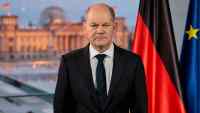
I made it through the airport crush to Berlin at the beginning of last week to see how Germany is faring under Olaf Scholz, Angela Merkel’s tough-minded centre-left successor. Under Merkel, Germany was important because it was the key to EU decision-making, but towards the end of her chancellorship, the country slowed down, there was too little change and, as we now know, Merkel misjudged Vladimir Putin’s revanchist ambitions and thirst for personal glory. In talking to Scholz, I did not get the impression that he has any illusions about whom he is dealing with.

Nicola Sturgeon’s referendum stunt

Nicola Sturgeon presents Scotland as a country outraged by Brexit and straining at the leash of the United Kingdom. She said she wants a second referendum on 19 October next year. But she has no powers to call one and has already referred herself to the Supreme Court, which is likely to confirm that only the UK parliament can bring into being a referendum on the future of the UK. So her call for a referendum date is, to all intents and purposes, a stunt. The SNP and their Green allies stood on pro-referendum manifestos last year and between them captured a majority of Holyrood seats. Sturgeon feels that justifies another vote. But that logic has already been rejected by the UK government, which says that now is not the time.

Why tactical voting is so dangerous for the Tories

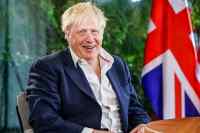
Boris Johnson has always been a celebrity politician. It is one of the reasons why the normal rules of politics have so often not applied to him. This status has given him political reach and put him on first-name terms with the public. It makes it easier for him to command media attention than other politicians: a fact that he turned to his advantage in 2016 and 2019. But this strength is now becoming a weakness. Johnson’s ability to dominate politics means that the country is now polarising into pro- and anti-Boris camps. The worry for him is that he has more opponents than supporters. Last week’s by-elections suggest people are prepared to vote tactically to give him a kicking. ‘His celebrity is working against him,’ laments one secretary of state.

Britain avoids a recession – for now

The UK's economy grew by 0.8 per cent between January and March this year, according to this morning’s update from the Office for National Statistics. This means real GDP is now just 0.7 per cent above its pre-pandemic levels. On the face of it, it's fairly grim news. The spectacular growth originally forecast for this year, making up for lost time in lockdown, did not transpire in the first three months of the year. Signs of a weak economy are starting to show. While consumer spending was up by 0.6 per cent in the first quarter, business investment fell by the same amount, down 9.2 per cent overall from its pre-pandemic levels.

Boris Johnson’s fate is to be forgotten

Boris Johnson divides Britons in a way few other politicians manage. To his dwindling group of supporters, he is the hero who Got Brexit Done; to his detractors, he is a villain, edging the country towards a dark place. He is, according to Alastair Campbell, Britain’s ‘accidental fascist’. But if you stand back from the Westminster hurly-burly you can see Boris for what he is: a carefully constructed empty space onto which Britons have, over the years, been invited to project their hopes and fears; one whose purpose has been to further the personal ambition for power of the very real but (so far as the public are concerned) largely unknown Alexander Boris de Pfeffel Johnson.

Does Nicola Sturgeon really want an independence referendum?

14 min listen

The campaign for a second independence referendum is well and truly on, as Nicola Sturgeon tours the airwaves this week. But can the SNP will Indyref2 into existence, given Boris Johnson is very unlikely to allow it? Natasha Feroze speaks to Katy Balls and James Forsyth on the podcast, in which James suggests that, perhaps, Sturgeon doesn't even want an independence referendum right now.