Politics

Read about the latest political news, views and analysis

GB News shakes up its stars

The winds of change are blowing through Paddington, with news reaching Steerpike of something of a bloodbath over at GB News. The self-proclaimed 'People's Channel' is currently undergoing a shake-up in its personnel and programming, with staff being told today of changes to take effect from the beginning of next week. All individual shows between midday to 4 p.m are to be effectively scrapped and replaced. Stars Gloria De Piero, the former MP, and economics journalist Liam Halligan will therefore no longer work on their current shows: instead they will both expand on their work on other features. De Piero also gets to co-host a new weekday show, titled simply: 'GB Newsday.


Is Labour in trouble again with the rail strikes?

11 min listen

Today rail union leaders announced another round of strikes, this time to coincide with the Labour party conference. Is there a message here that they are trying to send to Kier Starmer? Should we expect similar disruption during the Conservative Party Conference? Also on the podcast, after the death of the last leader of the Soviet Union, Mikhail Gorbachev, who was instrumental in ending the Cold War, how well do we understand future geopolitical threats? Cindy Yu speaks to James Forsyth and Isabel Hardman. Produced by Cindy Yu and Oscar Edmondson. Get tickets to Coffee House Shots Live here: spectator.

Will Sunak’s heating bill plan be quashed by Truss?

When the next prime minister is installed in Downing Street on Monday, we can expect a package of initiatives to help households with their heating bills. But will Rishi Sunak’s existing scheme – which promised £400 worth of handouts to every household – survive if, as expected, Liz Truss walks into No. 10? The scheme has already been heavily criticised because it is not means-tested and fails to target help towards the poorest. But this morning came bad news: the Office for National Statistics has decided to treat the £400 handout as extra income, not as a reduction in bills as was intended. This matters because it means the scheme will not help to reduce inflation.

Green parties are facing a reality check

How pleasant it is to watch an idea fall apart. Especially when it is an idea held by people you don’t particularly care for. In recent years all of the democracies have been plagued by green parties. The kindest interpretation of them is that they provide a wake-up call of some sort: a reminder that we should be kind to our planet, that sort of thing. But in every country they got too free a ride. They ended up preaching catastrophism to a supplicant media. And they ended up demanding that we all get off fossil fuels yesterday without any satisfactory explanation of how we were meant to keep the lights on today. That pleasant period for them came to a halt this year, when that old friend of conservatives – reality – kicked in.

British bobbies have much to learn from French police officers

Priti Patel wants the police to get back to basics and solve crime instead of parading their progressive credentials at every available opportunity. It's about time: recorded crime in England and Wales is at a 20-year-old high. Villains have never had it so good. Just 5.6 per cent of offences reported to police resulted in anyone being charged or summonsed in 2021-22, a drop of ten per cent from 2014-2015.   The Home Secretary is said to support a paper by the Policy Exchange think tank that warns that the police’s persistence in espousing social justice causes is ‘hugely damaging’ to public confidence. There is a growing sense among the public that the police have thrown in the towel, at least when it comes to keeping the streets safe.

‘Rude and threatening’: MPs bully expenses staff

Given the state of the country, you’d have thought MPs might have better things to do than abuse and belittle those running the parliamentary expenses scheme. But that’s exactly what some of our elected masters appear to have been doing in recent months, according to a Freedom of Information request sent by Mr S. Staff at the Independent Parliamentary Standards Authority (IPSA) recorded six anonymised incidents of ‘bullying and abusive behaviour by MPs’ in one 14-month period between July 2020 and September 2021. Among them include one male MP ‘threatening to make bullying and harassment complaints against [IPSA’s] validation team if they do not approve his wrongly categorised claims for taxis.

How Putin manipulated history to help Russians feel good again

Every country has an origin story but none has ‘changed it so often’ as Russia, according to Orlando Figes. The subject is inseparable from myth. In this impressive and deeply immersive book, the author sets out to reveal Russia’s history, its people’s perception of their past and the manifold ways in which those in power manipulate both events and legend to shape the present. It is a saga of multi-millennial identity politics. A bestselling historian with a storied background himself, Figes arranges his material chronologically over ten chapters, beginning with the medieval chronicles of Kievan Rus. Those sources launched myths that became fundamental to the Russian understanding of nationhood.

Iraq is fracturing again

Political turmoil is nothing new in Iraq. The American invasion and occupation turned the country from a brutal dictatorship led by the late Saddam Hussein into a quasi-democracy that spends more time fighting against itself than providing for its citizens. Iraqi politics is laced with sectarianism. When the US helped construct Iraq’s political system, dividing the spoils among Iraq’s three main groupings, the Sunnis, Shia and Kurds, it was thought to be the best way to ensure the system didn’t collapse. The more buy-in from Iraq’s major communities, the logic went, the more incentive they would have to make Iraqi democracy work. Since then, the world has become familiar with factional disputes and violence between Iraq’s sectarian communities.

The monarchy will survive Diana’s death (1997)

Today marks 25 years since the death of Diana, Princess of Wales. Andrew Roberts wrote The Spectator’s cover story that week, republished below and available at our digitised archive. The story that ended so horribly in that functional concrete Parisian tunnel early on Sunday had begun with a television show in 1969, when the victim was seven years old. In contradiction of Walter Bagehot's advice, daylight was let in on the magic of the monarchy. Before 1969, all had been deliberately obscure. Who now remembers Commander Colville? For over two decades, Commander Richard Colville DSC was press secretary, first to George VI and then to the present Queen.

Gorbachev was no saint. But he was a kind of hero

Mikhail Gorbachev is dead at the age of 91, and in a way I feel orphaned. I became fascinated by what was still then the Soviet Union in its late years of sclerosis, when one moribund geriatric at the top of the system succeeded another (the dark joke at the time went as follows: a KGB guard stopped someone at one of the state funerals and asked him if he had a pass – ‘oh,’ came the reply, ‘I’ve got a season ticket’). But my early years as a Russia-watcher were during his time as General Secretary, and if my seniors had become used to the idea that the USSR was a stagnant, unchanging police state, for us, the thought that there could be change, even change for the good, was baked into our assumptions.

Will Boris be back?

14 min listen

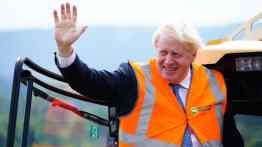
Boris Johnson is on his farewell tour but is remaining coy about the possibility of a political comeback. What problems will this throw up for the next prime minister? Will Boris be friend or foe?  Also on the podcast, after Liz Truss pulled out of her BBC interview with Nick Robinson, is she trying to avoid scrutiny of her plan to tackle the cost of living?  Katy Balls speaks to James Forsyth and Isabel Hardman.  Produced by Max Jeffery and Oscar Edmondson.

What kompromat does Trump have on Macron?

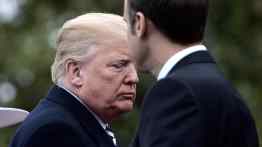
Did Donald Trump have kompromat on Emmanuel Macron within the secret files seized by the FBI from his Mar-a-Lago Xanadu? One of the files is known to have been titled ‘Info re: President of France’. And Trump is known to have bragged for years that he knew details of Macron’s sex life. Well, possibly. There’s plenty of circumstantial evidence to suggest that Macron is not entirely conventional in the sexuality department, not least in his marriage to his former drama teacher, 25 years his senior.

The extremism on the unionist side of Scotland’s independence debate

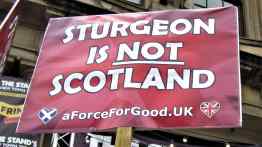
When a nationalist mob descended on the Tory leadership hustings in Perth recently, those of us who criticise the SNP’s degrading of Scottish political discourse seized on the ugly scenes as another example. However, extremism is not limited to one side of Scotland’s constitutional divide. Last week, as she was attending an event at the Edinburgh Festival, Nicola Sturgeon was protested by a group called ‘A Force For Good’. Their number would generously be characterised as a handful and there is no suggestion they engaged in the sort of behaviour reported in Perth. In videos posted by the pro-Union outfit, a man can be heard shouting at Sturgeon, asking her to ‘apologise for damaging Scotland’ and asking when she will resign.

The minister trying to fix the Northern Ireland Protocol

One of the big priorities for the new Prime Minister is dealing with the situation in Northern Ireland. There's no time for procrastination as the existing arrangements which suspend checks on goods travelling between Northern Ireland and Great Britain expire on 15 September. Liz Truss has made very clear that she is serious about getting the problems with the Protocol fixed and that while her favoured outcome is a negotiated settlement, she is also prepared to be tough. One of her newest supporters is Conor Burns, Minister of State for Northern Ireland, who only declared for the Foreign Secretary at the weekend but who is in Dublin at the moment trying to see if there is greater appetite for a settlement.

Six of the worst bits of Meghan Markle’s interview

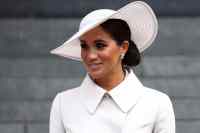
'I have a lot to say' claims Meghan Markle 'until I don't.' But there's no sign of such silence happening anytime soon, given the Duchess of Sussex's latest sally in the pages of an American magazine. Whatever happened to all that privacy, eh? In a 6,400 word cover piece for The Cut, the Duchess certainly had plenty to say on everything from the British media and royal family to how little girls see her as a 'princess' and of course the similarities between her wedding and the release of Nelson Mandela from prison. Already the Mandela family have hit back, with the great man's grandson declaring that 'overcoming 60 years of apartheid' cannot be equated with 'marrying a white prince.

What happens if Liz Truss designates China as a ‘threat’?

Early on in the Tory leadership campaign, Liz Truss was the only contender to say that she wanted to sit down with Vladimir Putin – so that she could ‘call him out’. It now seems that President Xi Jinping will be next in her firing line, after her team briefed yesterday that as PM she intends to put China on the same footing as Russia. According to campaign sources who spoke to the Times, Truss intends to redesignate China as a ‘threat’ rather than the ‘systemic competitor’ the government described Beijing as in last year’s integrated review.

It’s time to kickstart North Sea oil

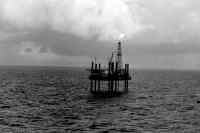
It is reported this morning that one of Liz Truss’s first acts as prime minister, assuming she wins the Conservative party leadership election, will be to grant new licences for North Sea oil and gas extraction. But will it be enough – and quick enough – to alleviate the energy crisis? There are still substantial known oil and gas reserves in the North Sea left to be exploited. According to a report produced by the Oil and Gas Authority last September, known reserves of oil and gas in the North Sea at the end of 2020 amounted to 4.4 billion barrels of oil equivalent (BOE). This is just a tenth of the 45.9 billion BOE which have already been extracted. However, that ignores that exploration for oil is an ongoing business.

Can the next Tory leader avoid John Major’s fate?

The wheels are coming off the Conservative party. In recent days, in the polls, the party averaged just 31 per cent of the national vote. This is John Major in 1997 territory, or William Hague in 2001, both of whom were humiliated at the ballot box. Britain’s governing party is now in the fast lane toward electoral wipeout. In fact, remarkably, half the people who voted for the party only 989 days ago have now abandoned it. This has given Keir Starmer and the Labour party a commanding 11-point lead. Meanwhile, the share of voters who think the next election will deliver another Conservative majority has collapsed to just 19 per cent. And they are right to think this way.