Politics

Read about the latest political news, views and analysis

Matt Hancock’s latest comeback wheeze

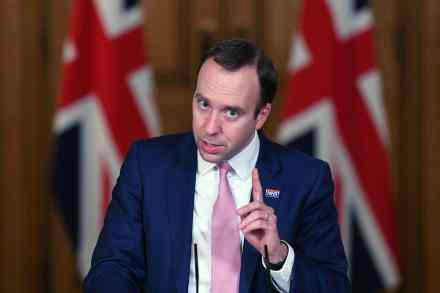
There's a sad mood of mourning in Westminster at present so thank God for Matt Hancock's ongoing efforts to become relevant again. The Casanova of the Commons has tried every trick in the book to mount a cabinet comeback since losing office in disgrace some 14 months ago. He's signed a book deal, joined the Metaverse, done a podcast, championed polo necks and adopted a refugee in between fronting crypto, enraging the Serpentine, alienating the UN and acting as Boris Johnson's human shield, all to no avail. Now though, our dashing hero has a new wheeze: potentially starring in the Channel 4 series Celebrity SAS: Who Dares Wins.
Has inflation peaked?

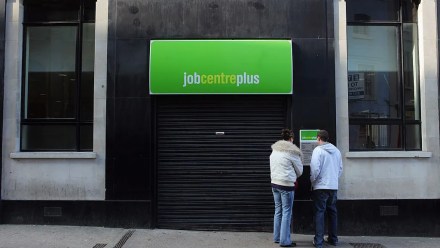
This morning’s surprise update from the Office for National Statistics shows headline inflation at 9.9 per cent on the year to August, down slightly from 10.1 per cent in July. While consumer inflation remains at a 40-year high, the drop from double digits back into single digits has the optimists whispering: might inflation have peaked? This update is no doubt good news, but this is likely to be a brief moment of calm in an ongoing storm. The slight fall in headline inflation has primarily been driven by easing fuel prices, as the cost of oil has been on a downwards trajectory. That at least is an early sign that global markets are starting to fill in the gaps created by the West’s decision to shun Russia’s crude oil supplies.

Jair Bolsonaro and Brazil’s football fight

Brazil's football strip is one of the most recognisable garments in sport, perhaps the most potent symbol of Brazil’s sizeable soft power. People who can’t name the country's capital or president are familiar with the players who made the yellow jersey famous. Names such as Pelé, Sócrates, Ronaldo and Marta are known and loved the world over. In Brazil, however, the iconic shirt is at the centre of a political tug-of-war. With barely a month until the presidential election, and two months until the World Cup, the fight over who 'owns' the jersey, a symbol appropriated in recent years by supporters of Brazil's president Jair Bolsonaro, is one of the more colourful political dramas currently playing out in the South American nation.

Zemmour is his own worst enemy

Eric Zemmour is back. The bogeyman of French politics spent the summer licking his wounds after his far-right Reconquest party was wiped out in June’s parliamentary elections, but on Sunday he addressed several thousand supporters at a rally in the south of France. It is, hopes Zemmour, an opportunity to relaunch his political career and judging by his recent media appearances he won’t be watering down his right-wing rhetoric. Railing against immigration, environmental extremists and the sanctions on Russia, Zemmour picked up from where he left off in the spring. When it was put to him by one interviewer that he had paid the price electorally for focusing too much on immigration, Zemmour replied: ‘I was wrong electorally, but history will prove me right.

The sorry state of republicanism

As republican protestors seek to disrupt the handing on of the title of head of state from one royal to another, we should appreciate that it is an obsolete system in the modern world. Not the monarchy, of course: it only takes one look at the mass outpouring of grief for the late Queen and the goodwill towards the new King displayed by all mainstream political leaders to realise that is in rude health. But republicanism. Imagine for a moment that a new British republic is about to be born. The presidential election has reached its final round of voting. Jeremy Corbyn and Nigel Farage have been edged out in previous rounds, leaving a straight head-to-head between Sadiq Khan and Boris Johnson.

What was the message behind King Charles’s visit to Belfast?

12 min listen

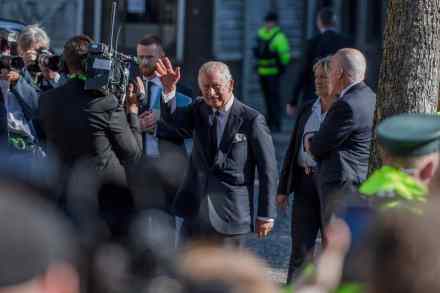
King Charles arrived in Belfast where he was met by the new Secretary of State for Northern Ireland, Chris Heaton-Harris. The King has pledged to follow the 'shining example' set by his mother during her life of public service. Tonight, the Queen's body will be moved from Edinburgh to Buckingham Palace where her body will lie-in-state ahead of the funeral. Also on the podcast, is Ukraine's largest counteroffensive against Russia working? And how might Russia escalate?Katy Balls is joined by James Forsyth and Isabel Hardman. Produced by Natasha Feroze.

Norway says ‘no’ to a gas price cap

One implication of the Russian gas shut-off is that Norway has now become the EU’s largest single supplier of natural gas. According to the country’s energy ministry, they are expected to export 122 billion cubic metres of gas south to the EU over the course of 2022. This compares with the 155 billion cubic metres of gas which the union imported from Russia in 2021. Getting gas from Norway is obviously preferable to Russia: Norway is a friendly country, and Nato ally, and has gone out of its way to facilitate as much exports to the EU as possible. Over the summer, the country’s government effectively put a stop to a strike by gas platform workers that would have cut exports by around 60 per cent. But Norway isn't doing this out of the kindness of its heart.

President Biden still can’t get a grip on inflation

Oil prices have been falling steeply, reducing prices at the pumps. Wheat prices have dropped as supplies from Ukraine start to hit the world market again. And supply chains are steadily getting back to normal as trade routes recover from the pandemic, with shipping costs back down to their level at the start of the year. So when the US inflation figures were published today, the markets expected both headline and core rates to be coming back down. But – yikes – they were disappointed. Instead, prices are still climbing – and it is becoming more and more clear that President Biden’s wild spending is the real problem. The inflation numbers out of the US today are, once again, alarming.

New York Times in civil war over WFH

It's a grim old time in Westminster at the moment. The Queen is dead, prices are up, inflation is rampant and a winter of discontent beckons. But, from the Big Apple itself, a ray of light at last. For the New York Times, the world's worst newspaper best known for Brit-bashing Anglophobia, is embroiled in something close to civil war. The casus belli of this? A directive from on high that the paper's hard-of-thinking hacks return to the office part-time, now that Covid has banished to the history books. Unfortunately, not all at the 'Gray Lady' seem too pleased with this development. The paper's local rival reports that more than 1,300 journalists have signed a pledge not to return to the office, even though bosses expect staff in only three days a week.

Will New Zealand ever become a republic?

New Zealand’s Prime Minister Jacinda Ardern said on Monday that her government will not be pursuing any moves toward changing New Zealand to a republic following the death of Queen Elizabeth II. Ardern admitted she thought New Zealand would eventually become a republic, and it would probably happen within her lifetime, but that there were more pressing issues for her government to contend with. Under the current system, the British monarch remains New Zealand’s head of state, represented in New Zealand by a governor-general. The debate as to whether New Zealand should fully step out from the shadows of its colonialist past and become a republic has ebbed and flowed over the last few decades.

Has war broken out again between Armenia and Azerbaijan?

Overnight, it seems as if a new war might have broken out in Europe. Armenian authorities claim that at least 49 soldiers have been killed in fighting with Azerbaijan close to their disputed border. A new conflict would be a tragedy and a waste. But it would also signal something else: the collapse of Russia’s global empire as it is defeated in Ukraine, and the shaking of the kaleidoscope this will inevitably cause. Armenia and Azerbaijan dispute the ownership of the Nagorno-Karabakh region. In 2020, they fought a war over it. Unexpectedly, the Armenians were handily defeated. Azerbaijan was heavily supported by Turkey, and Armenia by Russia. The same Turkish drones which are fan favourites in Ukrainian hands wrecked hundreds of Armenian vehicles and positions.

What should Liz Truss do about Scotland?

What should Liz Truss do about Scotland? To ask the question is to illuminate its limitations. Scotland is no more Truss’s to manage than it was her predecessor’s plaything. Truss may call herself a 'child of the Union' but a few years in a Paisley primary school are not enough to justify such a claim – there is, in any case, no obvious sense that Truss exhibits the kind of conflicted subtlety that’s mother’s milk to any true 'child of the Union'. For this is a Janus-faced business and everything we know about Truss suggests she favours the clean lines of simplicity – and directness – over the contradictions and ironies of reality.

Former Treasury minister savages Tom Scholar

There was much anger and sadness in Whitehall last week at the sacking of the Treasury's top civil servant Sir Tom Scholar by Chancellor Kwasi Kwarteng on his first day in office. But one person who won't be shedding tears for the departing Permanent Secretary is Lord Agnew, who served as a minister in Scholar's department between 2020 to 2022. Agnew's resignation from government in January was one of the more sensational and principled that Westminster has seen in recent years. Arriving at the despatch box to answer an Urgent Question on fraud in the UK's coronavirus business loan scheme, Agnew said he was unable to defend his department's record and bemoaned how 'arrogance, indolence and ignorance freezes the government machine.

Would Putin take an ‘off ramp’ out of Ukraine?

Over the past few days, the Ukrainians have upended assumptions about the war with Russia. They have shown it was wrong to predict that the conflict was inevitably going to turn into a war of attrition. They have advanced at speed, reclaiming, according to reports, 1,000 square miles of territory in a week. It's not clear yet whether they will be able to secure these gains. But for now, Russian forces are demoralised and do not have a conventional response. The upset evident among hawks in Russia is a reminder of the dangers for the regime in losing face in Ukraine For Ukraine's president Zelensky, the military advance is particularly well-timed.

Royal rumpus as hacks lose office access

Preparations for Her Majesty's Lying-in-State in Westminster Hall are continuing and all is not well in the Houses of Parliament. After yesterday's news that MPs' staff are unhappy at their exclusion from those given priority access to pay their last respects, now Mr S can tell his readers that at least two other fresh rows are brewing. The first is about whether former Members of Parliament who are not sitting members of the House of Lords will be allowed priority access to avoid predicted queues of up to 30 hours to file past the coffin. Unfortunately, the special phone number which former Members have been given to arrange such visits to Westminster Hall is not working, according to one ex-MP who phoned Mr S to convey his disappointment.

Putin is cornered

On the evening of Sunday 11 September, a general alert was announced in nearly all the regions of Ukraine. A mass launch of precision missiles by the Russian Black and Caspian Sea fleets had just been detected. This is not the first occasion in this war on which such an attack has happened. The difference is, the aggressor this time deliberately aimed for critical civilian infrastructure – and hit it. Within an hour, reports of explosions and fires were followed by power-failures in several regions, with two of them, Kharkiv and Donetsk, suffering complete blackouts.